The plan
The bent-over row is easy to underrate in CrossFit because it rarely shows up as the loudest movement in the workout. No judge is counting a max row in the Open. Still, a stronger row can clean up a lot of ugly pulling: better lats, better hinge discipline, and less panic when grip starts to fade.
The trick is keeping it honest. A row stops being useful when the athlete stands up, yanks the bar, and calls it back work. Done well, it teaches you to hold a hinge while the upper back pulls with control.
- Set the hinge first. If the torso keeps rising, the load is too heavy or the set is too long.
- Pull toward the lower ribs, not the neck. The elbows should travel back, not flare into a shrug.
- Dumbbells are often easier to run in class, especially when space and fatigue matter.
What a bent-over row should train
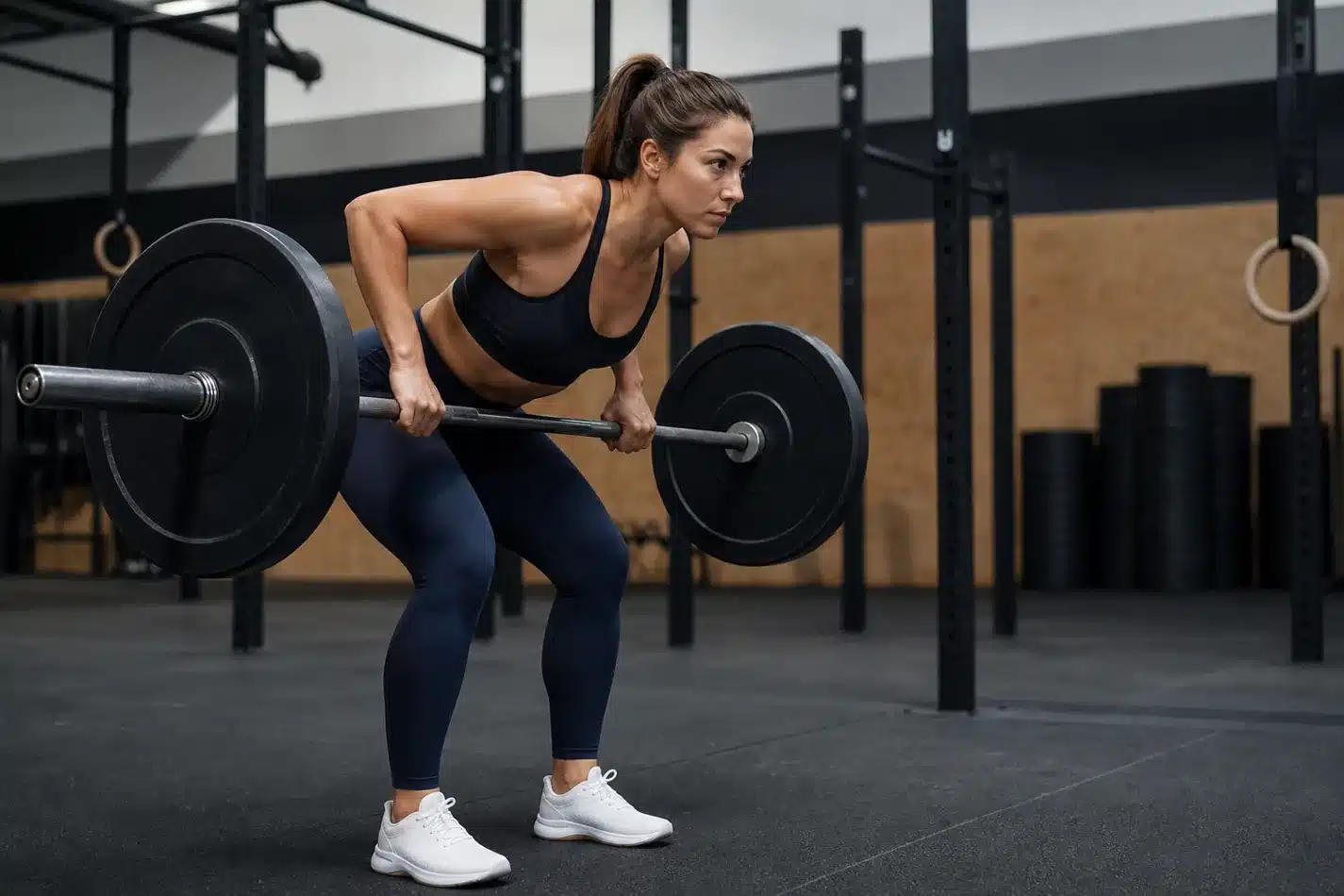
A good bent-over row trains the upper back while the hips hold position. The athlete hinges, braces lightly, lets the arms hang, then pulls the bar or dumbbells close without changing the back angle on every rep. The movement should feel like back work, not a strange deadlift bounce.
This is why it belongs near deadlift setup, Romanian deadlift control, and good morning hinge work. Those movements teach the hinge. The row asks you to keep that hinge while the shoulders and lats do their job.
Set the hinge before you start pulling
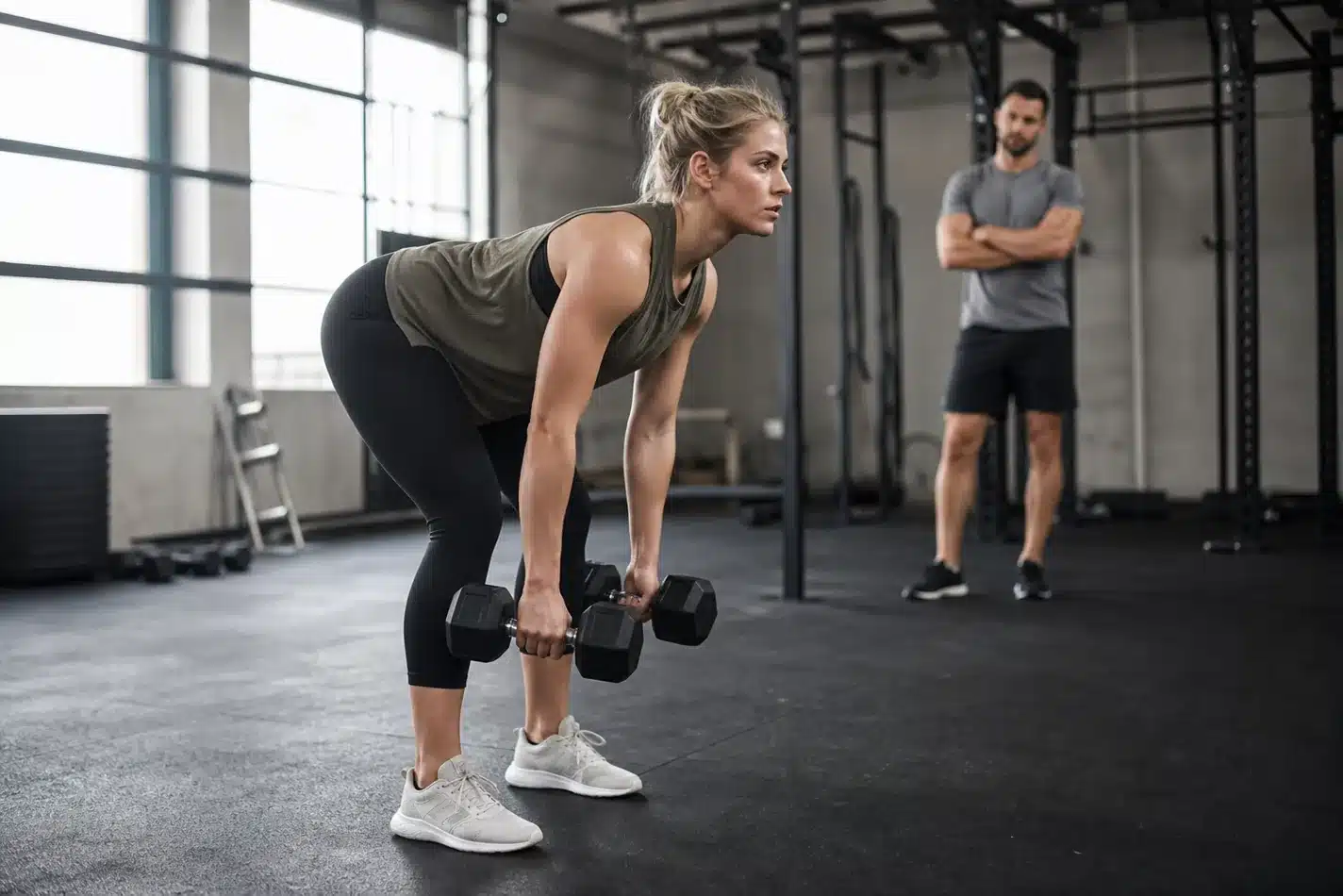
Start with the feet under the hips, soften the knees, and push the hips back until the torso is angled forward. The exact angle depends on the athlete and the tool, but the position has to be repeatable. If the first rep starts at 45 degrees and the fifth rep is nearly upright, the set is already drifting.
Keep the bar close to the body and pull toward the lower ribs. With dumbbells, keep the bells under the shoulders and let each arm move cleanly. Athletes who already use dumbbell deadlift setup well usually find this position faster because they understand how to hinge without chasing the floor.
| Fault | What it usually means | Fix before adding weight |
|---|---|---|
| Torso rises every rep | The athlete is using hip drive to finish the pull | Reduce the load and hold the hinge for the whole set |
| Bar pulls toward the chest or neck | The elbows flare and the traps take over | Pull to the lower ribs and keep the shoulders down |
| Low back gets tired first | The hinge is not stable enough for the volume | Shorten the set or use a chest-supported variation |
| Dumbbells swing forward | The athlete is losing lat tension at the bottom | Pause briefly and pull the bells back toward the pockets |
Barbell row or dumbbell row?
The barbell bent-over row is better when the goal is heavier upper-back strength and the athlete can hold position without turning the set into a hinge rep. It gives both arms the same path and makes sloppy torso movement obvious.
The dumbbell version is friendlier in a busy class. It lets the shoulders move naturally, exposes side-to-side differences, and pairs well with mixed work like carries, burpees, or renegade row control. If grip is the limiter, the row can also support farmer carry grip and other loaded work where the hands have to stay calm.
The demo below is useful because it keeps the row simple. Watch the torso angle, the pull toward the lower ribs, and the way the athlete finishes without turning the last inch into a shrug.
How to scale it for a WOD
Good CrossFit scaling starts with the position, not the ego. Lower the load first. Then reduce reps or switch to dumbbells. If the athlete cannot hinge safely under fatigue, use a ring row, an elevated dumbbell row, or a chest-supported row if the gym has the setup.
The row should not compete with the main stimulus. If the workout already includes heavy pulling, rope climbs, or high-volume gymnastics, keep the sets smaller. Athletes who struggle with ring row tension or strict pull-up strength often benefit from strict rowing work, but only if the reps stay clean enough to build the right pattern.
Where it fits in training
Use bent-over rows after a CrossFit warm-up, as accessory work after strength training, or in a controlled mixed piece where quality matters more than speed. They fit especially well on days that need upper-back strength without more overhead volume.
Before you load it, do one simple check: can you hold the same torso angle for eight slow reps? If not, the row is telling you something useful. Fix the hinge, shorten the set, or choose a variation that lets the back train instead of just survive.


