The plan
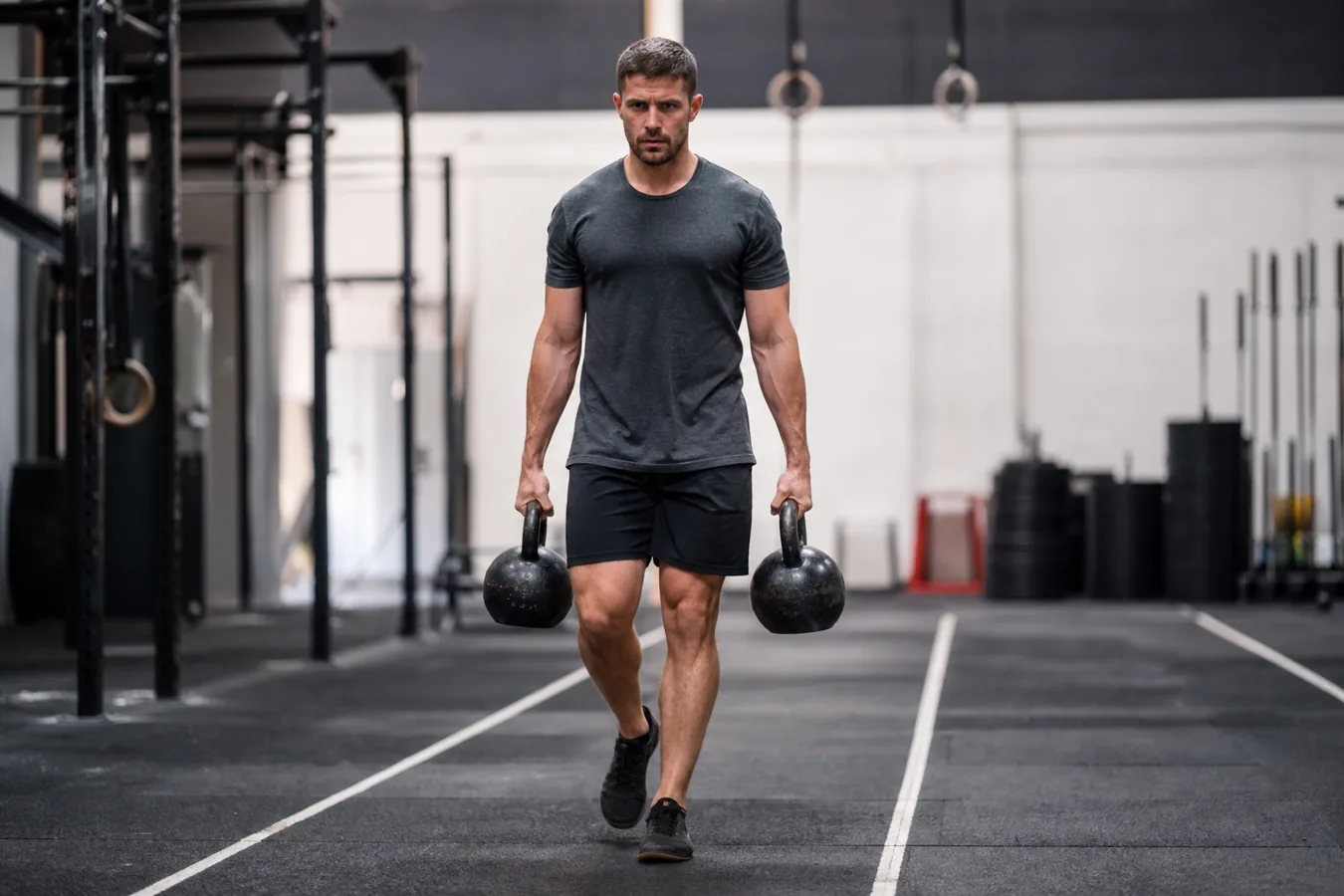
The farmer carry looks almost too simple for CrossFit: pick up heavy objects, walk, put them down. Then the clock starts, your grip fades, your breathing gets shallow, and every lazy step begins to cost you.
That is why the movement earns its place in workouts and accessory work. A good farmer carry builds grip, trunk stiffness, loaded posture, and the ability to stay calm while your hands are screaming. It also exposes whether you can keep moving without turning every loaded walk into a side bend.
- The farmer carry should look tall and quiet, not rushed and tilted.
- Grip matters, but posture and breathing decide whether the carry survives inside a workout.
- Scale load, distance, or object choice before the shoulders roll forward or the weights bang into the legs.
What the farmer carry trains
The farmer carry trains the grip first because that is what most athletes feel. The bigger value is the full-body tension behind it. You have to brace the ribs, keep the shoulders packed, walk evenly, and breathe while load tries to pull you out of position.
That carryover shows up in barbell and gymnastics work. If your grip disappears during toes-to-bar in CrossFit, loaded carries can help build the kind of hand and shoulder stamina that does not depend on yanking harder every rep.
Set up before the first step
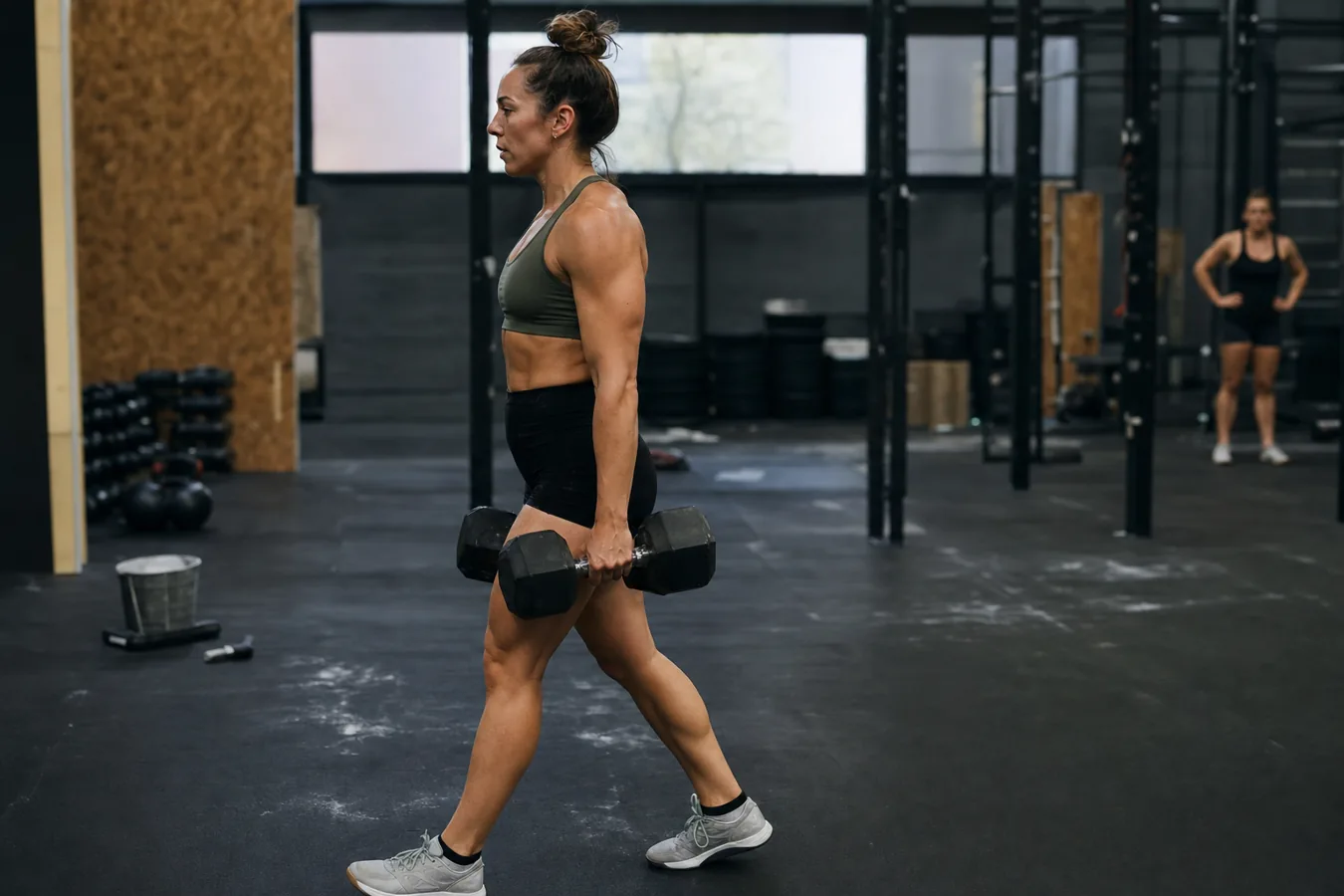
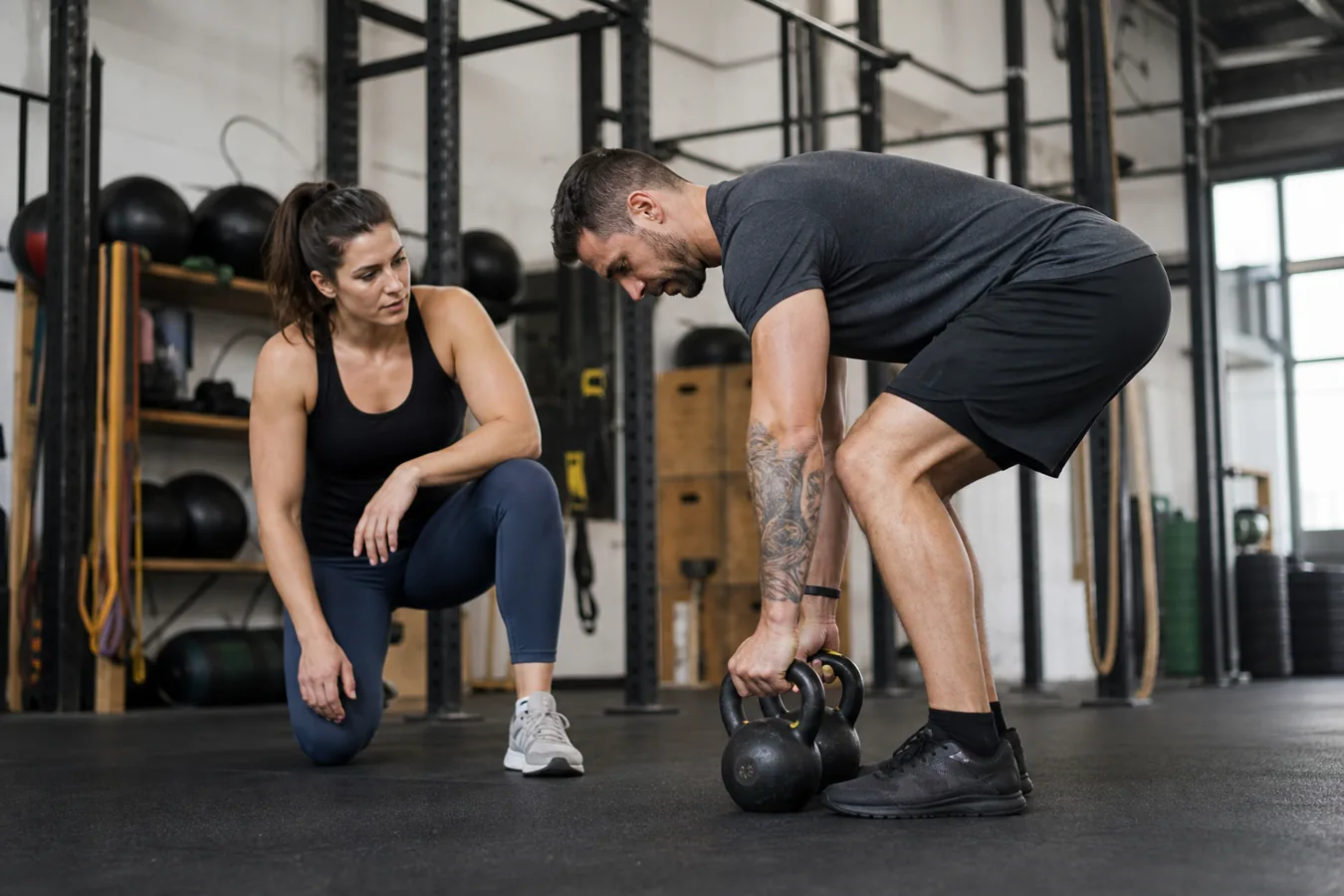
Start with the handles beside the feet, not too far forward. Hinge down, brace, and stand the weights up the same way you would start a clean deadlift from the floor. Once you are tall, let the arms hang long without letting the shoulders dump forward.
The first step tells you a lot. If you have to jog immediately to save the weights, the load is too heavy for the goal. If the weights swing and hit your thighs every stride, slow down and shorten the step. The best farmer carries look boring from the outside because the athlete is doing the hard work inside the brace.
| Checkpoint | Good rep | Fix when it breaks |
|---|---|---|
| Grip | Hands closed evenly around the handles | Use lighter objects or shorter distances before the fingers open |
| Shoulders | Down and slightly back without shrugging | Stand taller and stop letting the bells pull the chest down |
| Ribs | Braced, stacked over the hips | Exhale, reset the brace, and avoid leaning back |
| Stride | Short, steady, and quiet | Slow the walk before the weights start swinging |
| Finish | Controlled set-down with a hinge | Do not drop unless the workout standard and gym rules allow it |
Use the video to check the standard
This CrossFit demo is useful because it keeps the movement clean and simple. Watch the athlete's torso and step length, not only the weights. The goal is not a dramatic sprint with loose shoulders. It is steady movement under load.
How heavy should a CrossFit farmer carry be?
The right load depends on the workout. For a short strength piece, heavy carries can be useful if the athlete can stay tall and set the weights down cleanly. In a conditioning workout, the load should let you keep the intended pace without turning every round into a grip failure drill.
If the workout already includes pulling, hanging, or rope work, be careful with the total grip cost. A hard carry before a CrossFit rope climb can change the whole workout, especially for athletes who do not use their feet well on the rope.
Mistakes that make carries fall apart
Most farmer carry mistakes come from trying to make the movement faster before it is solid. Athletes overstride, twist, hold their breath too long, or shrug the shoulders up toward the ears. Those fixes do not save energy. They spend it faster.
- Starting with the weights too far in front of the body.
- Letting the shoulders round forward after the first few steps.
- Taking long steps that make the bells swing into the legs.
- Holding the breath until the brace turns into panic.
- Dropping the weights from fatigue instead of hinging to the floor.
When to scale the carry
Scale the farmer carry when the athlete cannot keep a tall posture, when the grip fails before the workout stimulus makes sense, or when the set-down becomes unsafe. Good options include lighter dumbbells, kettlebells with easier handles, shorter distances, suitcase carries on one side, or rest breaks at marked points.
The scale should protect the purpose of the workout. If the day is about loaded conditioning, keep the athlete moving. If the day is about grip strength, make the carry challenging but still repeatable. That is the same idea behind a smart CrossFit scaling choice: adjust the version without losing the training target.


