The plan
Banded face pulls are one of those CrossFit warm-up drills that get rushed because they look easy. The band is light, the reps are small, and the class wants to get to the barbell. Then the first set of pull-ups, presses, or wall walks starts and the shoulders feel like they never woke up.
The drill is not meant to smoke your arms. It teaches the upper back to pull, rotate, and hold position without turning every rep into a neck shrug. Done well, it makes pressing and pulling prep feel cleaner. Done poorly, it is just ten fast reps with a rubber band.
- Banded face pulls train upper-back tension, external rotation, and shoulder blade control before harder work.
- The band should be light enough to finish with elbows high and ribs quiet.
- If the neck takes over or the low back arches, step closer to the anchor and slow the rep down.
What the banded face pull should feel like
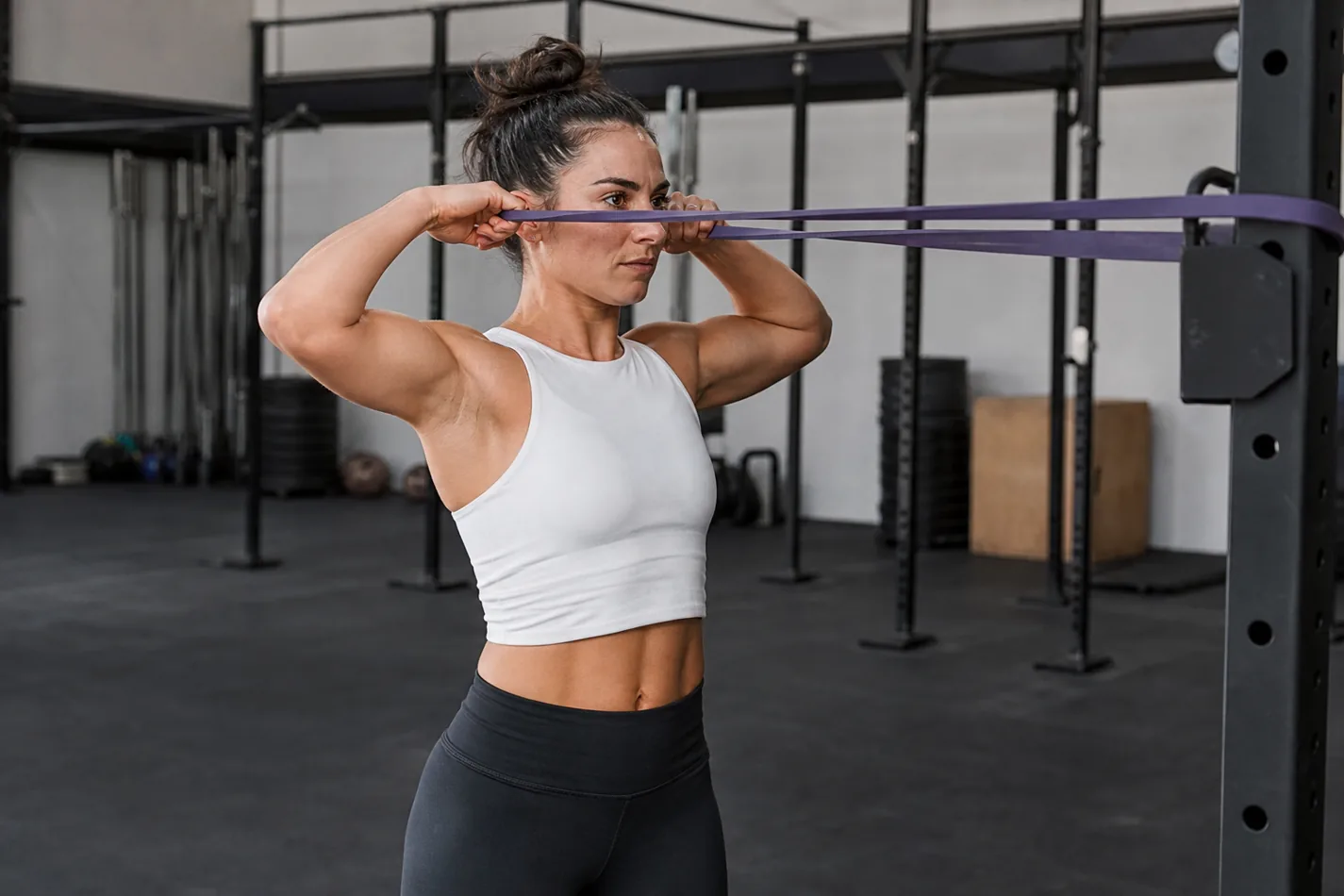
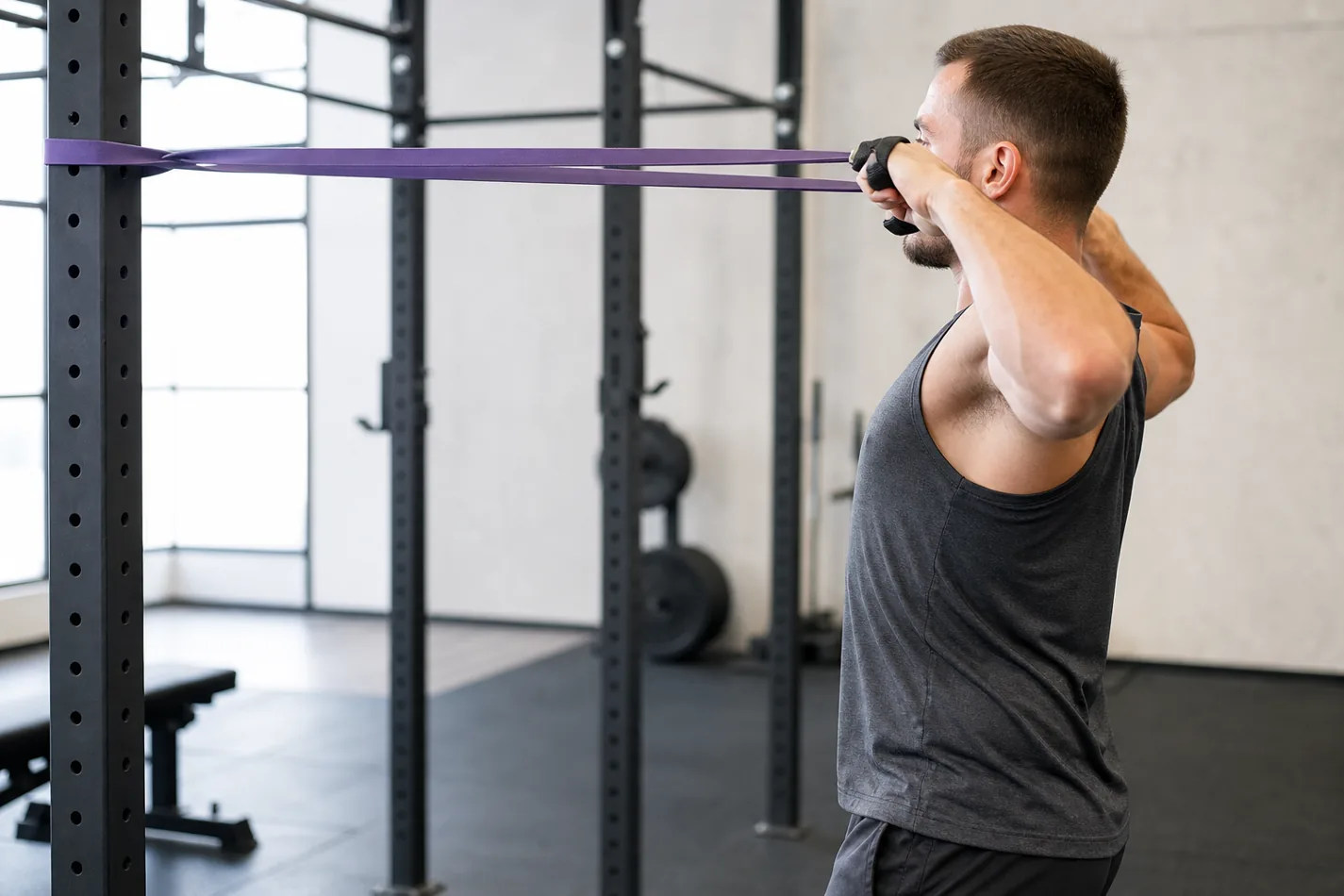
A good face pull starts with the band anchored around face height. Take a few steps back, keep the ribs down, and pull the hands toward the sides of the face. The elbows travel high and slightly out. The shoulder blades move, but the athlete does not need to jam them together like a max-effort row.
The finish should feel like the back of the shoulders and upper back are holding the rep. If the athlete feels only biceps, traps, or low back, the setup is probably too heavy or too far from the anchor. This is the same kind of shoulder awareness that helps in scap pull-ups and strict pulling work, just from a different angle.
Setup cues that keep it out of the neck
Start with a light band. More tension is not automatically better. If the band yanks the athlete forward or forces a big lean, the rep will turn into a fight. Stand tall, soften the knees, brace just enough to keep the ribs from flaring, then pull the band apart as the hands travel toward the face.
The easiest cue is "thumbs toward the temples." It keeps the rep away from a low row and encourages the hands to finish wide. Another useful cue is "show the chest, not the chin." Athletes often crane the neck forward to meet the band. The head should stay quiet while the shoulders do the work.
| Fault | What it usually means | Fix on the next set |
|---|---|---|
| Shoulders shrug every rep | The traps are taking over | Use a lighter band and finish with the neck long |
| Low back arches | The athlete is leaning back to create range | Step closer and keep the ribs down |
| Hands finish too low | The drill has become a row | Pull toward eye level or temple height |
| Reps bounce fast | The band is driving the movement | Pause briefly at the finish and control the return |
Where it fits in a CrossFit warm-up
Use banded face pulls before days with overhead pressing, pull-ups, ring work, snatches, benching, or long sets of burpees. They pair well with banded pull-aparts because one drill opens the upper back while the other gives the athlete a clearer finish position near the face.
For overhead sessions, put them near PVC pass-throughs and light pressing prep. For gymnastics days, place them before ring rows, strict pull-ups, or wall-facing work. Keep the dose modest: two sets of 10 to 15 controlled reps is usually enough for a warm-up. If the workout already has huge shoulder volume, do not turn the prep into another workout.
This demo is worth watching for the finish position. The hands come toward the face, but the shoulders should not climb into the ears. Pause there for a second and you can see whether the upper back is doing the work.
How to scale the drill without losing the point
The first scale is distance. Step closer to the anchor and the band gets easier. The second scale is tempo. A slow two-count pull and a controlled return make light tension useful. The third scale is range. If the athlete cannot finish near the face without pain or shrugging, use a smaller range for that day.
Rings can work as a related option, but they change the lesson. Ring face pulls load bodyweight and can get hard quickly. Use them when the athlete can already control the band version. If the goal is simple shoulder prep before wall walks or ring push-ups, the band is usually the cleaner choice.
Common programming mistakes
The biggest mistake is treating face pulls like filler. If athletes are chatting through them, the reps rarely transfer. Give one cue, watch two reps, and fix the obvious fault. That is enough.
The other mistake is using them as a cure-all for cranky shoulders. A banded face pull can help an athlete feel better prepared, but it cannot erase sharp pain, poor overhead range, or sloppy volume management. If a movement hurts, change the movement or load. Do not bury the signal under more warm-up reps.
What to test before heavier pulling
Before your next pulling or pressing session, try one slow set of banded face pulls and check three things. Can you keep the ribs down? Can you finish without shrugging? Can you control the band back to the start instead of letting it snap you forward?
If those answers are yes, the drill did its job. If not, make the band lighter and clean up the rep before the workout starts moving faster.