The plan
Ring rows look like the easy option until the workout gets fast. Then the hips sag, the elbows flare, the rings drift wide, and the rep stops training the pull it was supposed to build.
That is why the ring row matters in CrossFit. It is not a consolation prize for athletes who do not have pull-ups yet. Done well, it teaches body tension, scapular control, and a strong finish position without asking the shoulders to survive sloppy kipping volume.
- A good ring row keeps the body in one line from shoulder to ankle.
- The angle sets the difficulty. Small foot changes can make the rep much harder or easier.
- Ring rows work best when they support pulling strength, not when they turn into half-squats with straps.
What a clean ring row should look like
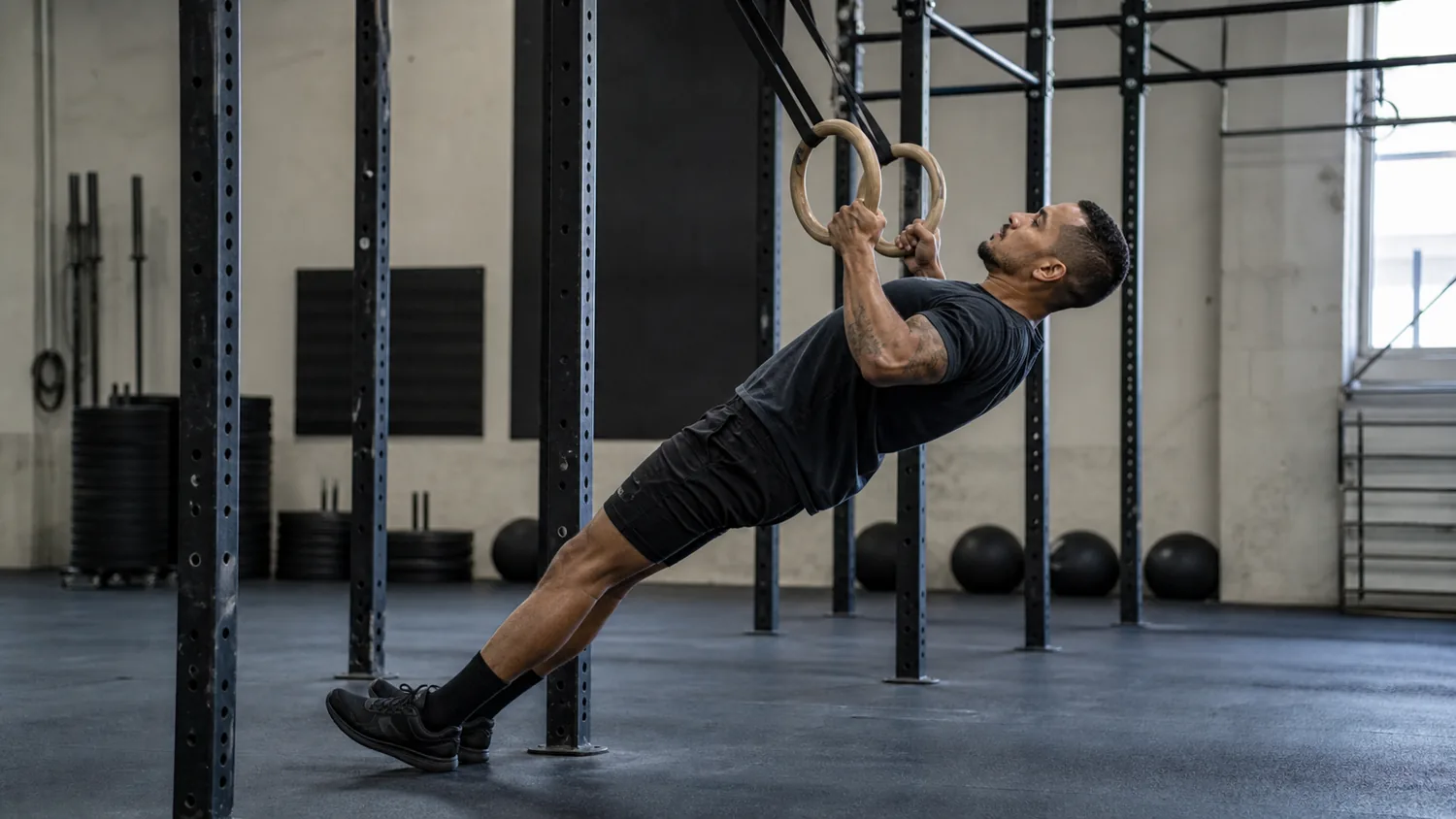
Set the rings around lower chest height, walk the feet forward, and lean back with straight arms. Before the first pull, squeeze the glutes lightly and keep the ribs down. The body should stay quiet while the elbows drive back and the rings finish near the lower ribs.
The common miss is subtle. An athlete starts with a decent plank, then bends the knees and pops the hips up to make the pull easier. That may keep the score moving, but it stops building the strength you wanted. If the goal is better strict pull-up strength, the row has to look like a pull, not a standing hip thrust.
How to adjust the difficulty without wrecking the rep
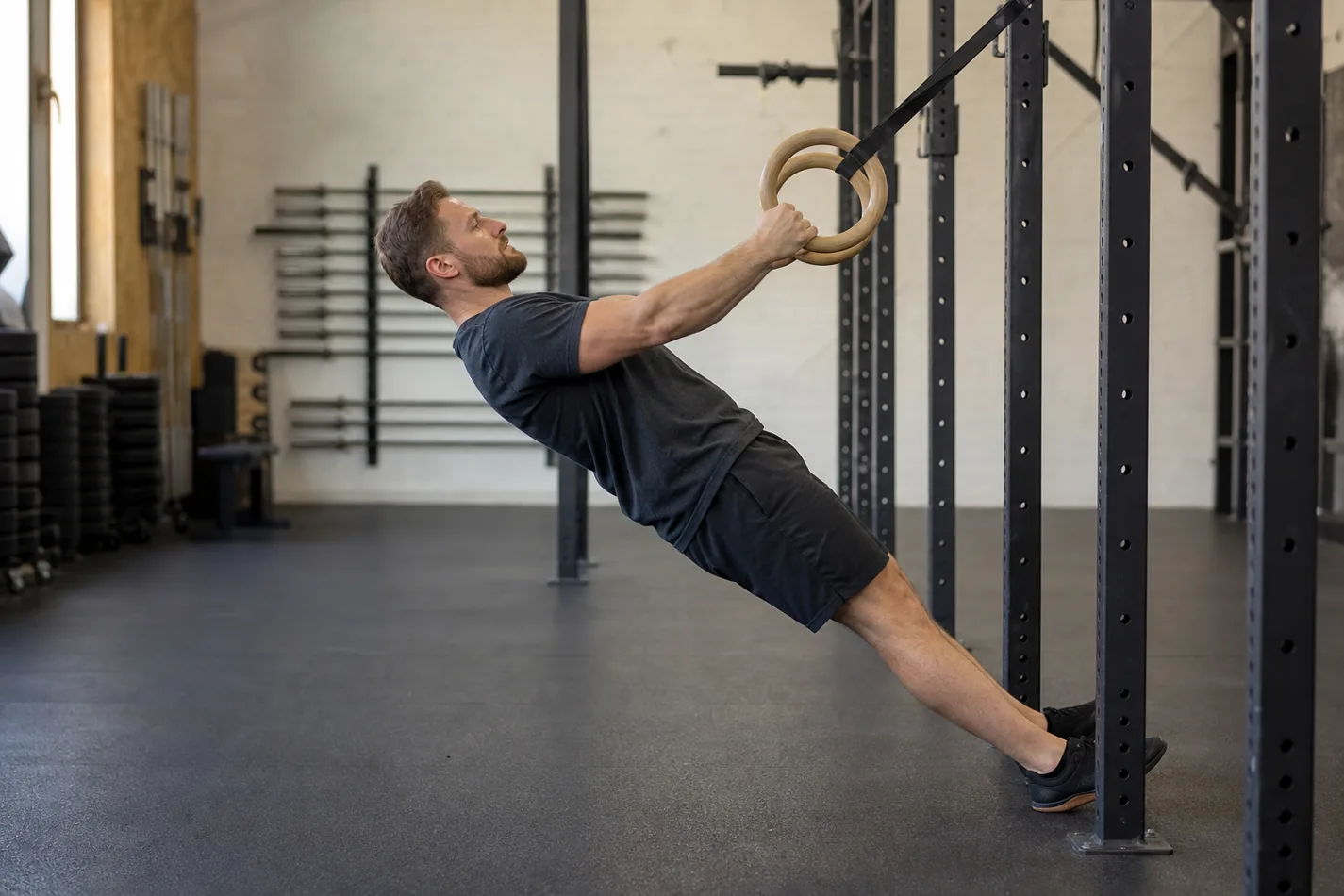
Ring rows are easy to scale because the feet control the load. Walk the feet back and the row gets lighter. Walk them forward and it gets heavier. Put the feet on a box only when the athlete can already keep a straight line and finish each rep without shrugging.
This is where ring rows beat many rushed pull-up scales. They let newer athletes train pulling volume while more experienced athletes can chase tempo, pauses, and harder body angles. The same idea applies when you scale the workout without missing the stimulus: change the load, keep the movement honest.
The CrossFit demo below is useful because it keeps the movement simple. Look at the straight body line, the ring height, and where the rings touch at the top. That is the rep standard most athletes lose when they rush.
Ring row variations and when to use them
Not every ring row should feel the same. A long conditioning piece needs a version that stays clean under fatigue. A strength session can use slower reps, pauses, or a steeper body angle. The table below gives coaches and athletes a quick way to choose.
| Variation | Best use | Watch for |
|---|---|---|
| Upright ring row | New athletes learning the pattern | Pulling with bent knees instead of the back |
| Standard ring row | Workout scaling and moderate volume | Hips dropping as fatigue builds |
| Tempo ring row | Strength control and position work | Losing range to make the tempo easier |
| Feet-elevated ring row | Advanced pulling strength | Shrugging or cutting the top short |
If your hands tear easily, CrossFit grips can help, but they do not fix weak tension. The better test is whether the rings touch the same spot on the body every rep. If they climb toward the neck or drift toward the armpits, reduce the angle and clean up the pull.
Technique mistakes that make ring rows too easy
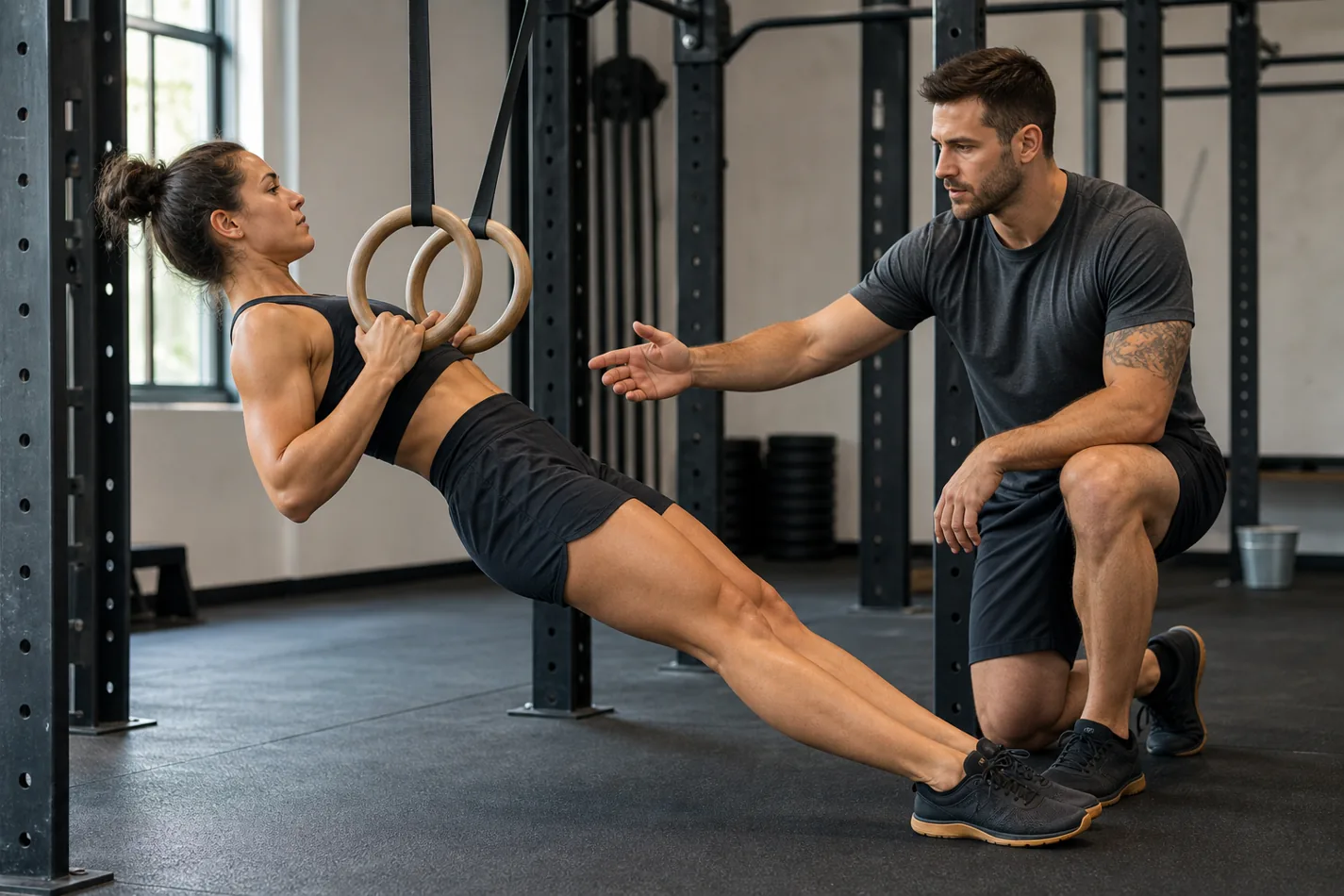
- Sagging hips: keep the glutes on so the row does not become a loose back bend.
- Soft shoulders: start with control instead of hanging passively from the straps.
- Flared elbows: pull the elbows back rather than letting the rings drift wide.
- Short reps: touch the rings to the body or get close enough that the finish is clear.
- Random foot position: mark the stance so every set uses the same difficulty.
Where ring rows fit in CrossFit training
Ring rows are useful in warm-ups, strength accessories, partner workouts, and WODs with high pulling volume. They also give the shoulders a lower-risk way to practice control before harder gymnastics. That carries over to kipping pull-up timing, muscle-up prep, and even the stability needed for a strong ring dip support position.
For conditioning, choose an angle that lets you break sets before the form falls apart. For strength work, make the angle harder and slow the rep down. Both approaches work, but mixing them without a plan usually gives you sloppy reps and tired forearms.
What to check before the clock starts
Do three test reps before the workout begins. If the rings hit the same spot, the body stays straight, and the last rep looks like the first, the angle is probably right. If the hips sag or the finish disappears, step back a few inches. Ring rows pay off when the standard stays boring and repeatable.


