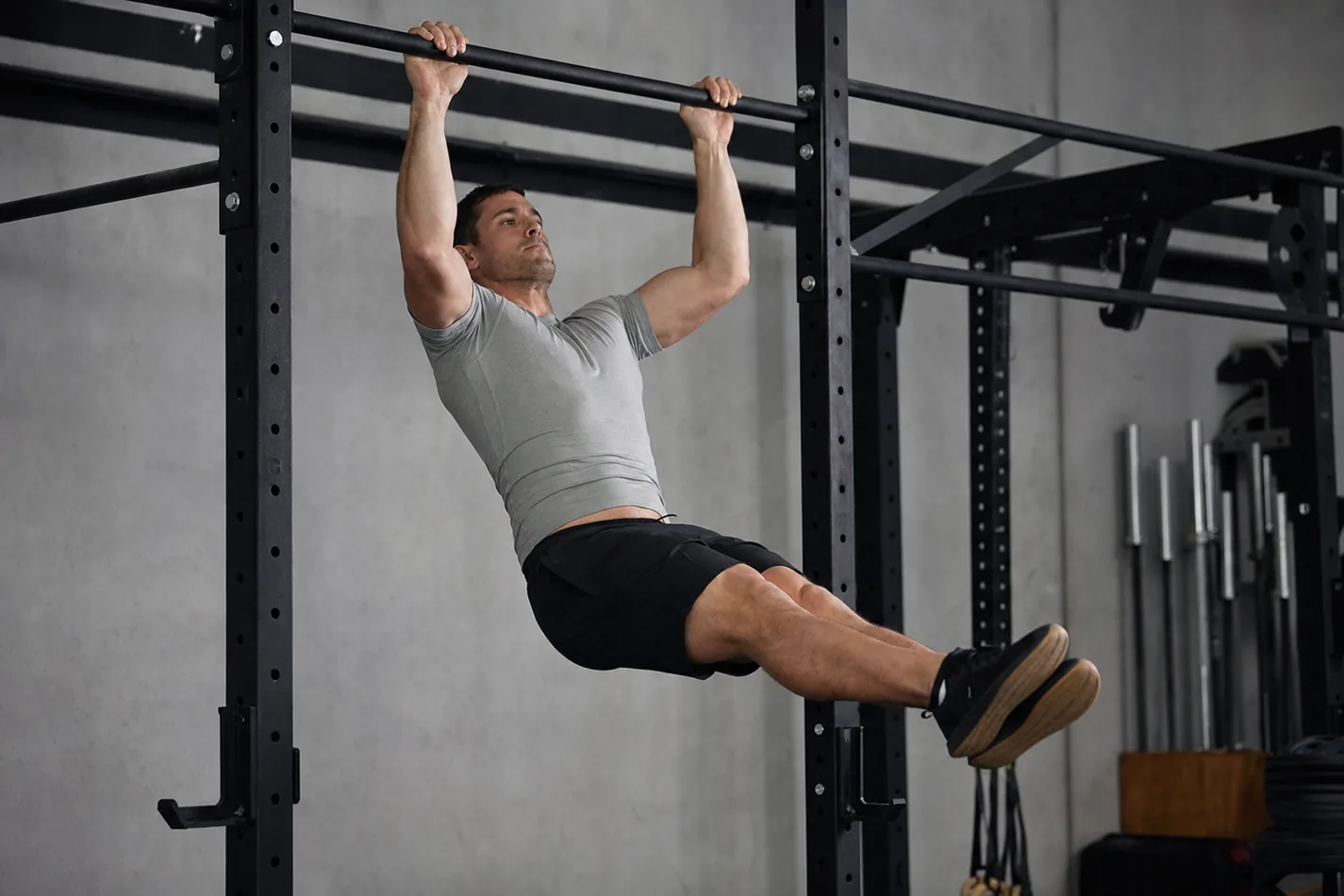
The plan
Strict pull-ups are easy to respect after they disappear in the middle of a workout. The first few reps feel clean, then the neck reaches, the knees bend, and the bar suddenly looks higher than it did in warm-up.
In CrossFit, the strict pull-up is more than a strength test. It tells you whether your lats, grip, midline, and shoulder position can hold together before speed enters the picture. Kipping has its place, but it works best when the strict base is honest.
- A strict pull-up should start from active shoulders, not from a loose dead hang.
- Better strict strength makes kipping reps safer, cleaner, and easier to control.
- Scaling should train the same vertical pull instead of turning every rep into a jump.
What a good strict pull-up actually tests
A clean strict pull-up starts before the elbows bend. Set the shoulders down and back, squeeze the legs lightly, and keep the ribs from flaring. From there, pull the elbows toward the floor and finish with the chin clearly over the bar without kicking or reaching the neck forward.
The movement exposes weak links fast. If the shoulders start loose, the first inch of the rep is wasted. If the midline breaks, the athlete starts fishing for momentum. If the grip is cooked, every rep becomes slower than it needs to be. This is why strict work pairs so well with choose CrossFit grips that do not fight your hands before workouts that also include toes-to-bar, bar muscle-ups, or long hanging sets.

Strict strength before kipping speed
Kipping pull-ups are not the enemy. The problem is using the kip to hide a pull that is not there yet. When athletes skip strict work, they often turn the swing into a rescue mission. The arch gets huge, the hollow disappears, and the shoulders take more stress than they need.
Think of strict pull-ups as the brakes and steering for faster gymnastic reps. If you can pull with control, the kipping pull-up swing becomes easier to time. If you cannot control the top half of the rep, chasing speed usually makes the miss bigger. The same base also helps when learning the bar muscle-up transition, where a weak pull leaves the athlete low and late to transition.
The CrossFit demo below is short, but it shows the part most athletes rush past: the body stays organized before the chin clears the bar. Watch the shoulders and rib cage, not just the finish.
Best scales when strict reps are not there yet
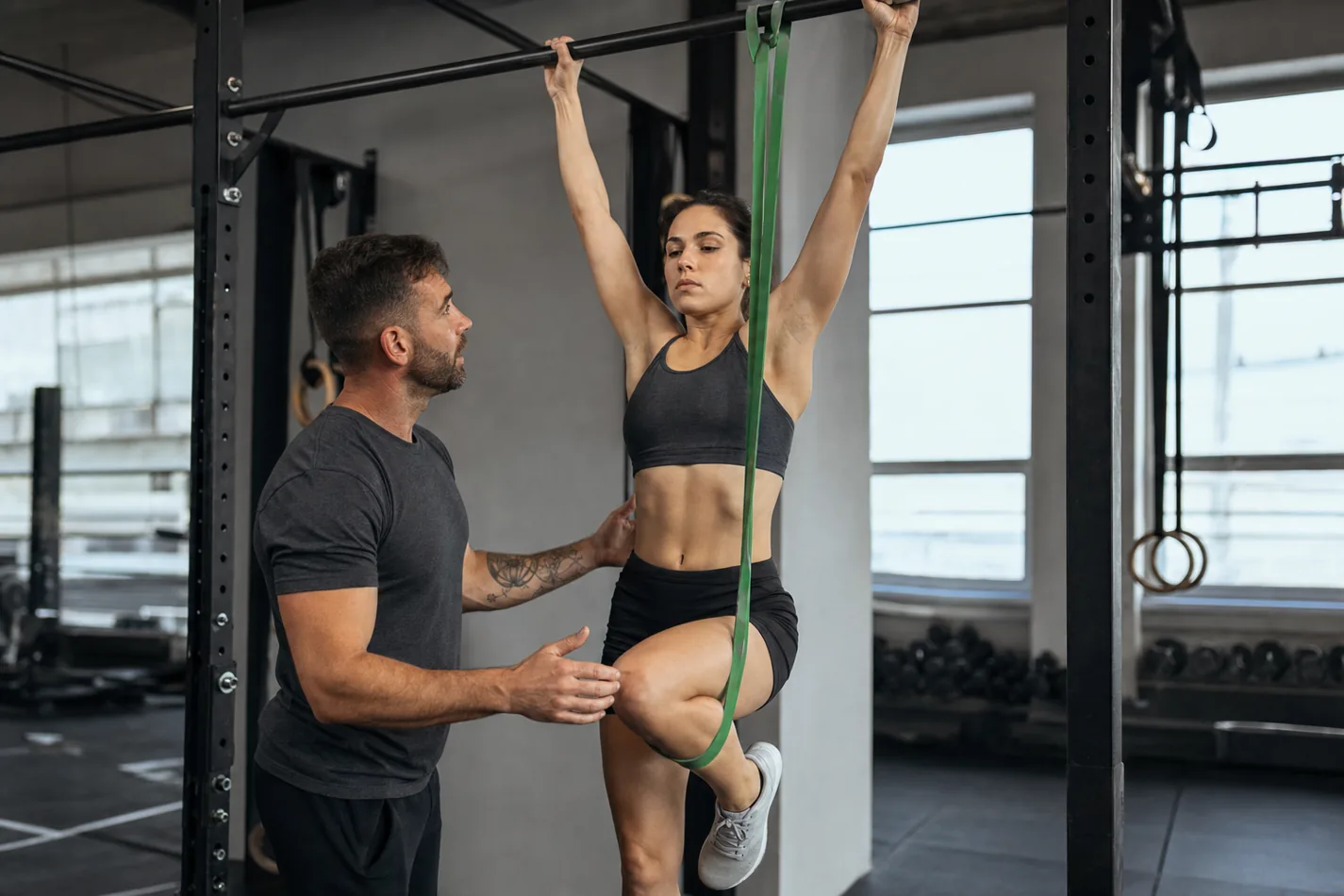
The right scale should keep the athlete pulling vertically. Ring rows can be useful, but they are not a perfect match. For many athletes, band-assisted strict pull-ups, foot-assisted pull-ups, slow negatives, and top holds do a better job of building the exact pattern.
| Scale | Best use | Watch for |
|---|---|---|
| Band-assisted strict pull-up | Learning full range with less body weight | Bouncing out of the bottom |
| Foot-assisted pull-up | Controlling how much help you use | Pushing too hard with the legs |
| Slow negative | Building strength through the descent | Dropping the last half of the rep |
| Top hold | Improving finish position and confidence | Reaching the chin instead of pulling high |
If the workout is meant to be fast, pick a version that lets you keep moving with clean reps. If the day is strength focused, reduce reps and make each pull honest. That is the same logic you would use to scale the workout without missing the point: keep the intended stimulus, then choose the version that lets you train it.
Small technique fixes that change the rep
- Start active: pull the shoulders away from the ears before the elbows bend.
- Keep the body quiet: a small hollow position beats bent knees and random kicking.
- Drive elbows down: thinking about the elbows often works better than thinking about the chin.
- Finish tall: clear the bar without craning the neck forward.
- Break sets early: strict reps fade quickly once the first ugly rep appears.
How strict pull-ups fit into CrossFit training
Strict pull-ups show up in strength pieces, skill work, and benchmark prep. They also support other upper body movements. A stronger pull makes hanging gymnastics less chaotic, and better shoulder control helps when pressing volume piles up alongside ring dip support strength or handstand push-ups.
For workouts with strict pull-ups, do not wait until failure to scale. A good rule is simple: if your warm-up set already needs a kick or a neck reach, choose a scale before the clock starts. You will get more useful training from clean sets than from ten minutes of almost-reps.
What to test in warm-up
Before the WOD, try one active hang, one slow negative, and one small set at the version you plan to use. If your shoulders stay packed and the body stays quiet, the scale is probably right. If every rep turns into a fight for height, make the movement easier and keep the pull honest. Strict pull-ups reward patience, and they expose shortcuts fast.


