
The plan
- What the bar muscle-up is really testing
- Build the swing before chasing height
- Pull high, then turn over before you stall
- A useful video for seeing the timing
- How bar muscle-ups differ from ring muscle-ups
- Scaling options that keep the stimulus
- How to pace them in a WOD
- What to check before your next rig session
A bar muscle-up is where a good kip gets exposed. If the swing is loose, the pull gets late. If the pull is low, the turnover turns into a fight. And once fatigue shows up, small mistakes become no-reps fast.
Most CrossFit athletes do not need a wilder jump at the bar. They need a tighter hollow, a cleaner arch, and a pull that brings the hips and chest toward the rig before the hands try to roll over. Strength helps, but timing decides whether the rep feels sharp or desperate.
- A solid CrossFit bar muscle-up starts with a repeatable hollow-to-arch swing, not a random kick.
- The pull should rise toward the lower chest with the bar close, then the elbows turn over fast.
- In workouts, scale before missed reps wreck your grip, rhythm, and shoulders.
What the bar muscle-up is really testing
The bar muscle-up combines a gymnastics swing, an aggressive pull, and a quick turnover above the bar. It is less forgiving than a pull-up because the rep has to keep traveling. If you stall under the bar, there is not much time to rescue it.
The swing comes first. Athletes who are still guessing their rhythm on a CrossFit kipping pull-up usually feel the same leak here, only louder. The ribs flare, the feet separate, the shoulders lose tension, and the pull starts from a bad shape.
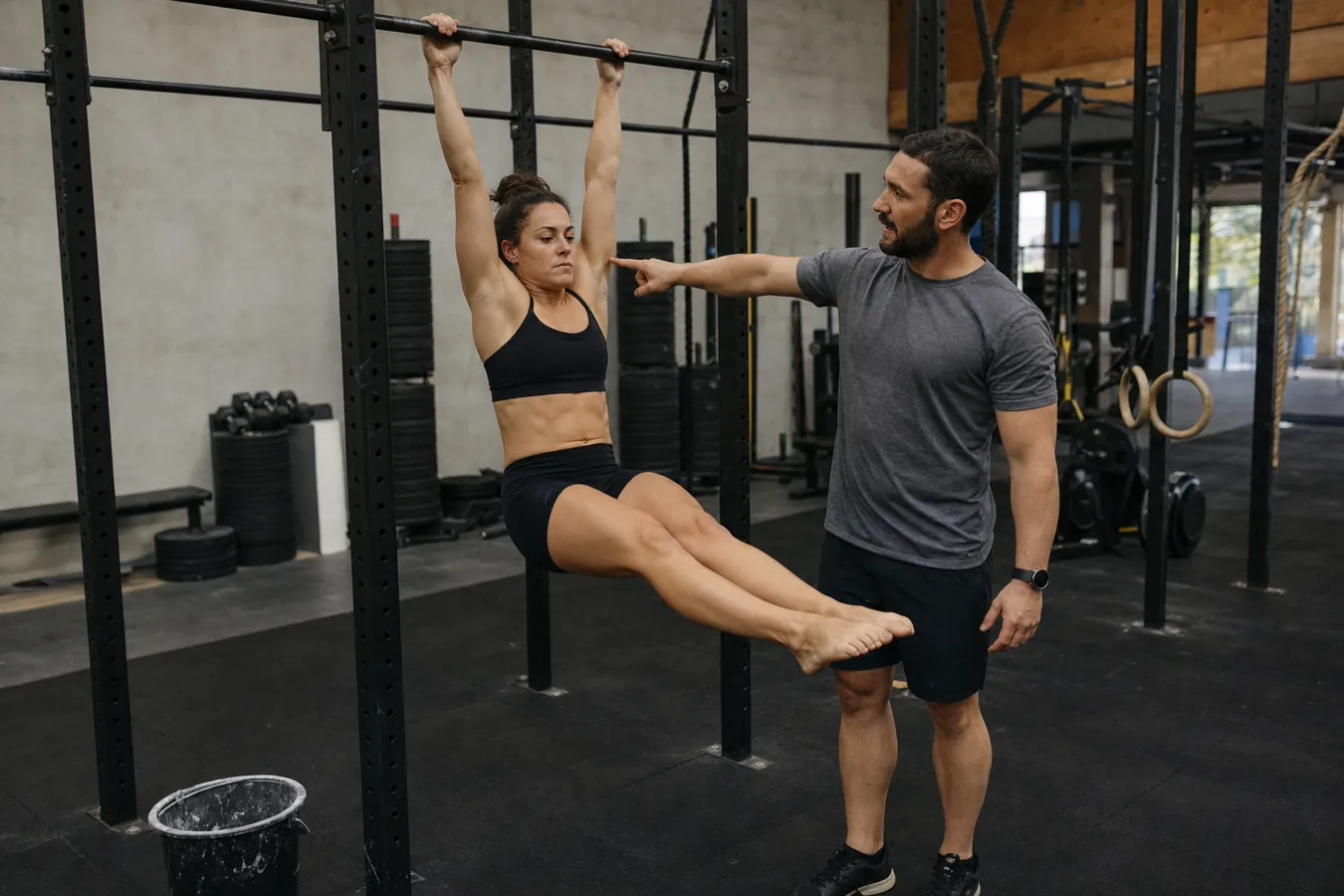
Build the swing before chasing height
Start with an active hang. The shoulders stay engaged, the body moves from hollow to arch, and the feet remain together. Think about pushing down on the bar as the body travels, not just hanging and waiting for momentum to appear.
The arch should not be a backbend. It is a loaded position that lets the athlete snap back into hollow and direct force toward the bar. If the legs kick behind the body and the chest opens too much, the swing gets big but not useful. Big is not the same as powerful.
Grip also matters. If your hands are already sliding during toes-to-bar in CrossFit, bar muscle-ups will punish that quickly. Chalk helps, but timing and shoulder tension save more grip than chalk ever will.
Pull high, then turn over before you stall
The pull is not straight up like a strict pull-up. As the body returns from arch to hollow, the hips rise and the athlete pulls the bar toward the lower chest. The bar should feel close. If it drifts away, the turnover gets late and the elbows have nowhere to go.
Once the chest reaches the bar, the job changes. The elbows come around, the shoulders move over the bar, and the athlete presses to support. Waiting too long is the classic mistake. You pull hard, get high enough, then freeze while the swing disappears.
| Fault | What it looks like | Fix to try |
|---|---|---|
| Loose arch | The feet kick back and the body loses tension | Practice smaller hollow-to-arch swings with active shoulders |
| Pulling too low | The chest never gets close enough to the bar | Use chest-to-bar pulls and focus on bringing the bar toward the lower chest |
| Late turnover | The athlete hangs at the top of the pull and then peels away | Drill jumping bar muscle-ups and fast elbows over the bar |
| Chicken wing rep | One elbow turns over first and the shoulder twists under load | Scale the movement and rebuild a symmetrical pull before adding fatigue |
A useful video for seeing the timing
This video is helpful because it shows the bar muscle-up as a sequence, not a single heave. Watch how the athlete keeps tension through the swing, pulls close, then turns over before the momentum dies.
How bar muscle-ups differ from ring muscle-ups
A bar gives you a fixed target. That makes the swing more predictable, but it also means the body must move around the bar. Rings move with you. The turnover on a CrossFit ring muscle-up feels different because the hands can travel and the dip starts on an unstable surface.
Neither version is automatically easier. Strong athletes sometimes prefer rings because they can keep the hands close. Others prefer the bar because the target does not move. The deciding factor is usually control: can you repeat the swing, pull, and turnover when the workout gets loud?

Scaling options that keep the stimulus
Good scaling keeps the pull, turnover, and pressing pattern alive without turning the workout into repeated failed attempts. Jumping bar muscle-ups, banded transitions, chest-to-bar pull-ups, box-assisted turnovers, and strict pull-ups plus dips can all work if they match the goal of the day.
If the workout calls for high skill under fatigue, do not wait for five ugly misses before changing the plan. A smart CrossFit scaling choice lets the athlete keep moving and train the intended stimulus instead of practicing panic reps.
How to pace them in a WOD
Small sets usually beat heroic sets. If you have six bar muscle-ups in a workout, 2-2-2 may keep the swing sharper than opening with four and fighting through the rest. The first missed rep is expensive because it costs grip, breathing, and confidence at the same time.
Break before your swing gets noisy. Signs are easy to spot: feet separating, knees bending early, hands sliding, one elbow turning over ahead of the other, or a support position that lands soft. Once those show up, the movement stops being a skill and becomes a coin toss.
What to check before your next rig session
- Can you keep a tight hollow and arch without kicking loose?
- Can you pull the bar toward the lower chest instead of chasing it with your chin?
- Can both elbows turn over together without a chicken wing?
- Can you finish in a stable support position above the bar?
- Can you choose a scale before fatigue turns clean reps into misses?
If those answers are not there yet, keep the drills boring for a while. Clean swings, chest-to-bar pulls, jumping transitions, and controlled supports do not look flashy, but they are the pieces that make a bar muscle-up hold up when the clock is running.


