
The plan
Toes-to-bar looks simple until the clock starts. Then the rep turns into a fight with your grip, your breathing, and the swing you thought you controlled.
The fix is usually not more effort. It is better timing. Most athletes lose the movement because they kick too early, pull with bent arms, or let the rib cage open before the kip has done its job.
- Good toes-to-bar reps start with a tight hollow and arch, not a bigger kick.
- If your grip fails before your abs do, your rhythm is probably leaking power.
- Scale the movement before your swing gets wild. Bad reps teach bad timing fast.
Why toes-to-bar fall apart in CrossFit workouts
In a fresh warm-up, one or two reps can feel fine. The problem shows up in sets of 10, 15, or 20, especially when the workout also has cleans, snatches, pull-ups, or jump rope. Your hands are already working. Your shoulders are tired. Your midline has to stay organized while your heart rate climbs.
That is why toes-to-bar are less about touching the bar at any cost and more about repeating the same shape. A strong rep has a clear arch, a tight hollow, straight arms for as long as possible, and a fast closing of the hips at the right moment.
If you are still learning when to scale high-skill gymnastics in a WOD, this CrossFit scaling guide is a useful companion. The goal is not to make the workout easy. The goal is to keep the intended stimulus without turning every rep into a survival project.
The timing cue that helps most athletes
Think "push down, then snap." Push down on the bar as your body moves from arch into hollow. Do not start by yanking your knees up. Let the shoulder angle and the swing load the movement first, then snap the hips closed and bring your toes toward the bar.
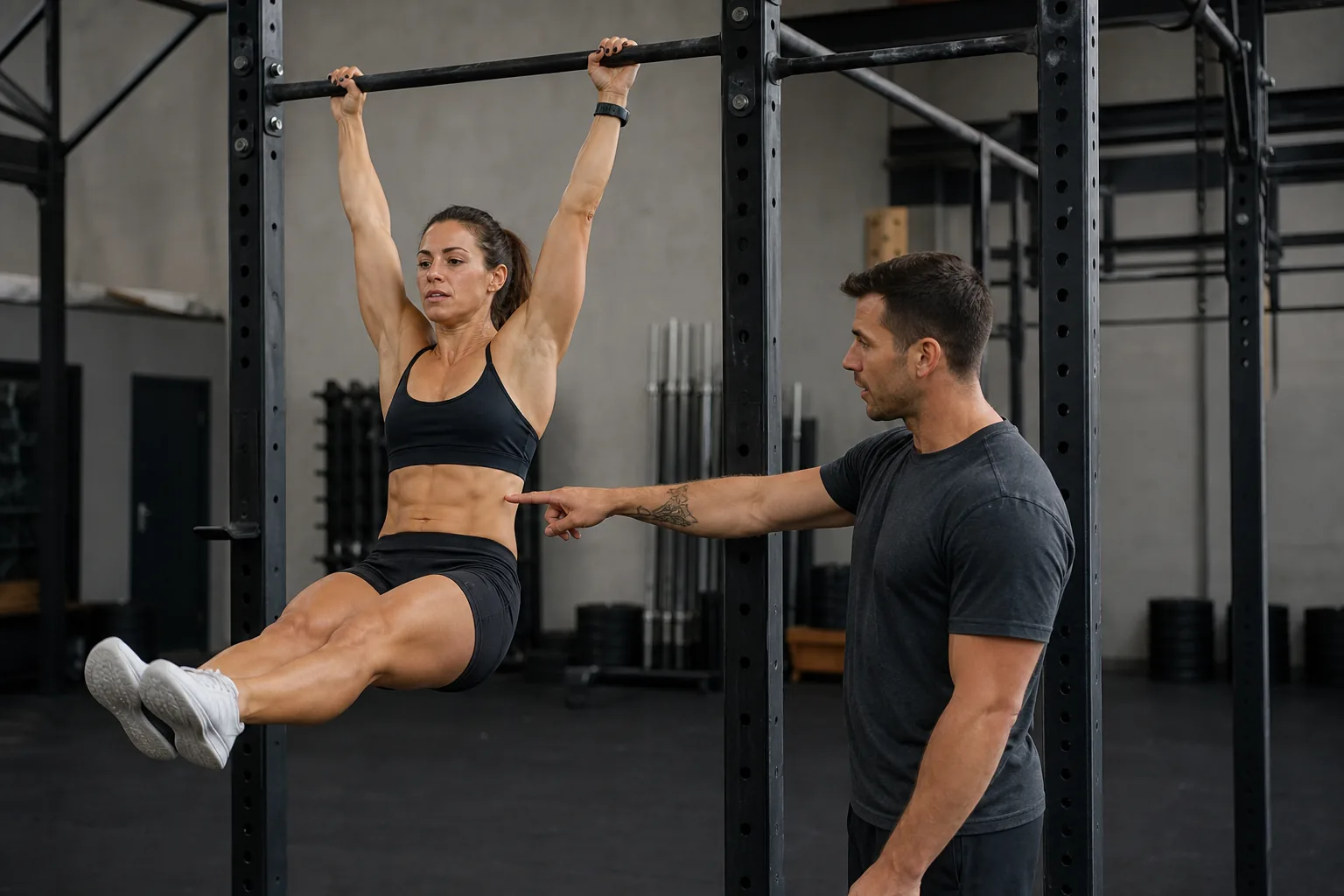
A simple test: film three reps from the side. If your knees rise before your shoulders move behind the bar, you are probably muscling the rep. If your legs swing forward while your ribs flare open, you are losing the hollow and asking your grip to save the movement.
| Problem | What it usually means | Fix to try next set |
|---|---|---|
| Grip blows up early | You are pulling too much with the arms | Keep arms long and push down on the bar |
| Feet miss the bar by a few inches | The hip snap is late or soft | Close the hips faster after the hollow |
| Swing gets bigger every rep | You are not returning to the same shape | Break the set before the rhythm turns messy |
| Low back feels loaded | You may be over-arching or losing rib control | Practice hollow holds and smaller kips first |
A smarter progression than chasing ugly reps
Strict toes-to-bar are not required before you learn the kipping version, but you need enough trunk strength to own the shapes. If hanging knee raises make you swing all over the rig, full reps will not get cleaner under fatigue.
- Start with active hangs. Learn to pull the shoulders down without bending the elbows.
- Add hollow and arch swings. Keep the swing small enough that you can repeat it.
- Use hanging knee raises. Bring the knees up without throwing the head back.
- Move to knees-to-elbows or high knee raises. Close the hip faster, but stay organized.
- Try small sets of toes-to-bar. Stop before the rep turns into a giant pendulum.
Hand protection can help, but it does not fix poor timing. If torn hands or slipping are the main limiter, review how your CrossFit grips fit on the bar before blaming your capacity.
Video cue worth watching before practice
This short video is useful because it focuses on the shape and timing of the rep, not just the finish position. Watch the shoulder action first, then the moment the hips close.
How to use toes-to-bar in a workout without wrecking the stimulus
The best version for the day depends on the workout. In a short sprint, singles may be too slow. In a longer chipper, small sets can keep you moving. If the workout has heavy pulling or a lot of barbell cycling, save some grip before it is gone.
A useful rule: choose a version that lets you finish the first round with clean mechanics and still believe you can repeat it. If you are already doing no-reps or jumping down after two reps, scale sooner. CrossFit rewards intensity, but only when the movement still looks like the movement.
The same timing idea shows up in other skills. Athletes who rush toes-to-bar often rush double unders too. The common thread is patience: let the rhythm set up the rep before you try to force the finish.
What to test in your next WOD
Do not overhaul everything at once. Pick one cue for the next session: long arms, ribs down, or push down before the hip snap. Keep the sets small enough that you can feel the difference. If the cue works, build volume slowly. If it falls apart after fatigue hits, your scale is giving you honest feedback.
Clean toes-to-bar are not magic. They are repeatable shapes, good timing, and the discipline to break before the swing gets sloppy.


