The plan
- What scaling actually means in CrossFit
- Start with the stimulus, not your ego
- The four easiest ways to scale a WOD
- Skill scaling: keep the pattern, remove the bottleneck
- Load scaling: choose the weight that lets you train, not pose
- A useful video on why scaling is not quitting
- How to scale common CrossFit movements
- How to know you scaled correctly
- Progression beats random scaling
- What to check before your next WOD
Scaling is not the backup plan in CrossFit. It is how good coaching keeps the workout honest.
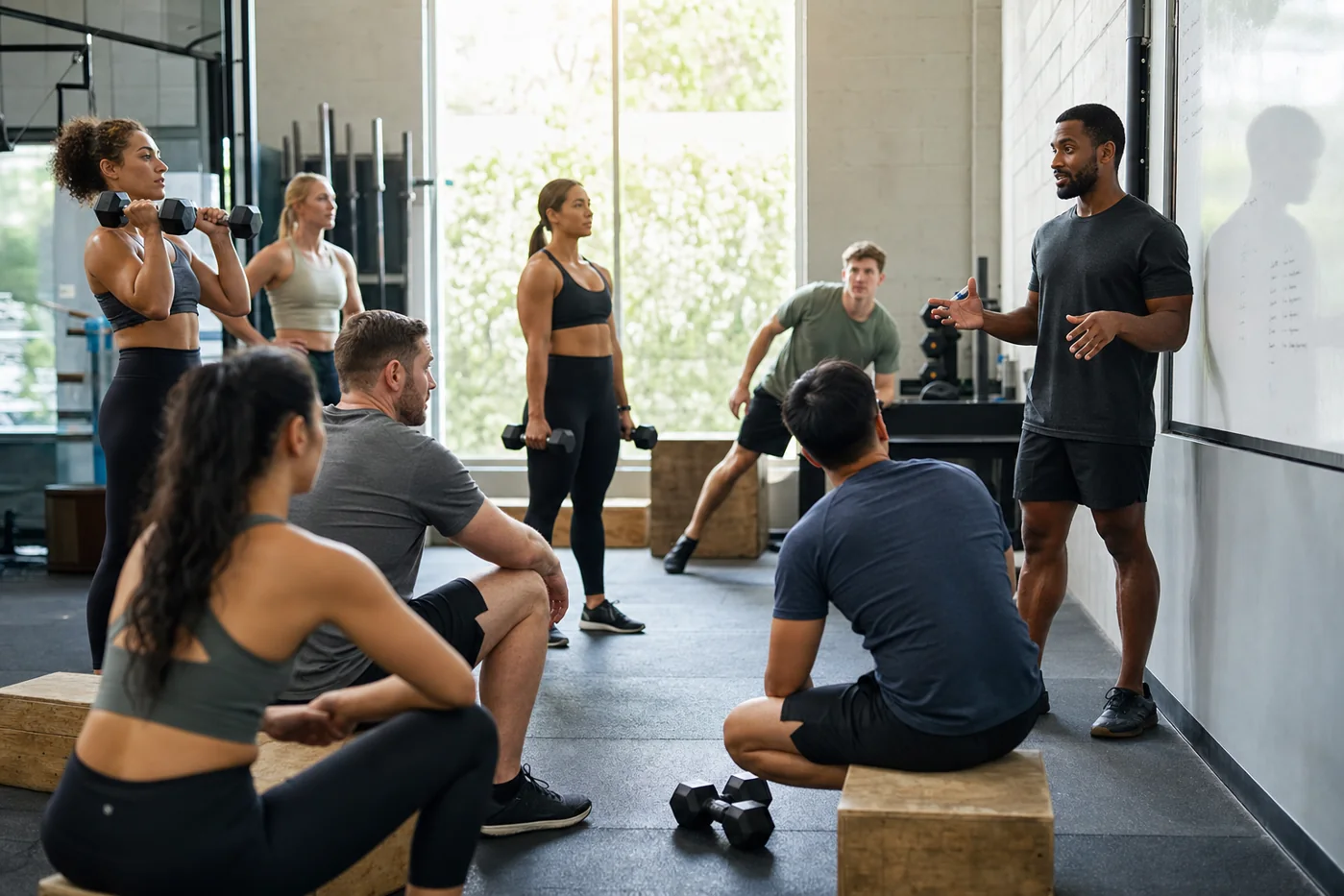
The problem is that many athletes hear "scale" and think "make it easier." That misses the point. A smart scale preserves the training goal of the WOD, whether that goal is intensity, skill practice, strength under fatigue, or simply moving well for the full time cap.
This CrossFit scaling guide gives you a practical way to modify workouts without turning them into random exercise. Use it before class, during open gym, or anytime the whiteboard looks like it was written for someone with a bigger engine, cleaner skills, or a shoulder that never gets cranky.
- Scale the movement, load, reps, or range of motion to keep the intended stimulus.
- A good scale should let you move with control, not survive one ugly rep at a time.
- Write down what you changed so you can progress instead of guessing every week.
What scaling actually means in CrossFit
Scaling means changing a workout so the athlete can hit the same basic training target as the prescribed version. That target might be five hard minutes of cycling, a steady 20 minute effort, heavy but clean barbell work, or skill exposure under mild fatigue.
That is why the best scale is not always the lightest option. Sometimes you should reduce the load. Sometimes you should keep the load and cut the reps. Sometimes the right answer is a different movement entirely.
If a workout is meant to feel like sprint intervals, turning it into a 25 minute grind changes the workout. If it is meant to build strict strength, bouncing through fast half reps also changes the workout. The scale has to respect the assignment.
Start with the stimulus, not your ego
Before you touch the dumbbells or start stripping plates, ask one question: what should this workout feel like?
Coaches usually know. The whiteboard brief might mention "fast rounds," "unbroken sets," "heavy singles," or "steady pacing." Those words matter. They tell you whether to protect speed, load, skill quality, or volume.
For example, if a workout calls for repeated sets of wall balls with controlled breathing, using a ball that forces you to stop every three reps is probably too heavy for that day. If the goal is coordination under fatigue, a lighter ball that lets you keep rhythm may be the better training choice.
The four easiest ways to scale a WOD
Most workouts can be adjusted with one of four levers. You do not need to rewrite the whole thing. Change the smallest piece that keeps you moving well.
| Scaling lever | Best when | Example |
|---|---|---|
| Load | The movement is safe, but the weight breaks your positions or pacing. | Use 75 lb instead of 95 lb on thrusters. |
| Reps | You can do the skill, but the volume would bury the workout. | Do 30 double unders instead of 50. |
| Movement | The prescribed skill is not reliable yet. | Use ring rows instead of pull-ups. |
| Range of motion | You need a safe temporary option for mobility, pain, or control. | Box squat to a target while rebuilding depth. |
Load is the obvious lever, but it is not always the best one. If you can lift the weight safely but the total volume is too much, reducing reps may preserve the strength stimulus better than making the bar too light.
Skill scaling: keep the pattern, remove the bottleneck
Skills expose timing fast. Double unders, toes-to-bar, handstand push-ups, rope climbs, and muscle-ups can turn a clean conditioning piece into ten minutes of frustration if they are not there yet.
The goal is to keep the pattern close enough that you build the right capacity. If the workout includes double unders and your timing falls apart after ten seconds, use single unders, line hops, or a smaller double under target. Then practice the real skill separately when you are fresh.
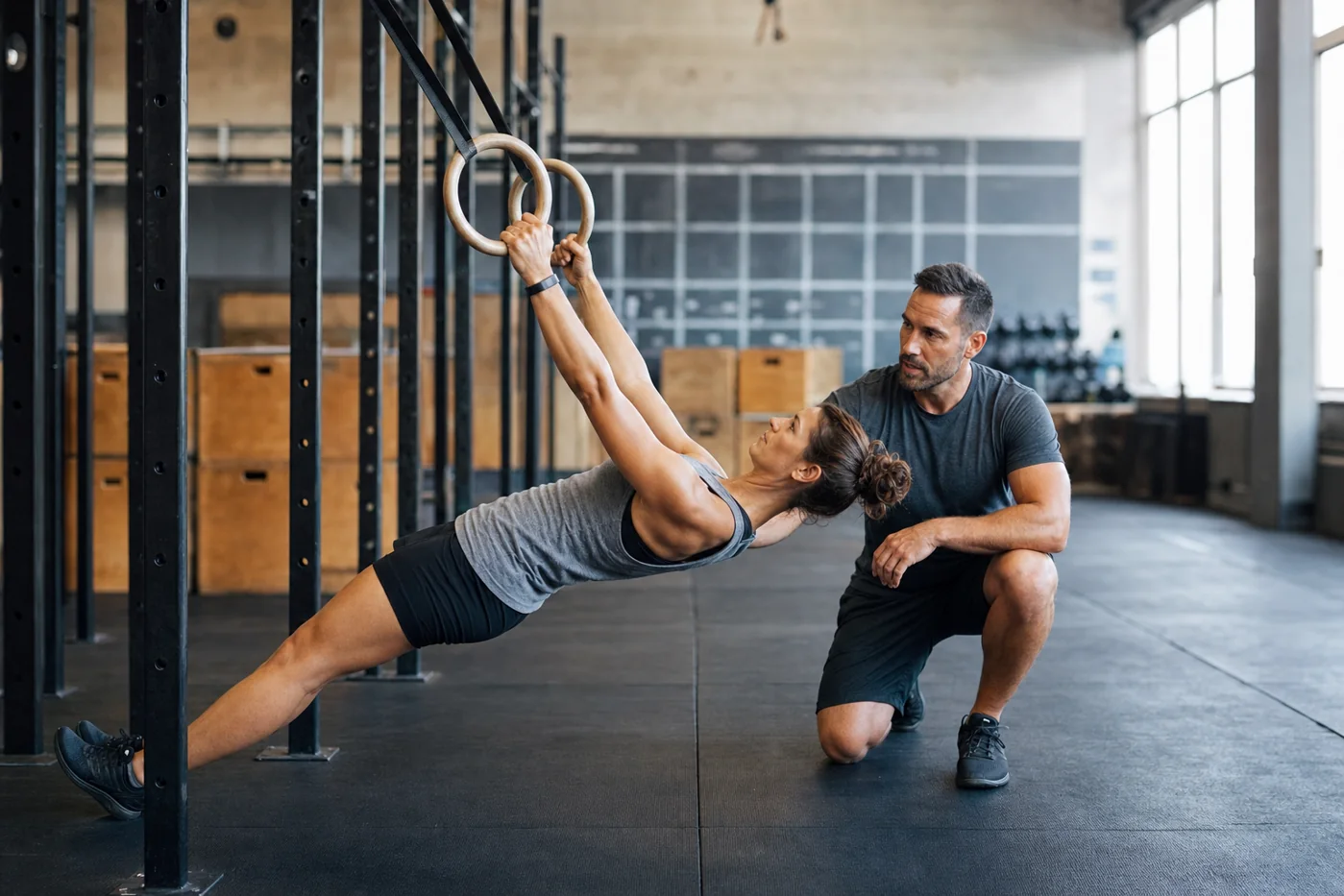
For pulling work, ring rows are often better than banded pull-ups for beginners because they are easier to adjust rep by rep. Step forward to make them easier. Step back to make them harder. You also get more control over shoulder position.
Load scaling: choose the weight that lets you train, not pose
A good working weight lets you keep the intended sets. If the coach says the barbell should be unbroken for most rounds, pick a weight you can actually cycle. If the day is meant to be heavy and slow, do not make it so light that it becomes cardio with a barbell.
Here is a simple test: warm up to the weight you want to use, then do five clean reps while breathing. If rep four already looks like a negotiation, scale down. The workout has not even started yet.
This matters even more with grip-heavy workouts. If your hands fail before your engine does, a small equipment choice can change the session. The same logic applies when you choose CrossFit grips that protect your hands without killing feel on the bar.
A useful video on why scaling is not quitting
The video below from Best Hour of Their Day explains the coaching mindset behind scaling. It is useful because it frames scaling as a way to keep the workout productive, not as a sign that someone failed the RX version.
How to scale common CrossFit movements
These swaps are not rules forever. They are starting points. The right version depends on the workout, your current ability, and what the coach wants you to practice that day.
| Prescribed movement | Practical scale | Use it when |
|---|---|---|
| Pull-ups | Ring rows or jumping pull-ups | You cannot keep sets clean under fatigue. |
| Handstand push-ups | Pike push-ups or dumbbell strict press | You need shoulder strength without crashing into the wall. |
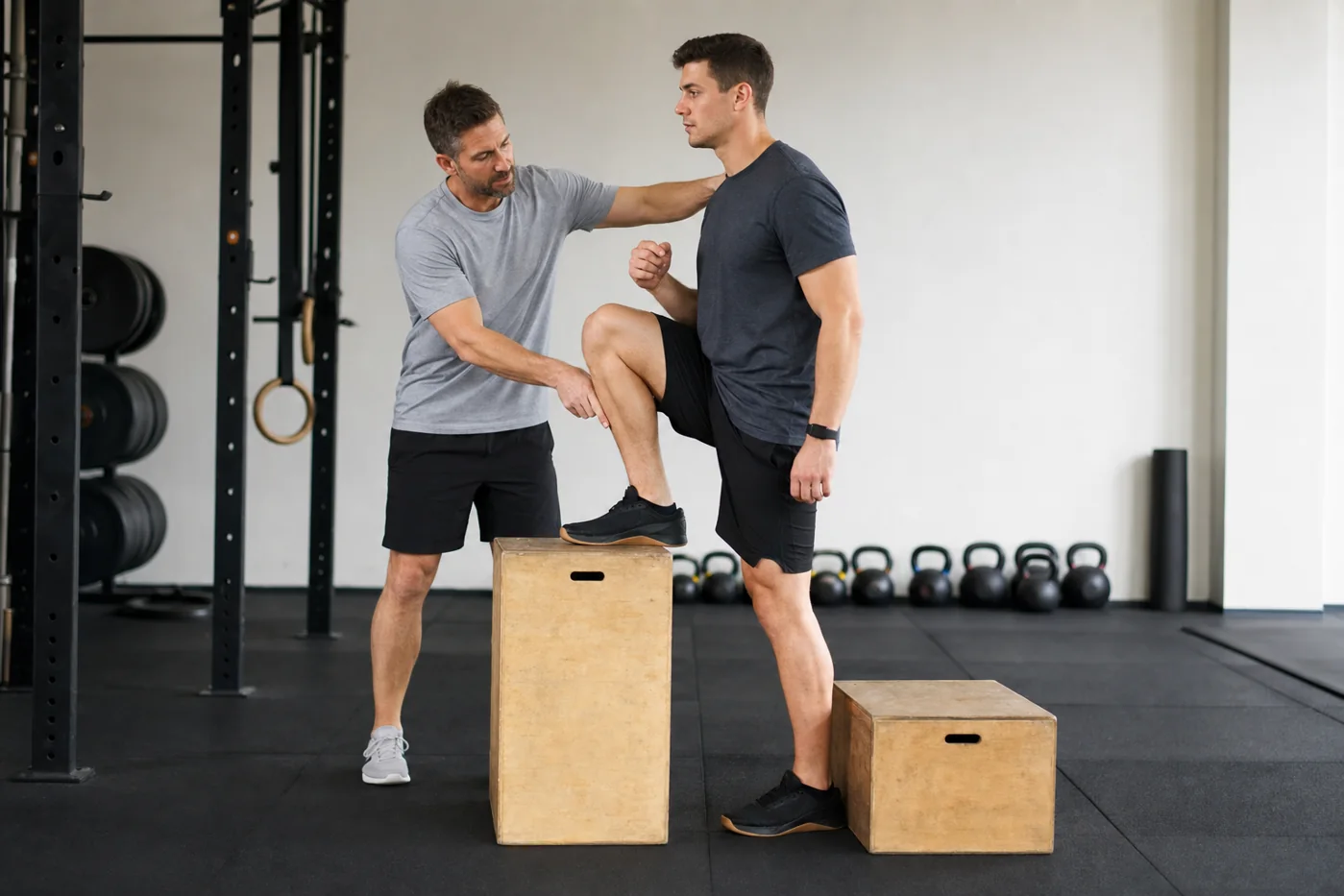
| Box jumps | Step-ups or a lower box | You need the leg work without risky landings. |
| Double unders | Reduced reps, single unders, or line hops | The rope stops the conditioning effect. |
| Toes-to-bar | Hanging knee raises or V-ups | You need trunk work without losing grip and rhythm. |
How to know you scaled correctly
You picked the right option if you can explain why you chose it. "Because it was easier" is not enough. "Because the workout was supposed to be fast and my pull-ups would have turned it into singles" is a real reason.
- You finished close to the intended time range.
- Your technique held up when you got tired.
- You felt the target muscle groups and energy system.
- You avoided long dead zones where you just stared at the equipment.
- You know what to try next time.
If you are always first by a mile, you may be under-scaling. If you are always time-capped and frustrated, you may be overreaching. The sweet spot is uncomfortable, controlled, and repeatable enough to measure.
Progression beats random scaling
Scaling works best when you track it. Write down the load, band, box height, target reps, or movement swap. Next time, change one thing. A little more weight. A lower ring angle. Five more double under attempts. One fewer break.
This is why timed formats can help. In an EMOM CrossFit workout, the clock gives you a clean way to test whether your scale is sustainable. If you finish each minute with 10 to 20 seconds to breathe, you probably found a workable version. If every minute turns into panic, adjust before the workout falls apart.
What to check before your next WOD
Read the workout, listen to the coach, and decide what you are protecting: speed, load, range, skill quality, or volume. Then scale that one thing on purpose.
The best scaled workout does not feel watered down. It feels like the workout was finally written for the athlete standing in front of it today.


