The plan
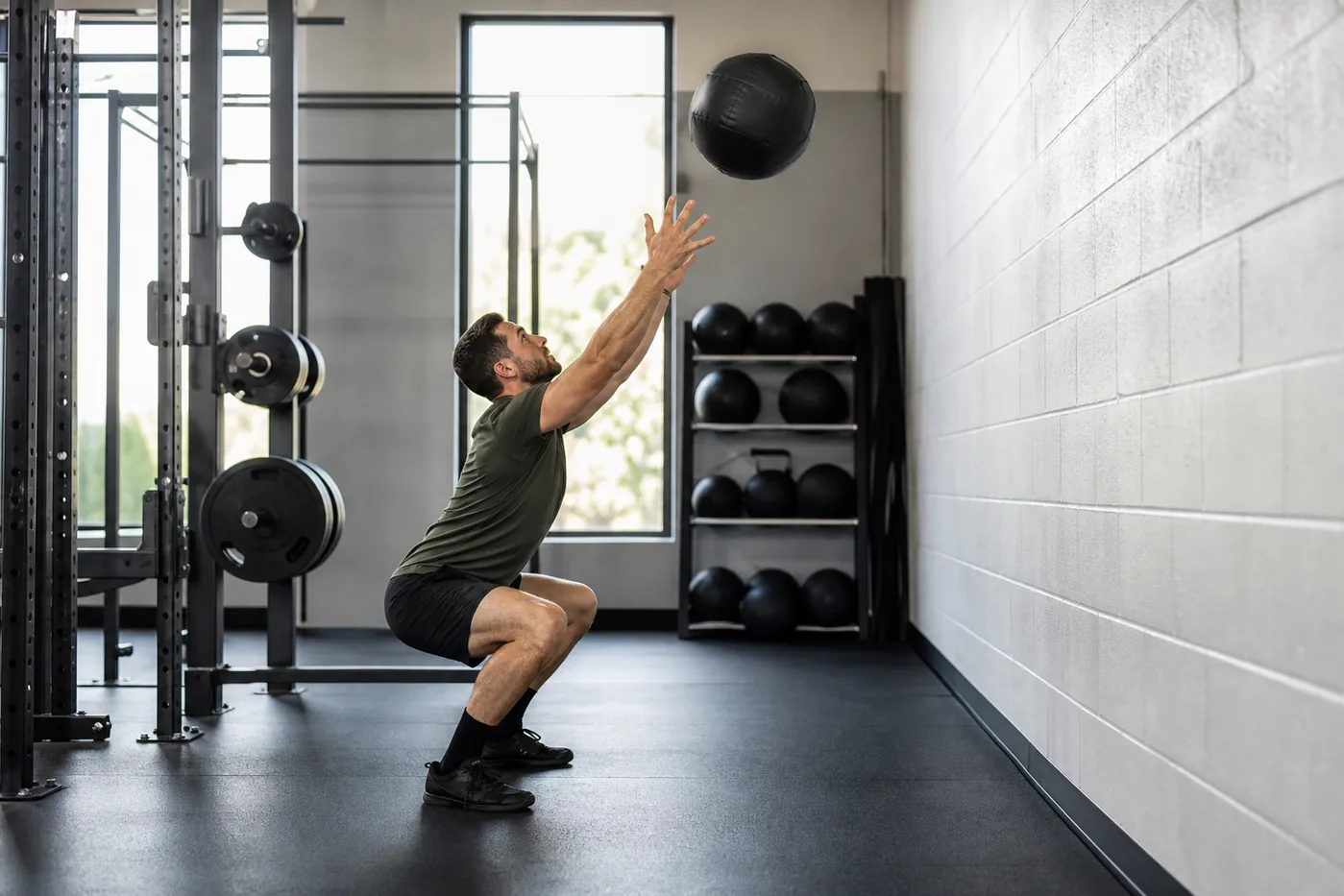
Wall balls have a rude way of exposing everything at once: squat depth, shoulder endurance, breathing, accuracy, and patience. The movement looks harmless on the whiteboard. Then the set hits 50 reps, the ball starts landing low, and every catch feels heavier than the last one.
The fix is not to attack the target harder. Most athletes need cleaner rhythm, a better catch, and a breathing pattern they can keep after the first minute. If you treat wall balls like a squat, a throw, and a metronome working together, the movement gets less chaotic fast.
- Good wall balls start with a real squat, not a quarter dip to rush the next throw.
- The ball should travel from the legs through the arms, with the release happening after the hips extend.
- Most missed reps come from bad breathing, lazy catches, or choosing an RX weight too early.
Why wall balls break down so quickly
A wall ball rep asks for more than leg drive. You squat below parallel, stand hard, throw to a target, receive the ball, and repeat before your heart rate settles. That is why athletes who can front squat well still fall apart in sets of 30 or 50.
The common mistake is turning the movement into two separate jobs: a slow squat, then a desperate shoulder throw. Once the shoulders take over, the ball path gets messy and breathing gets trapped. The better pattern is simple: let the legs create the speed, then guide the ball to the target.
This is the same reason pacing matters in an EMOM CrossFit workout. You are not just surviving one rep. You are protecting the quality of the next 20.
The setup: ball, stance, and target
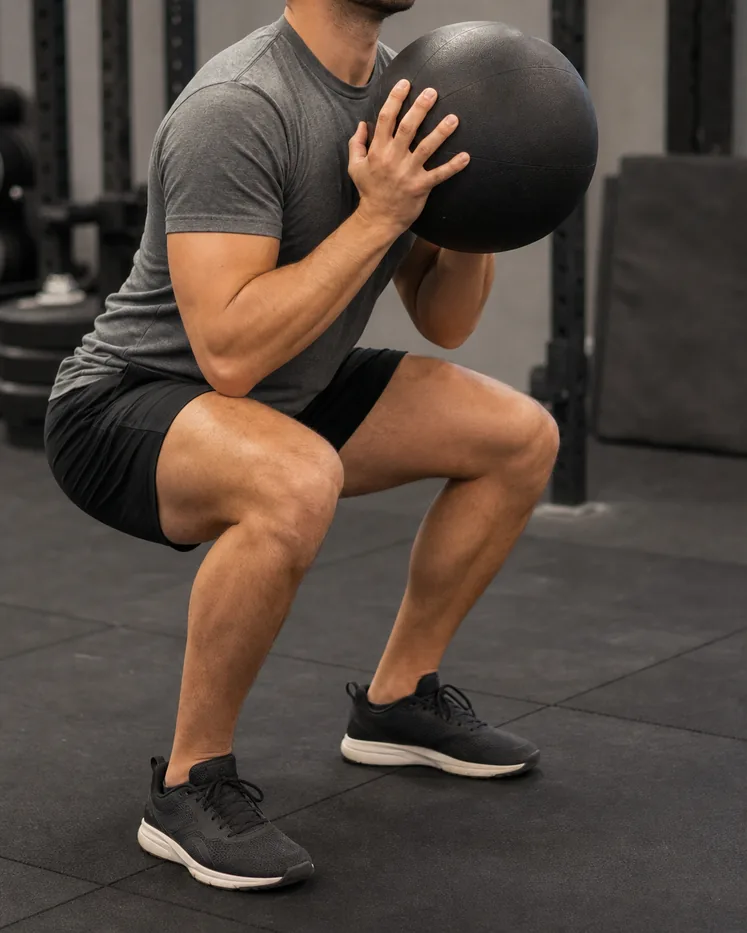
Start with the ball high on the chest, not hanging at the stomach. Elbows can point slightly down, but the upper back should stay active. If the ball sits too low, every rep begins with a small collapse before the squat even starts.
Your stance should look close to your squat stance: heels planted, knees tracking out, torso tall enough that the ball does not pull you forward. The target decides the throw, but the squat decides whether the rep stays efficient.
| Checkpoint | What it should feel like | What usually goes wrong |
|---|---|---|
| Catch | Ball lands high on the chest with soft arms | Ball drops to the stomach and pulls the torso forward |
| Squat | Full depth with heels grounded | Rushed half reps or knees collapsing inward |
| Throw | Leg drive sends the ball up before the arms finish | Shoulders do all the work after a weak stand |
| Breathing | One repeatable breath cycle per rep or every two reps | Holding air until the set becomes panic breathing |
How to breathe during wall balls
Breathing is where good athletes lose cheap reps. Try exhaling as you stand and throw, then inhale while the ball comes back down. It does not need to be theatrical. It just needs to happen before your heart rate makes the decision for you.
For bigger sets, use planned breaks instead of waiting for failure. A set of 50 can become 20, 15, 10, 5 with short, honest pauses. That is usually faster than opening with 35 ugly reps, staring at the ball, and bargaining with yourself.
A useful video for seeing the timing
The video below is worth watching because it shows the small timing errors that make wall balls feel much harder: catching low, throwing late, and losing the squat line. Use it as a quick visual check before your next wall ball-heavy WOD.
Scaling without making the workout pointless
Scaling wall balls should preserve the stimulus. If the workout is meant to be fast and cyclical, a lighter ball is often smarter than grinding RX singles. If the goal is skill under fatigue, reducing the target height can help while you keep full squat depth.
A good scale lets you keep moving with recognizable reps. A bad scale hides the problem. If every catch folds you in half, the ball is too heavy for that workout. If every throw misses low, lower the weight or target and rebuild the rhythm.
- Use a lighter ball if your shoulders take over after the first 10 reps.
- Use a lower target if you can squat well but lose accuracy overhead.
- Break the set early if the workout has other high-skill movements, like double unders.
- Protect your hands and grip for mixed workouts where wall balls sit next to rig work or CrossFit grips become part of the decision.
Drills that clean up wall ball reps
Two drills work better than adding more junk volume. First, do tempo wall ball squats without throwing. Hold the ball at the chest, squat for three seconds, stand fast, and pause. This teaches you to keep the ball from dragging your chest down.
Second, practice small sets of five with a strict target rule. Every rep must hit the target cleanly and return to the same catch position. If the catch changes, stop and reset. That sounds basic, but it builds the exact consistency that disappears under fatigue.
Mistakes to fix first
If you only fix one thing, fix the catch. A good catch saves the next squat. A bad catch steals energy before the rep starts.
After that, look at depth. Shaving depth may feel faster, but it usually makes the workout worse: reps get questionable, the rhythm gets choppy, and you still end up tired. Hit a real squat and make the throw smoother instead of louder.
Last, stop choosing RX just because the board says it. RX is useful when it matches the intended pace. If the workout turns into survival singles after two minutes, the weight is not proving toughness. It is changing the workout.
What to check before your next WOD
Before the clock starts, do five practice reps and answer three questions: can you hit depth, can you hit the target, and can you breathe without rushing the catch? If one answer is no, scale before the workout teaches you the same lesson the hard way.
Wall balls will never feel easy in a hard workout. They are not supposed to. But they should feel repeatable. When the legs drive, the catch stays high, and the breathing stays predictable, you stop donating reps to panic.


