
The plan
EMOM CrossFit sounds almost too simple: start a timer, do a set amount of work at the top of each minute, then rest with whatever time is left. Minute two starts, you go again. Repeat until the workout is over.
That simplicity is exactly why people get it wrong. They load the bar too heavy, choose reps they cannot repeat, or treat the first five minutes like a sprint. A good EMOM should feel controlled early, uncomfortable in the middle, and honest near the end. Not chaotic.
- An EMOM means "every minute on the minute": complete the assigned work, then rest until the next minute begins.
- The best EMOMs leave 10 to 25 seconds of rest per round, at least until the final minutes.
- For beginners, bodyweight moves, light kettlebells and simple cardio pieces are safer than technical barbell lifts under fatigue.
What EMOM means in CrossFit
EMOM stands for "every minute on the minute." In CrossFit, it is a timing format rather than a single workout. The coach assigns a movement, a number of reps, or a short calorie target. You start at 0:00, finish the work, rest, then start again at 1:00.
For example, a 10 minute EMOM might ask for 8 burpees every minute. If those 8 burpees take 32 seconds, you get 28 seconds to breathe. If they take 55 seconds by minute seven, the workout has become a problem. You are no longer training the intended stimulus. You are just chasing the clock.
That is the useful part. EMOMs expose your pacing. They make effort measurable without needing a complicated plan. They also keep sessions short, which is why the format works well for garage gyms, lunch break training and days when you want conditioning without spending an hour wandering between machines.
Why this format works so well
The timer does two things. First, it removes negotiation. When the next minute starts, you move. Second, it gives you immediate feedback. If your rest disappears, the workout is telling you something: the reps are too high, the load is too heavy, or your pace is too hot.
That makes EMOM training useful for conditioning, skill practice and strength accessories. You can use it for a clean 12 minute sweat, or you can use it to repeat crisp sets of pull-ups, push-ups, kettlebell swings or rowing intervals. The goal is not always to destroy yourself. Often, the goal is to repeat good work under a little pressure.
If you are building a broader routine, pair this format with smart mobility work. A tight hip or stiff upper back shows up quickly once the clock starts. This mobility flow for better performance is a useful companion on days when your movement feels restricted.
Three EMOM CrossFit workouts you can actually repeat
Use these as templates, not ego tests. If you finish a round with less than 10 seconds of rest before the halfway point, cut the reps. The workout will be better, and your form will thank you.
| Workout | Format | Best for | How to scale it |
|---|---|---|---|
| Beginner engine | 12 min EMOM: 8 air squats on odd minutes, 6 push-ups on even minutes | Learning the rhythm without equipment | Use incline push-ups or reduce to 4 reps |
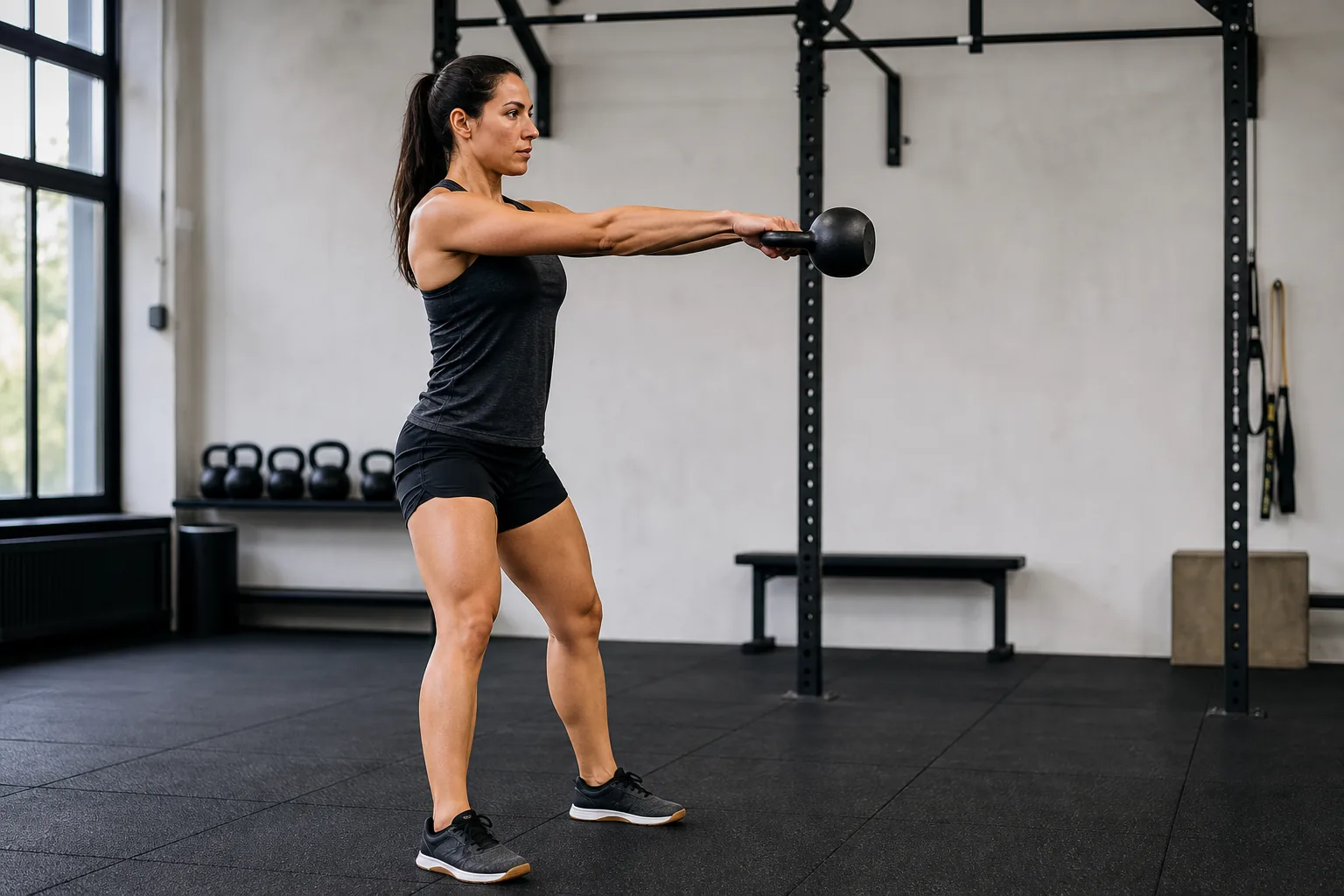
| Kettlebell control | 10 min EMOM: 12 kettlebell swings | Posterior chain and breathing under fatigue | Choose a weight you can swing cleanly for every set |
| Mixed conditioning | 15 min EMOM: minute 1 row or bike, minute 2 burpees, minute 3 plank hold | Full body conditioning with built-in variety | Lower calories, burpees or plank time before adding intensity |
How hard should an EMOM feel?
A clean rule: most rounds should finish with 10 to 25 seconds of rest. More than 30 seconds can be too easy if conditioning is the goal. Less than 10 seconds too early usually means the workout is badly scaled.
There are exceptions. Heavy strength EMOMs may have longer rest because the work is low rep and high tension. Sprint style EMOMs may deliberately feel nasty. But for most people using CrossFit to get fitter, leaner or stronger, repeatable quality beats dramatic collapse.
- Easy version: finish each round with 25 to 35 seconds left.
- Productive version: finish most rounds with 10 to 25 seconds left.
- Too hot: form breaks or you start the next minute still gasping from the last one.
If bodyweight squats are part of your plan, do not assume more reps automatically means better legs. This guide on why bodyweight squats are not always enough explains why progression matters.
Common mistakes that ruin the workout
The first mistake is choosing technical movements when tired. High rep Olympic lifts can look exciting on a whiteboard, but they are a poor choice if you cannot keep positions clean. Save complex barbell work for coaching sessions or lighter skill practice.
The second mistake is ignoring transitions. If your EMOM includes rowing, burpees and wall balls, moving between stations eats time. That matters. A workout that looks manageable on paper can become messy because your setup is spread across the gym.
The third mistake is treating every EMOM as a max effort test. You can go hard sometimes. You should not go to the well every time the timer starts. Keep a few sessions submaximal. Your joints, sleep and next workout will usually be better for it.
Who should be careful with EMOM workouts?
If you are new to training, coming back after injury, pregnant, managing blood pressure issues or dealing with unexplained pain, get guidance before using aggressive intervals. A timer can push people into bad decisions. Pain that changes your movement is a stop sign, not something to negotiate with.
Beginners can still use EMOMs. They just need simpler movements, fewer reps and more room to breathe. Think air squats, incline push-ups, step-ups, dead bugs, light carries and easy bike intervals. Build trust with the clock first. Intensity can wait.
A simple way to build your own EMOM
Start with the outcome. If you want conditioning, choose movements that raise your breathing without wrecking technique. If you want strength practice, choose a low rep movement you can repeat cleanly. If you want a quick finisher, keep it short and uncomplicated.
- Pick 1 to 3 movements.
- Choose a total length between 8 and 18 minutes.
- Test one round before starting.
- Adjust reps until you have at least 15 seconds of rest.
- Write down what you used so you can repeat or progress it next time.
That last step is where progress happens. If your 10 minute kettlebell EMOM felt smooth this week, you can add one rep per minute next week, extend the workout by two minutes, or use a slightly heavier bell. Change one variable at a time. Otherwise, you will not know what worked.
The bottom line
EMOM CrossFit works because it is brutally clear. The clock starts, you do the work, and your rest tells the truth. Used well, it builds conditioning and consistency without turning every session into a circus.
Keep the movements simple, leave enough rest to move well, and progress slowly. The best EMOM is not the one that looks savage on social media. It is the one you can repeat, measure and improve.
FAQ
Is EMOM good for beginners?
Yes, if the movements are simple and the reps are low enough. Beginners should finish each minute with comfortable rest and avoid technical lifts under fatigue.
How long should an EMOM CrossFit workout last?
Most useful sessions last 8 to 20 minutes. Short EMOMs work well as finishers. Longer ones need conservative pacing and simple movements.
Can EMOM workouts build muscle?
They can support muscle gain if the load, reps and weekly volume are appropriate. For pure hypertrophy, traditional strength sets are usually easier to control.


