The plan
Scap push-ups look too small to matter until a workout exposes the shoulders. The athlete can do push-ups, hold a plank, maybe even kick to the wall, but the upper back freezes and every rep starts to feel jammed. That is usually when the coach says, "move your shoulder blades," and half the class realizes they have no idea what that means.
The scap push-up is a simple CrossFit warm-up drill for that gap. It trains protraction and retraction in a plank while the elbows stay straight. No big range, no dramatic stretch. Just enough control to make pressing, crawling, wall walks, burpees, and ring work feel less sloppy.
- Scap push-ups train shoulder blade motion without bending the elbows.
- They fit best before push-ups, burpees, wall walks, handstand work, ring push-ups, and overhead sessions.
- If the drill turns into elbow bending or low-back sagging, scale it before adding speed.
What the scap push-up is actually training
A regular push-up bends the elbows and loads the chest, triceps, and shoulders. A scap push-up keeps the arms long. The movement comes from the shoulder blades sliding forward and back on the rib cage. At the top, the athlete pushes the floor away and lets the upper back spread. At the bottom, the chest sinks slightly between the shoulders without collapsing.
That small difference matters. Many athletes can press hard but cannot control the shoulder blade before the press starts. The result shows up in hand release push-ups, burpees, ring work, and any plank position where the shoulders start creeping toward the ears.
How to do the rep without faking it
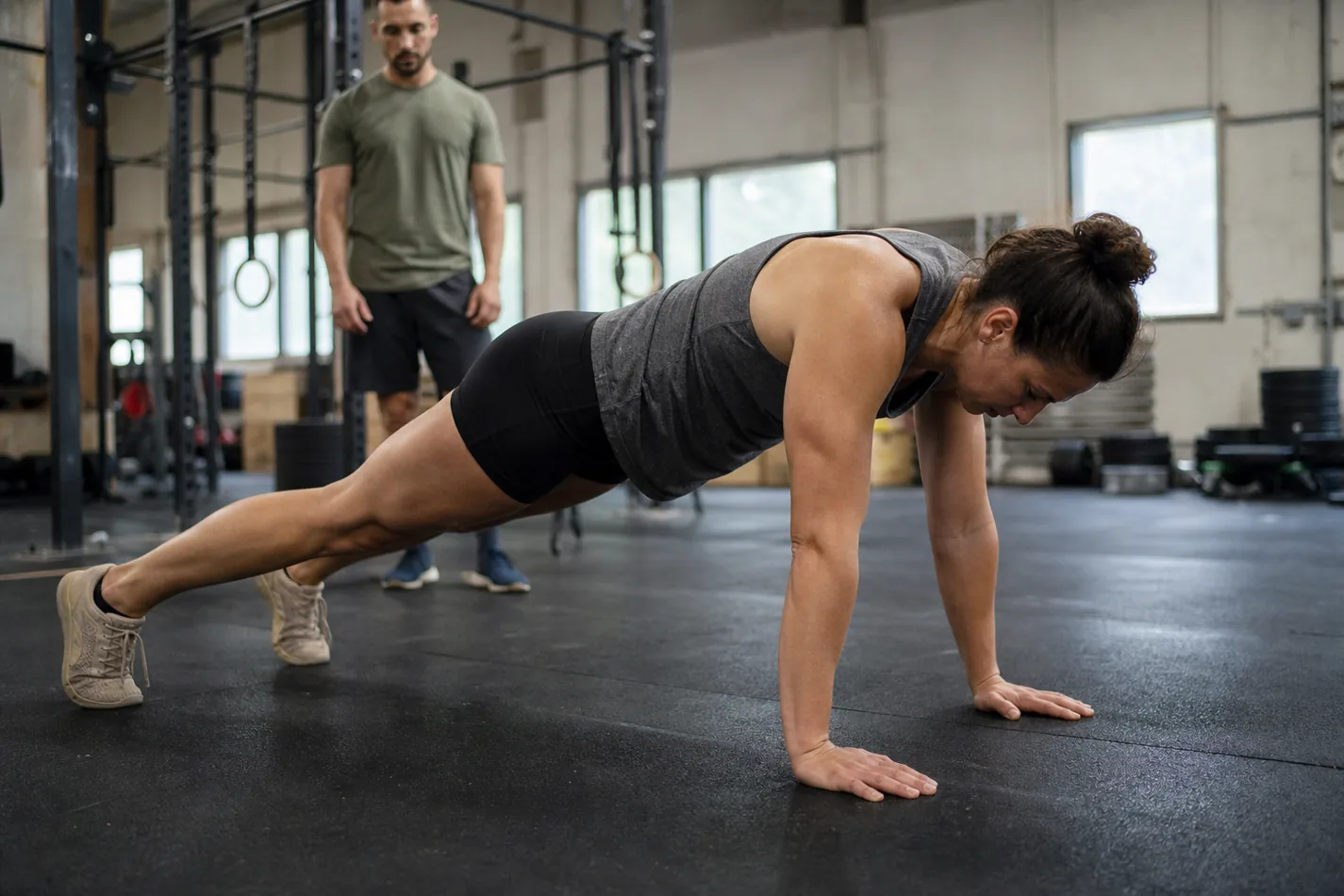
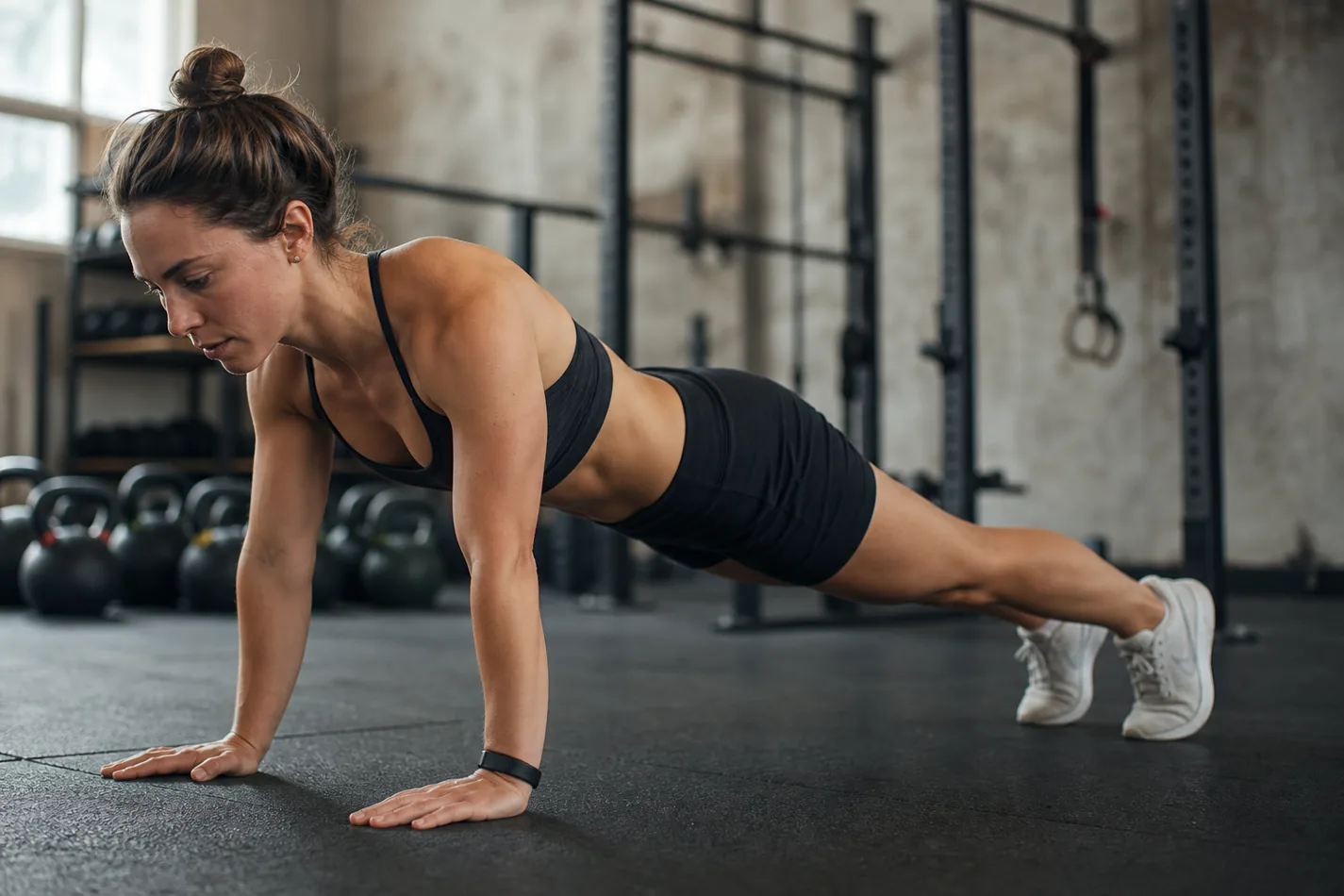
Start in a high plank with hands under the shoulders, fingers spread, ribs down, and feet set wide enough to keep the body quiet. Lock the elbows gently. Push the floor away until the upper back rounds slightly, then let the chest lower between the shoulders by a small amount. The elbows should not bend. The neck should not reach for the floor.
The best reps feel controlled, almost boring. If the athlete is bouncing, shrugging, or turning each rep into a mini push-up, slow down. A good cue is simple: keep the arms long and move the shoulder blades, not the elbows.
| Fault | What it usually means | Fix before adding reps |
|---|---|---|
| Elbows bend every rep | The athlete is doing a shallow push-up | Use fewer reps and keep the arms long |
| Low back sags | The plank is not strong enough yet | Widen the feet or move to an elevated surface |
| Shoulders shrug to the ears | The athlete is chasing range from the neck | Push the floor away and keep the neck long |
| Range is tiny and stiff | The athlete may not feel the shoulder blades moving | Try the drill from knees or against a box first |
Where it fits in a CrossFit warm-up
Scap push-ups work best when they are placed right before a position that needs shoulder control. For a push-up or burpee day, use them after general heat and before the first working reps. For wall walks or handstand push-up work, pair them with plank holds and short wall-facing holds. For rings, they help athletes feel the difference between a packed shoulder and a passive hang.
Keep the dose small. Two sets of 6 to 10 slow reps can be enough. The goal is not fatigue. The goal is to make the next movement cleaner. If the workout already includes high volume pressing, do not burn out the shoulders in the warm-up just because the drill feels easy.
This short demo is useful because the arms stay straight. That is the point. Watch the shoulder blades glide around the rib cage before you worry about speed or reps.
Why straight arms change the lesson
The straight-arm rule makes the drill honest. Once the elbows bend, stronger athletes can hide poor shoulder blade control with pressing strength. That is why scap push-ups are useful for athletes who already have decent push-ups but lose position under fatigue.
They also connect well with pulling prep. The same awareness that helps an athlete push the floor away can help them find an active shoulder in scap pull-ups. It is not the same movement, but the idea is similar: the shoulder blade moves first, then the bigger skill gets built on top.
Scaling options that still train the right thing
If the floor version is too hard, raise the hands to a box or bench. The athlete should still keep a plank line, but the load drops enough to feel the movement. A knee version can work too, although some athletes lose the trunk position there. Use whichever option lets the shoulder blades move without pain or panic.
If the athlete has wrist irritation, use dumbbells as handles, parallettes, or an elevated surface. If shoulder pain is sharp or does not warm up, skip the drill and choose a pain-free prep instead. Shoulder blade control matters, but forcing a painful plank is not good coaching.
How to pair it with other prep work
Scap push-ups are not a full warm-up by themselves. They are a piece. Before pressing, pair them with light push-ups, banded triceps or shoulder prep, and a few easy reps of the workout movement. Before handstand work, add wrist prep and controlled wall positions. Before crawls, use them with inchworms or plank shoulder taps so the athlete learns to hold the shoulder while the body moves.
For overhead days, they can sit next to PVC pass-throughs or light dumbbell pressing. The test is simple: after the drill, does the athlete feel more control in the setup, or just more tired? If it is only fatigue, the dose was too high.
What to check in your next warm-up
Before your next pressing-heavy WOD, do five slow scap push-ups and ask three questions. Did the elbows stay straight? Did the ribs stay down? Did the shoulder blades actually move? If one answer is no, fix that before chasing faster push-ups or bigger handstand sets.
The drill is small, but it gives quick feedback. When the shoulder blades move well, the plank feels quieter, the press starts cleaner, and the athlete has one less thing to fight when the workout gets messy.