The plan
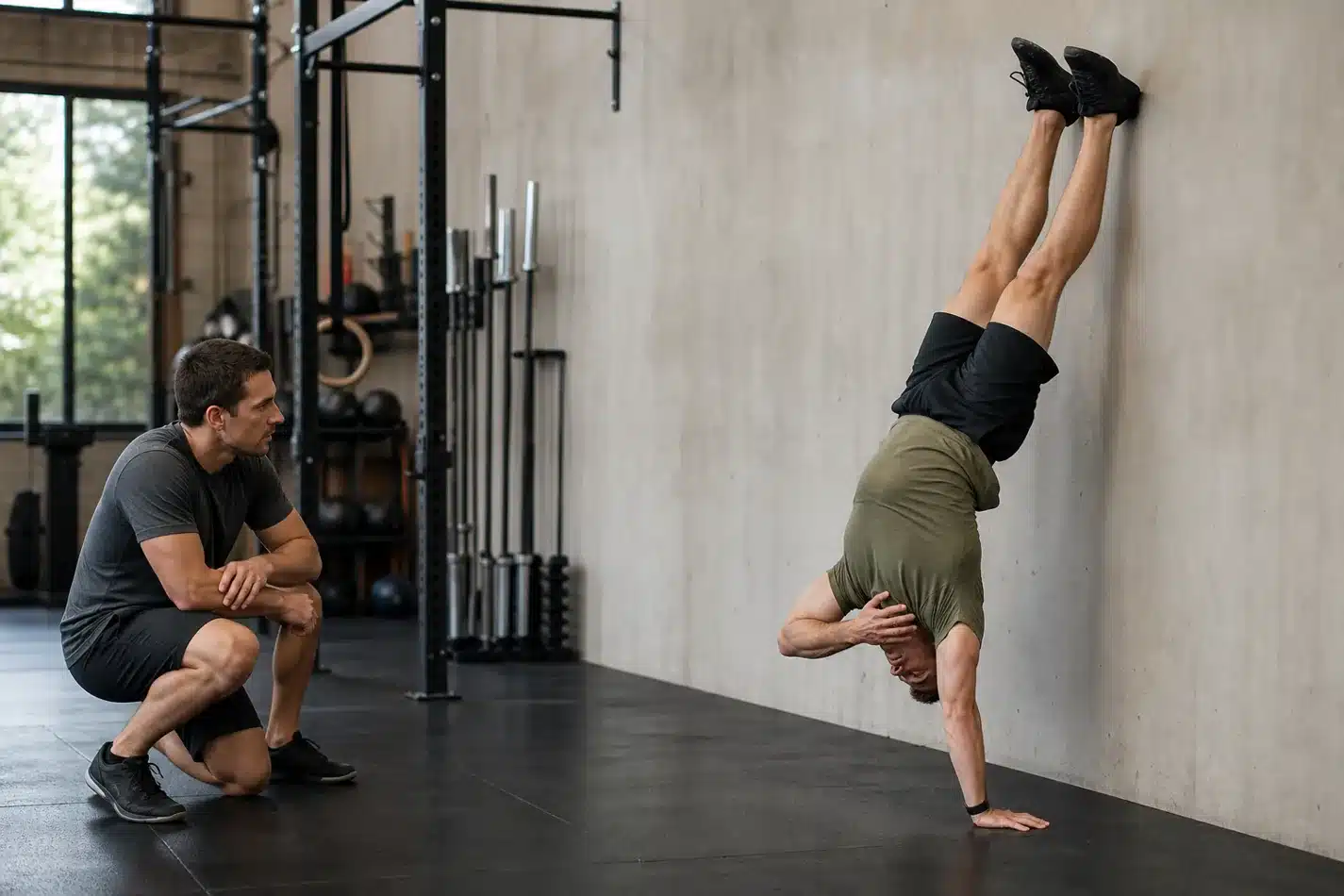
Handstand shoulder taps look small until the athlete has to do them upside down, under fatigue, with one hand briefly off the floor. That is when the movement stops being a party trick and starts showing whether the body can stay stacked.
In CrossFit, shoulder taps usually sit between basic wall work and more demanding skills. They can clean up balance before handstand walking, expose loose ribs before pressing work, and teach athletes to shift weight without twisting out of position.
- Shift the body over the planted hand before lifting the other hand.
- Keep the ribs down and the glutes tight. A banana shape makes every tap harder.
- Scale the angle first. Pike taps and wall-facing holds beat sloppy upside-down reps.
What handstand shoulder taps actually train
A good handstand shoulder tap is not a fast slap on the shoulder. It is a controlled weight shift. The planted shoulder has to support the body while the other hand leaves the floor, touches the shoulder, then returns without a crash. That same control matters in handstand walk control, but shoulder taps let you train it before you ask the athlete to travel across the floor.
The movement also teaches body tension. If the ribs flare or the low back arches, the weight shift gets wobbly. Athletes who already have a reliable handstand hold line usually learn shoulder taps faster because they are not fighting the line on every rep.
Start with the wall, but pick the right direction
Wall-facing taps are the cleaner choice for most athletes. They encourage a tighter line, hands closer to the wall, and less arching through the back. Kick-up back-to-wall taps can work, but they often let athletes hide a loose position by leaning into the wall.
Set the hands under the shoulders. Squeeze the glutes. Push tall through the floor. Then shift slowly until one hand feels light. If the hand cannot float for a split second, the athlete is not ready to tap yet. They need more time in the shift.
| Fault | What it usually means | Fix before adding reps |
|---|---|---|
| Hand slaps the shoulder and crashes down | The athlete is rushing the shift | Pause over the planted hand before lifting |
| Feet slide or bounce on the wall | The midline is loose | Squeeze the glutes and press the floor away |
| Body twists with every tap | The shoulders are not controlling the line | Use smaller taps or return to pike shoulder taps |
| Neck strains toward the floor | The head position is pulling the body out of stack | Look between the hands and keep the neck quiet |
How to scale without losing the skill
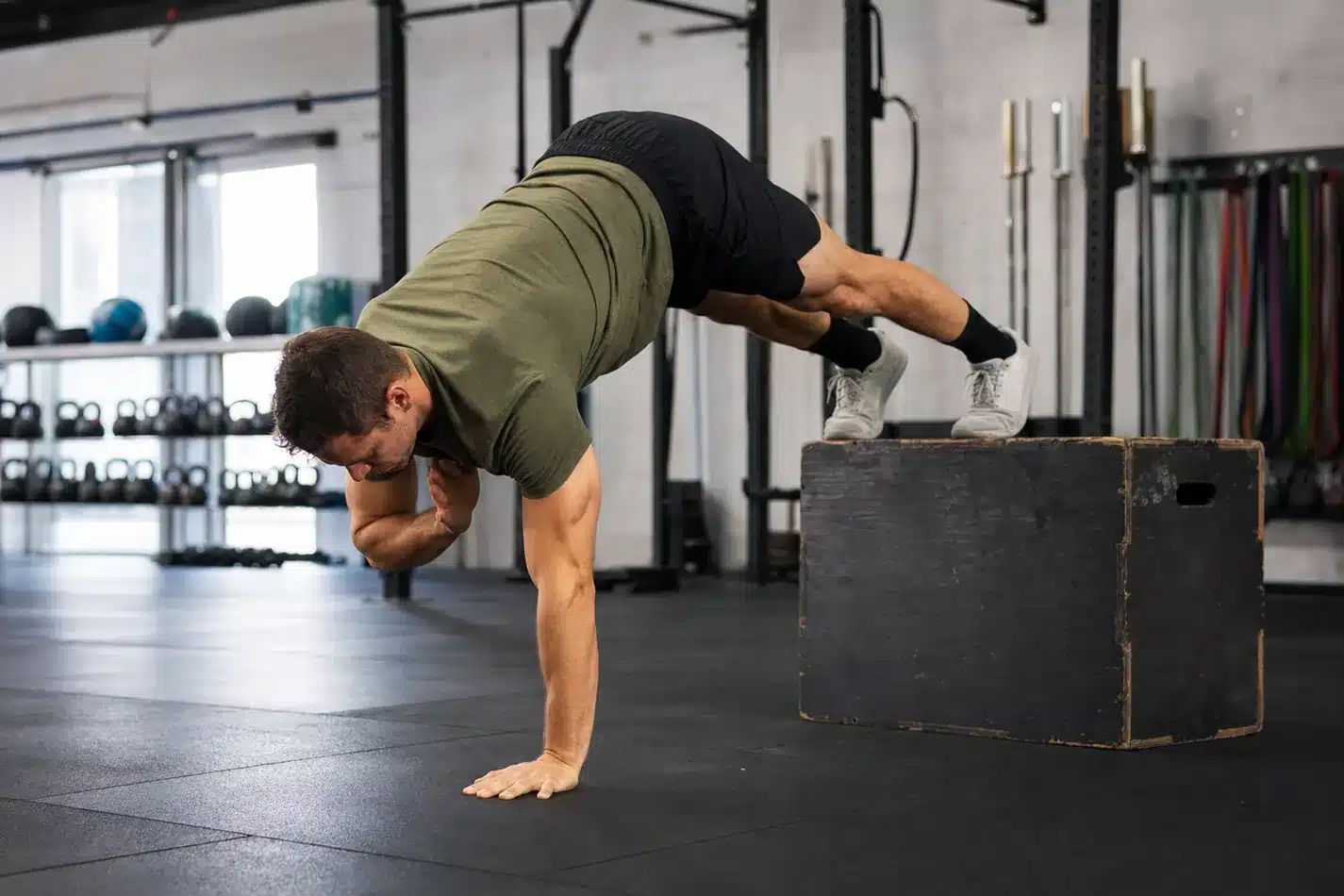
Good CrossFit scaling keeps the weight shift and removes the panic. Pike shoulder taps with feet on a box are a strong first option. The athlete still has to load one arm at a time, but the body angle is less severe. From there, raise the hips, walk the hands closer, and slow the tempo.
Another option is a shoulder shift without the tap. In a wall-facing hold, move the chest a few inches toward one hand, then back to center. It is boring, but it works. If the athlete cannot shift without bending the elbows or losing the ribs, tapping will only hide the problem for a few messy reps.
The demo below is useful because the rep is easy to judge. Pause it at the weight shift. The body should move over the planted hand before the other hand leaves the floor.
Where shoulder taps fit in training
They work well after a CrossFit warm-up, before skill practice, or as accessory work after upper-body strength. Keep the volume low enough that the reps stay clean. Sets of four to ten taps per side are usually better than long sets where the athlete starts chasing numbers.
Shoulder taps also pair well with handstand push-up setup, strict press strength, and ring support stability. The carryover is not magic. It comes from learning to press the floor away while the trunk stays organized. That is the same job in a handstand, on the rings, and under a barbell overhead.
When to keep it off the whiteboard
Skip full handstand shoulder taps if the athlete cannot control a wall hold, has wrist pain that gets worse under load, or turns every rep into a low-back arch. Use box pike taps, bear plank shoulder taps, or wall shoulder shifts instead. The goal is not to prove someone can survive upside down for twenty seconds. The goal is to build control they can use later.
Before the next handstand skill day, test one thing: can the athlete shift weight until one palm gets light without bending the elbow, twisting the hips, or losing the ribs? If yes, tap small and keep the rhythm quiet. If no, stay with the shift. That is where the skill is being built.


