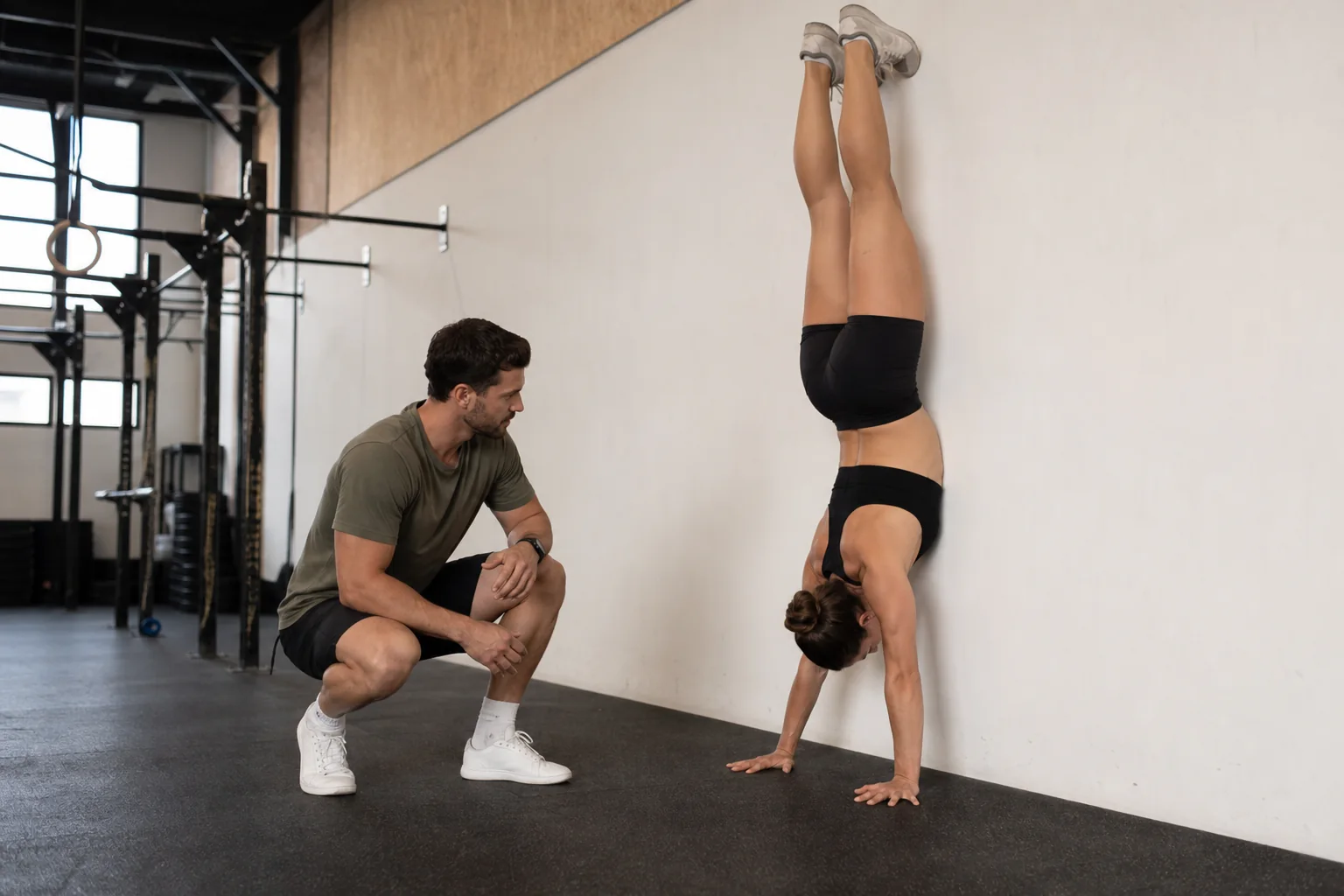
The plan
- What a good handstand hold should feel like
- Set up your hands before you kick up
- The wall-facing hold is stricter, but it tells the truth
- Common mistakes that ruin the hold
- Use this video to check the kick-up
- How to scale handstand holds without wasting the stimulus
- A simple progression for your next week
- What to check before you add harder skills
- FAQ
A handstand hold looks simple until you are upside down, breathing through your nose, and wondering why your shoulders feel like they are sliding into your ears.
In CrossFit, the handstand hold is not just a party trick. It teaches body tension, overhead strength, wrist tolerance, and calm under pressure. It also exposes sloppy positions fast. If your ribs flare, your elbows bend, or your hands sit too far from the wall, the clock gets loud in a hurry.
This guide breaks down the handstand hold for CrossFit athletes who want a stronger wall position, safer scaling options, and a cleaner path toward wall walks, handstand push-ups, and freestanding balance work.
- Stack hands, shoulders, ribs, hips, and heels before you worry about hold time.
- Use pike holds, box holds, or shorter wall sets if the full position turns ugly.
- Stop the set when your elbows bend, your back arches hard, or your breathing disappears.
What a good handstand hold should feel like
The best handstand holds feel less like a fight and more like a stacked support position. Your hands press through the floor. Your elbows stay locked. Your shoulders push tall. Your ribs stay pulled down enough that your low back does not turn into a bridge.
That stacked line matters because the handstand is a base for other skills. A better wall hold makes wall walk control easier to manage. It also gives you a cleaner start before you add pressing volume in handstand push-up control work.
Do not chase a longer set if the position has already changed. Thirty clean seconds with a tight line beats sixty seconds of bent elbows, shrugged panic, and banana back.
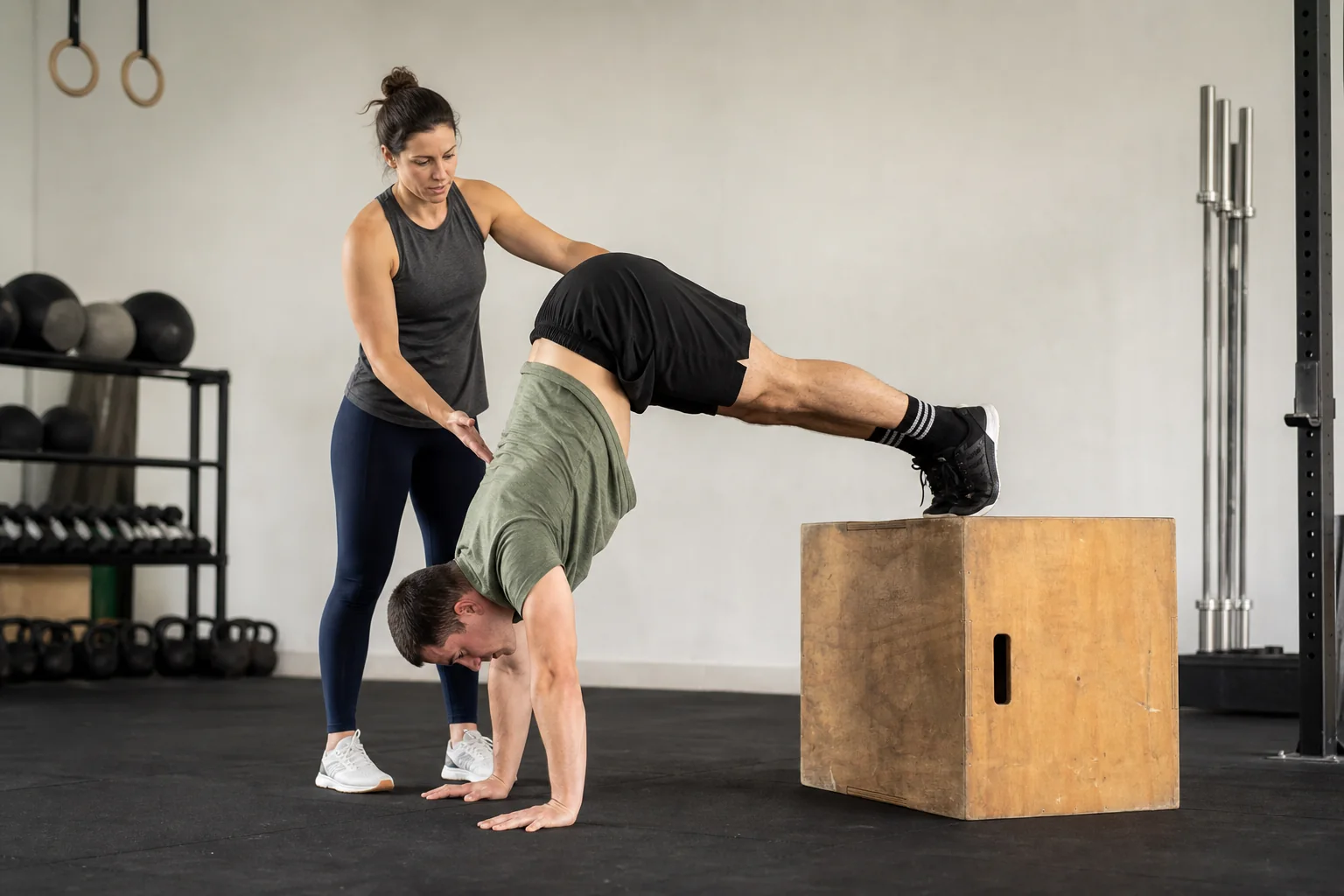
Set up your hands before you kick up
Start with your hands around shoulder width. Spread your fingers and grip the floor lightly. Your index fingers can point forward or slightly out, depending on what feels better on your wrists.
Once you kick up, push the floor away. That cue sounds basic, but it fixes a lot. Soft shoulders make the hold feel heavy. Active shoulders give you space, especially when fatigue hits.
If your wrists are the first thing to complain, warm them up before class and reduce the total time upside down. Pain is not a badge. It is feedback. For many athletes, a box pike hold or short wall set is the better choice while the wrists adapt.
The wall-facing hold is stricter, but it tells the truth
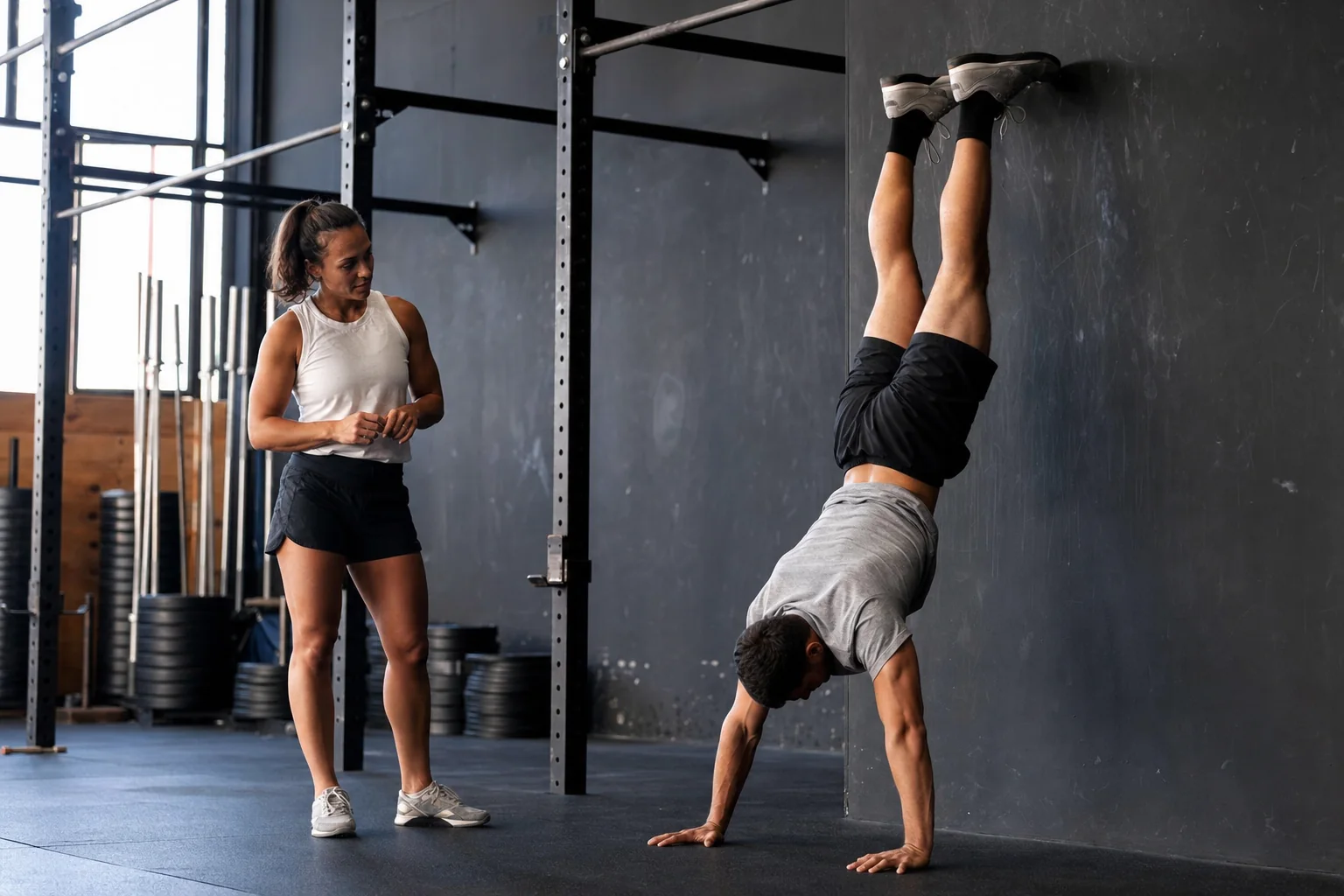
A back-to-wall handstand is easier to enter, but it lets many athletes arch hard and hang on the wall. The wall-facing version is less forgiving. Your nose faces the wall, your hands sit closer to it, and your body has to stay tighter.
That does not mean beginners should rush into it. Walk in only as far as you can control. If your hands are too close and you cannot step down safely, you are no longer training. You are trapped upside down.
Use small sets. Ten to twenty seconds is enough when the line is new. The goal is to build repeatable positions, not collect survival points.
Common mistakes that ruin the hold
| Mistake | What it usually means | Better fix |
|---|---|---|
| Banana back | The ribs are flaring and the midline is loose. | Squeeze the glutes, pull ribs down, and shorten the hold. |
| Bent elbows | The shoulders and triceps are losing support. | Drop to a pike hold or reduce the set length. |
| Hands too wide | You are trying to make balance easier by giving up the press. | Bring hands closer to shoulder width. |
| Holding your breath | The position is too intense or too long. | Use shorter intervals with one calm breath every few seconds. |
Most of these mistakes have the same fix: make the set cleaner before you make it longer. The handstand rewards patience. It also punishes ego quickly.
Use this video to check the kick-up
The CrossFit coaching clip below is useful because it focuses on a simple entry: kicking up to the wall without losing the line immediately. Watch the hand placement, the shoulder push, and how controlled the return to the floor should be.
How to scale handstand holds without wasting the stimulus
Scaling should keep the purpose of the movement. If the workout asks for handstand holds, the likely target is shoulder support, body tension, and time under tension upside down. Choose a scale that trains those pieces.
A pike hold with your feet on a box is often the cleanest option. You still load the shoulders, but you can control the angle. A tall plank with shoulder taps may work for newer athletes. Short wall holds can also work if the athlete can kick up and step down safely.
Use your broader CrossFit scaling guide logic here: preserve the goal, remove the bottleneck, and leave the gym with a version you can progress next time.
A simple progression for your next week
Do not add handstand work at random. Put it before the metcon or during skill practice while your shoulders are fresh.
- Day 1: 5 sets of 20 seconds pike hold, rest as needed.
- Day 2: 6 to 8 easy wall kick-ups, stepping down under control each time.
- Day 3: 4 sets of 10 to 20 seconds wall-facing hold, stopping before the line breaks.
If that feels too easy, add time slowly. If it feels sketchy, stay with the pike hold longer. There is no prize for rushing into an ugly wall position.
What to check before you add harder skills
Before you chase freestanding holds or faster upside down work, check three things. Can you breathe while inverted? Can you step down without collapsing? Can you repeat the position after a short rest?
If yes, the handstand hold starts to carry over. Your handstand walk balance work gets less frantic, and your pressing skills have a better base. If not, stay boring for another week. Boring is usually where the useful reps are.
FAQ
How long should I hold a handstand in CrossFit?
Start with 10 to 30 clean seconds. Longer holds only help if the line stays tight and you can breathe. If your elbows bend or your back arches hard, the set is done.
Is a wall-facing handstand better than back-to-wall?
It is usually stricter because it encourages a straighter line, but it is also harder to exit. Use it only when you can walk in and step down safely.
Why does my low back hurt during handstand holds?
Often, the ribs flare and the athlete hangs in an arched position. Shorten the set, squeeze the glutes, and practice hollow body position work before going upside down again. If pain persists, stop and ask a qualified coach or clinician.
What is the best scale for handstand holds?
For most athletes, pike holds on a box are the best first scale. They train shoulder support and body tension without forcing a full wall handstand before the athlete is ready.


