The plan
Handstand push-ups look simple from across the gym. Kick up, touch the head, press out. Then the clock starts, shoulders get hot, and the movement turns into a mix of soft lockouts, loose feet, and reps that only count because nobody wants to argue mid workout.
The fix is not always more aggression. Good handstand push-ups in CrossFit need two things working together: enough strict strength to control the bottom, and enough body tension to make the kip help instead of rescue the rep. If either piece is missing, fatigue will find it fast.
- Build strict pressing strength before relying on a big kip.
- Use a repeatable hand position, head target, and wall distance so every rep starts the same way.
- Scale early if your neck, low back, or elbows start taking over for your shoulders.
What a good handstand push-up should feel like
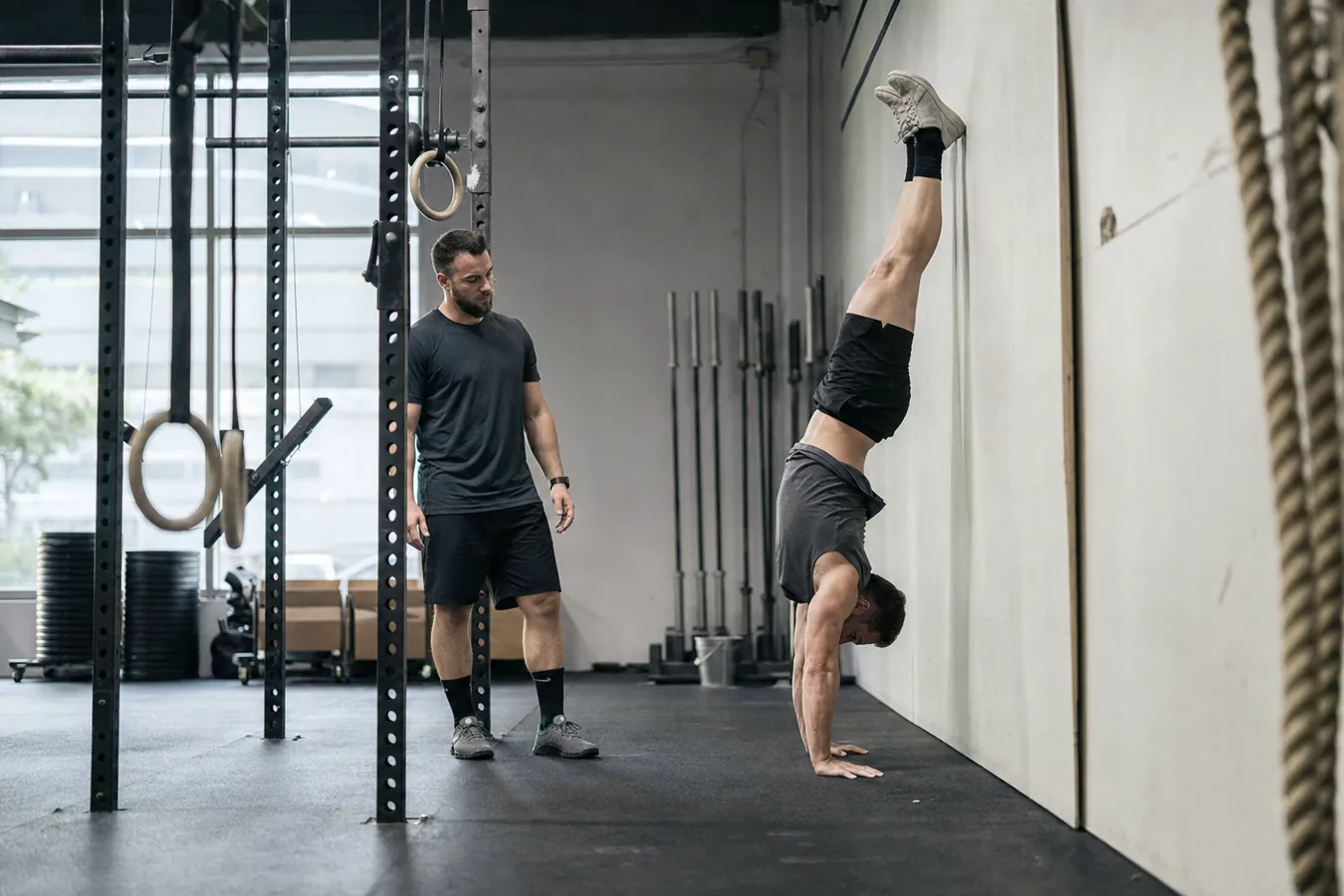
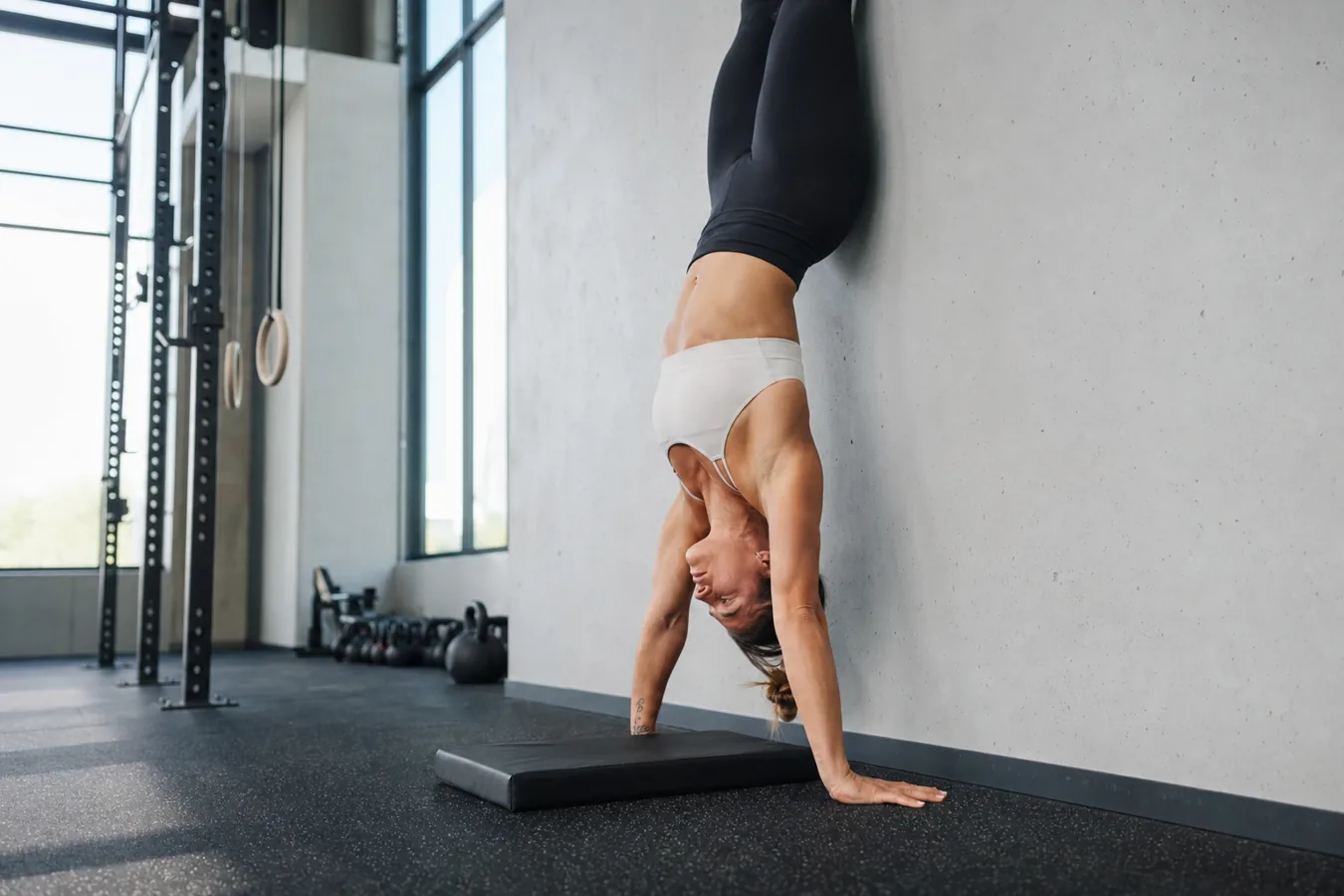
A strong rep starts before you are upside down. Hands sit a little wider than shoulder width. Fingers spread into the floor. The wall is close enough to support you, but not so close that your back folds into a banana shape. Once your heels touch the wall, squeeze your legs together and keep the ribs pulled down.
Lower with control until the head touches the floor or pad. The elbows should not flare straight out like a tired bench press. From there, press through the hands and finish with locked elbows, active shoulders, and the body stacked. If the rep ends with your chest facing the floor and your feet sliding down the wall, the press was already leaking.
This is why overhead strength from the CrossFit strict press matters. A barbell press is not the same movement, but it teaches the same hard truth: if the midline collapses, the shoulders have to solve a problem they did not create.
The setup checklist that keeps reps honest
Most athletes lose time because every rep starts differently. One kick-up is too far from the wall. The next has wide hands. The next lands on a pad that changes the depth. Small changes feel harmless in warm-up, then become expensive in round four.
| Checkpoint | What to look for | Common problem |
|---|---|---|
| Hands | Just wider than shoulders, fingers gripping the floor | Hands drifting wider as fatigue builds |
| Head target | Same touch point on every rep | Head landing too far forward and turning the press into a triangle |
| Midline | Ribs down, glutes tight, legs together | Low back arching to shorten the press |
| Lockout | Elbows straight with shoulders active | Leaving the wall early with a soft finish |
Strict reps before kipping reps
Kipping handstand push-ups are not bad. They are just easy to abuse. A good kip turns the hips into timing and speed. A bad kip is a desperate kick that throws the body away from the wall and asks the neck to survive the landing.
If you cannot lower with control and press out of a small set of strict reps, keep kipping volume conservative. That does not mean you need a huge strict set before ever kipping in a workout. It means your scale should protect the pattern you are trying to train. Box pike push-ups, negatives, reduced range of motion, or dumbbell presses can all be better choices than ugly inverted reps.
The same patience shows up in CrossFit wall walks. If you rush the upside-down position, your shoulders and midline start negotiating with gravity instead of controlling it.
A useful video for the movement pattern
This handstand push-up tutorial is worth using as a visual check. Watch the hand position, the body line, and how the athlete finishes the press before coming off the wall. Do not copy the speed first. Copy the shape.
How to scale without watering down the workout
The right scale keeps the workout stimulus alive. If the WOD is meant to be fast, spending 90 seconds fighting two failed reps is not toughness. It is poor scaling. If the WOD is meant to build upper body strength, bouncing off three ab mats may miss the point too.
- Box pike push-up: best when you need pressing volume without going fully inverted.
- Strict negative: useful for athletes who can control the descent but cannot press out yet.
- Reduced range of motion: fine when the pad height stays consistent and the lockout is clean.
- Dumbbell strict press: a good choice when the neck or wrist position feels questionable upside down.

Mistakes to fix before the next WOD
The first mistake is kicking up with no plan. Mark your hand position in warm-up, even if you do not use tape in the workout. Know where the head should touch. Know how far your hands are from the wall. Guessing upside down is a bad system.
The second mistake is chasing speed before lockout. Judges often miss soft elbows when a workout gets loud, but your shoulders still pay for those reps. Finish the rep, then come down. A clean lockout also makes the next descent easier because the body starts stacked instead of folded.
The third mistake is ignoring breathing. Holding your breath through every rep works for a small set, then falls apart. Take a quick breath at the top or before the kick-up. Athletes who already practice rhythm in movements like CrossFit wall balls usually understand this faster: breathing is part of pacing, not something you remember after the set breaks.
What to test in training
Film five reps from the side during warm-up. Look for a straight line from hands to hips, a consistent head touch, and a full lockout before the feet move. If those pieces hold, add pace. If they do not, pick a scale that lets you train the position instead of surviving it.
Handstand push-ups reward athletes who stay boring a little longer than they want to. Build the shape first. The faster reps come later, and they last longer when fatigue shows up.


