The plan
The strict press is one of the easiest lifts to cheat in a CrossFit gym. A tiny knee bend sneaks in. The ribs flare. The bar drifts forward. Suddenly the movement is no longer a strict press, even if the rep still ends overhead.
That matters because the strict press teaches raw overhead strength. No dip, no bounce, no help from the legs. If you can press well under control, handstand push-ups, push presses, thrusters, and overhead stability usually feel cleaner. If you cannot, heavy WODs expose the same leak again and again.
- A good CrossFit strict press starts with stacked ribs, tight glutes, and the bar close to the face.
- The most common mistake is turning the lift into a soft push press without noticing it.
- Use smaller sets and cleaner reps before adding load, especially if your lower back or wrists take over.
What makes a strict press actually strict
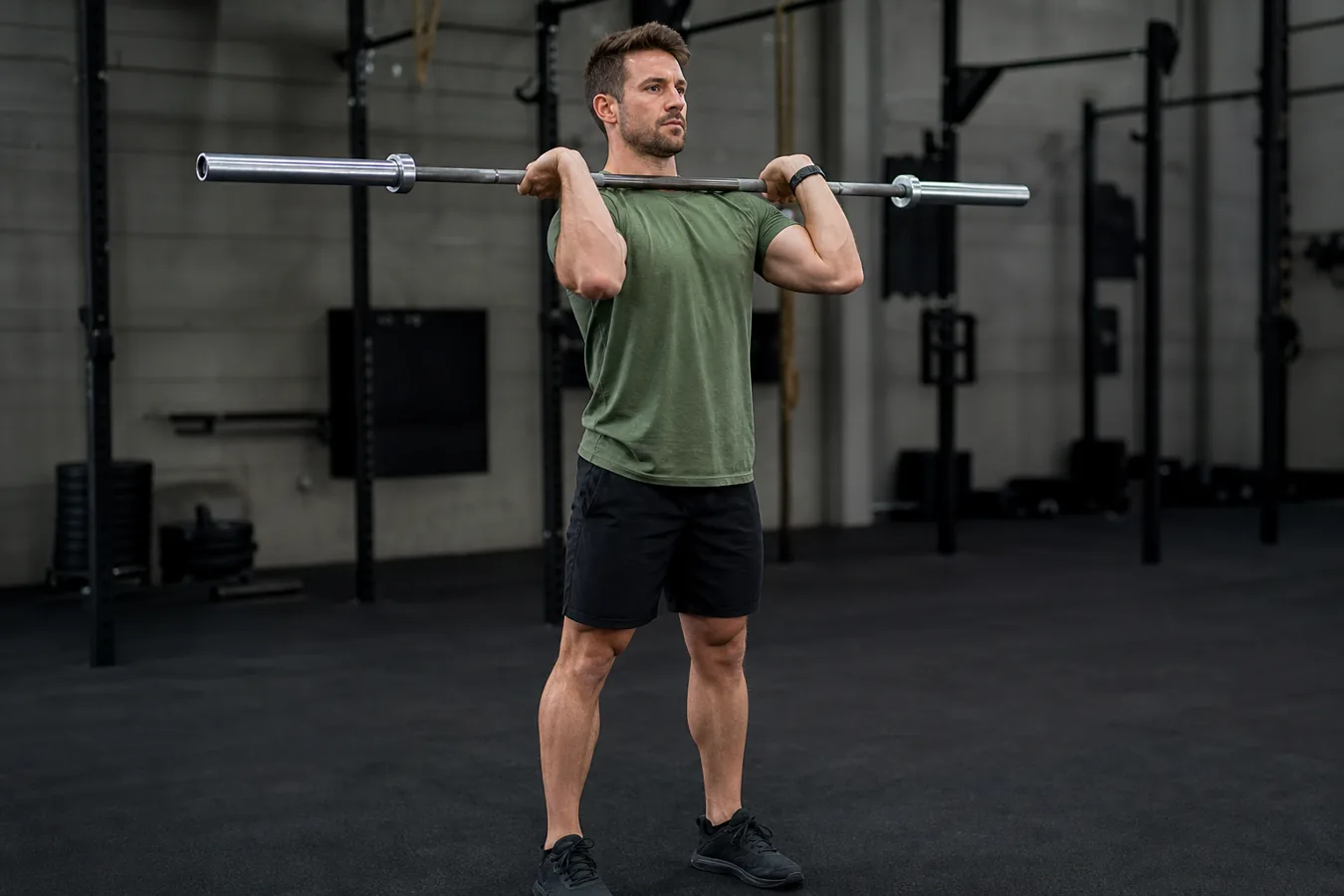
Start with the bar on the shoulders, hands just outside the shoulders, and elbows slightly in front of the bar. The grip should feel secure without forcing the wrists into a painful bend. Before the press, squeeze the legs, tighten the glutes, and pull the ribs down. You are building a post for the bar to travel on.
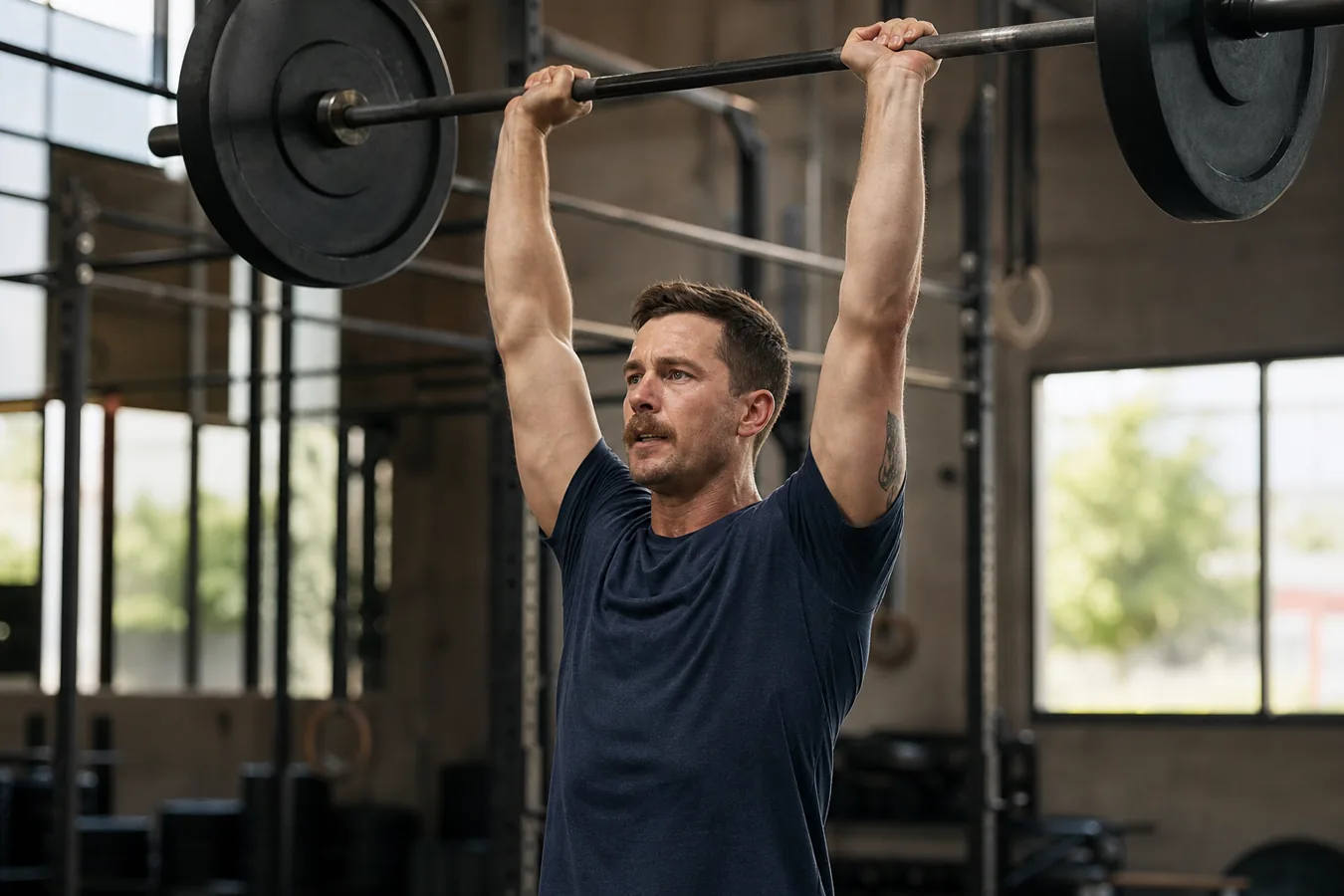
The rep begins when the bar leaves the shoulders without help from the knees. Press the bar up and slightly back as soon as it clears the forehead. The head moves out of the way, then returns through as the bar reaches lockout. At the top, the bar should sit over the middle of the foot, not in front of your face.
If you already struggle to keep a solid front rack in movements like the CrossFit front squat, the strict press will probably show the same issue. The bar needs a stable shelf before it can move well overhead.
The setup checklist before you press
Most bad strict presses are lost before the bar moves. Take a second to build tension instead of rushing the first rep. The goal is not to look stiff. The goal is to remove the loose parts that steal force from the press.
| Checkpoint | What to do | What usually goes wrong |
|---|---|---|
| Feet | Stand about hip width with full foot pressure | Rocking to the toes as the bar leaves the rack |
| Brace | Squeeze glutes and keep ribs stacked over hips | Leaning back to fake a stronger press |
| Bar path | Move the face back, then punch the head through | Pressing around the face in a long arc |
| Lockout | Finish with biceps near the ears and bar over midfoot | Stopping short with the bar still forward |
Why the bar should stay close
A strict press gets hard fast when the bar drifts away from the body. Even a few inches forward makes the lift feel heavier because your shoulders and low back have to fight the lever arm. This is why coaches often cue athletes to press close enough that the bar almost brushes the nose.
Do not solve that by throwing your chest up and leaning back. That might get one ugly rep overhead, but it teaches the wrong pattern. Keep the torso braced, move the head back just enough, and press through a narrow path. Once the bar passes the forehead, drive the head through and finish tall.
This carries over to faster barbell work. Athletes who lose the bar forward during CrossFit thrusters often need more strict pressing, not just more conditioning. A better press gives the dip and drive somewhere solid to land.
A short video worth watching
This CrossFit shoulder press demo is useful because it keeps the movement simple. Watch the knees, the rib position, and the way the bar finishes over the body. If your reps look more like a standing incline bench, this is the shape to compare against.
Drills that fix weak overhead positions
Keep these boring on purpose. The strict press rewards clean practice more than hype. If the drill turns into a fight, reduce the load and make the position obvious again.
- Empty bar strict press: three sets of five slow reps. Pause at the forehead, then finish overhead.
- Pressing from pins: start just below the chin to learn a strong first inch without dipping.
- Overhead hold: hold the lockout for 10 to 20 seconds with glutes tight and ribs down.
- Tempo negative: lower the bar for three seconds and keep the elbows under control.
When to scale the strict press in a WOD
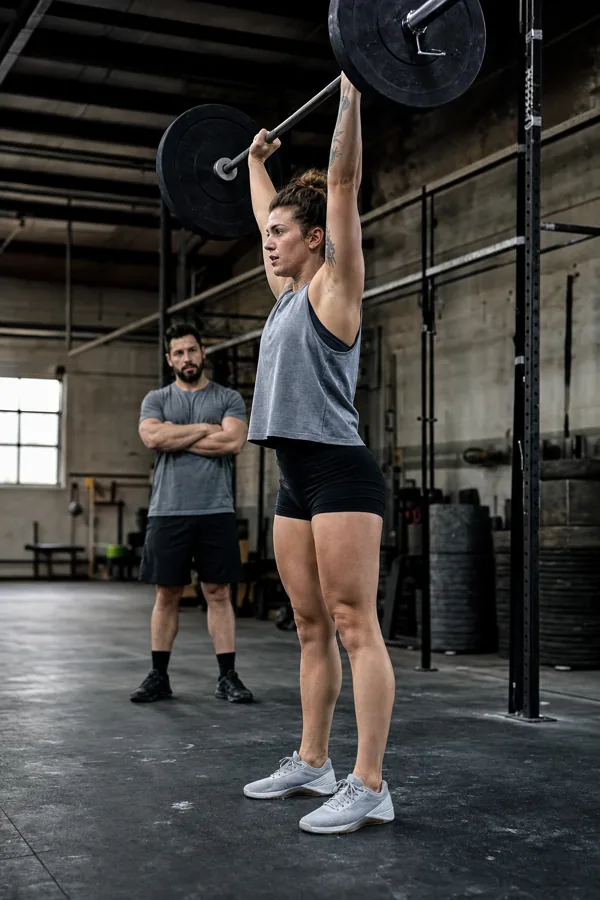
Scale the strict press when you cannot keep the rep strict after the first few attempts. If every set turns into knee dip, backbend, and a slow grind, the workout is no longer training the intended movement. Use a lighter bar, dumbbells, or fewer reps so the press stays honest.
Dumbbells can be a good option if the barbell locks you into a painful wrist or shoulder position. They also expose side to side differences that a bar can hide. For athletes learning to move weight from the floor to overhead, the same patience shows up in the CrossFit dumbbell snatch: clean path first, speed second.
What to test next
Film one set of five strict presses from the side. Look for three things: knees staying locked, ribs staying down, and the bar finishing over the middle of the foot. If all three hold, add a little load next time. If one breaks, keep the weight boring until the pattern is automatic.
The strict press is not flashy, but it is honest. It tells you whether your overhead strength is built on position or borrowed from momentum.


