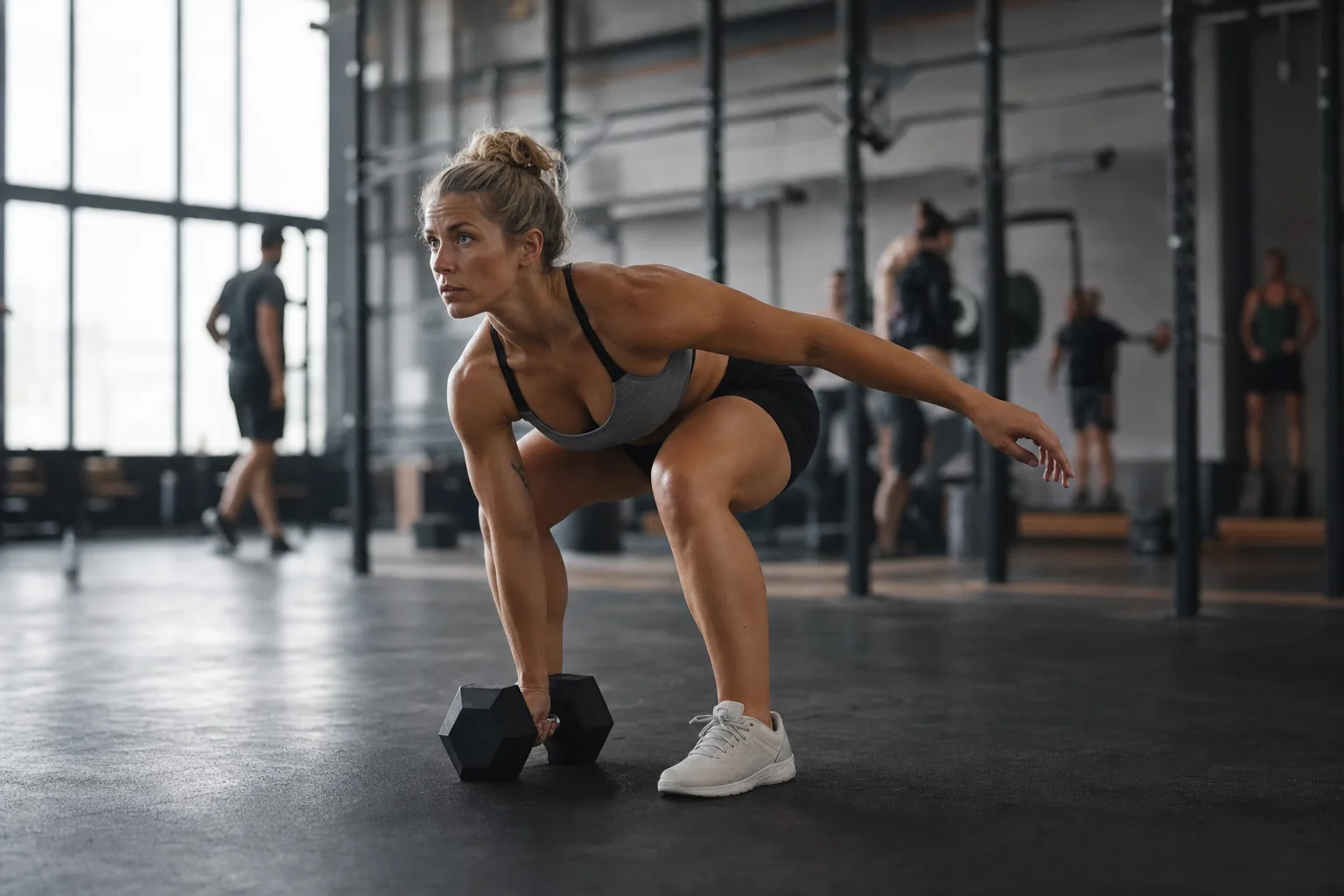
The plan
- What the dumbbell snatch should feel like
- The setup decides more than people think
- Pull with the legs, then punch through
- How to switch hands without wasting reps
- A useful video cue before you practice
- How to pace dumbbell snatches in a WOD
- When to scale the dumbbell snatch
- What to check before your next WOD
The dumbbell snatch looks simple until the clock starts. One hand, one dumbbell, ground to overhead. Then the reps pile up, the back starts doing too much of the work, and the lockout gets soft.
That is why the dumbbell snatch in CrossFit needs more than raw pulling power. The best reps come from a clean setup, a patient first pull, a fast punch overhead, and smart switching when the workout turns into a lung burner.
- Set up with the dumbbell between your feet, back tight, and hips loaded before the first pull.
- Drive with the legs first. If your arm bends early, you will burn your grip and shoulders fast.
- In high-rep WODs, switch hands with a plan instead of improvising when you are already tired.
What the dumbbell snatch should feel like
A good rep does not feel like a one-arm curl followed by a press. It feels more like a jump and a punch. The legs start the movement, the hips finish the drive, and the arm guides the dumbbell close to the body before locking out overhead.
If you have to muscle every rep, something is off. Usually it is one of three things: the dumbbell starts too far forward, the athlete yanks with the arm too soon, or the lockout turns into a slow press. None of those problems gets better at rep 40.
The setup decides more than people think
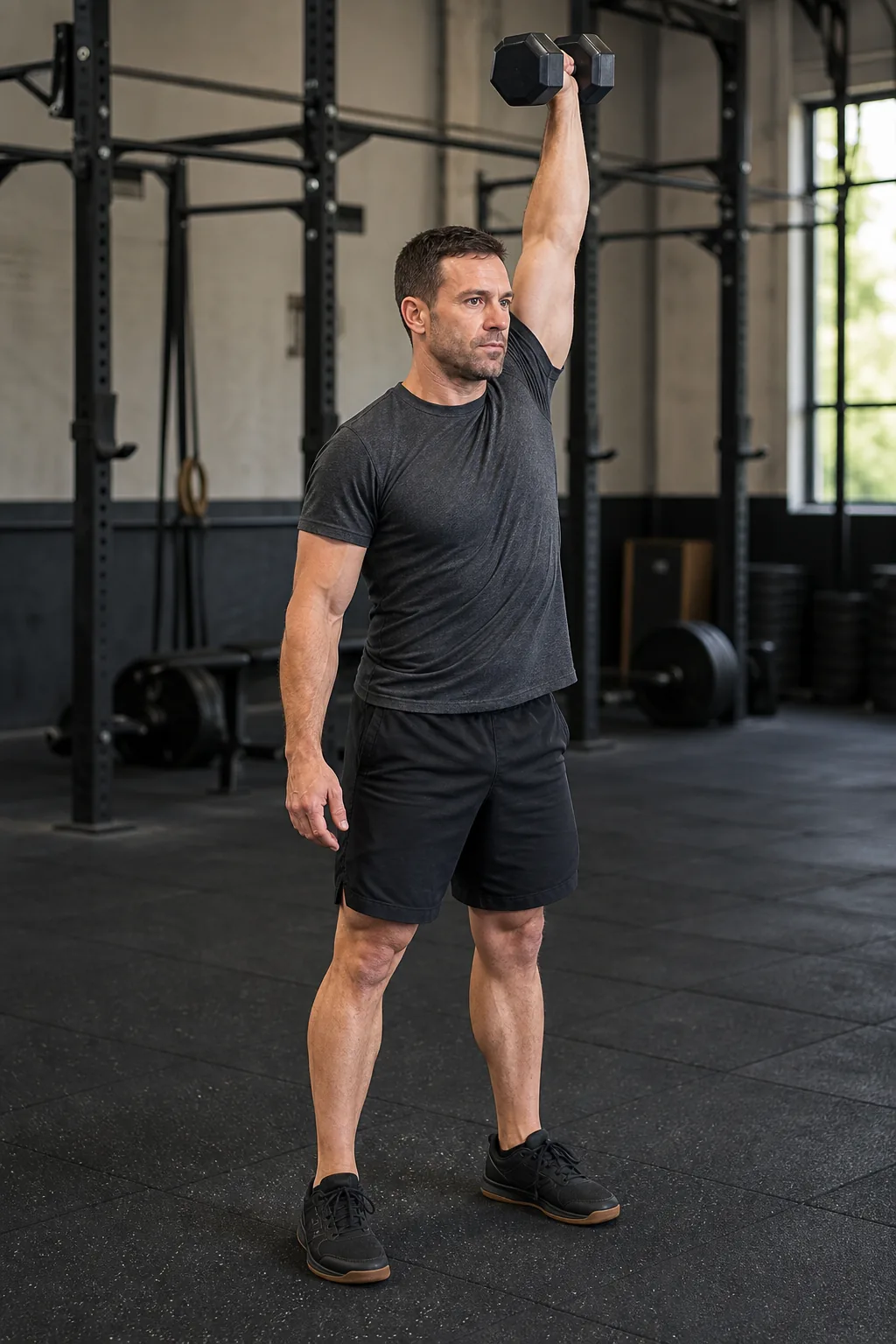
Start with the dumbbell on the floor between your feet, not way out in front. Your stance should be close to squat width, with the handle angled so you can grab it without twisting your shoulder.
Before you pull, brace like you would before a deadlift. Chest proud, lats on, eyes slightly forward. You do not need a perfect Olympic lifting start position, but you do need enough tension that the first inch of the rep does not yank your spine out of position.
This is also where a proper CrossFit warm-up pays off. If your hips and shoulders are cold, the first round becomes a negotiation with your body instead of a clean movement pattern.
Pull with the legs, then punch through
The dumbbell should leave the floor because your legs and hips drove it up, not because your biceps panicked. Think of standing hard, then pulling the elbow high and outside just long enough to keep the bell close.
At the top, punch the hand through and finish with the dumbbell stacked over the shoulder, ribs down, and feet flat. If you catch it forward, you will spend the next second chasing balance. In a workout with burpees, box jumps, or rowing, that second adds up quickly. The same patience you use in efficient rowing technique applies here too: rushing early usually costs more later.
| Fault | What it feels like | Fix to try next set |
|---|---|---|
| Early arm pull | Forearm and biceps blow up before your legs do | Delay the bend until the dumbbell passes the knees |
| Loose back off the floor | Every rep feels like a rounded deadlift | Reset the chest and lats before touching the next rep |
| Soft lockout | You press out the final inches overhead | Use more hip drive and punch earlier |
| Wild hand switch | The dumbbell swings away from the body | Switch at eye level or on the floor with control |
How to switch hands without wasting reps
Most WODs allow the dumbbell to switch hands in the air or on the floor, but the standard depends on the workout. Check the rules first. Then pick the method you can repeat under fatigue.
The air switch is faster when you already move well. Bring the dumbbell down under control, change hands around face or chest height, then guide it to the floor. The floor switch is slower but cleaner for newer athletes or heavy loading. Place it down, change hands, and go again.
The mistake is switching one way in round one and another way in round three because the workout got uncomfortable. Decide before the timer starts. If the dumbbell is heavy or your overhead position is inconsistent, use a smarter scaling plan and keep the movement honest.
A useful video cue before you practice
CrossFit's short demo is worth watching before a technique session because it shows the finish position clearly: the dumbbell travels close, the hips do the work, and the lockout is decisive rather than pressed out slowly.
How to pace dumbbell snatches in a WOD
For light loads, the trap is going unbroken just because you can. Ten fast reps can be fine. Fifty fast reps with no breathing rhythm can wreck the rest of the workout.
Use a breathing pattern you can keep. Many athletes do well with a short exhale as the dumbbell passes the hip or locks out overhead. If the workout includes other grip-heavy movements, break before your grip is gone. A planned 6-6-6 beats an ugly set of 18 followed by a long stare at the floor.
When to scale the dumbbell snatch
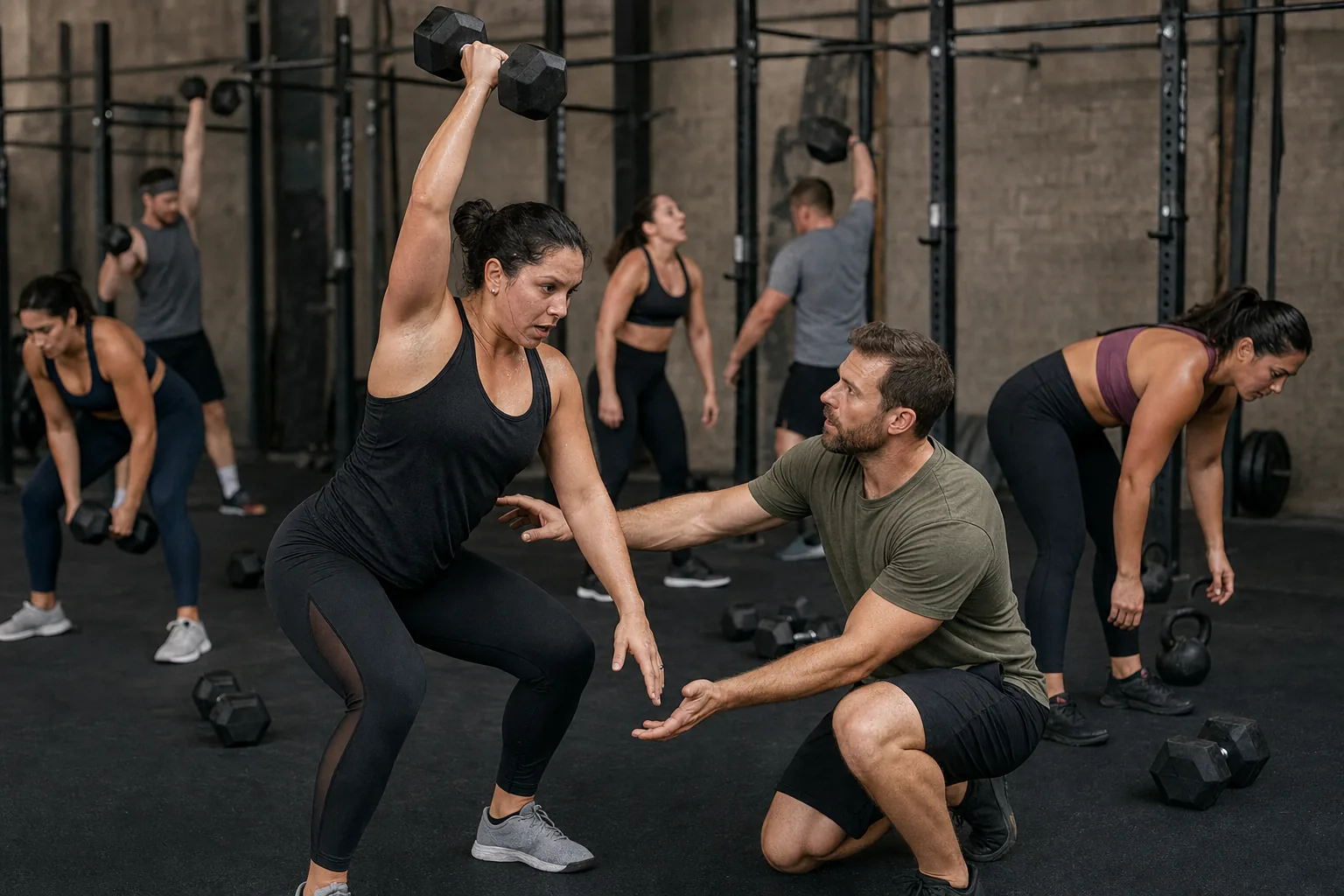
Scale when the movement changes shape. That means your back rounds every rep, the dumbbell drifts away from you, the lockout becomes a press, or you cannot control the switch. The goal is not to survive the RX weight once. The goal is to train the stimulus the workout asked for.
Good scaling options include reducing load, using a hang dumbbell snatch, switching on the floor, lowering the rep count, or using a kettlebell if that is the better tool available. For athletes with shoulder irritation, a coach may swap the movement entirely. Pain overhead is not a character test.
What to check before your next WOD
Take three practice reps per arm before the workout and watch for one thing: does the dumbbell stay close without turning into a curl? If yes, add speed slowly. If not, slow down and fix the pull before the workout fixes it for you.
The dumbbell snatch rewards athletes who move just clean enough to stay relaxed. Not perfect. Clean enough. That is usually the difference between a steady round and a messy one.


