The plan
- The stroke order that fixes most rowing problems
- Why CrossFit athletes often row too hard and too short
- A useful video cue before you change everything
- Damper setting: stop treating 10 like a badge of honor
- How to pace rowing calories in a WOD
- A simple drill for your next warm-up
- When to push and when to back off
Rowing looks simple until the clock starts, the damper is too high, and the monitor begins punishing every rushed pull. In a CrossFit WOD, the rower is rarely just cardio. It can decide whether you step off ready to move or stumble into the next station with your legs full of cement.
Good CrossFit rowing technique is not about making every athlete row like an Olympic specialist. It is about getting more meters from each stroke, wasting less energy, and keeping enough composure to transition well. That matters on rowing calories, 500-meter repeats, longer aerobic pieces, and workouts where the rower sits between wall balls, burpees, cleans, or box jumps.
- Start with legs, then hips, then arms. Reverse that order on the way back.
- Most CrossFit rowing mistakes come from rushing the recovery, yanking early with the arms, or setting the damper too high.
- For WODs, the goal is a repeatable stroke that leaves you able to move well after the row, not one heroic sprint that wrecks the rest of the workout.
The stroke order that fixes most rowing problems
The clean rowing sequence is easy to say and harder to keep under fatigue: legs, body, arms on the drive, then arms, body, legs on the recovery.
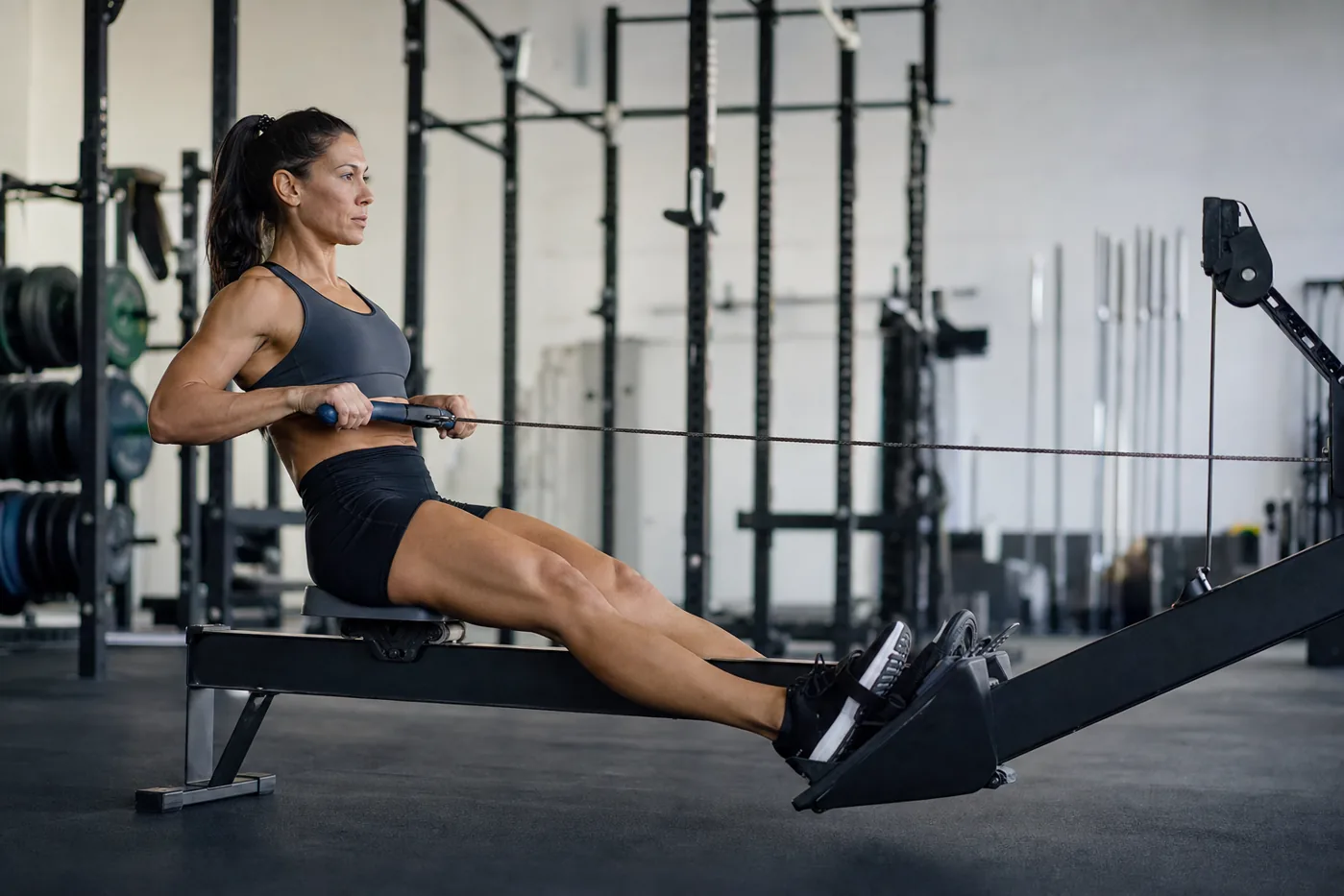
At the catch, sit tall with the handle out front, shins close to vertical, shoulders relaxed, and heels connected enough that you can push instead of tug. The first move is not a biceps curl. Push the machine away with your legs. When the handle passes the knees, swing the torso slightly back, then finish by drawing the handle toward the lower ribs.
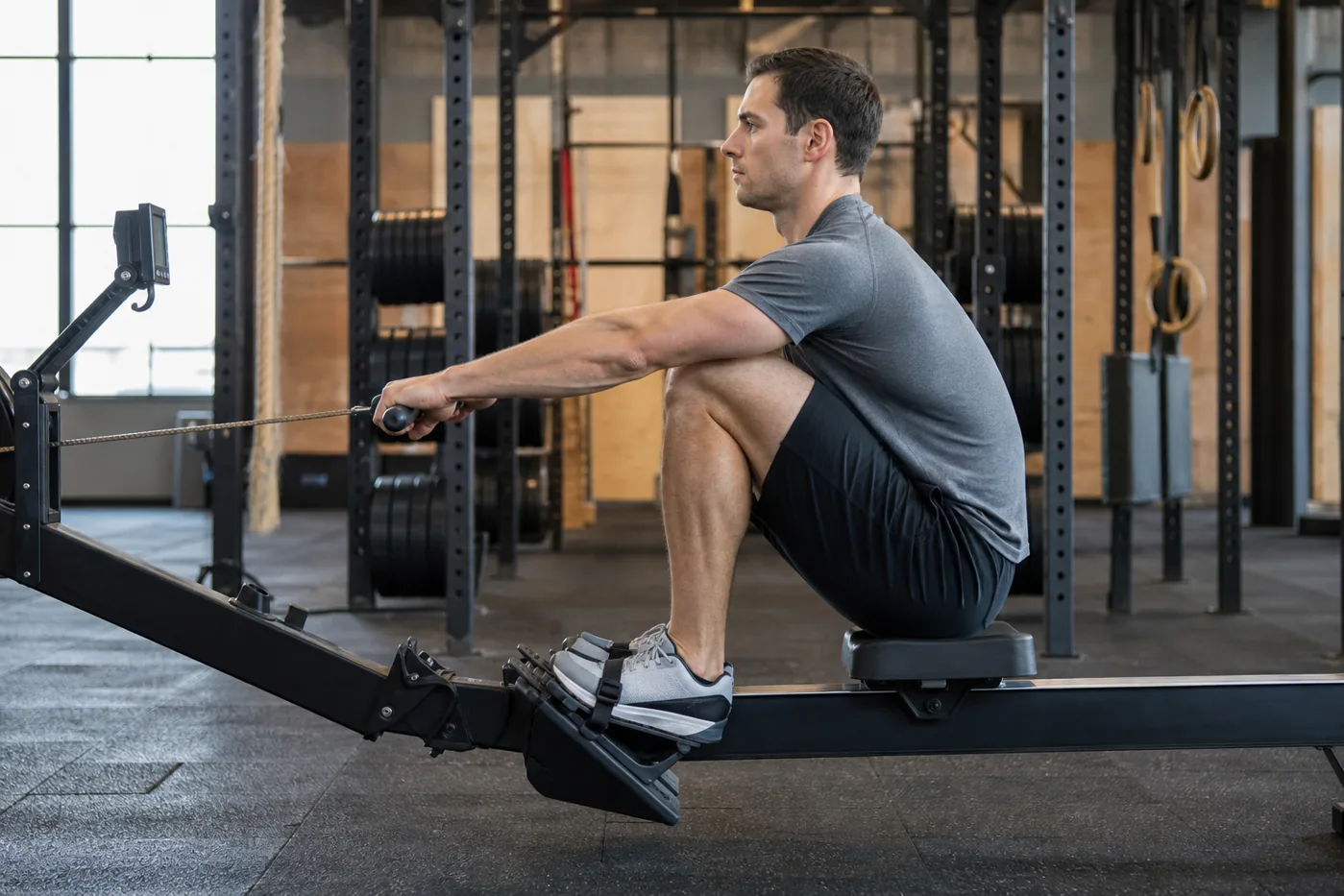
The recovery should feel like the drive played backward, but calmer. Extend the arms first, hinge the torso forward, then let the knees bend once the handle has cleared them. If the knees shoot up too early, the handle has to climb over them. That little detour costs time and rhythm every stroke.
Why CrossFit athletes often row too hard and too short
CrossFit rewards urgency, but rowing punishes panic. The athlete who attacks every stroke with a short pull and a fast slide usually sees the stroke rate climb while the split barely improves. It feels intense. It just is not efficient.
A better cue is simple: make the hard part hard and the easy part easy. Drive with intent. Then let the recovery breathe. You should not drift back to the catch like you are asleep, but you also should not slam into it. The rower gives back what you put into the flywheel. If you keep rushing the slide, you spend more energy resetting your body than moving the handle.
This is the same trap athletes hit when they hurry through other cyclical movements. If your transitions get sloppy, the workout gets expensive fast. The same idea shows up in our guide to burpee box jump over technique, where saving a half-second is useless if it makes the next rep worse.
A useful video cue before you change everything
CrossFit's short video "Rowing Technique Tips" is useful because it keeps the focus narrow: body position, stroke order, and timing. Watch it once before your next easy row, then pick one cue to test instead of trying to rebuild your entire stroke mid-workout.
Damper setting: stop treating 10 like a badge of honor
The damper is not a difficulty score. On most indoor rowers, a higher damper lets more air into the flywheel and makes each stroke feel heavier. Some big, powerful athletes like that. Many CrossFit athletes set it too high, then wonder why their legs disappear halfway through a chipper.
For most mixed-modal workouts, a moderate setting is a better starting point. Think of the row as something you need to repeat and recover from, not a max-effort deadlift with a handle. If the workout has heavy squats, thrusters, box jumps, or running after the row, an overly heavy pull can make the rest of the workout uglier than it needs to be.
| Mistake | What it looks like | Fix to try |
|---|---|---|
| Pulling early with the arms | Elbows bend before the legs drive | Think "push first" for the first half of the stroke |
| Rushing the slide | High stroke rate, split does not improve much | Drive hard, recover with control |
| Overreaching at the catch | Back rounds and shoulders collapse forward | Sit tall and reach from the hips, not the spine |
| Finishing too low or too high | Handle drops into the lap or pulls near the neck | Finish around the lower ribs |
| Damper too high | Heavy strokes, legs burn early | Use a moderate setting and check if pace holds longer |
How to pace rowing calories in a WOD
Calories change the psychology of rowing. Athletes see the number move slowly at first, then they panic. The answer is not always a higher stroke rate. It is usually a stronger drive, cleaner rhythm, and a pace that matches what comes next.
If the row is the only hard part of the workout, you can push. If it is followed by gymnastics, heavy barbell work, or high-skill reps, leave yourself a gear. The rower should not steal the movement quality you need later. That is where smart scaling matters too. If the prescribed calories force you into survival mode from round one, use the same logic we explain in this CrossFit scaling guide: modify the dose while keeping the training goal intact.
A simple drill for your next warm-up
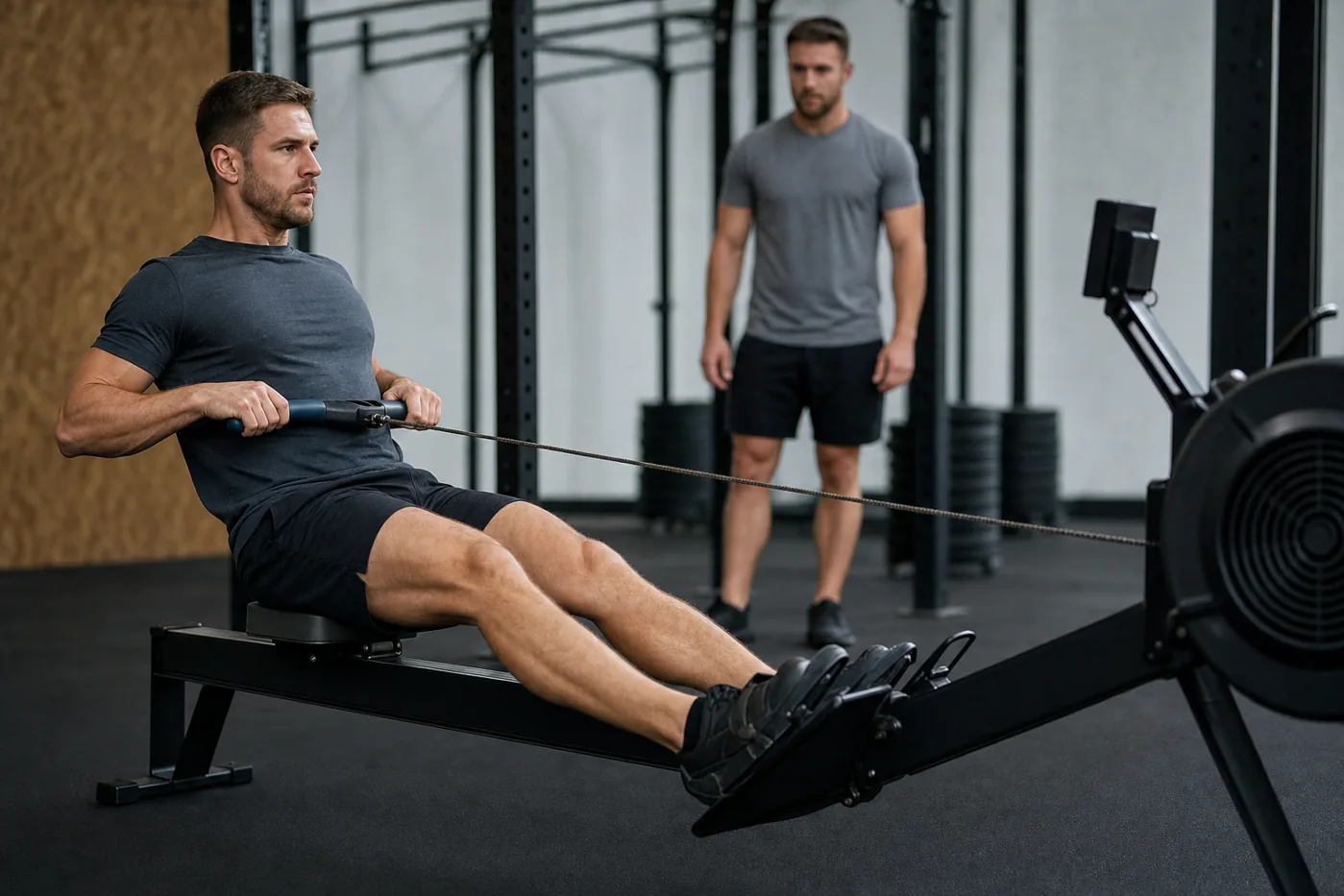
Before your next rowing workout, spend four minutes on a stroke order drill. Row lightly with legs only for 10 strokes. Add the body swing for 10 strokes. Add the arms for 10 strokes. Then row normally for 30 seconds and see if the timing holds.
Do not chase a heroic split during the drill. The point is coordination. If you can feel the legs start the drive and the arms stay patient, you are already ahead of most rushed WOD rowing.
When to push and when to back off
Push the row when it is short, isolated, or placed near the end of the workout. Back off a little when the row sits before movements that demand leg drive, grip, or breathing control. The best row in a CrossFit workout is not always the fastest row on the monitor. It is the one that lets you keep moving after your feet hit the floor.
Next session, pick one thing to watch: stroke order, recovery speed, damper setting, or posture at the catch. One clean fix beats six vague cues. The monitor will tell you quickly if the change is working.


