The plan
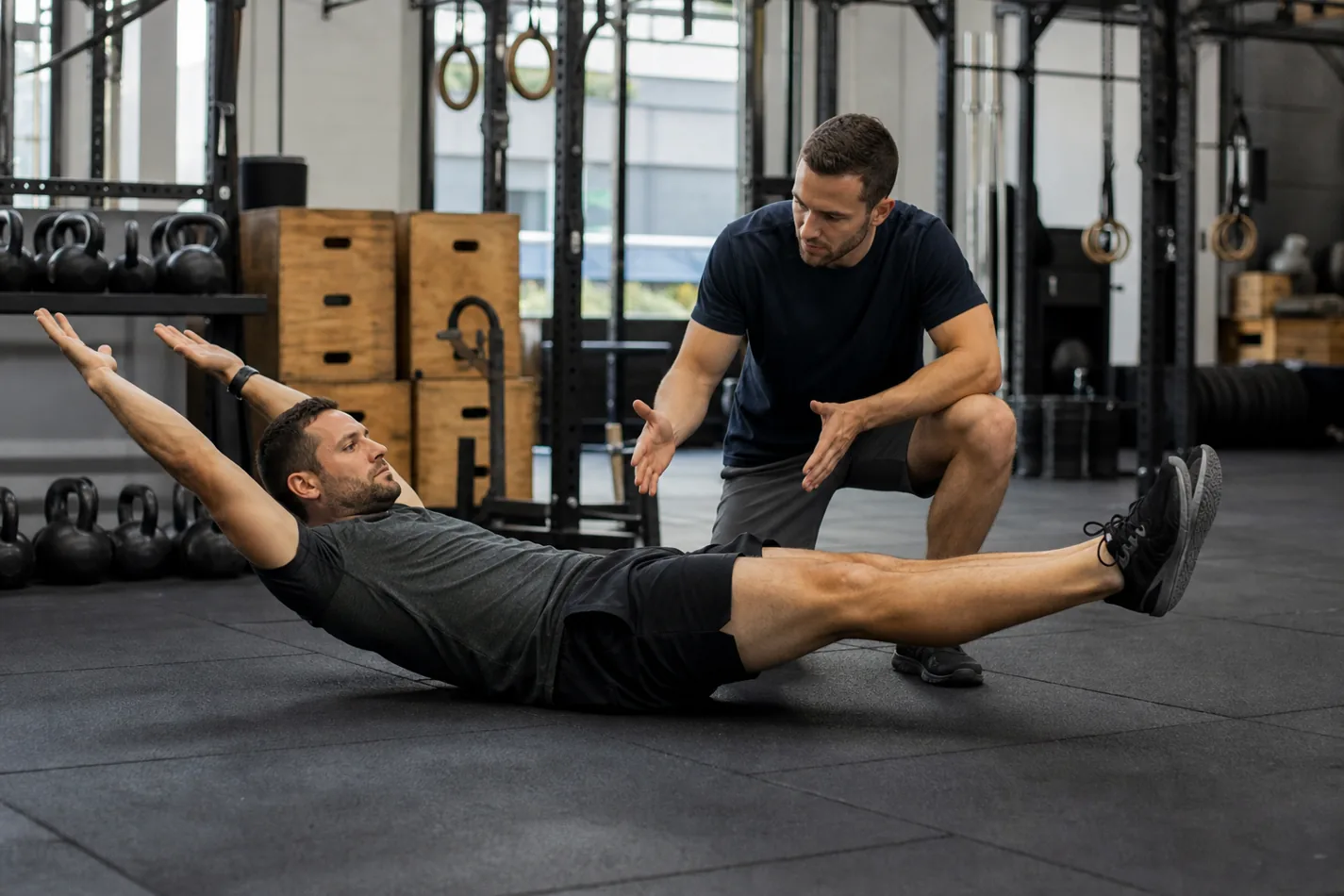
A hollow hold does not look dramatic. You lie on your back, lift your shoulders, lift your legs, and try not to shake too much. Then it shows up in gymnastics practice and suddenly explains half the problems in your kipping swing, handstand line, toes-to-bar rhythm, and core work.
The point is not to suffer in a banana shape until the timer ends. A good hollow hold teaches the body to stay long, tight, and organized while the ribs want to flare and the low back wants to peel off the floor. That position matters in CrossFit because so many skills ask you to move fast without losing your midline.
- A real hollow hold keeps the ribs down, pelvis tucked, and low back controlled against the floor.
- If the back arches or the neck takes over, scale the hold before adding time or movement.
- The carryover is biggest for gymnastics skills, hanging work, handstands, and fast core sets.
What a hollow hold should actually train
Set up on your back with arms overhead, legs straight, and feet together. Before lifting anything, pull the ribs down and lightly tuck the pelvis so the low back stays connected to the floor. Then raise the shoulders and legs only as high as you can while keeping that shape.
The height of the legs is not the standard. The standard is control. If your feet are low but your back is arched, you are not building the position you need. Bring the legs higher, bend the knees, or shorten the set. That same midline control shows up later in toes-to-bar timing, wall walk control, and any skill where a loose trunk turns into wasted swing.
The setup cues that fix most bad reps
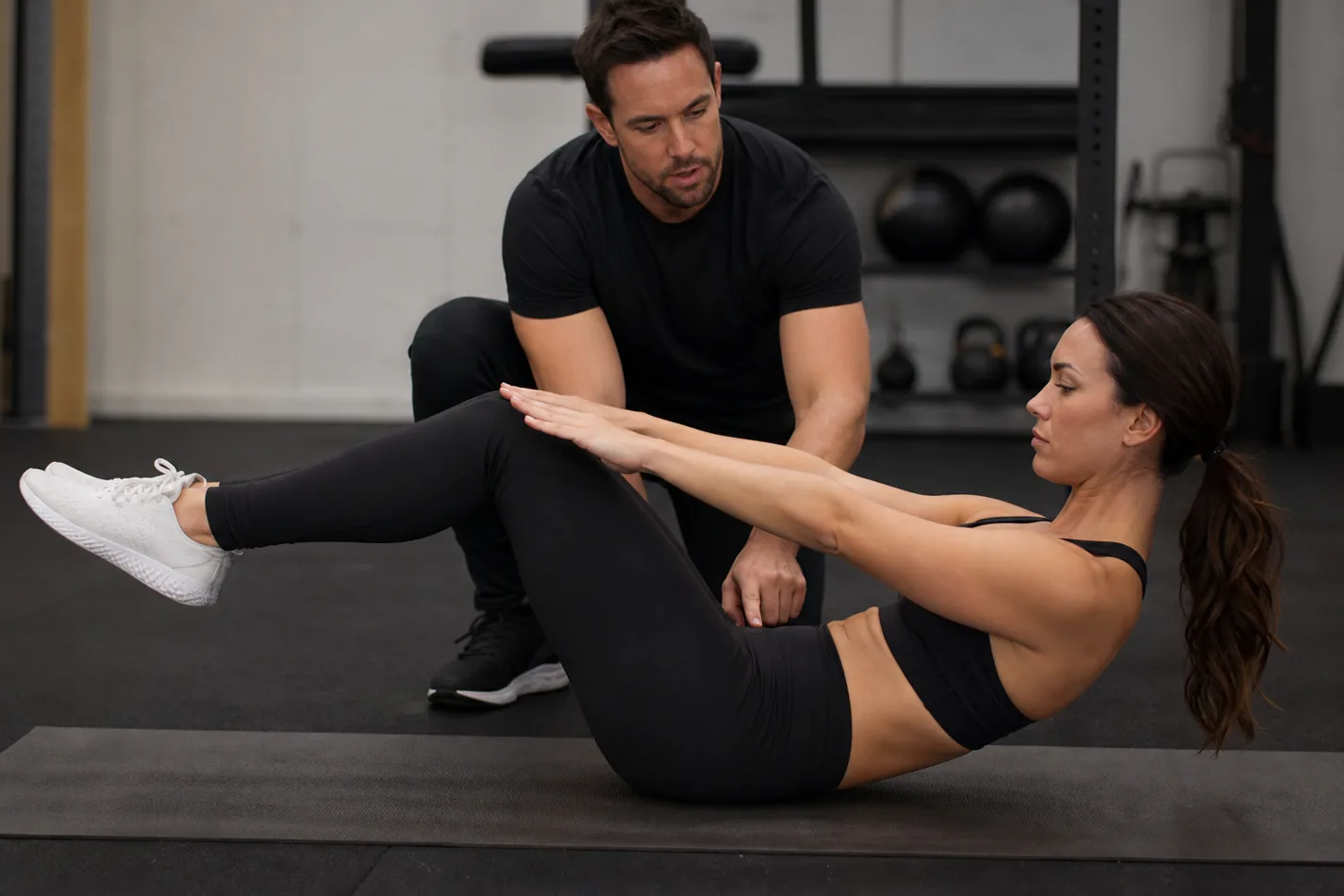
Start small. Exhale first, pull the ribs toward the hips, and press the low back into the mat. From there, lift the shoulders enough to see your knees or feet. Keep the chin quiet. The neck should not be doing the work that the abs refuse to do.
Leg position comes last. Straight legs with pointed toes look clean, but only if the trunk is still honest. Athletes who rush to the hardest version usually end up with an arched back, tight hip flexors, and a hold that looks brave but teaches very little.
The CrossFit demo below is worth a quick watch because it shows the hollow body as a position, not just an ab exercise. Look at the rib position first, then the legs. Most athletes try to fix the legs before they fix the trunk.
How to scale the hollow hold without watering it down
The best scale is the version that lets you keep pressure through the low back for the full working interval. For some athletes, that means bent knees. For others, it means arms by the sides instead of overhead. Both are fine if the position is cleaner.
| Version | Use it when | Keep this standard |
|---|---|---|
| Dead bug hold | The low back lifts as soon as both legs extend | Ribs stay down while one limb moves at a time |
| Tuck hollow hold | The athlete can hold shape but not with long legs | Knees stay bent and shoulders stay off the floor |
| Arms by sides | Overhead arms make the ribs flare | Hands reach forward without curling into a full sit-up |
| Full hollow hold | The athlete can stay tight for the assigned time | Low back stays connected and breathing stays controlled |
This is the same logic coaches use when they scale the workout without changing the stimulus. The goal is not to make the movement easy. The goal is to make the right position repeatable while breathing hard.
When to use hollow holds in a CrossFit session
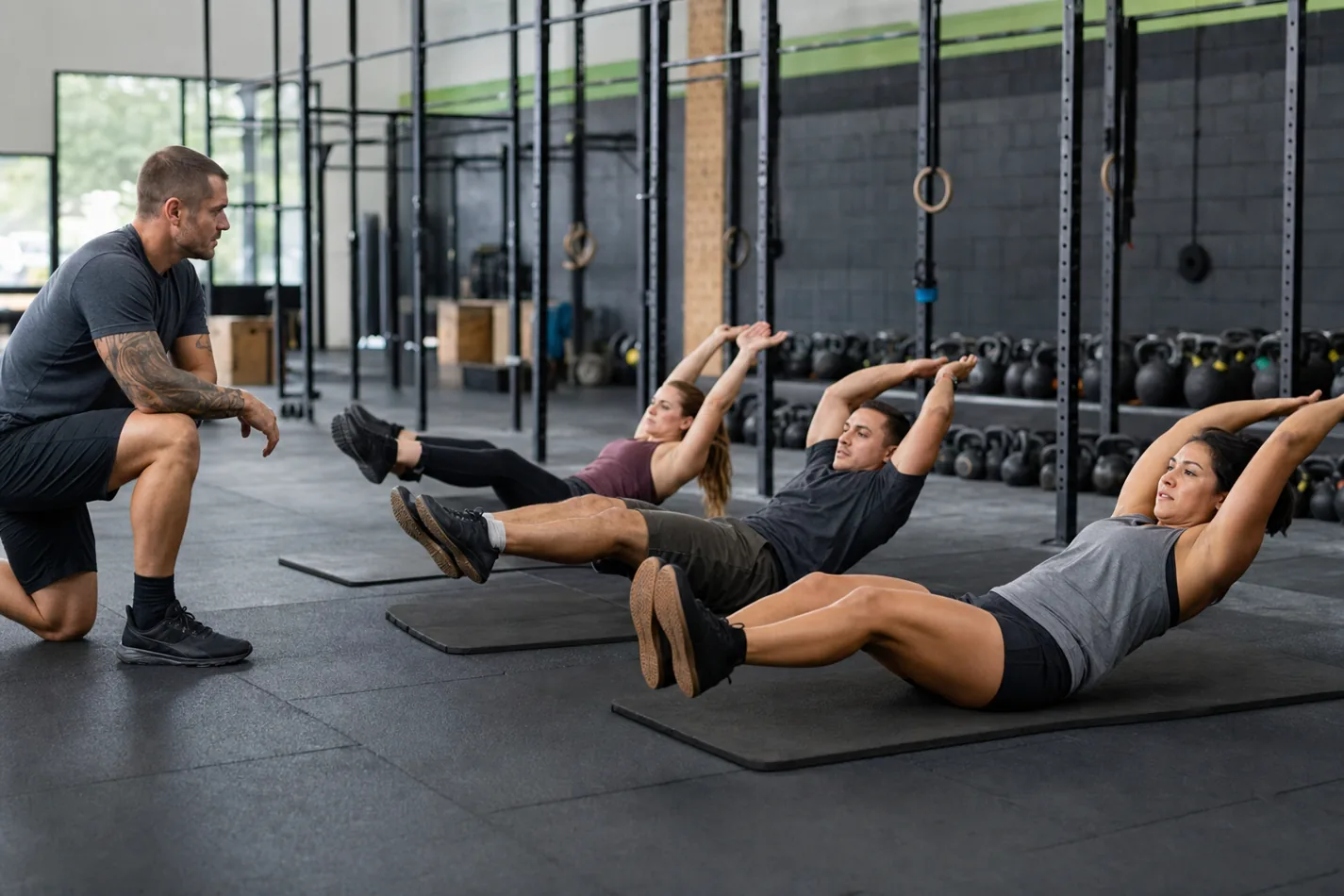
Hollow holds fit well before gymnastics work, in warm-ups, and as short accessory pieces after lifting. Ten to twenty seconds of honest tension can do more than a minute of sloppy shaking. If the class is preparing for pull-ups, toes-to-bar, wall walks, or handstand work, the hollow hold gives athletes a simple body line to feel before the skill gets faster.
They also pair well with strict pull-up strength, hanging knee raises, plank variations, and V-up mechanics. Just be careful with volume. If the WOD already has a lot of sit-ups, GHD work, or toes-to-bar, extra hollow work can turn into low quality fatigue quickly.
Common faults that tell you to scale
- Low back floating off the floor: bend the knees or lift the legs higher until the back stays down.
- Neck pulling hard: relax the jaw, look toward the thighs, and shorten the hold.
- Ribs flaring upward: exhale before the hold and bring the arms forward if needed.
- Legs shaking out of position: use smaller sets instead of grinding through a broken shape.
- Breath held from the start: reduce the difficulty until you can take short, controlled breaths.
What to test next
Try three sets of ten seconds before your next gymnastics piece. If you can keep the low back down, breathe, and come out of the hold without your hip flexors screaming, extend the legs lower next time. If not, keep the scale and make the position cleaner. Hollow work pays off when it looks almost boring. That is usually when it is finally doing its job.


