The plan
V-ups look like a small core movement until they show up in a fast CrossFit workout. Then the first set feels sharp, the second set gets loose, and by the third round the movement often turns into a leg swing with a tired crunch attached.
The fix is not to chase a bigger kick. A good V-up starts with hollow tension, folds from both ends, and finishes with control. If the athlete loses that shape, the reps may still count in a loose gym setting, but they stop training the thing the movement is supposed to train.
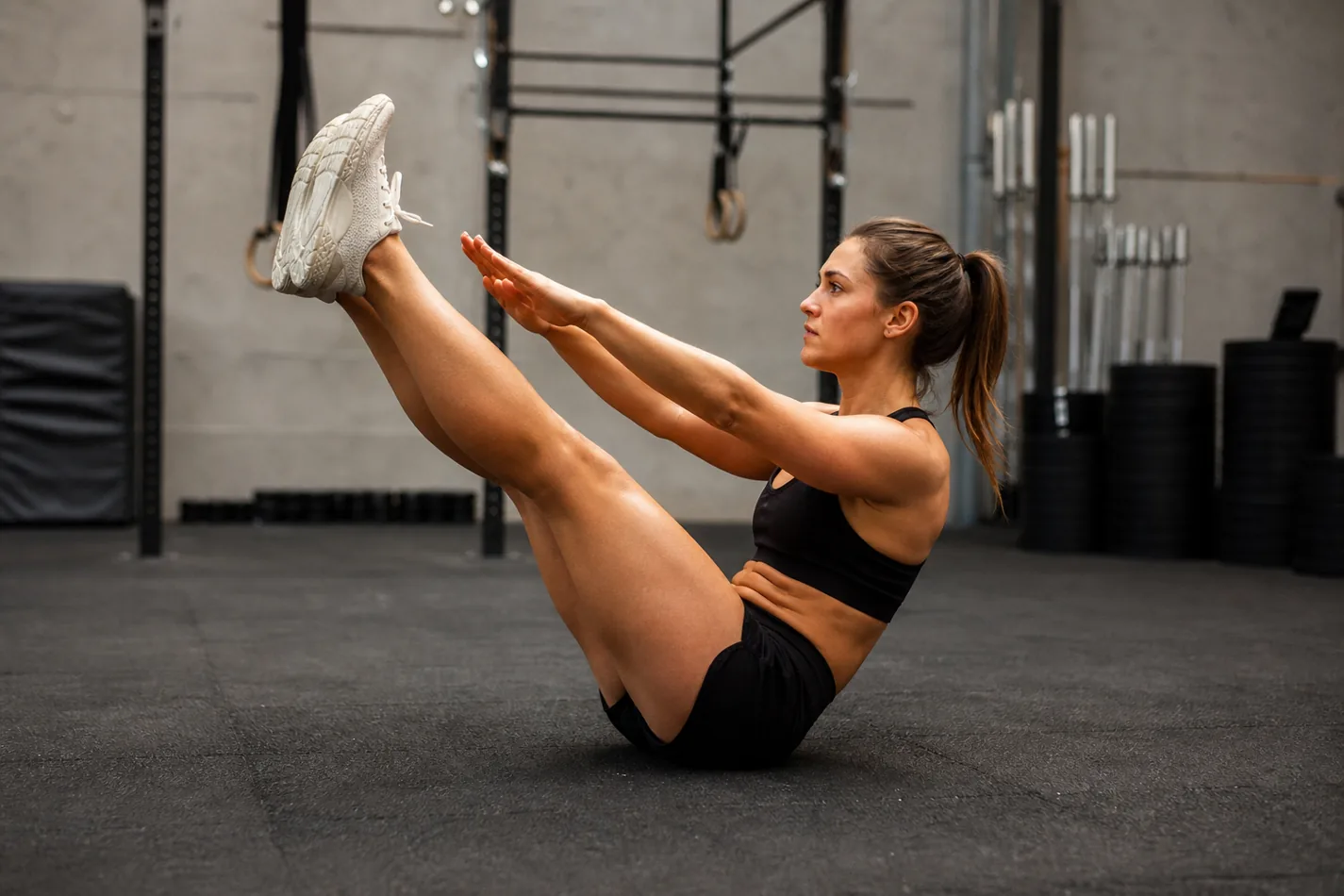
- A strong V-up uses the abs to close the body, not just hip flexors yanking the legs up.
- The best scale is the version that keeps hollow position, rhythm, and clean contact at the top.
- In workouts, small smooth sets beat one huge opening set followed by sloppy singles.
What a clean V-up should feel like
Start on your back with arms overhead, legs straight, ribs pulled down, and lower back controlled against the floor. From there, reach the hands and feet toward each other. The torso and legs should rise together. At the top, the body makes a sharp V shape before returning to the floor with enough control to keep the next rep clean.
The mistake is letting the legs do all the work. When that happens, the hip flexors burn early and the abs never learn to hold shape. Better V-ups carry over to toes-to-bar timing, stronger hollow positions, and better control in gymnastics sets where the midline is already tired.
How to keep the reps clean under fatigue
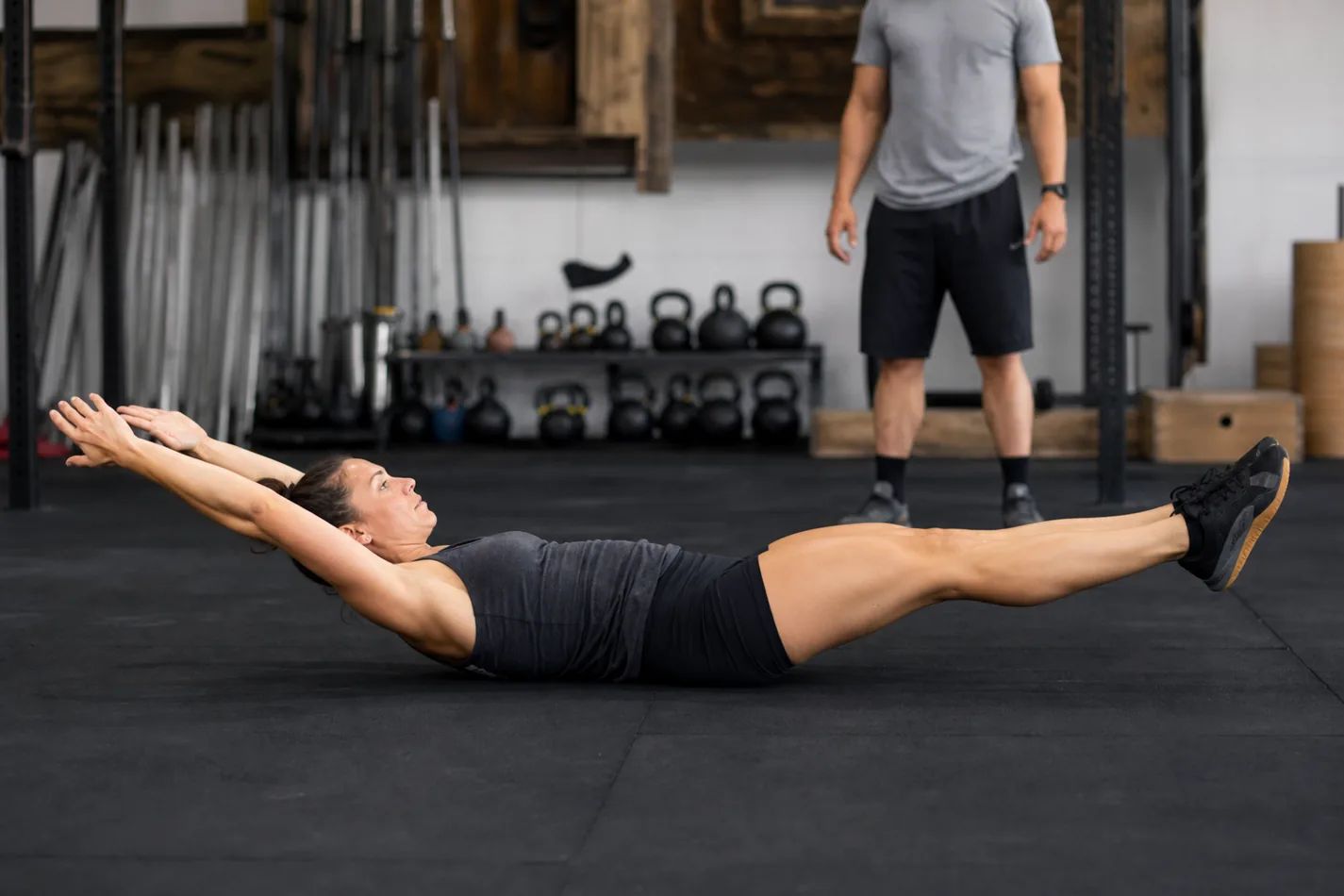
V-ups reward rhythm, but only if the athlete owns the bottom position. Think long body, tight ribs, quick fold, controlled return. If the back slams into the floor or the feet drop early, the next rep usually starts from a bad shape.
In mixed conditioning, treat V-ups like grip work for the abs. Break before the movement falls apart. Sets of five to ten with short breaths can be faster than trying to hold twenty ugly reps together, especially when the workout also includes running, rowing, burpees, or AbMat sit-up volume.
The short CrossFit demo below is useful because it shows the finish position clearly. Watch the way the athlete closes the angle from both ends instead of just throwing the legs upward.
Scaling options that still train the midline
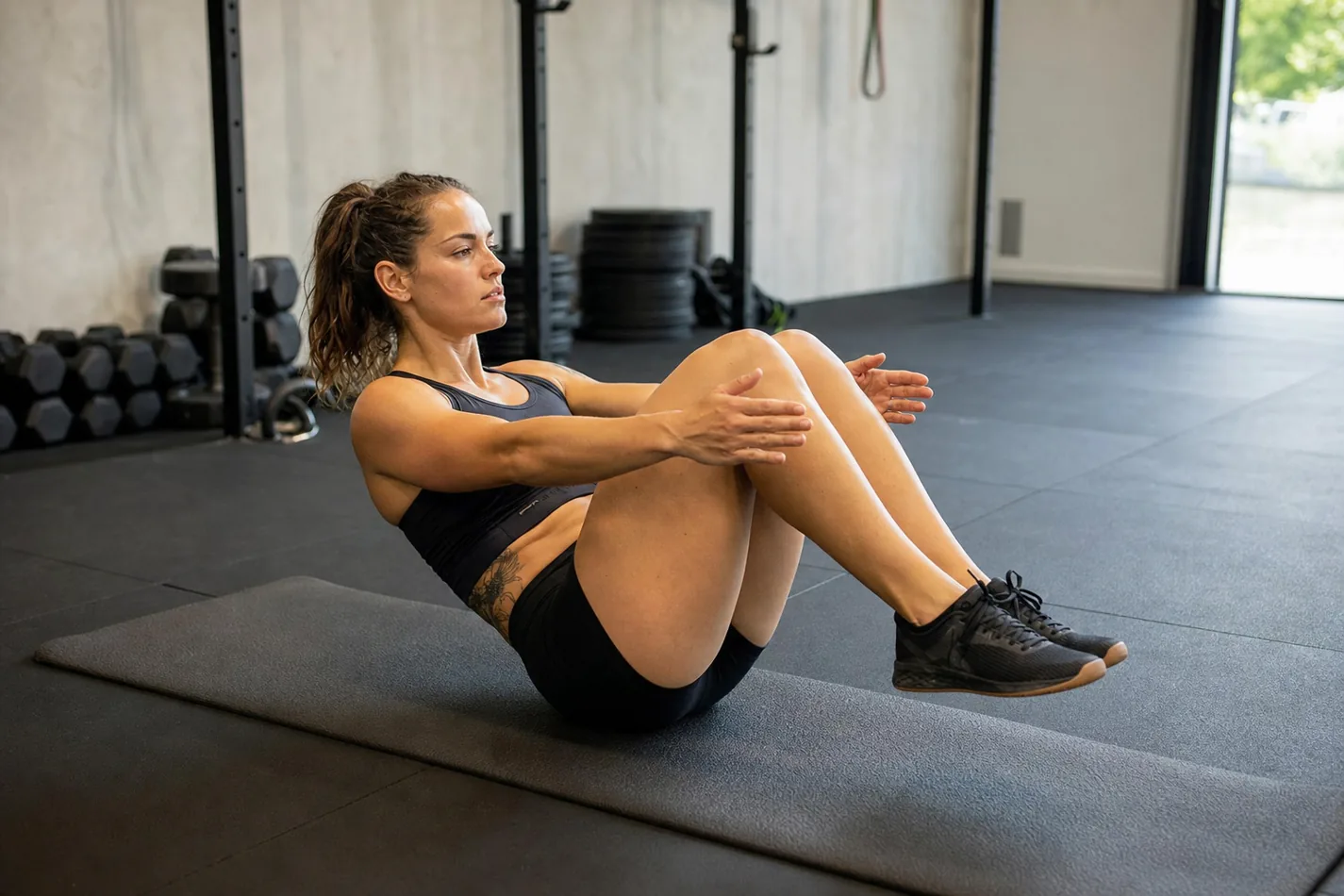
The right scale keeps the athlete folding with control. Tuck-ups, single-leg V-ups, and bent-knee V-ups all work if the athlete can keep the ribs down and avoid flopping into each rep. A scale is not a punishment. It is how you keep the target stimulus alive.
| Option | Use it when | Keep this standard |
|---|---|---|
| Tuck-up | The full V-up pulls hard on the hips or low back | Knees and chest meet with control, not a rolling sit-up |
| Single-leg V-up | The athlete needs less load but can stay long | Alternate sides without twisting through the torso |
| Bent-knee V-up | Straight legs break the hollow position | Ribs stay down and both ends move together |
| Small sets of full reps | The athlete has good reps but not big sets yet | Stop before the back starts slamming the floor |
This is the same decision a coach makes when helping someone scale the workout without missing the stimulus. The movement should still feel like a fast midline challenge. It should not become a hip flexor cramp with random toe touches.
Mistakes that make V-ups feel worse than they should
- Kicking instead of folding: reach with the arms and legs together so the abs close the angle.
- Relaxing at the bottom: keep a light hollow shape before the next rep starts.
- Chasing toe contact at any cost: a cleaner range beats a forced reach that wrecks position.
- Holding huge sets too long: break early if the workout has more core work coming.
- Ignoring low back feedback: switch to tuck-ups or smaller sets if the back takes over.
Where V-ups fit in CrossFit training
V-ups work well in warm-ups, accessory core blocks, and metcons where the goal is quick midline fatigue without equipment. They also pair well with hollow holds, dead bugs, and controlled hanging work. If the session already includes GHD sit-up work, keep V-up volume modest so the midline does not get crushed twice.
Before a high-rep workout, it is worth taking two minutes to warm up the midline before the WOD. Ten slow hollow rocks, five tuck-ups, and five clean V-ups will tell you whether the assigned version is realistic for the day.
What to check before your next WOD
Do five V-ups at the pace you expect to use in the middle of the workout. If the feet are flying up while the shoulders stay glued to the floor, scale the movement. If the lower back is taking the hit, scale sooner. The goal is simple: reps that are fast enough to repeat and strict enough to actually train your core.


