The plan
AbMat sit-ups are easy to underestimate. They do not look technical, they do not require a barbell, and most athletes can move through the first round without thinking. Then the reps climb. The hip flexors light up, the neck starts pulling, and a simple core movement turns into a slow argument with the floor.
The fix is not to make every rep dramatic. It is to set up the same way every time, use the AbMat for the job it was built to do, and pace the movement so your trunk still works when the workout gets messy.
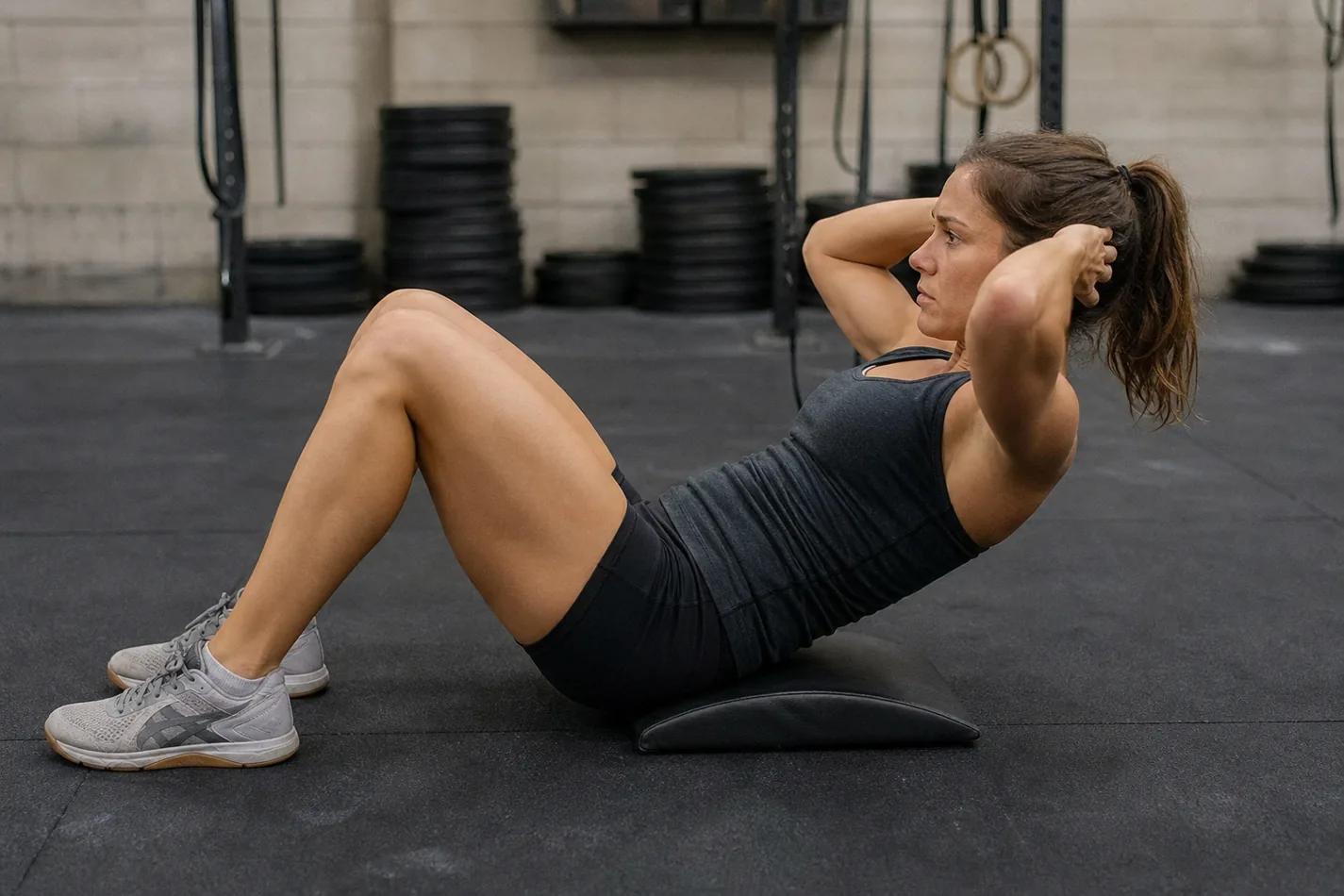
- The AbMat should support the lower back, not turn the rep into a neck yank or a hip-flexor contest.
- Fast reps still need full range: shoulders touch behind the body, then the torso comes through to the top.
- In high-rep workouts, breathe early and keep the arms relaxed. Panic reps get expensive fast.
What the AbMat is actually doing
The AbMat fills the space under the lumbar spine so the abs can move through a longer range than a flat-floor sit-up. That extra range is useful, but only if the athlete owns it. If the ribs flare, the head snaps forward, or the feet bounce around, the movement stops looking like trunk flexion and starts looking like a race to survive the standard.
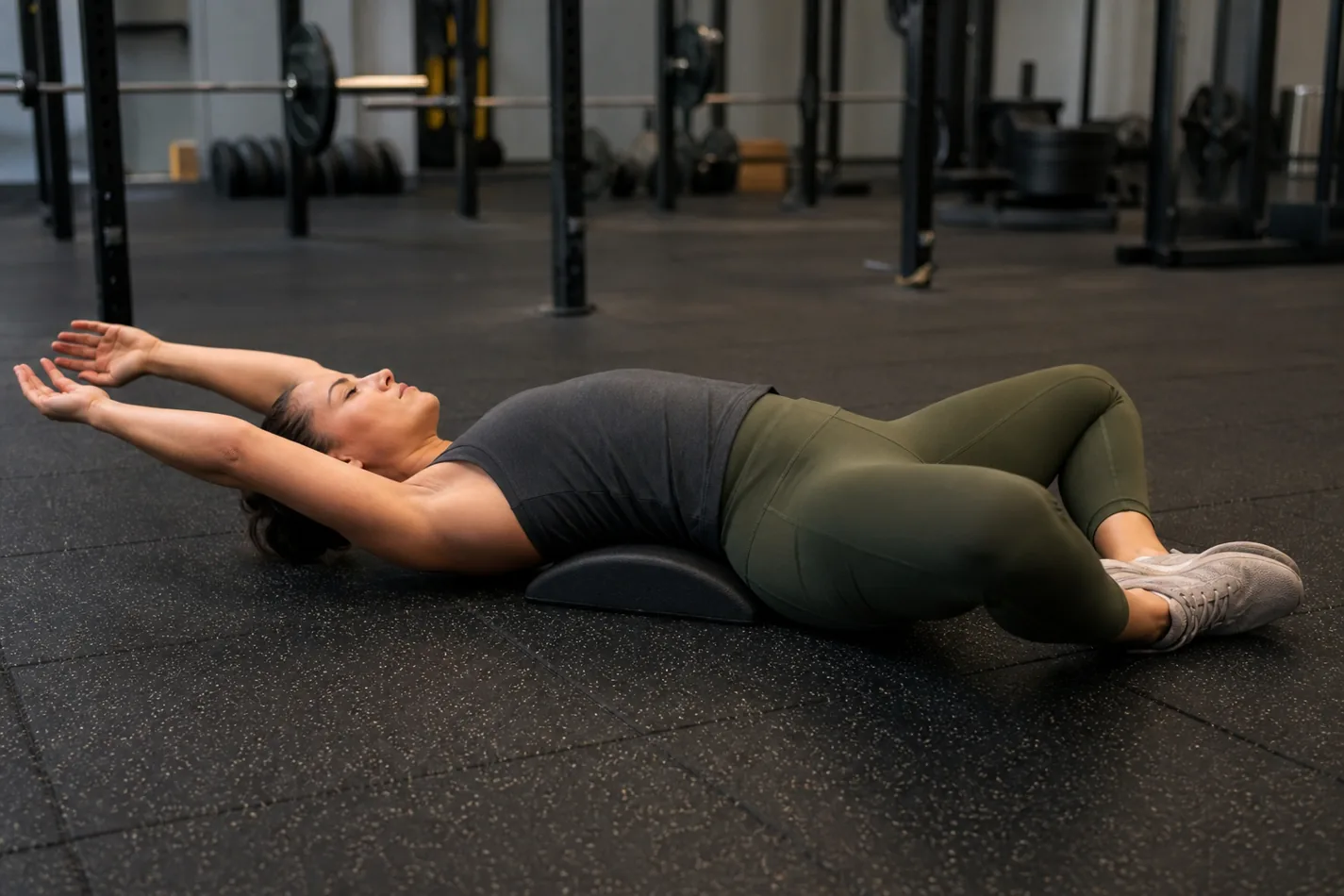
Set the thick side of the AbMat against the lower back. Most athletes do best with a butterfly stance, knees open and soles together, because it reduces the urge to drive hard through the hip flexors. Some workouts or standards may call for a different foot position, so check before the clock starts.
Setup cues that save reps later
Start with the hips close enough to the AbMat that it supports the lower back, not the mid-back. Reach the hands behind you until the shoulders touch the floor or the required standard. Then sit up by curling the torso forward and reaching toward the feet, not by throwing the head and hoping the body follows.
The first few reps should feel almost too controlled. That is a good sign. In CrossFit, the athlete who opens with clean reps usually has more room to speed up later. The athlete who starts with a violent neck pull usually pays for it by round three.
This also connects to CrossFit warm-up. A few slow sit-ups, dead bugs, or hollow rocks before class can tell you whether your abs are working or your hip flexors are about to steal the whole workout.
How to pace AbMat sit-ups in a WOD
High-rep sit-ups reward rhythm. Use the arms, but do not turn them into a full-body whip on every rep. Reach back, breathe out as you sit up, touch the target, and fall back with control. If the workout includes running, rowing, or toes-to-bar, the goal is to leave the floor with your midline awake, not fried.
| Workout setup | Best approach | What usually goes wrong |
|---|---|---|
| Short sprint with low reps | Quick cycle speed with full range | Cutting the bottom position to chase the clock |
| High-rep chipper | Small sets or steady breathing from the start | Opening too hot and losing the hip flexors |
| Sit-ups before gymnastics | Controlled reps that protect the midline | Arriving at the rig with no trunk tension left |
| Partner workout | Clean handoff pace and repeatable sets | Matching your partner's sprint instead of your own engine |
If sit-ups sit near toes-to-bar timing, be careful. Both movements ask for trunk flexion and grip or shoulder position can suffer when the midline is already cooked. Smooth reps now may save broken sets later.
The hip flexor problem
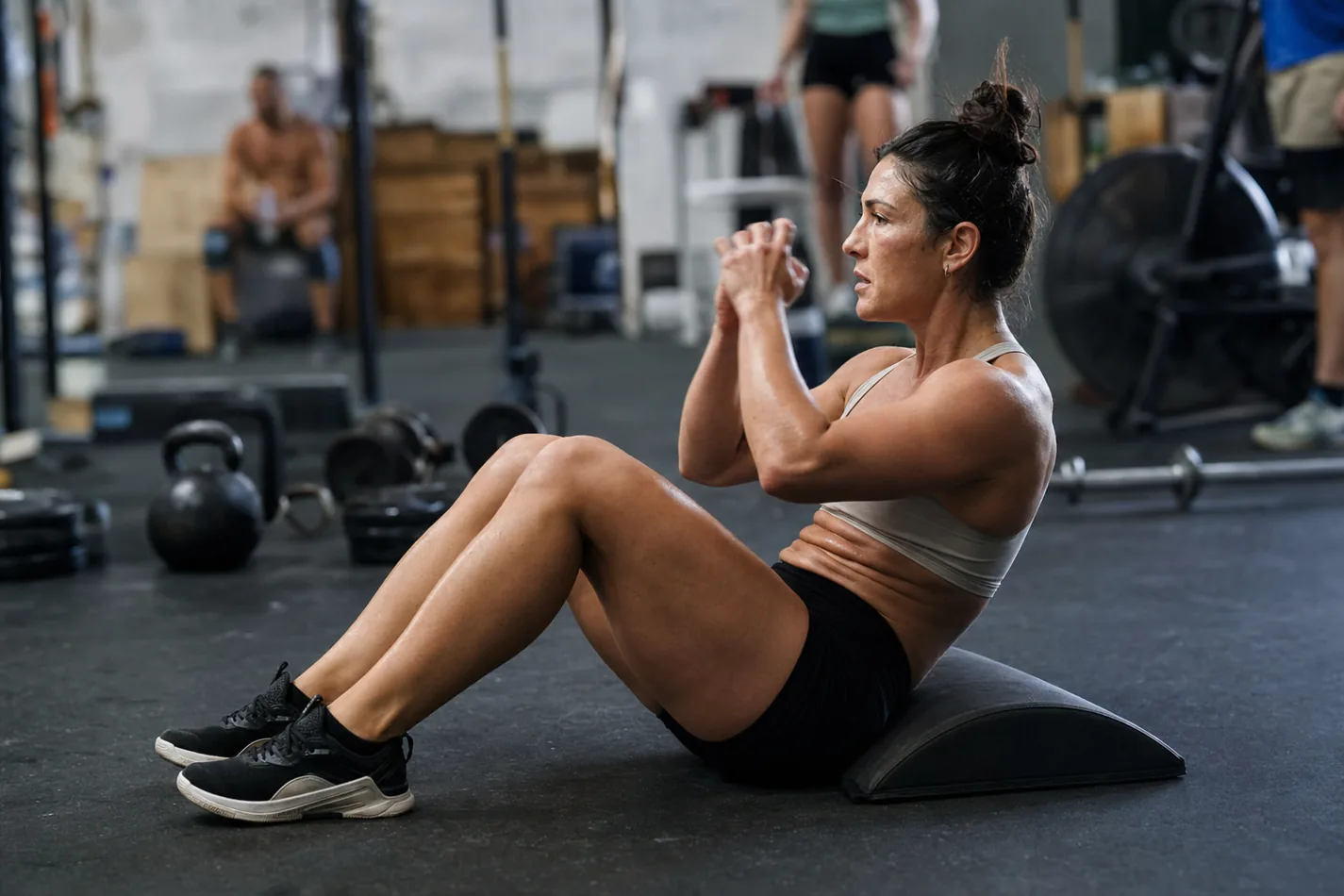
Some hip flexor fatigue is normal, especially in long sets. But if the front of the hips burns before the abs feel involved, check the setup. Feet jammed under heavy dumbbells, aggressive kicking, and a loose rib cage all shift work away from the trunk.
Try slowing the first five reps. Keep the ribs down at the top, exhale as you sit up, and let the spine roll instead of snapping straight from the hips. The rep may look less frantic. It will usually hold up better.
If the setup still feels awkward, watch The AbMat Sit-Up before your next class. The useful part is not the speed. It is the way the athlete uses the AbMat to support the lower back, reaches through the full range, then sits up without yanking the neck forward.
Common mistakes to fix first
The first mistake is placing the AbMat too far away. If it supports the wrong part of the back, the athlete loses the benefit and often feels pinching instead of support.
The second mistake is pulling the head forward. The hands can travel fast, but the neck should not be the engine. Look roughly toward the feet as you sit up and keep the chin from jutting hard toward the chest.
The third mistake is letting every rep collapse at the bottom. Touching the shoulders down is one thing. Flopping into the floor for 80 reps is another. Control the descent just enough that the next rep starts from a real position.
Scaling without losing the core stimulus
Good CrossFit scaling keeps the reason for the movement intact. For AbMat sit-ups, that usually means adjusting range, volume, or tempo before replacing the movement completely. A newer athlete might use fewer reps or a controlled crunch variation. An athlete with back irritation may need dead bugs, plank work, or another coach-approved substitute.
Do not treat GHD sit-up control as a simple upgrade. It is a different demand, with more range and more stress if the athlete is not prepared. Earn that progression slowly instead of using it because the AbMat version feels boring.
What to test in your next class
Before the workout starts, do ten reps at the pace you plan to use. If your feet fly around, your neck pulls, or your breathing disappears, the workout already gave you the answer. Slow down slightly, fix the setup, and choose a rhythm you can repeat.
AbMat sit-ups do not need to look heroic. They need to be honest, consistent, and cheap enough that the next movement is still there when you stand up.


