
The plan
The GHD sit-up looks simple until the workout gets loud. A few fast reps can feel smooth. Fifty reps later, the athlete who lost control of the ribs, hips, and range of motion usually knows it.
In CrossFit, the goal is not to turn the GHD into a dramatic backbend machine. The goal is to train a strong midline through a longer range than a floor sit-up, then decide honestly whether that range fits the workout, the athlete, and the day.
- A good GHD sit-up starts with a locked-in setup: hips placed correctly, legs active, ribs controlled.
- Range of motion should grow gradually. Big volume on day one is a bad bet.
- Scale the movement if the athlete loses midline control, feels back discomfort, or cannot keep reps consistent.
What the GHD sit-up is training
A GHD sit-up uses the abdominals and hip flexors through a longer arc than most floor ab work. That longer range is the reason it can be useful. It is also the reason it needs respect. The athlete has to control extension on the way back and finish the rep without yanking through the lower back.
Think of it as midline training under tension, not just an ab burner. If an athlete already struggles to keep the ribs down during strict press work in CrossFit, the same habit can show up on the GHD when the torso opens too far and the rep stops being controlled.
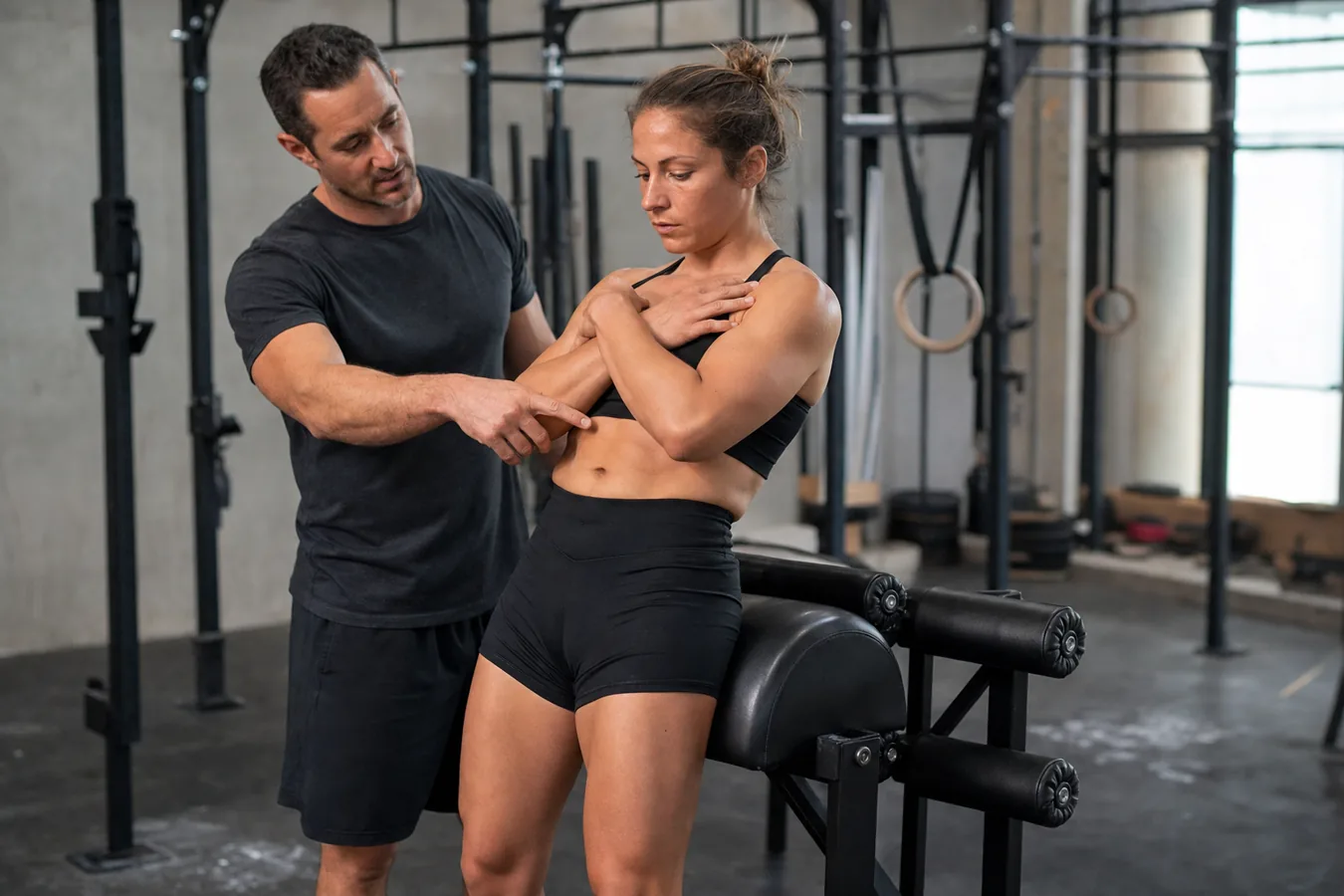
Set the machine before you worry about speed
The hip pad should support the athlete without forcing a wild reach backward. Foot position matters too. The legs should be active against the rollers, but not so aggressive that every rep becomes a leg kick with the trunk along for the ride.
Start with a smaller range. Touching the floor behind the body is not a requirement for every athlete or every session. A shorter rep that stays controlled beats a full-range rep that dumps into the spine and depends on momentum to come back up.
This is the same decision-making problem that shows up with CrossFit scaling choices: preserve the training effect first, then add range, speed, or volume when the athlete can actually own it.
Common faults and safer fixes
| Fault | What it looks like | Fix to try |
|---|---|---|
| Overreaching backward | The athlete drops too far and loses rib control | Cut the range and stop the rep before the back takes over |
| Throwing the arms | The arms whip forward to rescue the sit-up | Use hands across chest or a smaller range until the trunk does the work |
| Leg-dominant reps | The knees snap hard and the torso follows late | Keep the legs active but reduce the kick |
| Volume too soon | Reps look fine early, then fall apart fast | Use small sets and build exposure across weeks |
A useful video for seeing the midline demand
This CrossFit video is worth watching because it frames the GHD sit-up around midline stabilization, not just rep count. Pay attention to the relationship between the ribs, hips, and legs as the athlete moves through the machine.
How to scale GHD sit-ups in a WOD
Good scaling does not make the movement soft. It makes the stimulus trainable. Athletes can shorten the range, reduce reps, slow the tempo, use AbMat sit-ups, or switch to hollow holds if the goal is midline endurance without the same extension demand.
If the workout also includes hinging, running, rowing, or toes-to-bar, be more conservative. A tired trunk changes everything. Athletes who are already fighting grip and timing on toes-to-bar in CrossFit may not need a huge GHD dose in the same session.
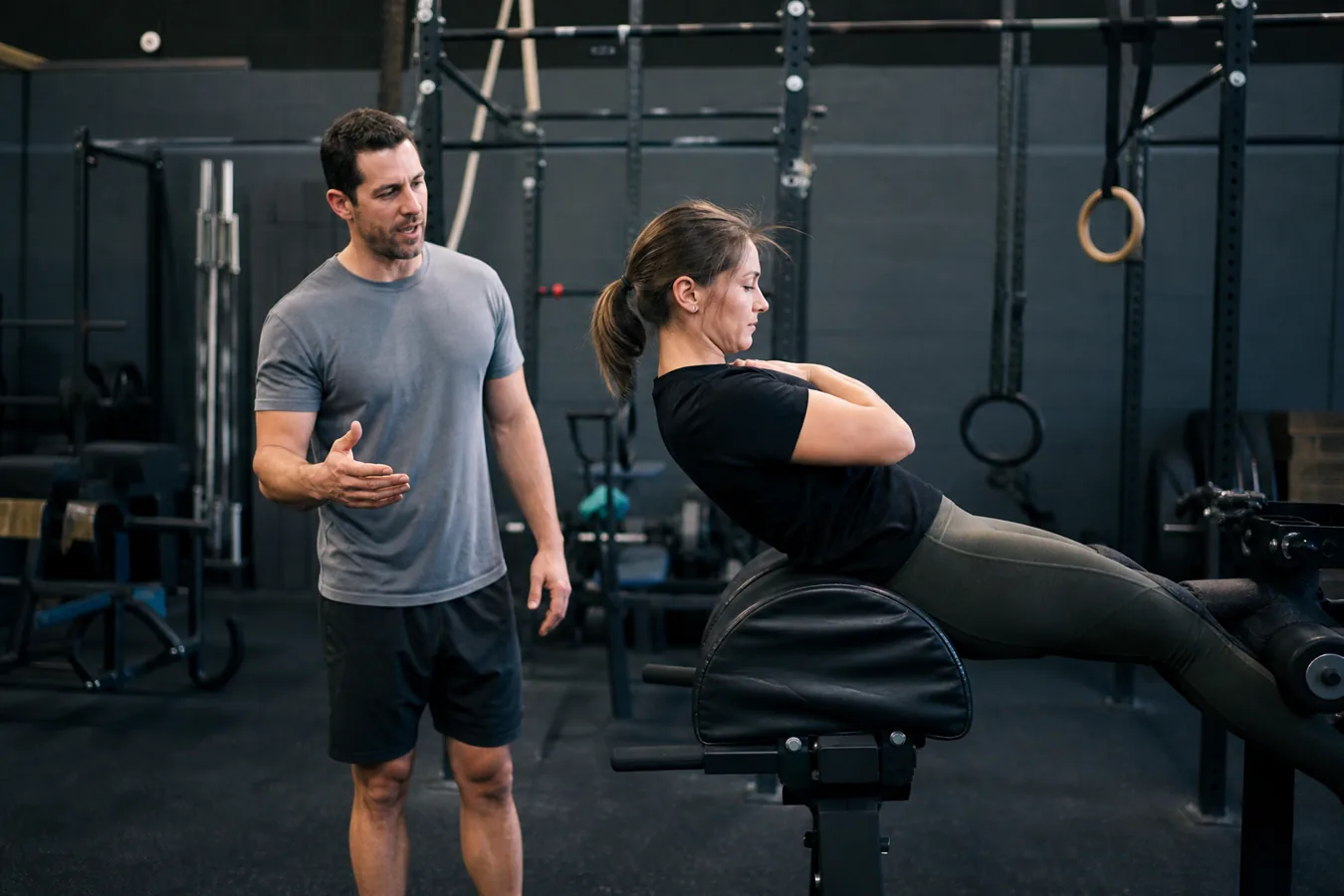
How much volume is enough
For newer athletes, exposure matters more than totals. Ten controlled reps can be plenty if the movement is new. Experienced athletes can handle more, but only if the reps stay honest. Once the athlete starts bouncing off the end range, throwing the arms, or complaining about the back instead of the abs and hip flexors, the set has already gone too far.
Coaches should also consider timing. High-volume GHD sit-ups after a layoff, after heavy pulling, or before a workout full of hip extension can create a problem that does not show up until later. The movement is useful, but it is not harmless just because the athlete can finish the set.
What to check before your next core session
- Can you set the GHD without forcing your hips too far off the pad?
- Can you control the ribs as you move backward?
- Can you sit up without throwing the arms or snapping the knees?
- Can you keep every rep the same when breathing gets harder?
- Can you stop or scale before the lower back starts doing the job?
If those answers are shaky, keep the range shorter and the sets smaller. The GHD sit-up rewards patience. Build clean reps first, then let the clock test them later.


