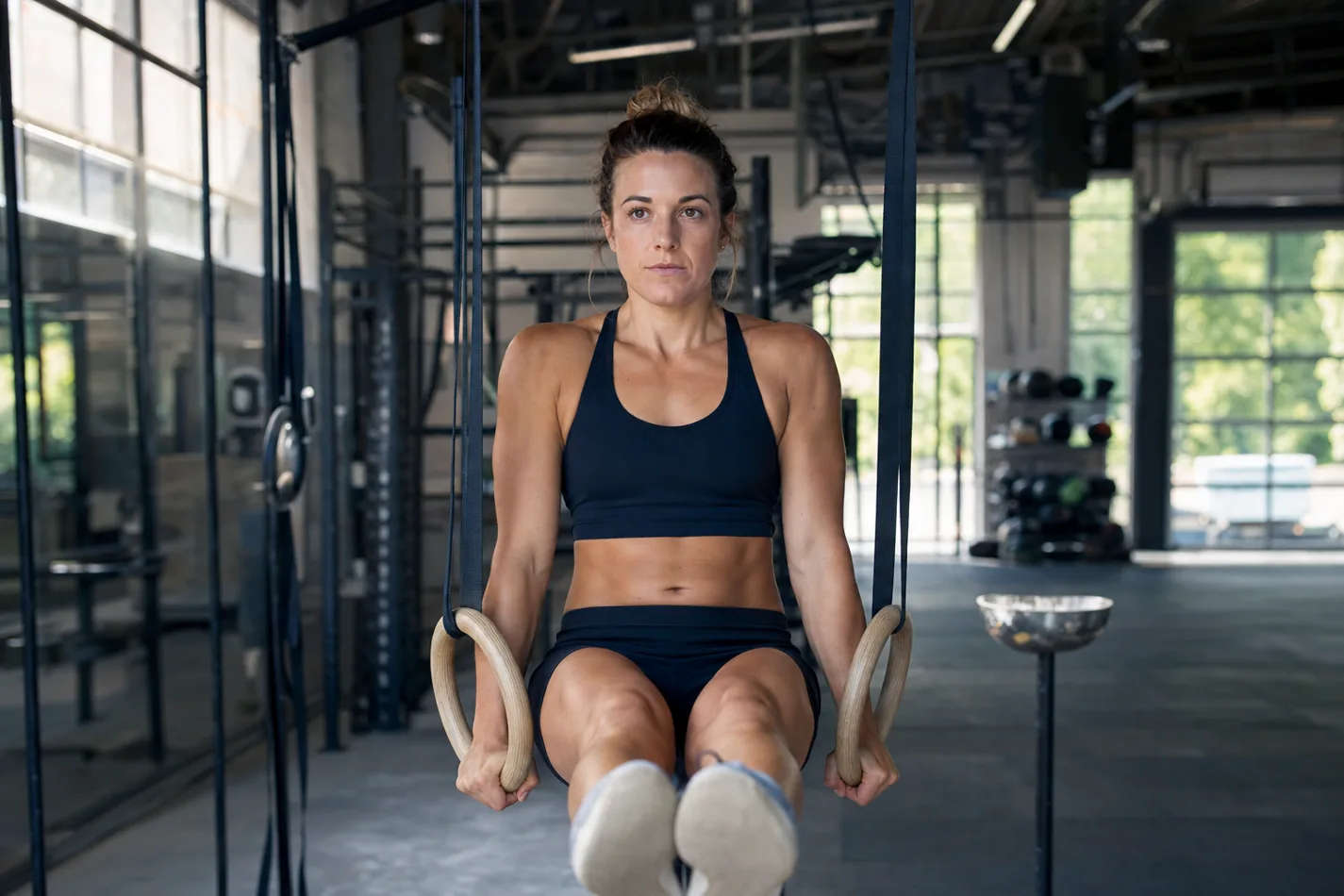
The plan
The top of the rings exposes people quickly. On the floor, a push-up or dip station feels stable. On rings, the hands shake, the elbows soften, the shoulders creep up, and the athlete suddenly has to fight for a position that looked easy from ten feet away.
The ring support hold is not flashy, but it is one of the cleanest tests of upper body control in CrossFit gymnastics. If you cannot own the top, the bottom of a dip and the transition of a muscle-up will usually get messy too.
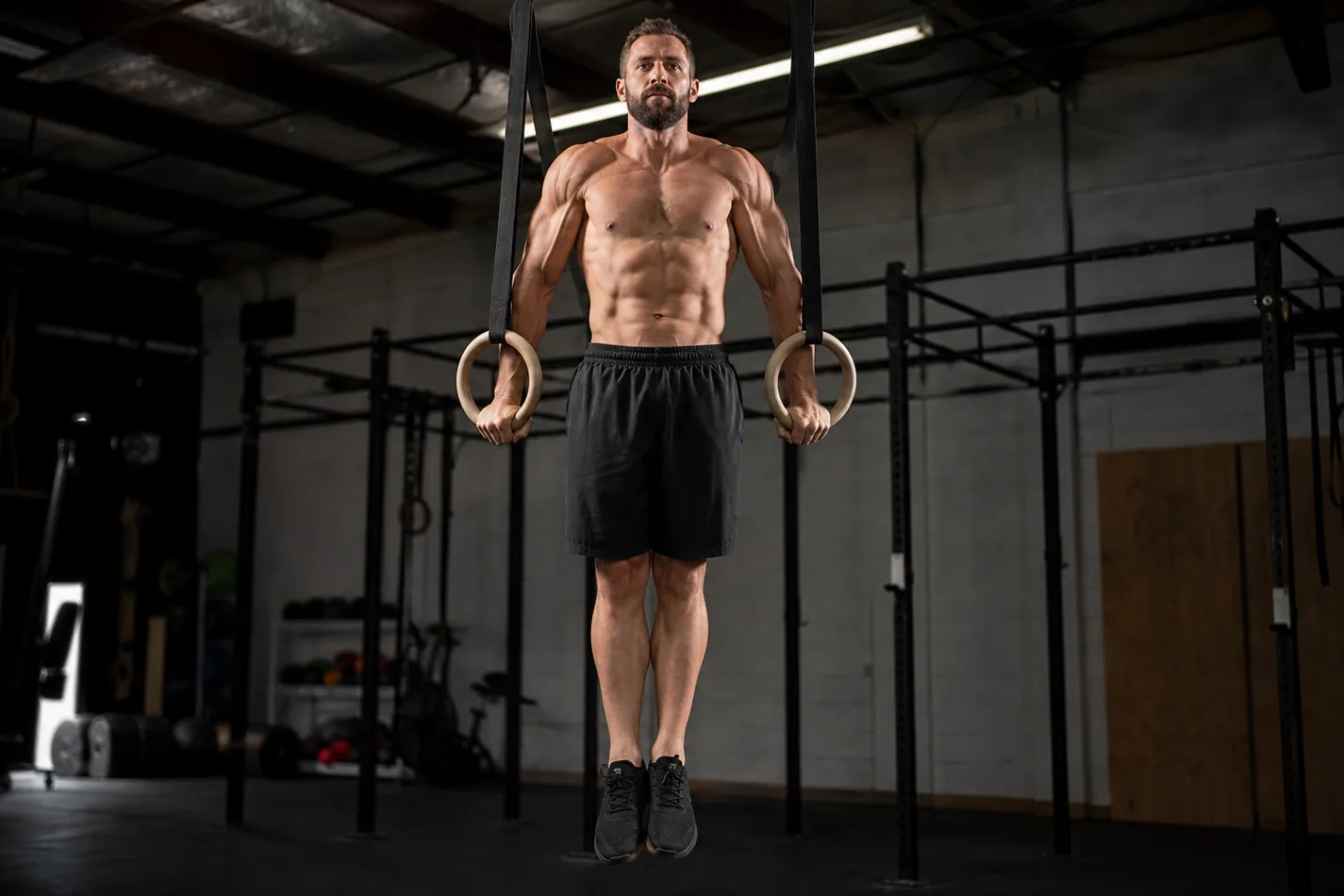
- Start with locked elbows, shoulders pressed down, and the rings close to the body.
- Turn the rings out only as much as you can control without losing the ribs or bending the arms.
- Scale with feet assistance or shorter holds before letting the rings drift wide under fatigue.
What the ring support hold should train
A good support hold teaches straight arm strength, shoulder depression, trunk tension, and calm hands on an unstable tool. It is the quiet top position behind ring dip control, ring muscle-ups, and many low ring drills. The goal is not to survive with the traps shrugged and the elbows half bent. The goal is to stand tall on the rings with the body organized.
That organization starts before the timer starts. Set the rings at a height that lets the athlete mount safely. Jump or step to support, squeeze the legs lightly, keep the ribs down, and press the rings toward the floor. If the rings drift out like sliding doors, the athlete is already losing the fight.
Lock the elbows without hiding in the shoulders
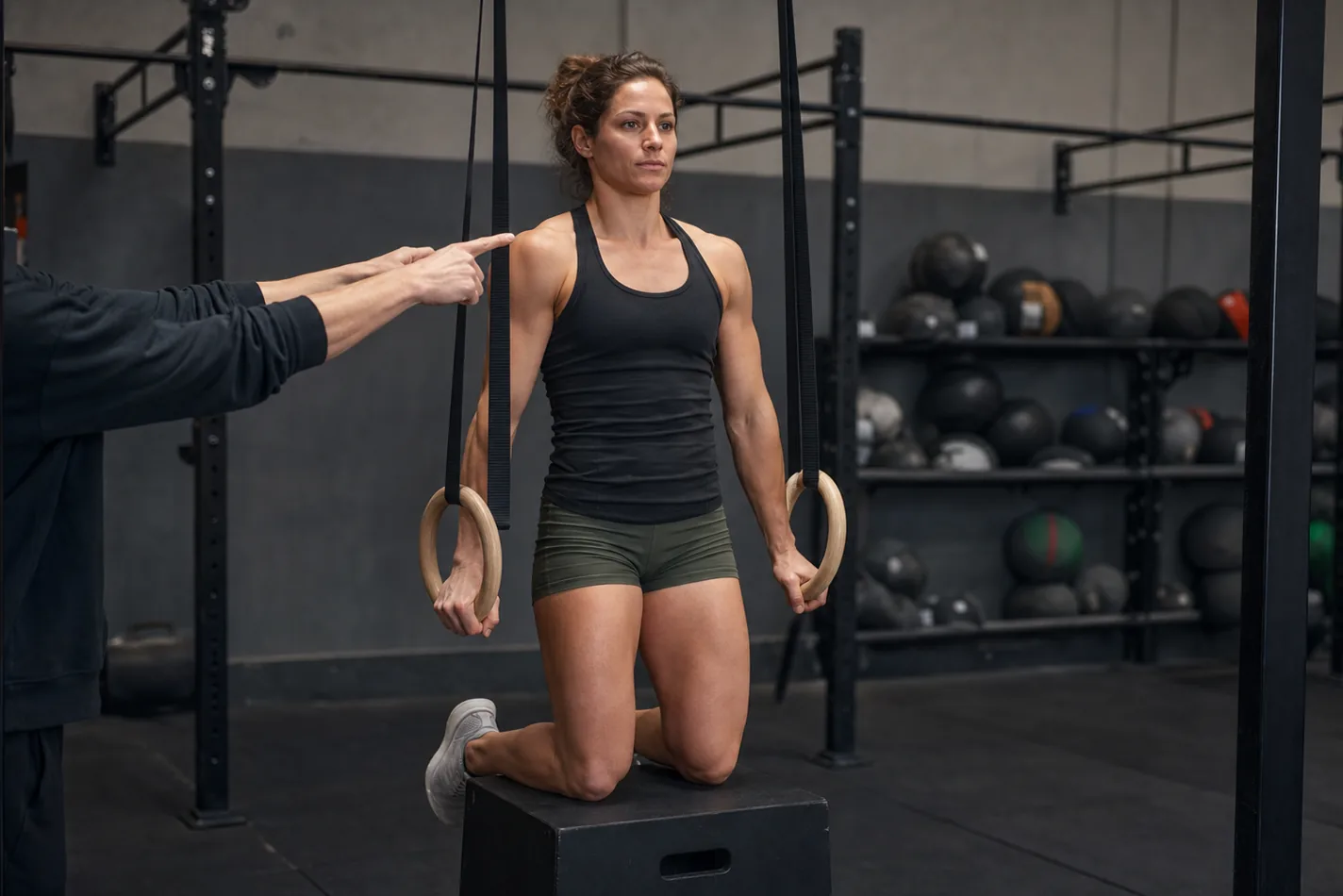
The elbows should be straight, but locked elbows alone do not make the position strong. Many athletes straighten the arms while the shoulders climb toward the ears. That usually turns a support hold into a neck and forearm problem.
Press down through the rings and make the neck look long. The chest can stay proud without flaring the ribs. This is where the hold borrows from ring row tension and strict pull-up strength: the shoulder has to stay connected to the trunk, not float around while the hands panic.
| Fault | What it tells you | Fix to try first |
|---|---|---|
| Rings drift wide | The athlete cannot keep pressure down and in | Shorten the hold and keep the rings close to the hips |
| Elbows bend early | The position is too long, too hard, or too unstable | Use feet assistance and rebuild straight arm time |
| Shoulders shrug | The traps are taking over for the lats and serratus | Press the rings down and make the neck long |
| Ribs flare | The athlete is borrowing extension from the low back | Squeeze the glutes and use a tighter midline |
Turn the rings out only if you own the base
Ring turnout looks good on video, but forcing it too early can make the whole position worse. A small, controlled turnout with locked elbows beats a big turnout with bent arms and shaking shoulders. Start with the rings neutral and close. Then turn them out a few degrees while keeping the same body line.
The best cue is boring: keep the rings quiet. If the hands spin, wobble, or drift away every second, the athlete needs less range, more foot help, or shorter sets. That restraint pays off later in muscle-up transitions, where a loose top position often turns into a rushed dip or a missed lockout.
The demo below is useful because it treats the ring support as a position, not a pause between harder skills. Watch the shoulders, elbows, and rings before you look at the clock.
How to scale the support hold without watering it down
Good CrossFit scaling should keep the same shape. Feet on a box, toes lightly touching the floor, or low rings can all work if the elbows stay straight and the shoulders stay down. The mistake is making the scale so easy that the athlete never has to control the rings.
Try sets of five to fifteen seconds instead of one long ugly hold. Rest, reset, then repeat. Quality matters more than the total time on a whiteboard. If the athlete cannot stop the rings from drifting, reduce the demand before adding more seconds.
Where it fits in a CrossFit warm-up
The ring support hold works well before ring dips, muscle-up skill work, push-ups, handstand work, and pressing days. Use it early, before grip and shoulders are already tired. It can also sit next to hollow body position and overhead stability work when the session needs better body position before heavier work.
For newer athletes, two or three short rounds are enough: assisted support hold, slow ring row, hollow hold, then a simple pressing drill. For athletes chasing muscle-ups, use support holds as a check. If the top is shaky before fatigue, the workout will not magically fix it.
Grip and wrist details people ignore
Support holds can bother the hands when athletes death-grip the rings or let the wrist collapse. Keep the hand wrapped firmly, but not like you are trying to crush the wood. The wrist should stay stacked enough that the forearm does not feel twisted from the first second.
If the workout already includes high-rep pulling, toes-to-bar, or rope climbs, think about hand protection and grips and total hand volume before adding long ring holds. The support hold is a skill drill. It should sharpen positions, not turn every palm into a problem for tomorrow.
What to check before adding dips
Before moving from holds to ring dips, check three things. Can you hold the rings close without shaking hard? Can you keep the elbows straight for repeated short sets? Can you turn the rings out a little without losing your ribs or shoulders?
If yes, dips have a better chance of staying honest. If not, the support hold is still the work. Own the top first. The rings will tell you when you are ready for more.


