The plan
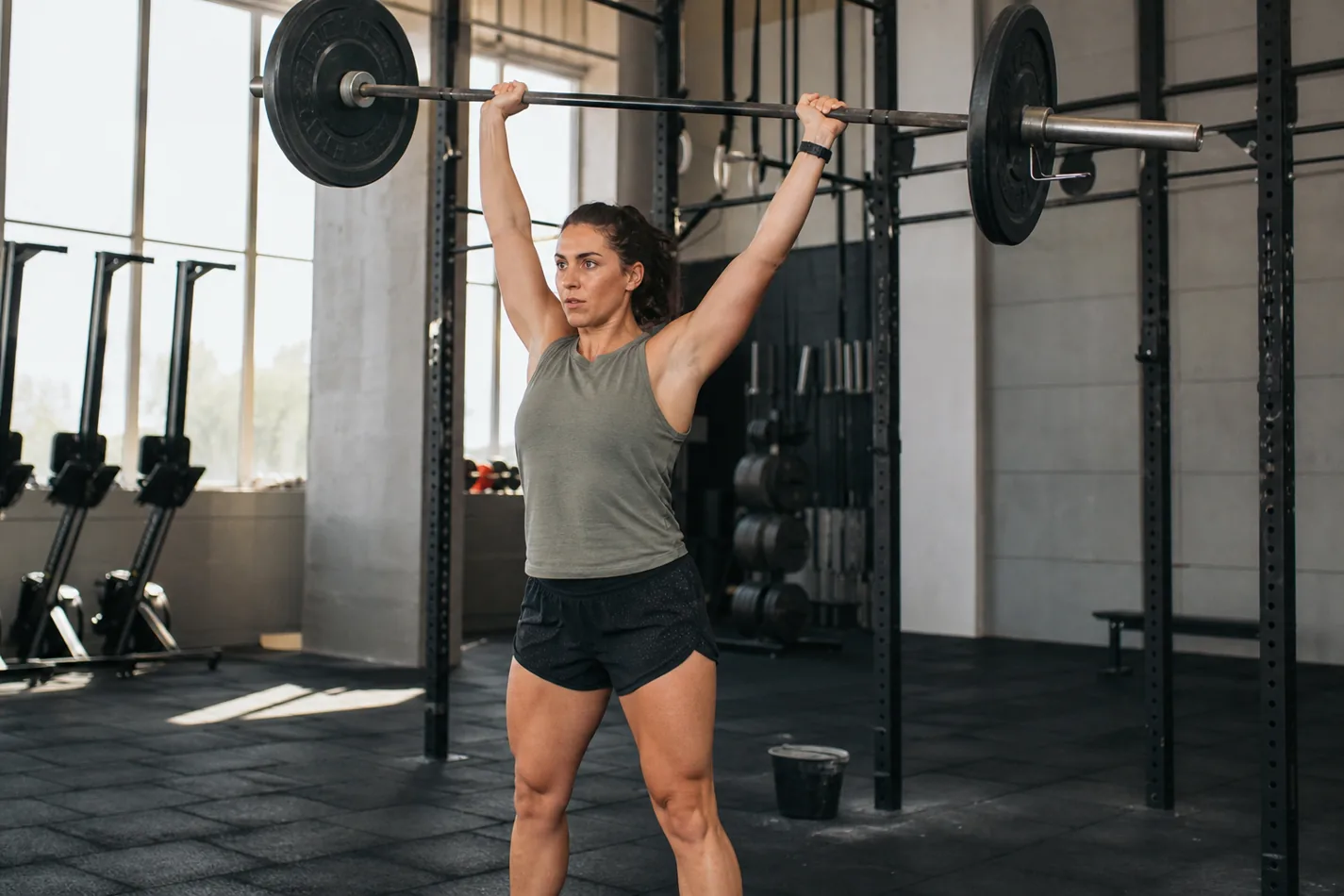
Shoulder to overhead looks like a simple instruction on the whiteboard. It is not one lift. It is a choice.
In a CrossFit workout, shoulder to overhead can mean a strict press, push press, push jerk, split jerk, or another legal way to move the bar from the shoulders to a stable lockout. The best choice is not always the prettiest lift. It is the one that lets you keep the bar moving, protect your shoulders, and avoid wasting your legs too early.
- Shoulder to overhead is a movement standard, not a single technique.
- Most metcons reward a clean dip and drive more than a max-effort strict press.
- Choose the lift based on load, rep count, fatigue, and how well you can bring the bar back down.
What shoulder to overhead means in a workout
The standard is usually straightforward: the bar starts at the shoulders and finishes locked out overhead, with the hips, knees, and elbows extended. The messy part is everything between those two positions.
A light bar for 30 reps asks for something different than a heavy bar after cleans. If the workout includes a clean and jerk, the limiting factor may be the catch and the front rack before the overhead rep even begins. If the workout is a short sprint, cycling speed matters. If the load is heavy, stability matters more than saving a second.
Pick the lift before the clock starts
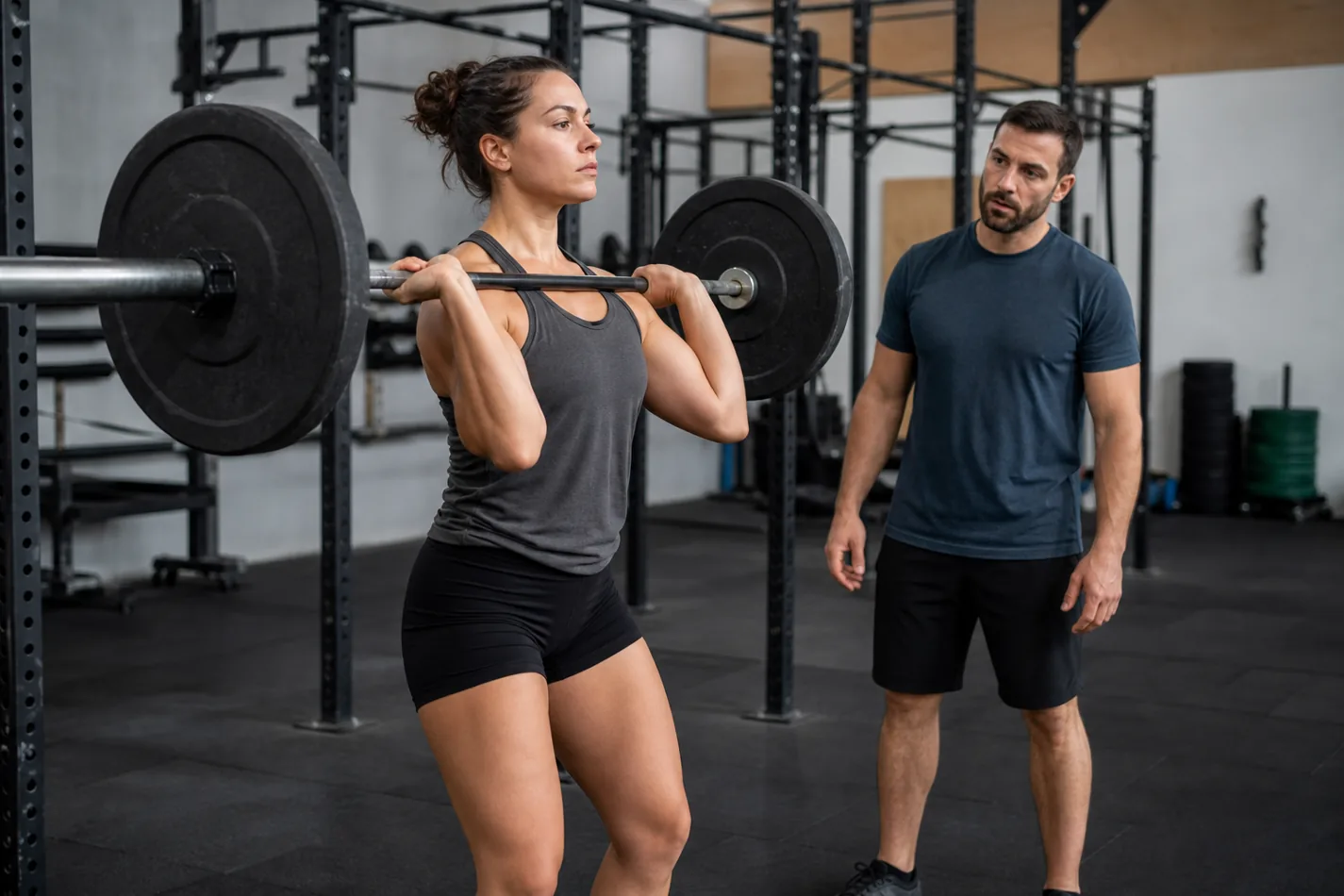
Do not wait until round two to decide how you will move the bar. Warm up the same version you plan to use in the workout. If the bar feels light and the sets are short, a fast push press can be enough. If the reps are heavy or the shoulders are already tired, the push jerk usually buys you more speed because you can drop under the bar instead of pressing it all the way out.
The split jerk is useful when the load is high and you need a more stable receiving position, but it costs more time and space. In a crowded class, or in a workout with quick singles, split jerk footwork needs discipline. Sloppy footwork under fatigue turns a strong lift into a chase across the lane.
| Option | Best use | Risk when tired |
|---|---|---|
| Strict press | Very light loads, strength focus, warm-up control | Shoulders fail before the workout really starts |
| Push press | Moderate loads and fast cycling | Dip gets soft and the bar drifts forward |
| Push jerk | Higher reps, heavier loads, tired shoulders | Catch gets shallow and lockout becomes unstable |
| Split jerk | Heavy singles or low-rep strength work | Feet get random and recovery takes too long |
The dip decides more reps than your shoulders do
Most failed shoulder to overhead reps start below the chin. The dip gets too deep, the knees slide forward, the torso tilts, and the bar leaves the shoulders already drifting away from the body. Once that happens, the athlete has to save the rep with the arms.
Keep the dip short and vertical. Bend the knees, keep pressure through the midfoot, and drive straight up before the bar rolls forward. If your elbows drop too much, the bar tends to peel away from you. If your heels pop early, the drive loses force.

How to cycle reps without getting sloppy
The way down matters. A bar that crashes onto the collarbones makes every next rep worse. Bring the bar back to the shoulders with the ribs down and the elbows ready, then dip again. The rhythm should feel like catch, breathe, drive. Not catch, panic, press.
Small sets often beat heroic sets. If the workout has 45 total reps, three planned sets can be faster than one big opening set followed by five ugly survival breaks. Athletes who cycle shoulder to overhead well usually look boring early. That is the point.
If shoulder to overhead shows up in a fast workout, the video below is worth a quick look before class. Watch how the bar stays close, how the dip stays vertical, and how the athlete avoids turning every rep into a slow strict press.
Scaling without missing the stimulus
Scale load first if the overhead position is good but the bar speed dies. Scale the movement if the shoulder position is the issue. Dumbbell shoulder to overhead can be useful, but it is not automatically easier. One arm often exposes rotation and lockout problems that a barbell hides.
If the workout is supposed to be conditioning, pick a load you can move for repeatable sets. If it is supposed to be strength under fatigue, use singles or small clusters and keep every lockout honest. There is no prize for turning shoulder to overhead into a collection of half-pressed reps that leave your elbows bent.
Mistakes to fix before your next barbell workout
- Dipping too low: use a short bend, not a squat.
- Letting the bar roll forward: keep the bar connected to the shoulders before the drive.
- Pressing every rep out: use the legs before the shoulders are gone.
- Crashing the return: lower the bar with control so the next rep is ready.
- Choosing the wrong version: a fast push press is not better if rep eight turns into a grind.
What to check in warm-up
Before the workout starts, do five reps at the planned load and watch the bar path. If the bar travels straight, the lockout is stable, and you can lower it without bracing for impact, the choice probably fits. If the third rep already drifts forward, switch earlier. Shoulder to overhead rewards the athlete who decides before fatigue makes the decision for them.


