The plan
The push jerk is where a lot of CrossFit athletes find out they have been pressing more than they thought. The bar moves well for a few reps, then the shoulders fade, the knees stop helping, and every overhead rep turns into a grind.
A good push jerk does the opposite. You use the legs to send the bar up, then you move your body down fast enough to meet it with locked arms. It is not a slow shoulder press with a little knee bend. It is a timing skill under fatigue.
- The push jerk depends on a vertical dip, a sharp leg drive, and a fast drop under the bar.
- If the knees or chest drift forward in the dip, the bar usually leaves the best path before the rep even starts.
- In WODs, scale the load before the movement becomes a push press with a messy catch.
What the push jerk is training
The push jerk trains leg drive, overhead lockout, foot timing, and the ability to punch under the bar without losing your midline. It sits between the CrossFit push press and heavier Olympic lifting variations. You still drive with the legs, but now the arms finish by catching, not by pressing the whole rep out.
That difference matters in workouts with repeated overhead reps. A push press asks the shoulders to finish every lockout from a taller position. A push jerk lets you receive the bar lower, which can save the shoulders if the dip, drive, and catch stay clean.
Build the rep from the dip
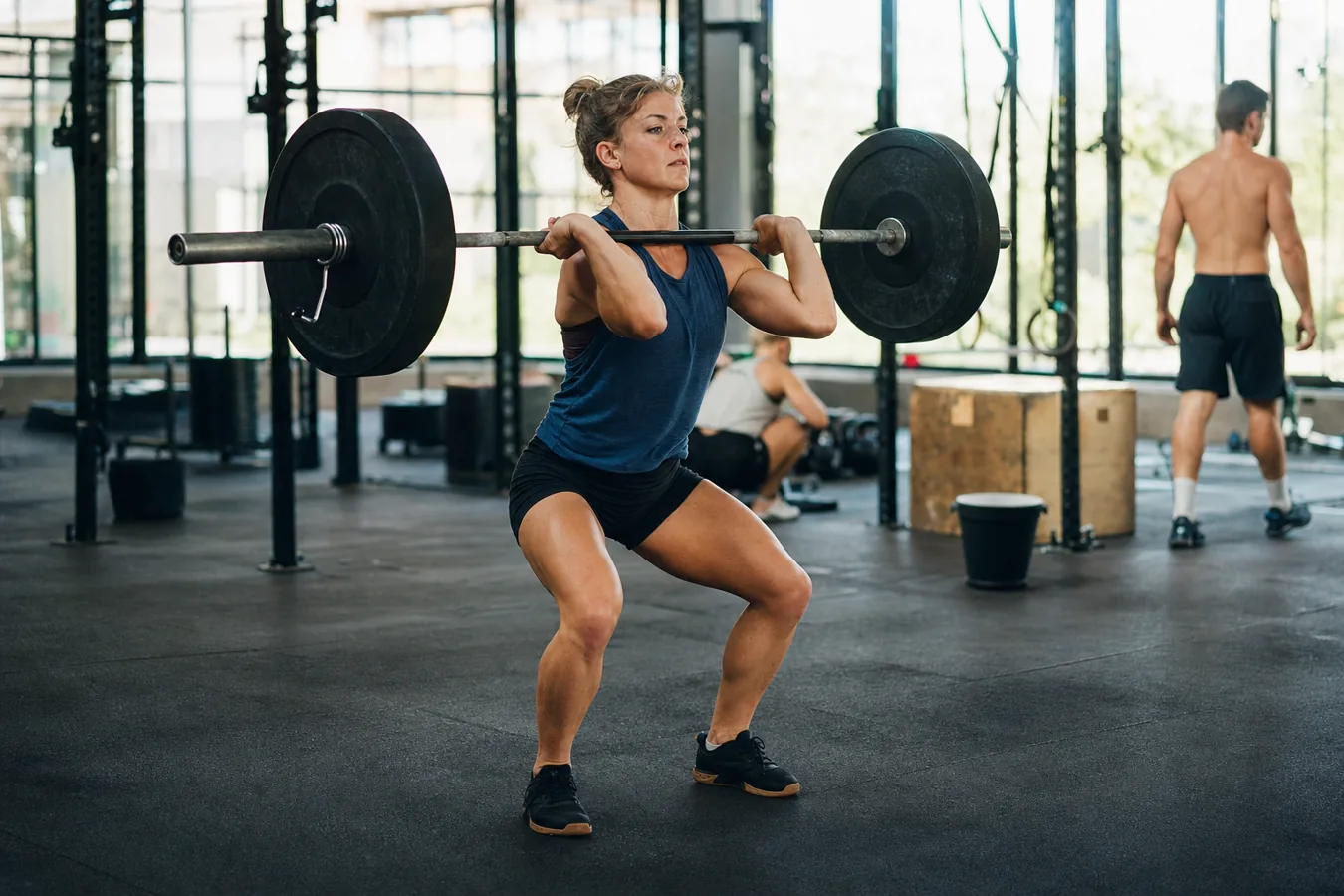
The dip should feel short and straight. Heels stay down, knees track out, chest stays tall, and the bar remains over the middle of the foot. If the dip turns into a bow forward, the drive sends the bar away from the body. Then the catch has to chase the mistake.
Think about loading the legs like a spring, not sinking into a squat. The dip is only deep enough to create speed. From there, stand hard, punch the bar up, and move your feet only as much as needed to receive the bar balanced.
Push jerk faults that show up fast
| Fault | What it looks like | Fix to try |
|---|---|---|
| Forward dip | The chest tips and the bar drifts away | Shorten the dip and keep the ribs stacked over the hips |
| Early press | The arms bend before the legs finish driving | Wait on the arms, then punch after the leg drive |
| Soft catch | The elbows bend overhead and the rep turns into a press-out | Drop faster and receive with active shoulders and locked elbows |
| Feet jump too wide | The landing turns into a split without control | Practice a small move from jumping stance to landing stance |
Watch the timing before you add load
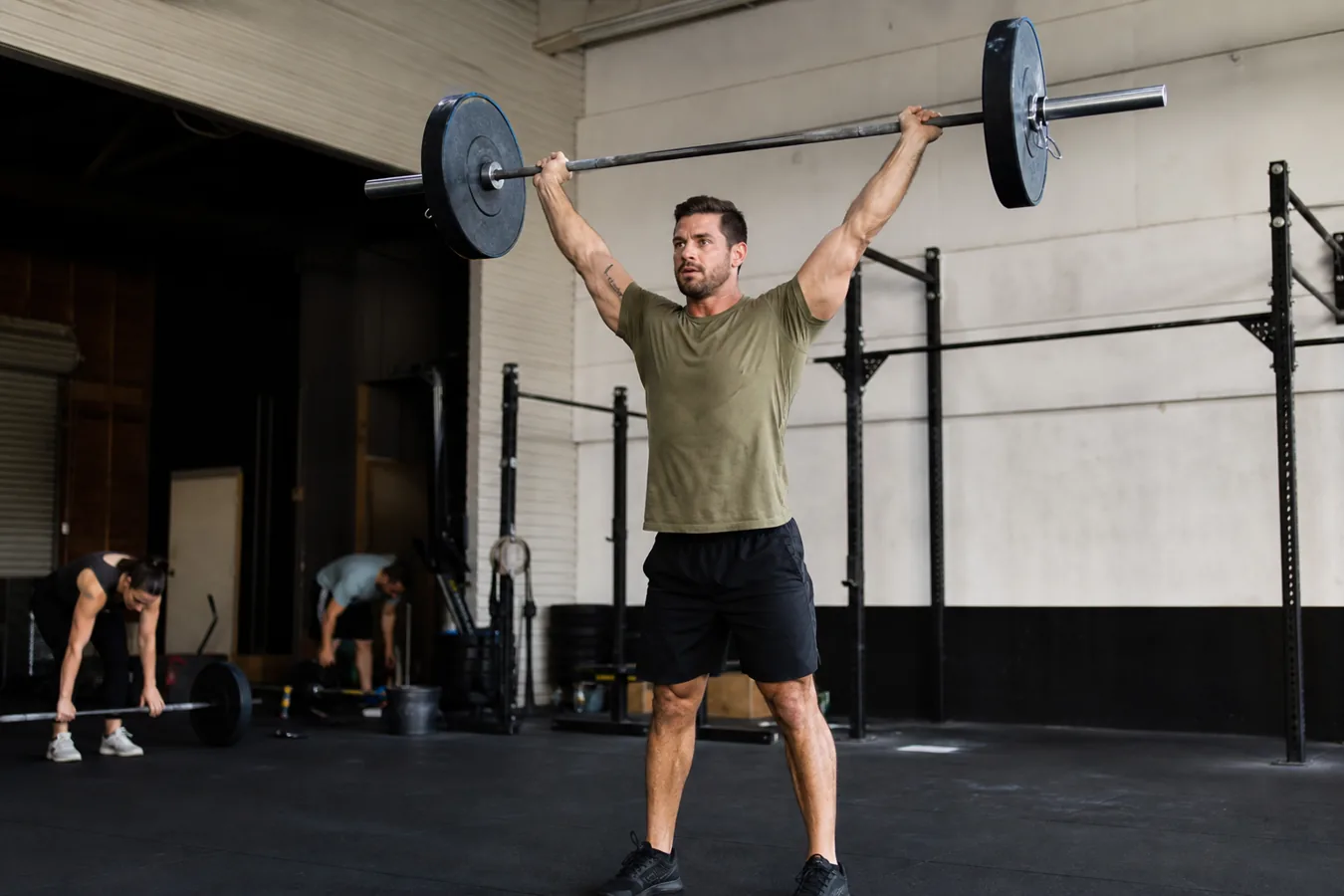
This CrossFit demo is useful because it keeps the rep simple: dip straight, drive hard, catch with the bar stacked overhead. Watch the moment after the leg drive. The athlete is not waiting at full height and then trying to press. They are moving under the bar.
How to use the push jerk in a WOD
In a workout, the first mistake is usually rushing the setup. Athletes bounce the bar off the shoulders, dip unevenly, and hope the lockout appears. A better rhythm is boring and repeatable: brace, dip, drive, punch, stand, breathe. If the bar starts crashing into the rack position, reset before the next set.
The push jerk also connects well to the CrossFit clean and jerk. If your jerk falls apart after the clean, the issue is not always strength. Sometimes the rack is loose, the breath is late, or the feet are landing in a different place every time.

When to scale the push jerk
Scale when the catch is soft, the bar keeps drifting forward, or the athlete can only finish reps by leaning back. Lower the load, reduce the reps, or switch to a push press if the workout calls for overhead volume but the jerk timing is not ready yet.
A practical CrossFit scaling plan keeps the intended stimulus without turning every overhead rep into a shoulder survival test. If the goal is skill, slow down. If the goal is conditioning, choose a load that still lets you catch the bar with control.
What to check before your next overhead set
- Can you dip without the chest tipping forward?
- Do your heels stay grounded until the drive starts?
- Are your elbows locked when you receive the bar?
- Can you stand the rep up without chasing the bar forward?
- Does the same footwork hold in the final round?
If those checks disappear, the bar is too heavy for the day or the pace is too hot. Bring the weight down, make the catch crisp again, and then rebuild speed from there.


