
The plan
Chest-to-bar pull-ups expose the gap between getting over the bar and actually finishing the rep. A regular pull-up can survive a loose swing. Chest-to-bar usually cannot. If the athlete drifts away from the rig, every rep turns into a reach.
In CrossFit, the standard is simple to describe and harder to repeat under fatigue: the chest must make contact with the bar. Good athletes do not just pull harder. They time the kip, stay close, and choose a pace they can keep when the forearms start to complain.
- The chest has to touch the bar. Chin height is not enough for most workout standards.
- A useful kip sends the body up and in, not away from the rig.
- Small sets with fast breaks often beat one early max set followed by long staring at the bar.
What counts as a chest-to-bar pull-up
A clean rep starts from a full hang, moves through a controlled kip or strict pull, and finishes with the chest touching the pull-up bar. Workout standards can define the contact point more tightly, so read the event brief, but the common miss is easy to spot: the athlete clears the chin, reaches with the neck, and never brings the chest in.
That last inch matters. It is where strict pull-up strength, shoulder position, and timing meet. If the athlete only thinks about pulling up, the bar stays too far away. Think about pulling the bar toward the chest while keeping the ribs down.
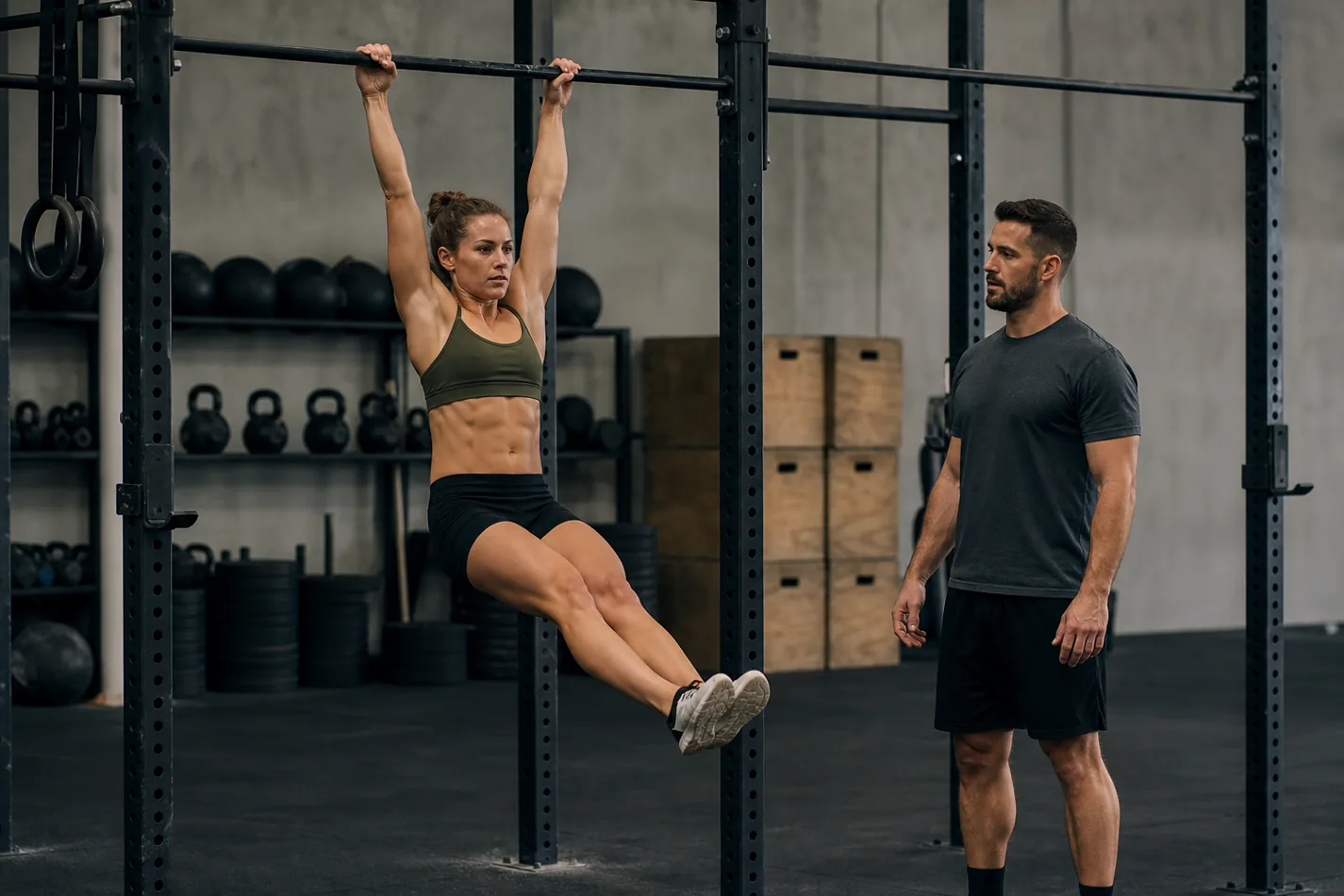
The kip should bring you closer, not louder
The best chest-to-bar reps are not the biggest swings in the room. They are the ones where the hollow and arch connect cleanly, then the athlete snaps the hips and pulls at the right moment. A wild swing may feel powerful for three reps. After that, it usually creates extra distance.
If you already have decent kipping pull-up timing, keep the same rhythm but finish later and closer. Wait until the body rises, then pull the elbows down and back. Pull too early and the arms burn. Pull too late and the chest misses the bar.
| Problem | What it looks like | Fix for the next set |
|---|---|---|
| Early arm pull | The athlete bends the elbows before the kip lifts the body | Wait for the hip pop, then pull |
| Body drifts away | The chest reaches forward but never touches | Pull elbows down and back toward the ribs |
| Loose bottom position | Every rep starts with a dead swing | Reset a hollow shape before the next arch |
| Grip fails first | Hands peel before the pulling muscles are done | Break earlier and check the hand position |
How to pace chest-to-bar pull-ups in workouts
The first set should feel almost too easy. That is not softness. It is math. If your max unbroken set is twelve, opening with ten in a workout that also has thrusters, burpees, or rowing is usually a bad deal. Sets of four, five, or six with short breaks may keep the total time lower.
Hand care changes the plan too. If the workout has a lot of pulling, hand protection and grip choice can help, but grips do not fix bad timing. They only buy you time if the swing and pull stay organized.
The demo below is worth watching for one reason: it shows how close the athlete keeps the body to the bar before the final pull. Pause on the contact point. The rep is not finished when the chin clears. The chest has to meet the bar.
Scaling without losing the point
Good CrossFit scaling keeps the chest-to-bar intent: a strong pull toward the bar with control at the bottom. Banded chest-to-bar pull-ups can work if the athlete still finishes close. Jumping chest-to-bar reps are useful when they train the final contact instead of becoming a bounce drill. Ring rows with a higher pull can also teach the elbow path.
The athlete should scale before reps turn into no-rep practice. Missing the bar by an inch for twenty reps does not build the skill. It mostly teaches panic. Use jumping pull-up scaling, a band, or smaller sets until the contact is real.

What to test before your next WOD
Do three small sets in warm-up. On each rep, check the same order: tight bottom, patient kip, late pull, chest contact. If the third set already feels messy, the workout version needs smaller chunks or a scale.
Chest-to-bar pull-ups are a useful bridge toward harder rig skills, including bar muscle-up turnover. The bridge only works if the rep is honest. Stay close. Touch the bar. Break before the swing turns into a fight.


