The plan
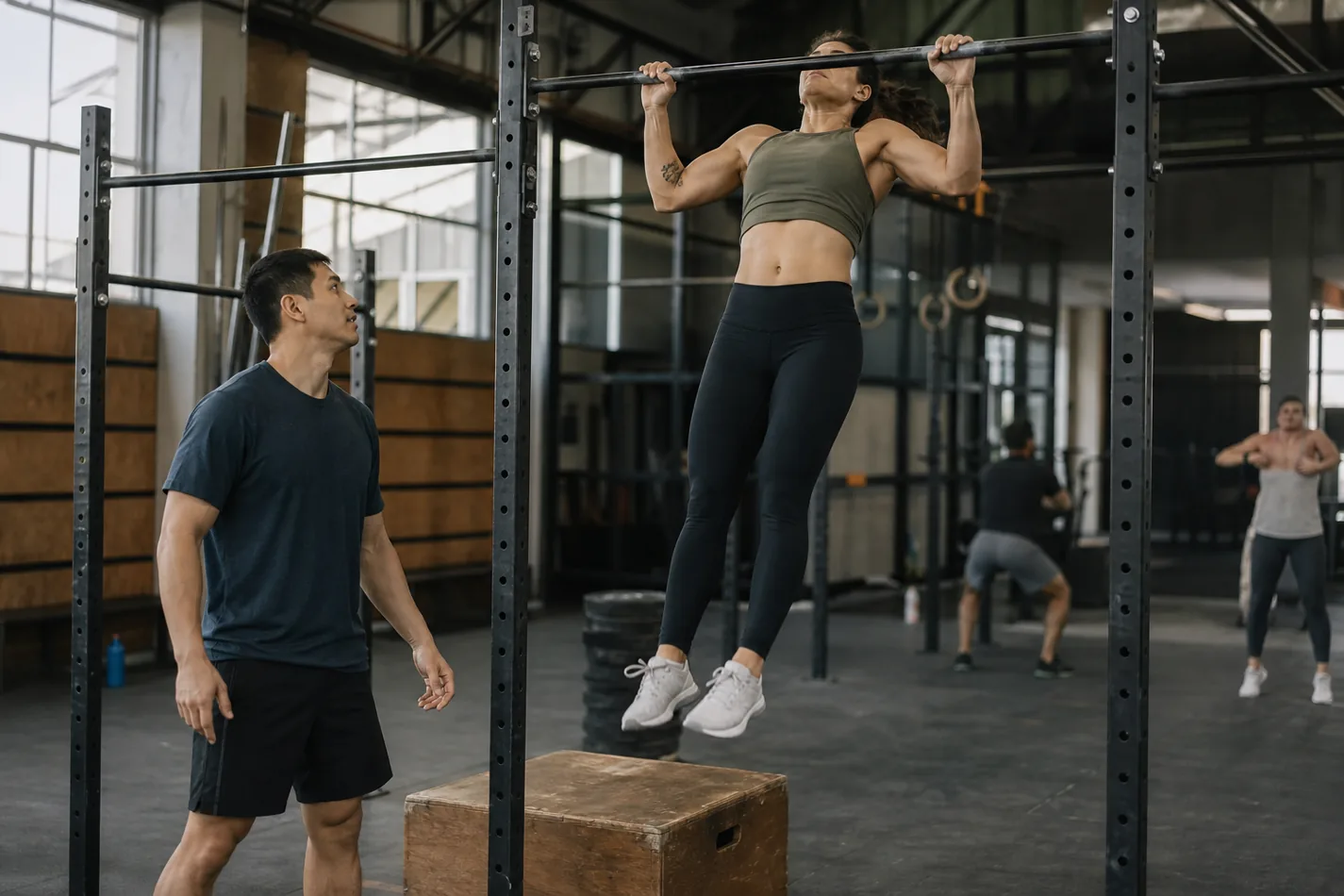
A jumping pull-up can be a smart scale or a messy shortcut. The difference is usually the box height, the way the athlete finishes the pull, and whether the descent is controlled instead of dropped.
In CrossFit, the movement shows up when the workout needs a pulling pattern but the athlete is not ready for full bodyweight reps under fatigue. That does not make it second class. Done well, it teaches timing, upper-back engagement, and confidence at the bar. Done badly, it becomes a jump with bent elbows and no useful pulling at all.
- The box should let the athlete jump enough to help, not so much that the arms stop working.
- The rep still needs a real pull, a chin-over-bar finish, and a controlled lower.
- Use jumping pull-ups to preserve workout intensity while building toward stricter pulling skills.
What the jumping pull-up is supposed to train
The setup is simple. Place a box under the pull-up bar, stand tall with arms extended, then use a small jump to help the pull. The legs assist, but the shoulders and lats still finish the rep. At the top, the chin clears the bar without craning the neck. On the way down, the athlete lowers with control and returns to straight arms before the next rep.
The movement should feel like assisted pulling, not a pogo jump. If the athlete never feels the arms or upper back, the box is probably too high. If every rep turns into a failed max effort, the box is too low or the workout needs a different scale. This is where scale the workout without missing the stimulus matters more than ego.
Set the box height before you coach the rep
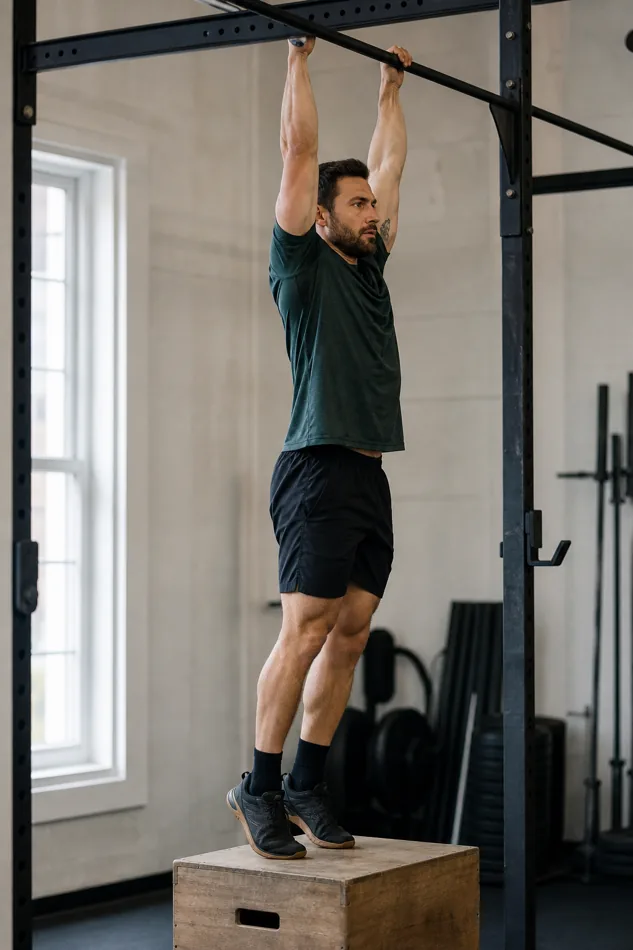
Most bad jumping pull-ups start before the clock begins. A box that is too tall lets the athlete stand with elbows already bent. There is barely any pull left. A box that is too short can turn the set into singles because the jump does not give enough help.
A useful starting point is arms long at the bottom, knees slightly bent, and feet stable on the box. The athlete should need to jump and pull at the same time. If they can float to the bar without using the arms, lower the box or move to a smaller plate. If they cannot control the lower at all, raise the box or switch to a ring row for the day.
| Problem | What it usually means | Better fix |
|---|---|---|
| Elbows start bent | The box is too high | Use a lower box or plates |
| Athlete drops from the top | The eccentric is too hard | Slow the tempo or raise the box slightly |
| No pull is visible | The legs are doing everything | Pause at the top and cue elbows down |
| Neck reaches for the bar | The finish is rushed | Keep eyes forward and pull the chest up |
The cue that cleans up most reps
Tell the athlete to jump, then finish the pull. Not jump and hope. The legs start the rep, but the elbows should still drive down and back. A small pause at the top helps athletes feel the difference between reaching the chin and actually finishing with the back.
The lower matters too. If the athlete drops fast into the next jump, the reps get bouncy and loose. A controlled descent builds the same pulling tissues needed for strict pull-up strength, while the rhythm still keeps the workout moving.
The CrossFit coaching video below is useful because it treats the jumping pull-up as a progression, not as a throwaway scale. Watch the leg drive, then the controlled finish at the bar.
When a ring row is the better scale
Jumping pull-ups are not always the right choice. If the workout has very high pulling volume, or if the athlete cannot control the lower without shoulder discomfort, ring row pulling position may be the cleaner option. Ring rows are easier to adjust, easier to keep strict, and often better for new athletes who still need to learn scapular control.
Jumping pull-ups make more sense when the workout wants the athlete to practice getting over the bar, keep a faster cycle, or prepare for future pull-up work. Ring rows make more sense when the priority is strength and clean range of motion. A good coach can use both in the same training week.
How to use them in workouts without wrecking your hands
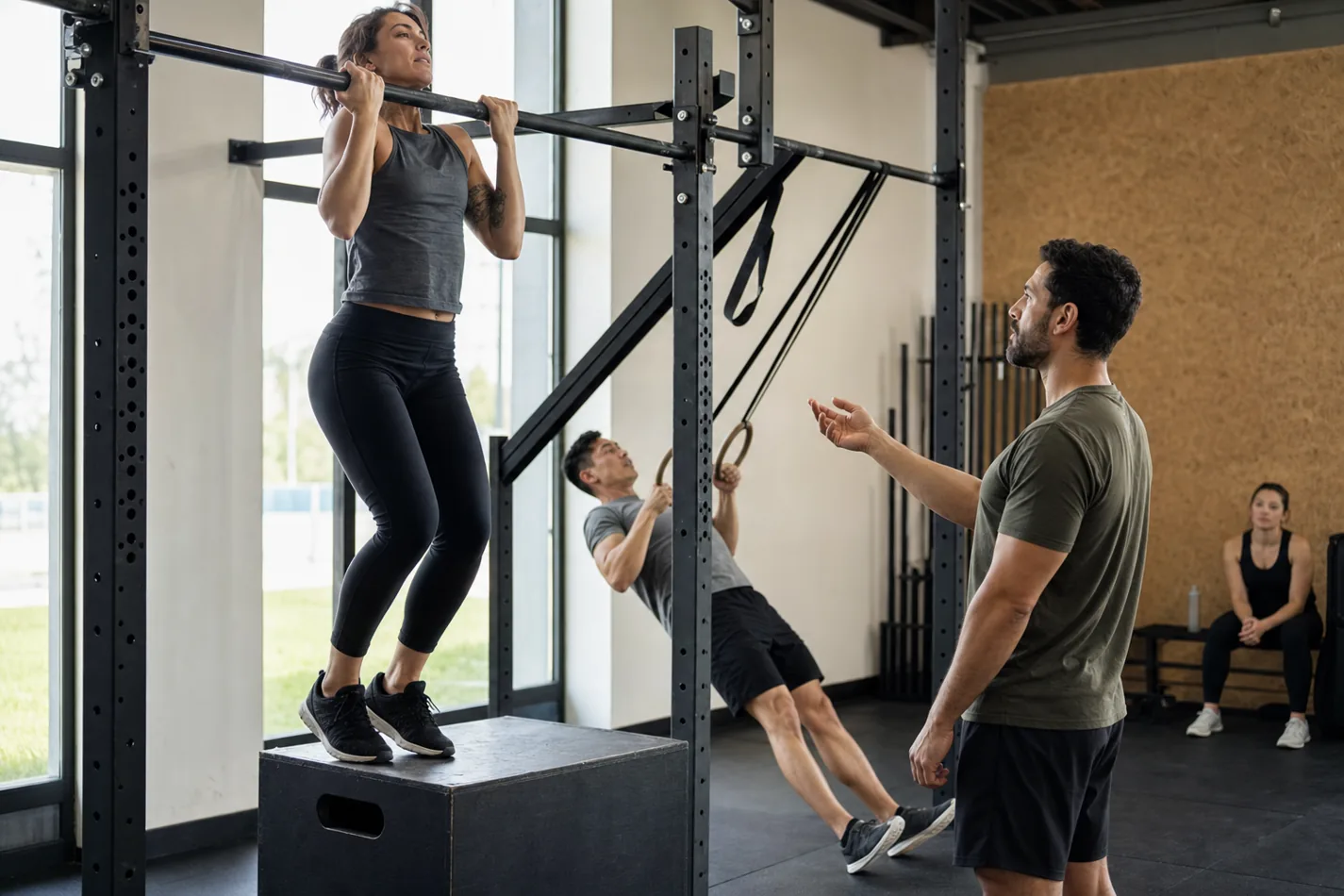
Small sets beat heroic sets. If a workout calls for high volume, break early enough that the pull still looks like a pull. Athletes who bounce hard from the bottom often beat up the shoulders, tear hands, or turn the movement into noise. Chalk helps only a little. Good rhythm and smart hand protection help more.
For athletes moving toward kipping pull-up timing, jumping pull-ups can build confidence with the bar and teach a strong finish. They do not replace hollow and arch work, strict pulling, or controlled negatives. They fill the gap between a beginner scale and the skill work that comes later.
Mistakes to fix first
- Using a box that is too high: if the elbows are bent before the rep starts, the scale is too easy to train much.
- Skipping the lower: dropping from the top wastes the best strength-building part of the movement.
- Reaching with the chin: keep the neck neutral and pull the chest toward the bar.
- Letting the shoulders shrug: think elbows down, ribs quiet, and shoulder blades controlled.
- Doing every set unbroken: big sets only count if the reps stay clean.
What to check before your next WOD
Before the timer starts, test five reps. If you can hit straight arms, jump and pull together, clear the bar, and lower without dropping, the scale is probably right. If one of those pieces falls apart, adjust the box before fatigue makes the decision for you. The best jumping pull-ups look controlled, almost boring, and repeatable. That is exactly why they work.


