The plan
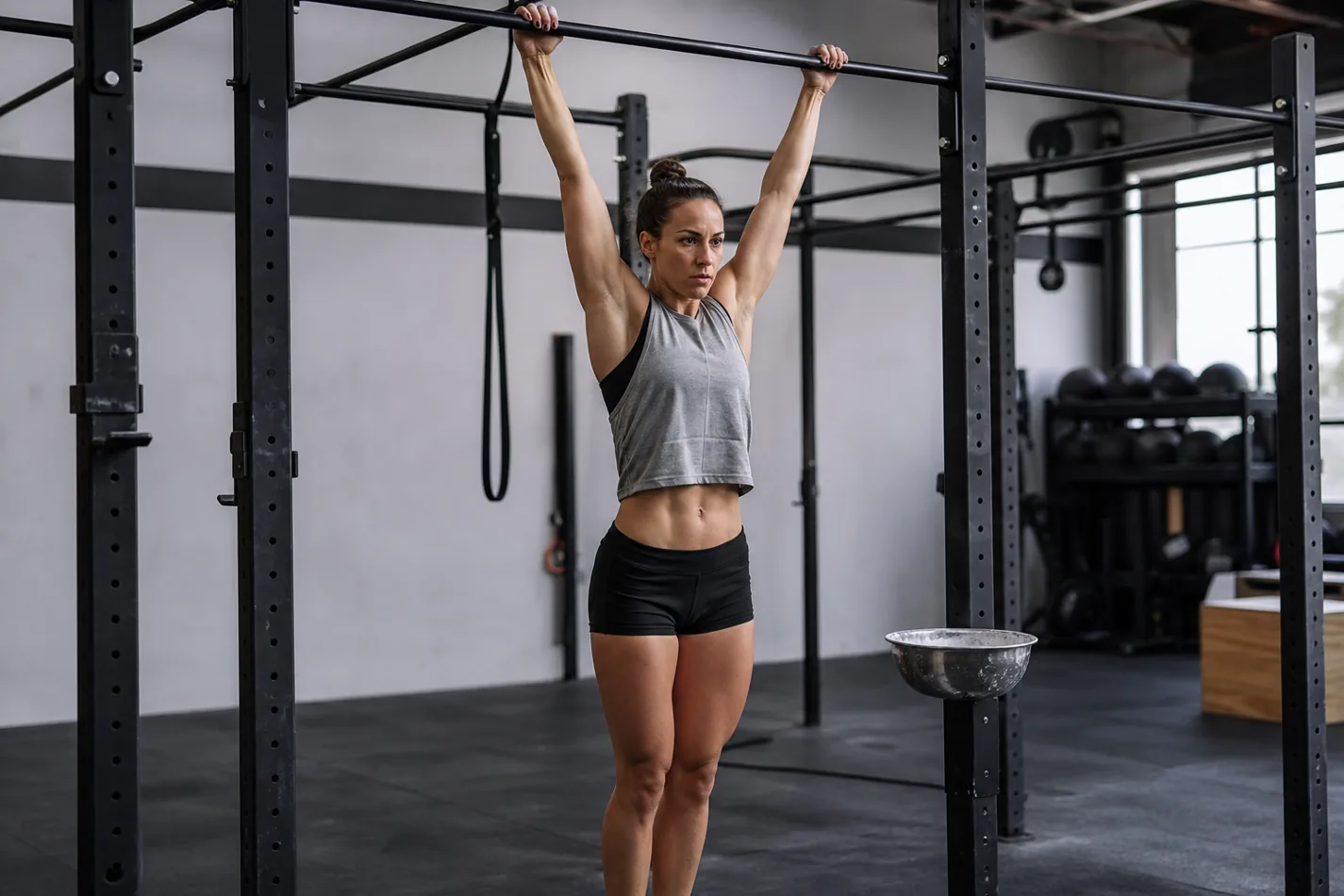
Scap pull-ups are easy to skip because they do not look like much. The athlete hangs from the bar, keeps the elbows straight, pulls the shoulder blades down, then returns to a relaxed hang. No big swing. No chin over bar. No rep that wins applause.
That quiet rep matters. In CrossFit, the active hang is the start of better pulling. If the shoulders drift up to the ears before every pull-up, toe-to-bar, or bar muscle-up attempt, the athlete is already spending position before the hard part begins.
- Scap pull-ups train the change from a passive hang to an active shoulder position.
- The elbows stay straight. If the arms bend, the athlete has turned the drill into a tiny pull-up.
- Use them before pulling days, gymnastics skill work, or as a scale when full pull-ups are not ready yet.
What a scap pull-up should look like
Start in a dead hang with a full grip on the bar. Keep the ribs down, legs quiet, and elbows locked. From there, pull the shoulder blades down and slightly back so the body rises a small amount. Then return to the hang under control.
The range is small on purpose. A clean rep might move the body only a few inches. The athlete should feel the lats and upper back turn on, not the biceps taking over. That is why scap pull-ups pair so well with strict pull-up strength: they teach the first piece before the arm pull starts.
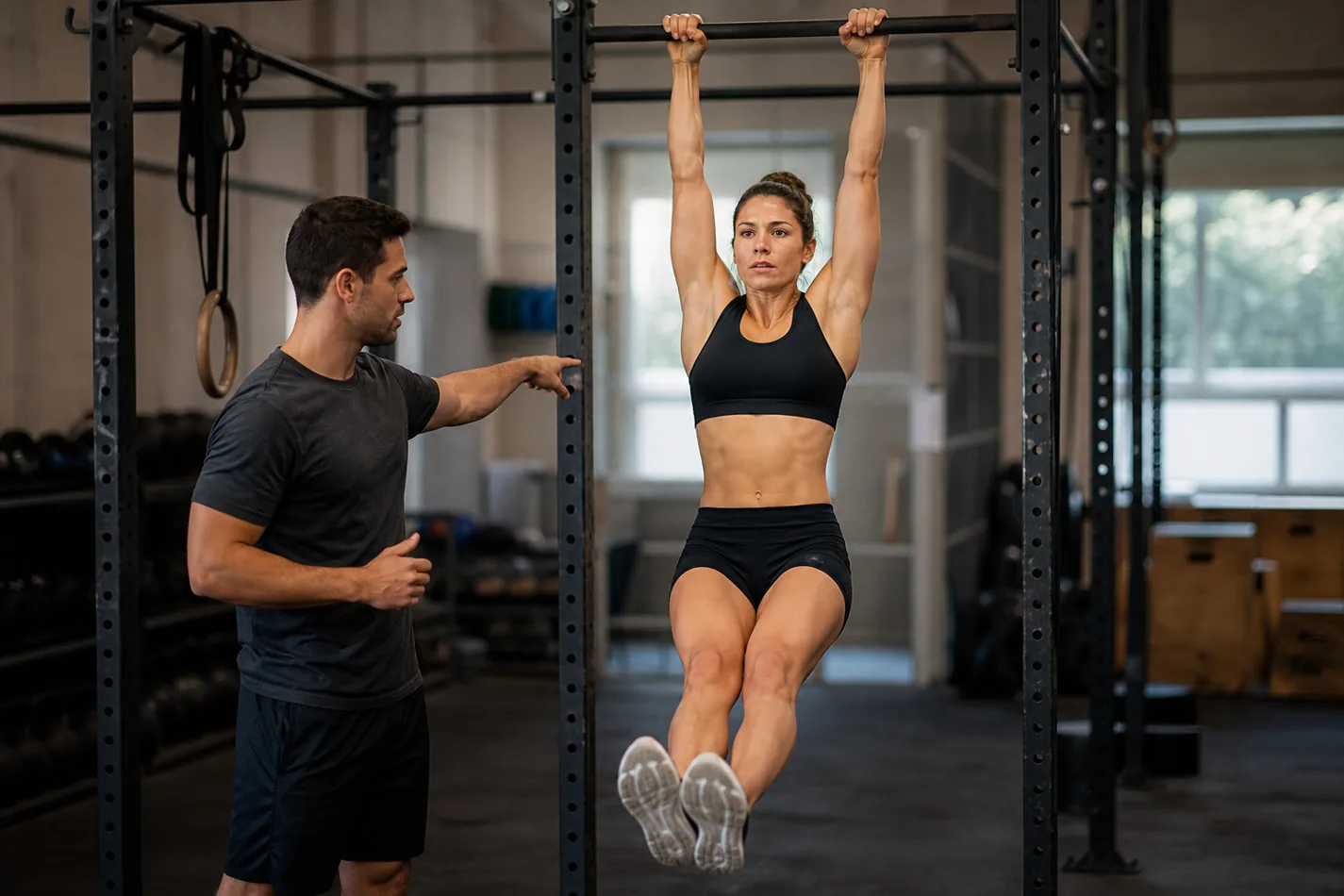
The active hang is the whole lesson
A passive hang is not wrong. It has a place for mobility and grip tolerance. But during pulling work, most athletes need to find an active shoulder first. That means the shoulders move away from the ears, the rib cage stays stacked, and the body feels organized before the next pull.
That position shows up everywhere. It helps athletes keep control during kipping pull-ups, hold tension through chest-to-bar pulls, and avoid turning every hanging skill into a shrug. If the active hang disappears, the next rep usually gets louder and less useful.
| Fault | What you see | Fix |
|---|---|---|
| Elbows bend | The athlete starts doing a short pull-up | Keep the arms long and move only at the shoulder blades |
| Ribs flare | The chest pops up as the shoulders pull down | Squeeze the glutes and keep the belt line tucked |
| Big swing | The body rocks forward and back after each rep | Use a slower return and reset the feet if needed |
| Neck tightens | The shoulders never move away from the ears | Think long neck, then pull the bar down with straight arms |
Why it helps more than another rushed pull-up attempt
Beginners often need this drill more than another banded set. A band can help someone clear the bar, but it does not always teach them how to start the pull from a strong shoulder. Scap pull-ups slow the problem down enough for the athlete to feel it.
They also give advanced athletes useful feedback. If a warm-up set of scap pull-ups feels rough, that is a clue. The shoulders may be tired from pressing, the grip may already be smoked, or the athlete may need more prep before high-volume gymnastics. That is where grip under fatigue and shoulder position start to overlap.
The demo below is short, but it shows the point well. Watch the shoulder blades move before the arms bend. That is the rep.
How to scale the drill
Not everyone needs to hang at full bodyweight on day one. Use a box under the feet so the athlete can unload part of the body. Keep the hands on the bar, knees bent, and practice the same shoulder blade action with less load.
Ring rows can help too, especially when the athlete cannot control a vertical hang yet. The angle is different, but ring row tension teaches the same idea: shoulders packed, ribs quiet, pull from the back before the arms try to finish the job. For athletes who are closer to pull-ups, jumping pull-ups can sit after scap pull-ups in the same progression.
Where to put scap pull-ups in a CrossFit session
The cleanest place is the warm-up. Do two or three small sets before pull-ups, toes-to-bar, rope climbs, or bar muscle-up work. Five to eight controlled reps are enough for most athletes. The goal is better position, not fatigue.
They also work as accessory training after the main piece. Pair them with hollow holds, slow ring rows, or light lat work when the session calls for pulling quality. Athletes who already struggle to keep a good hollow body position should keep the reps strict and stop before the body starts swinging.
How to use scap pull-ups in training
Start with three sets of five slow reps. Pause for one count in the active hang, then lower back to the passive hang without dropping loose. If the shoulder action is clean, add reps slowly or place the drill before harder gymnastics.
If the athlete cannot move the shoulder blades without bending the elbows, scale it. Use a box, reduce the load, or move to ring rows for the day. Good CrossFit scaling keeps the lesson clear: own the shoulder position before asking the arms to finish the pull.