The plan
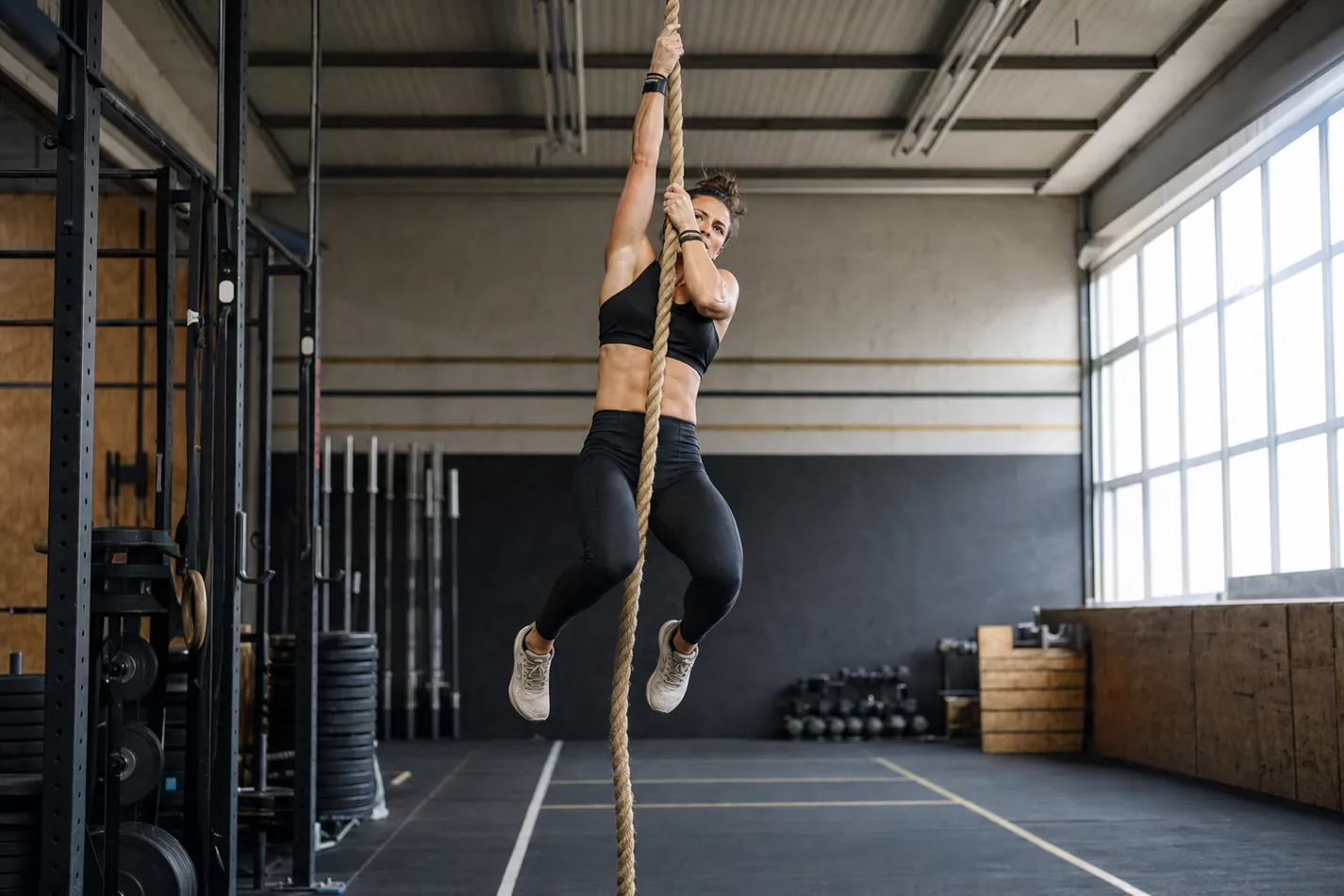
Legless rope climbs are honest in a way most pulling movements are not. There is no foot lock to rescue the rep, no jump to hide a weak pull, and no easy place to rest once the hands start slipping.
In CrossFit, that makes the movement exciting and easy to overreach. A good legless climb is not a death grip sprint to the top. It is a sequence of high reaches, tight body position, clean pulls, and a descent that does not punish the hands before the next round.
- Earn the first few feet before chasing full-height legless climbs.
- Keep the body tight so each pull moves you up the rope instead of swinging you away from it.
- Scale early when grip turns from challenged to unsafe.
What changes when the feet come off the rope
A standard rope climb lets the legs do a lot of work. That is the point of good regular rope climb footwork. The hands pull, but the feet trap the rope and give the athlete a platform to stand on.
Legless rope climbs remove that platform. Now the athlete has to create height with the arms and lats while keeping the ribs down and the legs from kicking all over the place. The strength from strict pull-up strength matters, but so does patience. If the body swings away from the rope, every next pull gets longer and uglier.
Start with the reach, not the panic pull
The first hand should reach high. Then the athlete pulls the rope down toward the chest while the other hand moves above it. The goal is not to do tiny biceps curls. The goal is to take enough rope on each reach that the climb has a rhythm.
A tight body line helps. Think about the same hollow shape used in hollow body control and toes-to-bar timing. Legs can stay slightly in front, knees controlled, ribs down. When the midline goes loose, the climb turns into a swing. That steals height and makes the grip work twice as hard.
| Fault | What it usually shows | Fix to try |
|---|---|---|
| Tiny pulls from bent arms | The athlete starts too low or never reaches tall | Reset each hand higher before pulling |
| Legs kick forward every rep | The body is swinging away from the rope | Tighten the ribs and slow the next reach |
| Hands slide on the descent | Grip is already cooked or the athlete is rushing down | Come down hand over hand and reduce volume |
| Shoulders shrug into the ears | The pull has lost lat tension | Think elbows down, chest close to the rope |
Where legless rope climbs fit in a WOD
They fit best when the workout rewards skill under fatigue, not reckless volume. Pairing legless climbs with running, moderate squats, bike work, or carries can work well. Pairing them with high-volume pulling such as chest-to-bar pulling can be brutal unless the athlete already owns the skill.
The grip cost is real. Athletes who are good at grip under fatigue or farmer carry posture still need to manage the rope. Chalk can help, but chalk does not replace a better reach or a calmer descent. Once the athlete starts missing hands or sliding down the rope, the set is over.
The CrossFit coaching clip below is worth watching before you add volume. It shows the hand-over-hand rhythm and body line without turning the drill into a frantic grip contest.
Scaling that still trains the skill
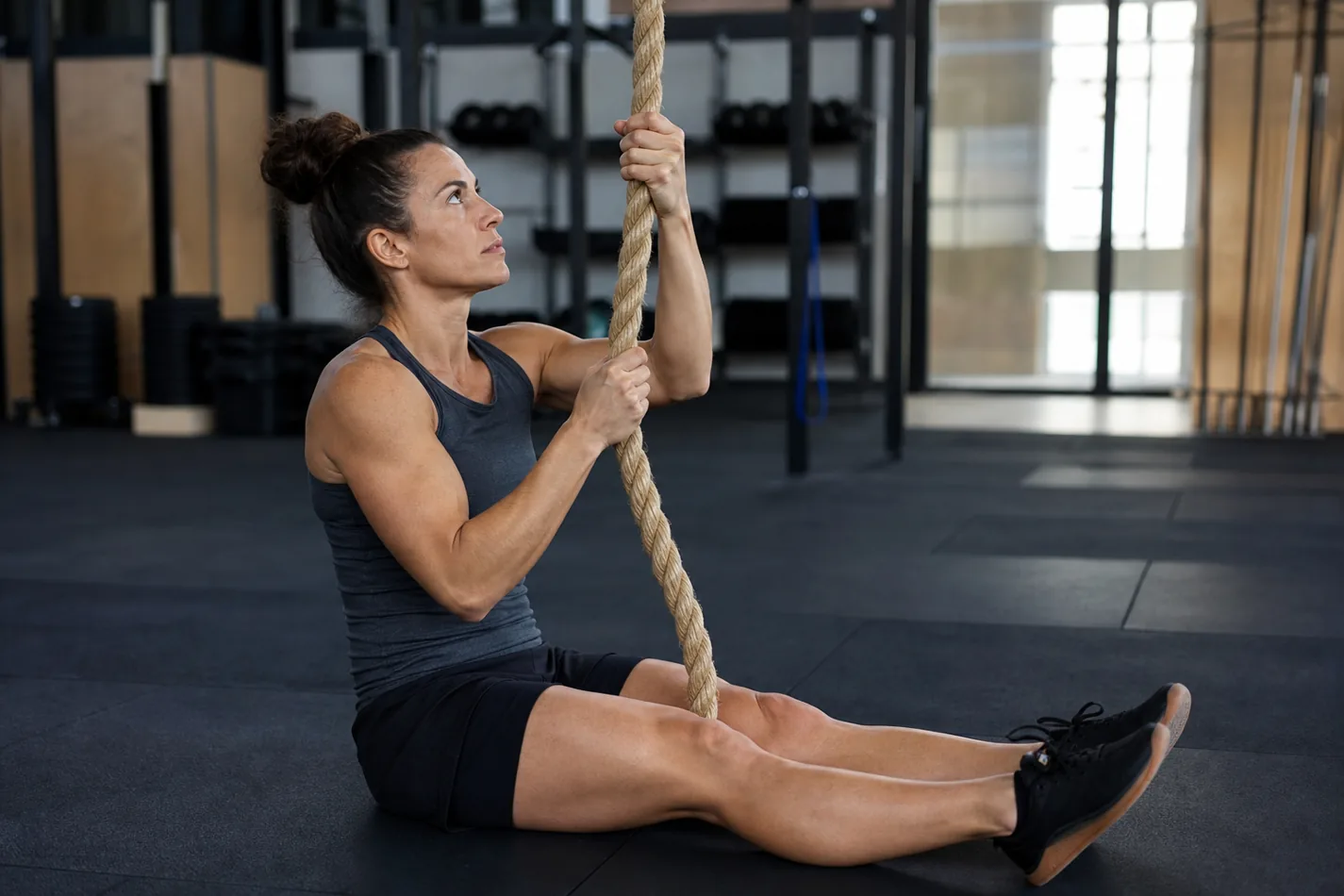
The best scale keeps the same problem: pull the body up without using the feet to climb. Seated legless pulls are the cleanest starting point. Sit tall, legs lightly on the floor, and pull hand over hand until standing. Then lower with control. It teaches reach, rhythm, and grip without the risk of being high on the rope.
Another option is a partial legless climb followed by a foot lock. The athlete climbs the first section without the feet, then switches to a secure lock before fatigue gets messy. That works well for athletes who have the pull but are not ready for repeated full-height reps.

How to build toward full-height reps
Do not rush from seated pulls to repeated climbs in metcons. Build the pieces first: strict pulling strength, controlled descents, short legless pulls from the floor, then one clean climb when fresh. The jump from one good rep to five ugly reps is where hands and elbows usually complain.
Use the CrossFit warm-up to test readiness. One short legless pull, one controlled descent, and one regular climb are enough to tell the coach what should happen in the workout. If the athlete cannot control those pieces, CrossFit scaling is not a downgrade. It is the training plan.
What to check before you climb
The standard is simple: reach high, keep the body close, pull without kicking, and descend on purpose. If the rope starts moving more than the athlete, the rep is telling you something.
Legless rope climbs should feel hard, not chaotic. When each hand placement is deliberate and the body stays quiet, the movement becomes a powerful test of pulling strength. When every rep turns into a fight for the next inch, scale it before the rope wins.


