The plan
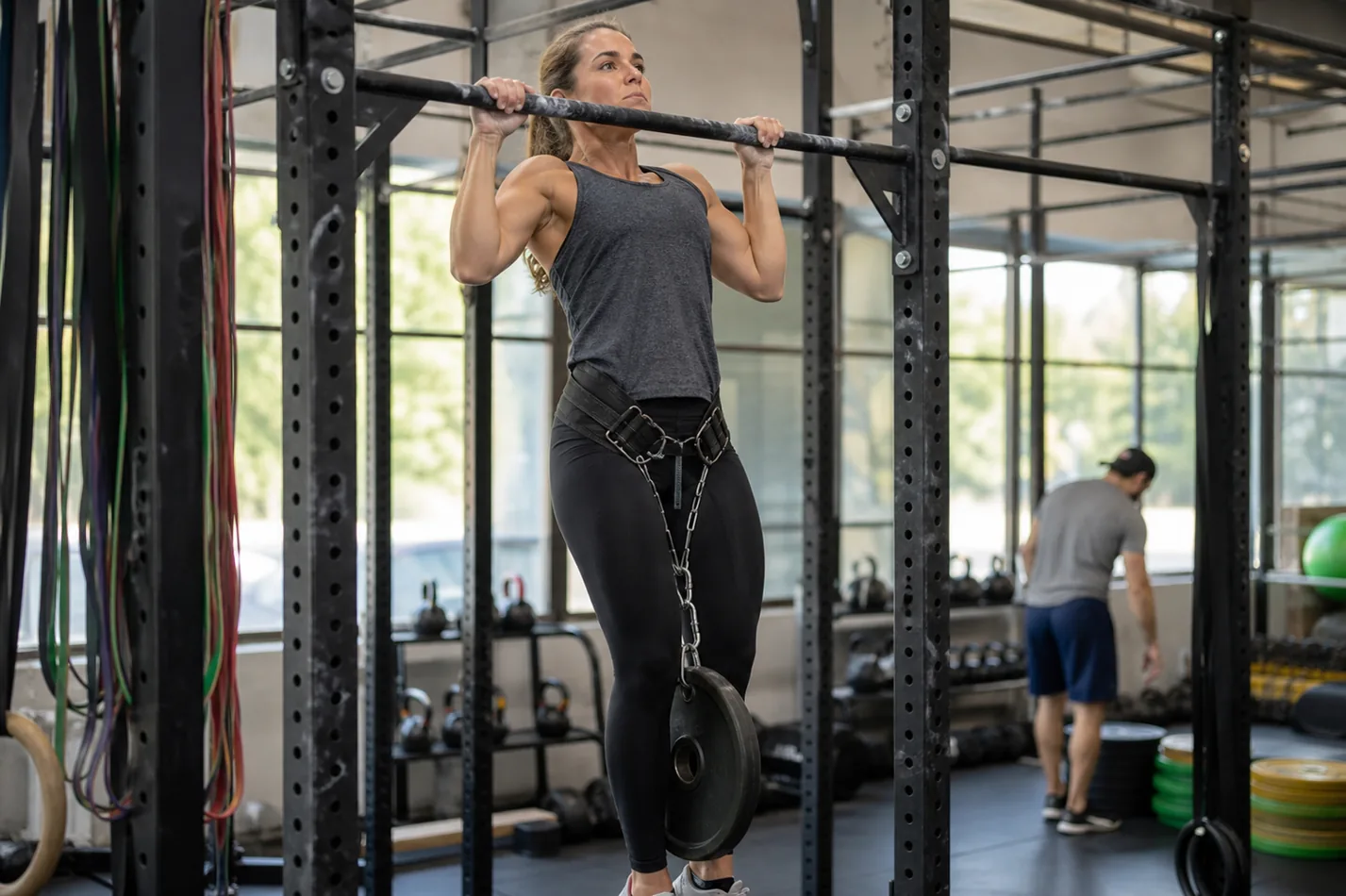
A weighted pull-up exposes the part of your pulling strength that kipping cannot hide. Add a belt, dumbbell, or vest too early and the rep changes fast. The chin stops short. The ribs flare. The feet start fishing for momentum.
That is why the weighted pull-up belongs in CrossFit training, but not as a random ego test. Used well, it builds the strict strength behind bigger gymnastics sets. Used poorly, it turns into a heavy half rep that teaches the body to miss the finish.
- Load the rep only if the strict pull-up is already clean at full range.
- The chin has to clear the bar without a kick, knee drive, or broken rib position.
- Small jumps in weight beat one ugly max that ruins the next week of pulling.
Start with the rep, not the weight
The first question is not how much weight you can hang from a belt. It is whether the unweighted rep is honest. A good weighted pull-up starts from a controlled hang, pulls with the shoulders set, finishes with the chin clearly over the bar, then lowers without dropping into the bottom.
If that sounds basic, good. It should. Weighted work is not a replacement for strict pull-up strength. It is a way to make strict pulling stronger once the pattern is already reliable.
What changes when you add load?
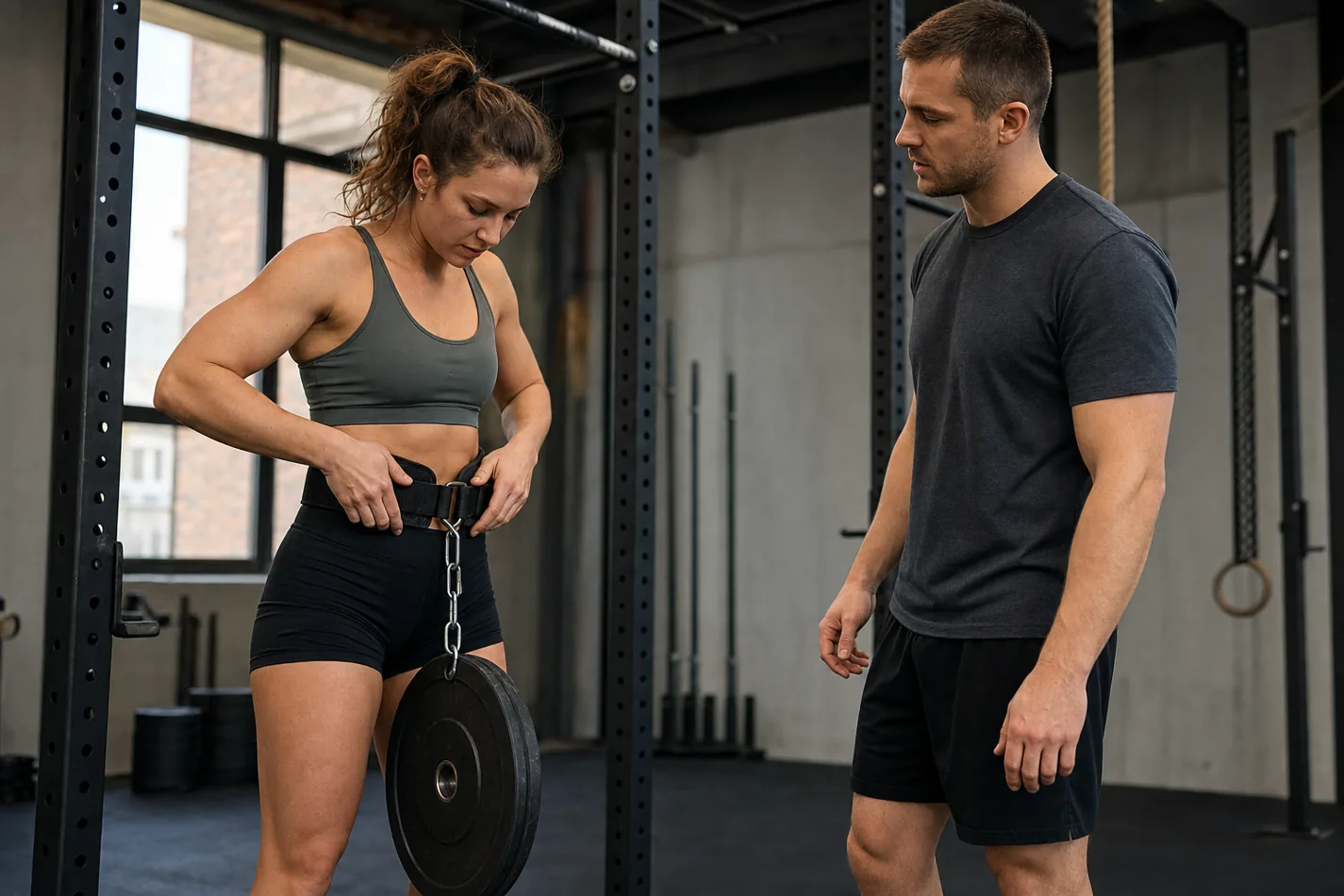
Extra weight changes the bottom of the rep first. Athletes who can bounce through bodyweight reps often find that a loaded hang feels much stricter. The shoulders need to stay active, the ribs need to stay down, and the first inch has to come from real pulling strength rather than a swing.
The second change is patience. A loaded pull-up does not need to be slow, but it cannot be rushed from a loose start. Set the body, breathe, pull the elbows down, and finish the rep before thinking about the next one. That control carries into chest-to-bar pulling, especially when fatigue makes athletes cut the top short.
| Fault | What it usually means | Fix before adding more load |
|---|---|---|
| Chin misses the bar | The weight is too heavy or the athlete is rushing the finish | Drop the load and hold the top for one second |
| Knees kick forward | The athlete is turning the rep into a kip | Use a hollow body start and lighter sets |
| Shoulders sink at the bottom | The hang is passive under load | Reset every rep with active shoulders |
| Grip opens early | The set is too long or the hands are not ready for the load | Use smaller sets and check hand position before the pull |
Choose the right loading style
A belt is usually the cleanest option because the load hangs under the body. A dumbbell held between the feet can work, but it often makes athletes clamp the legs and twist. A vest is useful for workouts because it feels closer to bodyweight movement, but it can hide whether the pull is truly strict.
The best choice depends on the goal. For strength sets, use a belt or a controlled dumbbell. For workout prep, a vest may make sense. For newer athletes, stay with ring rows, tempo lowers, or jumping pull-ups until the full range is there without negotiation.
The demo below is worth watching because it shows several loaded pull-up options, not just one hero-style max rep. Look at the start position, the chin finish, and how the athlete avoids kicking to finish the rep.
How heavy should weighted pull-ups be?
Most athletes do better with repeatable strength work than with a weekly max. Start with a load that allows three to five clean singles or small sets. If the third rep looks different from the first, the set already told you enough.
Small increases matter. Five or ten pounds can change the rep more than expected, especially for lighter athletes. Use the same standard every time: dead hang, no swing, chin over bar, controlled lower. If any piece disappears, the weight did not make you stronger that day. It just made the rep worse.
Where it fits in CrossFit training
Weighted pull-ups fit best before conditioning, after a smart CrossFit warm-up, or on upper-body strength days. They also work as a bridge between basic pulling and higher volume gymnastics. The goal is not to replace kipping pull-up timing. It is to give kipping better raw material.
In metcons, loaded pull-ups need restraint. A heavy vest can turn the workout into a grip tax before the real work starts. If the day already includes rope climbs, farmer carries, or toes-to-bar, protect the hands and use CrossFit grips only if they help without changing the standard.
When to scale or skip them
Skip weighted pull-ups for the day if the athlete cannot control the shoulder at the bottom, cannot finish a strict bodyweight rep, or feels sharp elbow or shoulder discomfort. There is no prize for loading a pattern that is not ready.
Good CrossFit scaling keeps the intent. Use tempo strict pull-ups, banded strict work, ring rows with a hard body line, or eccentric lowers. The athlete should leave with better pulling mechanics, not just tired arms.
What to check before your next set
Before adding weight, ask one simple question: would this rep count if the coach was strict? If the answer is no, fix the bodyweight version first. If the answer is yes, load it slowly and make every rep look like it belongs to the same athlete.


