The plan
Ring push-ups look harmless until the handles start moving. On the floor, the ground gives you a fixed target. On rings, every shaky rep asks the shoulders, trunk, and hands to solve a new problem.
That is why ring push-ups can be a useful CrossFit accessory and a rough workout surprise. They expose loose plank positions fast. They also tell you whether your pressing work is built on control or just on finding the floor and bouncing back up.
- Set the rings low enough that the athlete can keep a full plank from head to heels.
- Lower with the rings close to the ribs. Wide, drifting rings usually mean the rep is too hard.
- Scale by raising the rings or shortening sets before shoulder position turns ugly.
What ring push-ups are really testing
A ring push-up is a push-up performed with the hands on gymnastics rings instead of the floor. The movement still asks for a chest-to-hand depth, a strong press, and a stable trunk. The difference is that the rings move in every direction if the athlete is not organized.
That instability is the point. Ring push-ups sit in the same family as hand release push-ups, ring dips, and ring support holds, but they are usually easier to scale than full ring dips. The athlete gets to train pressing control without dropping straight into a deep dip position that the shoulders may not own yet.
Set the rings before you blame the athlete
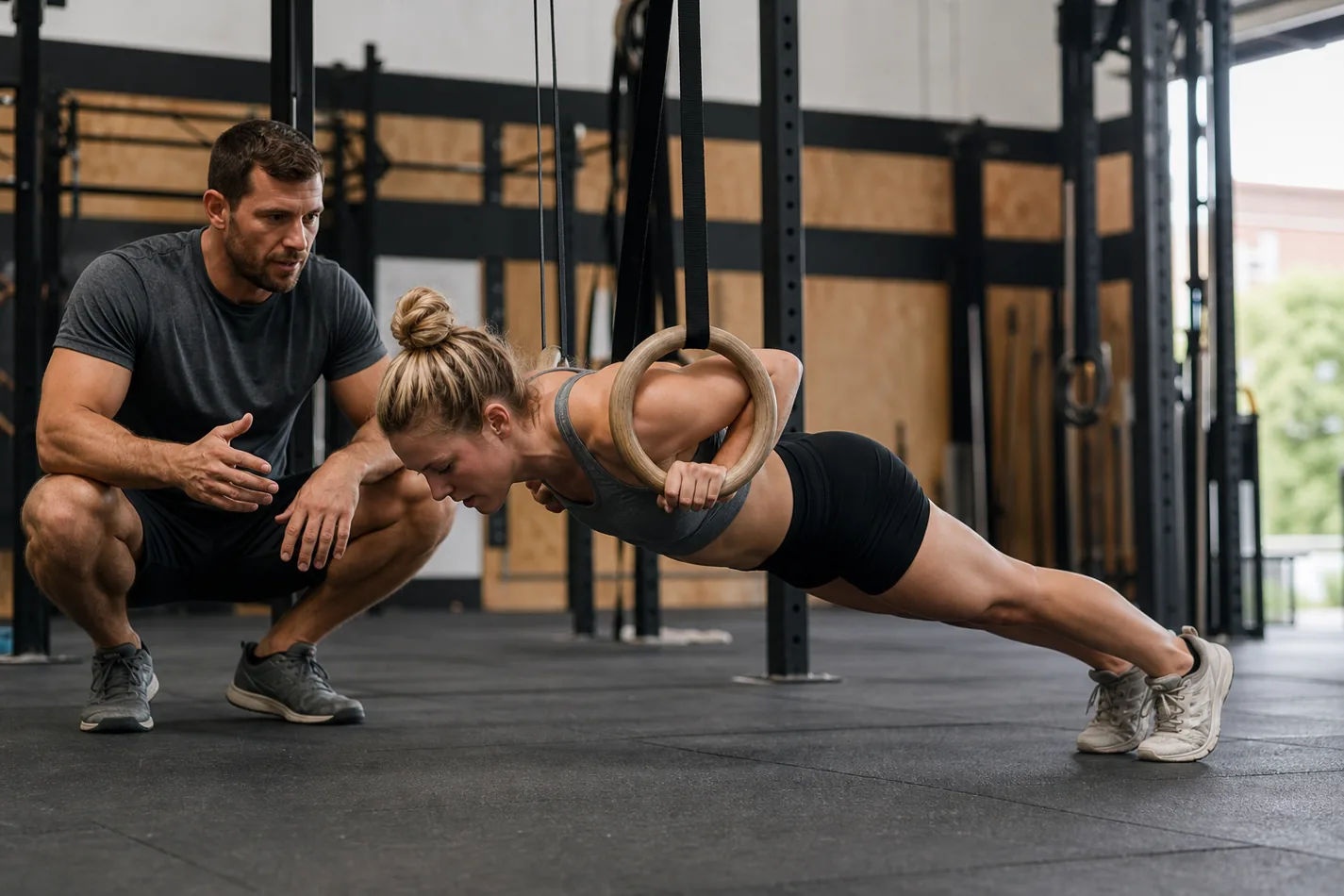
Bad setup ruins this movement. If the rings are too low, the athlete gets forced into a harder angle than planned. If the straps are too wide, the hands drift away and the rep turns into a shoulder fight. Set the rings at a height that lets the athlete start with straight arms, a tight plank, and the rings just outside the chest.
The straps should hang cleanly. The athlete should not start with the rings spinning, crossing, or pulled far outside the body. A good first rep looks almost boring: hands steady, ribs down, glutes tight, feet planted, eyes on the floor a few inches ahead.
The plank decides the press
The most common mistake is treating ring push-ups like a chest exercise only. The elbows bend, the chest drops, and the hips sag a beat later. Once that happens, the athlete presses from a broken shape. The rings drift out. The next rep gets worse.
Think about moving the whole body as one piece. Squeeze the legs, keep the ribs down, and lower the chest between the rings without reaching the chin forward. If the hips arrive before the chest, the set is already telling you to scale.
| Fault | What it looks like | Fix it with |
|---|---|---|
| Rings drift wide | The hands slide away from the ribs at the bottom | Raise the rings and keep elbows closer to the body |
| Hips sag | The chest lowers, then the pelvis follows late | Squeeze glutes before the first rep and cut the set sooner |
| Shoulders dump forward | The athlete loses tension at the bottom and presses from a collapsed position | Use a smaller range until the shoulder stays packed |
| Reps get rushed | The rings shake more every rep | Pause at the top and restart the plank before lowering |
How deep should the rep go?
Depth depends on the athlete and the workout standard. For training, the useful range is the deepest position the athlete can control without the shoulders rolling forward or the rings flying away. Chasing extra depth on unstable rings is not automatically better.
A good cue is chest between the hands, not shoulders hanging below them. If the athlete has solid pressing strength and wants more range, lower slowly and stop before the bottom turns soft. If the goal is conditioning, pick a range that can survive fatigue. A standard that only works for three perfect reps may not belong in a set of thirty.
The demo below is worth watching because it keeps the movement simple. Look at the strap angle, the straight body line, and the way the athlete lowers without letting the rings drift away.
Scaling ring push-ups without losing the point
Good CrossFit scaling keeps the same lesson in the workout: press while the rings try to move. The easiest adjustment is ring height. Higher rings make the body angle more vertical and reduce the load. Lower rings make the rep harder. Foot position matters too. A wider stance can calm the body while the athlete learns the pattern.
If the athlete still cannot control the rings, move back to floor push-ups or incline push-ups for the workout and use ring holds as skill work. There is no reward for grinding sloppy reps on unstable handles. The shoulder pays for that later.
Where ring push-ups fit in CrossFit training
Ring push-ups work well after a focused CrossFit warm-up, in accessory blocks, or as a moderate-volume pressing piece in a workout. They pair nicely with pulling work like ring rows because the athlete gets time on the rings without only hanging from the hands.
Be careful when the day already has heavy overhead work, high-volume burpees, dips, or handstand push-up strength. Ring push-ups may feel small on the whiteboard, but they still add shoulder and triceps fatigue. If the rings start shaking early, break the set before the elbows flare and the trunk goes soft.
What to check before adding volume
Test five slow reps before writing big numbers on the board. The rings should stay close. The body should move as one piece. The athlete should finish the set with shoulders that feel worked, not irritated.
If those five reps are clean, add small sets across the week. If they are messy, raise the rings and keep practicing. Ring push-ups reward patience. The quiet reps are the ones that usually build the most useful strength.