The plan
The bench press does not show up in every CrossFit gym as often as squats, cleans, or pull-ups. When it does, it tells the truth fast. If your shoulders are loose, your feet are lazy, or the bar drifts all over the place, the lift gets heavy before the load is actually heavy.
A good CrossFit bench press is not a bodybuilding pause for show. It is a controlled strength movement that builds pressing power, shoulder awareness, and upper-body tension that carries into gymnastics and overhead work. The setup matters more than most athletes want to admit.
- Set your upper back, feet, and grip before unracking the bar.
- The bar should lower with control, touch the chest, then press back up without the shoulders rolling forward.
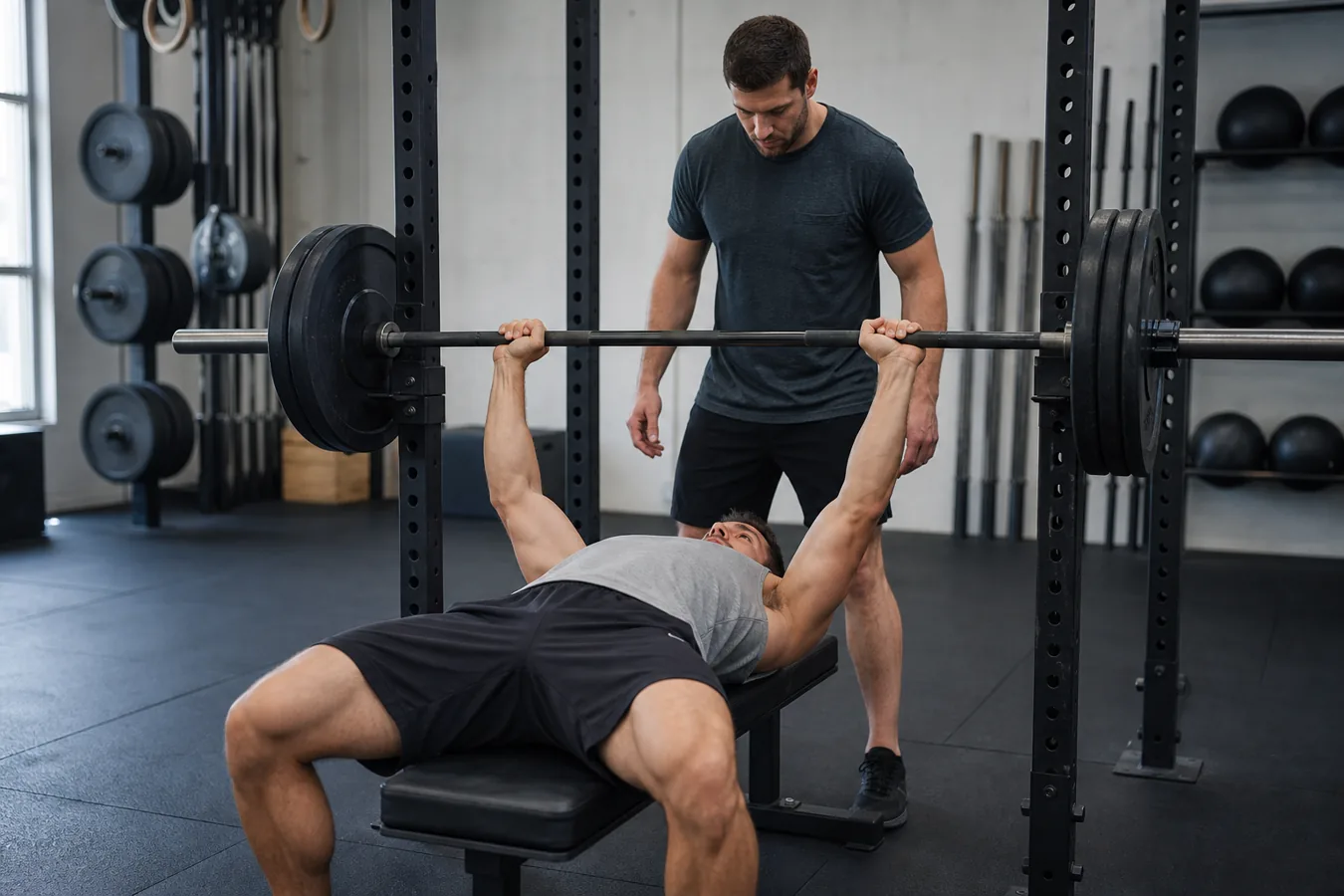
- Use a spotter, scale the load, and stop the set before position breaks.
Why CrossFit athletes should take the bench press seriously
The bench press builds horizontal pressing strength. That sounds separate from CrossFit until you look at the shoulders. Stronger, better controlled pressing can support handstand push-ups, ring dips, burpees, and any workout where the upper body has to keep producing force under fatigue.
It also gives athletes a slower strength environment than a metcon. If your lockout fails during handstand push-ups in CrossFit, the bench press can help build pressing capacity without asking you to balance upside down every session.

Set your position before the bar leaves the rack
Start with the eyes slightly under the bar. Pull the shoulder blades back and down, plant the feet, and make the bench feel like a stable platform instead of a place to lie down. The grip should feel even. The wrists should not collapse backward before the first rep begins.
Unrack with help if the load is challenging. A bad handoff can ruin a good setup. Once the bar is over the shoulders, take a breath, keep the upper back tight, and lower the bar to the chest with control. The rep should feel organized, not surprised.
| Checkpoint | Good rep | Fix when it breaks |
|---|---|---|
| Feet | Planted and quiet through the press | Move them closer to the hips or use a stable stance before loading more |
| Shoulders | Pinned to the bench without shrugging | Reset the upper back before the next rep |
| Wrists | Stacked over the forearms | Grip the bar lower in the palm and squeeze harder |
| Bar path | Controlled down, strong press back over the shoulders | Slow the descent and stop chasing speed with loose elbows |
| Spotting | Clear communication before the set starts | Agree on handoff, help, and rerack commands first |
Use the video to check the setup
This CrossFit coaching video is useful because it slows the lift down and focuses on the positions that decide the rep. Watch the shoulder setup, wrist angle, and bar path before worrying about how much weight is on the bar.
How to load the bench press in a CrossFit program
Bench press loading should match the day. For strength work, use sets that let you practice a consistent setup and clean reps. For accessory work, lighter sets with strict tempo can build control without turning every session into a max attempt.
If the workout already has overhead pressing, be honest about shoulder fatigue. A hard bench press session before push press work can change the quality of the dip, drive, and lockout. That is not always bad, but it should be intentional.
Mistakes that make the lift messy
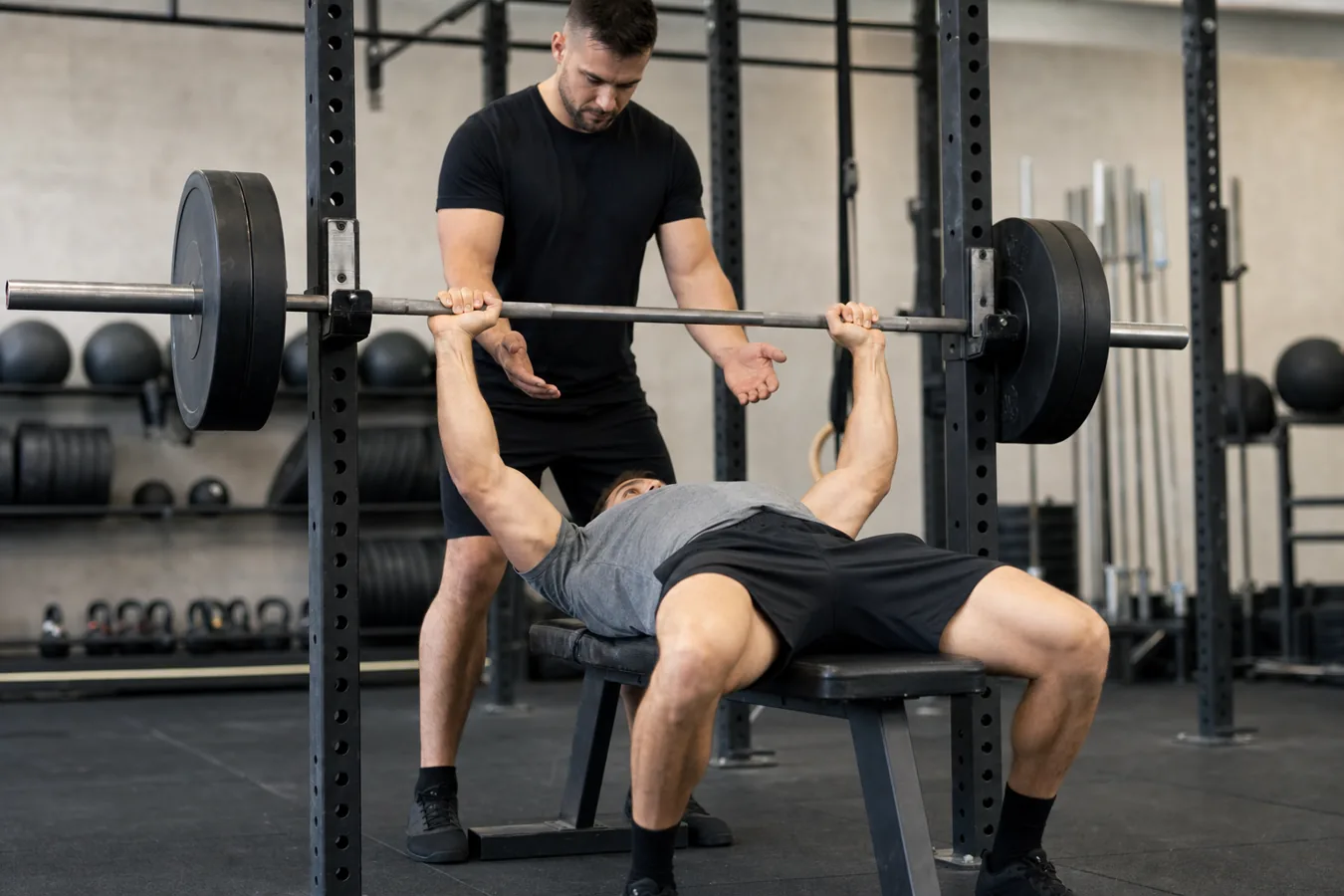
Most bench press misses start before the bar moves. Athletes lie down casually, loosen the upper back during the handoff, flare the elbows too early, or bounce the bar off the chest to steal momentum. That might get one ugly rep up. It does not build the pressing strength you can trust in training.
- Unracking without a tight upper back.
- Letting the wrists bend back under load.
- Flaring the elbows hard on the way down.
- Bouncing the bar instead of touching the chest with control.
- Racking the bar before both hooks are clearly caught.
When to scale or stop the set
Scale the bench press when the athlete cannot keep the shoulders set, when the bar path turns random, or when a spotter has to rescue every rep. Good options include lighter loads, dumbbell bench press, tempo reps, floor press, or fewer reps per set.
The goal is to train pressing, not survive bad positions. Treat the bench press the same way you would treat any smart CrossFit scaling choice: keep the stimulus, remove the part that is breaking the athlete.


