The plan
A strict handstand push-up is where pressing strength meets body control. The movement looks small from across the gym, but every weak spot shows up fast. Soft ribs turn into a banana shape. Loose hands make the head path messy. A rushed lower turns one clean rep into a slow crash.
That is why this skill deserves its own work, separate from kipping reps. In CrossFit, the strict version builds the base for bigger sets, safer overhead volume, and better control when fatigue makes athletes want to bounce out of the bottom.
- Do strict reps only when the wall setup, head position, and lockout stay consistent.
- The body should stay stacked. If the ribs flare or the feet peel off the wall, scale the rep.
- Small sets with clean control beat grinding singles that teach a bad wall pattern.
Set the wall position before you press
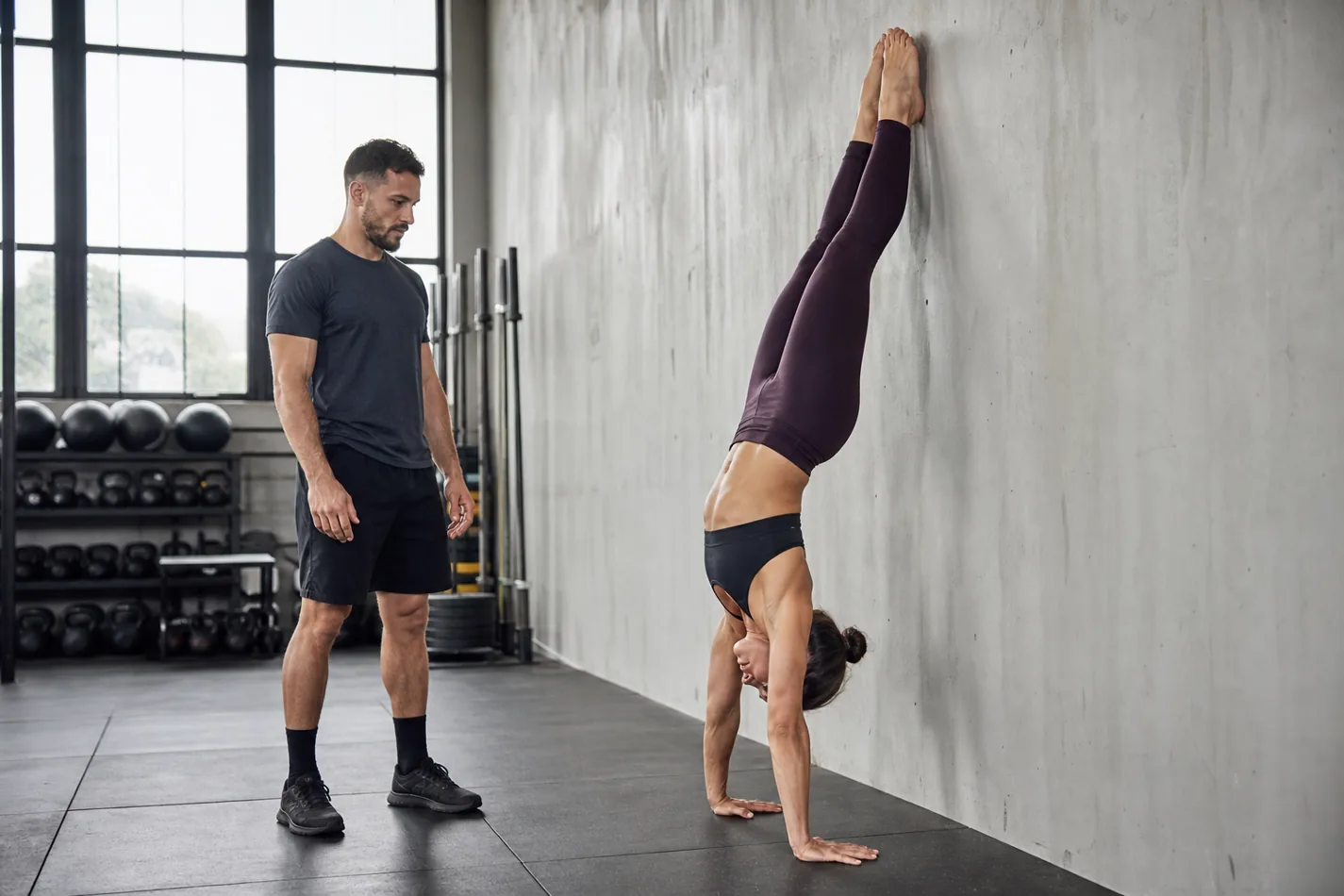
The rep starts before the elbows bend. Hands should be placed where the athlete can lower the head between them without collapsing into the floor. The feet touch the wall, the glutes stay tight, and the ribs stay down. If the athlete starts in a broken arch, the press has to fight the wall as much as the body.
This is where handstand hold position matters. A strict handstand push-up is not just a shoulder exercise upside down. It is a stacked shape that lets the shoulders press from a stable base.
What a clean strict rep looks like
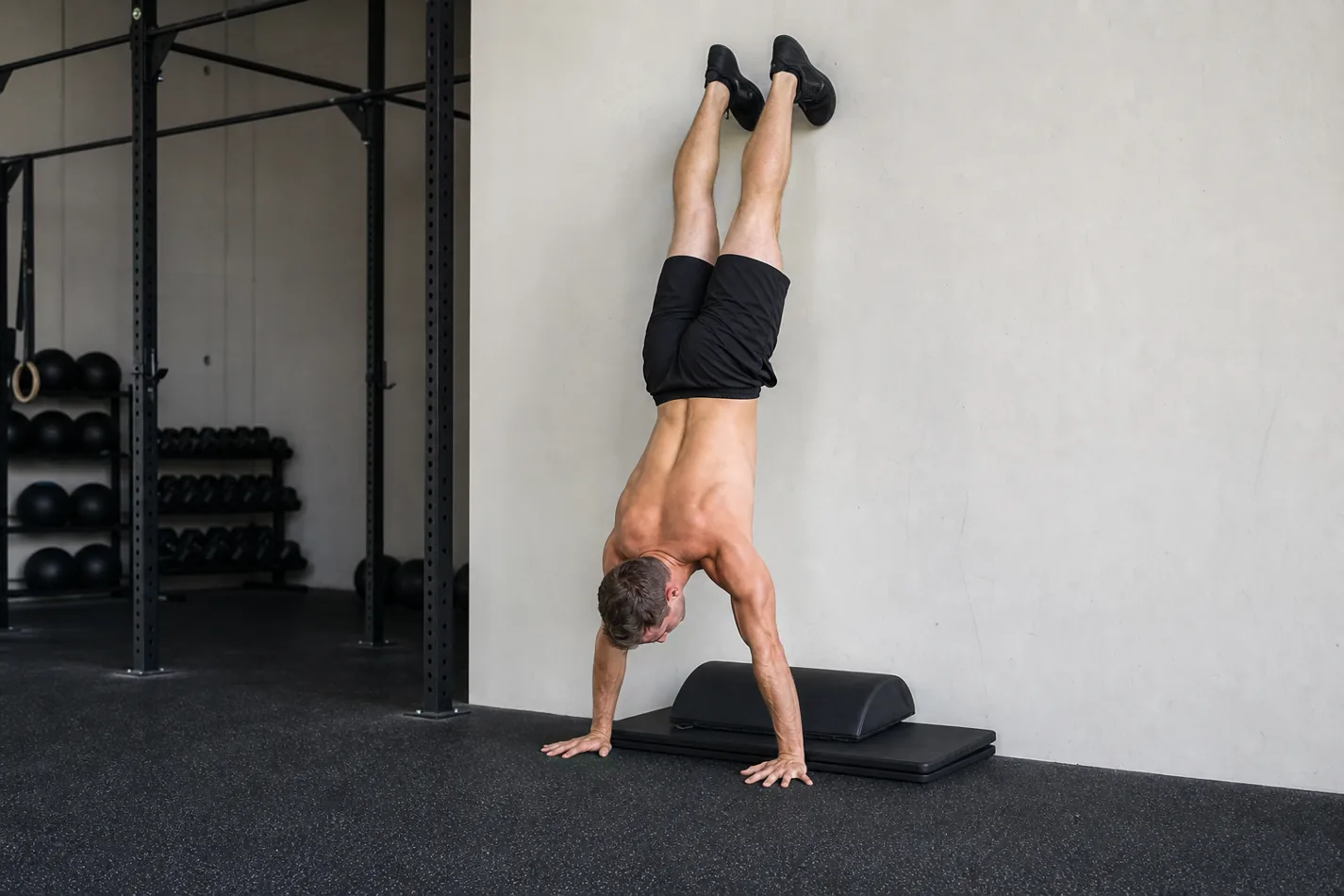
A good rep lowers under control, touches the head softly, then presses back to lockout without a knee drive or hip pop. The head should not slam into the floor. The elbows should not flare so wide that the athlete loses the pressing line. The lockout should finish tall, not with the ribs dumped forward.
If you already have general handstand push-up control, strict work makes the standard clearer. There is no bounce to cover a bad position. The rep either presses or it does not.
| Fault | What it usually means | Fix before adding reps |
|---|---|---|
| Head crashes to the floor | The athlete is dropping instead of lowering | Use fewer reps, add mats, and control the descent |
| Ribs flare at lockout | The body is losing the stacked line | Squeeze the glutes and keep the belly tight before pressing |
| Elbows flare hard | The hands may be too wide or the shoulders are not ready | Bring the hands in slightly and use a smaller range |
| Feet slide or kick | The athlete is sneaking in a kip | Reset the wall position and scale the press |
Build the press before chasing volume
Strict handstand push-ups should not be treated like a max-rep party every week. Most athletes need small sets, long rest, and a standard they can repeat. Two clean reps are more useful than six reps where the last four look like survival.
The carryover comes from real pressing. That means strict press strength, controlled negatives, partial range work, and smart accessories can all help. If an athlete cannot press well standing up, flipping upside down will not magically fix the problem.
The demo below is useful because it shows the strict version without hiding behind a kip. Watch the wall line, the head path, and how little the lower body contributes when the rep is done honestly.
How to scale strict handstand push-ups
The scale depends on what is missing. If the athlete cannot control the upside-down position, use wall walks, holds, or box pike holds. If pressing strength is the limit, use reduced range with mats, seated dumbbell presses, or slow negatives. If the shoulder position is rough, spend more time on CrossFit warm-up before loading the pattern.
Good CrossFit scaling should keep the intent. The athlete is training a vertical press with control, not just finding a way to get upside down. Box pike handstand push-ups can work well if the hips stay high and the head travels between the hands. Heavy seated presses can also help, especially when paired with ring dip support strength for lockout strength.
Where strict work fits in a CrossFit week
Strict reps fit best before conditioning or on a gymnastics strength day. They do not need to live inside every metcon. If the workout already includes wall walk control, heavy overhead work, or high-volume pressing, adding hard strict reps may steal more than it gives.
Use strict work as a base layer. Then kipping reps, deficit work, or faster wall skills have something better to build on. The same idea applies to shoulder-to-overhead timing and dumbbell push press leg drive: cleaner strength first, faster cycling later.
What to test next
On your next session, film one set from the side. Look for three things: a stacked wall line, a soft head touch, and a lockout that finishes without a rib flare. If those are there, add a rep slowly. If one is missing, fix that piece before chasing a bigger set.


