The plan
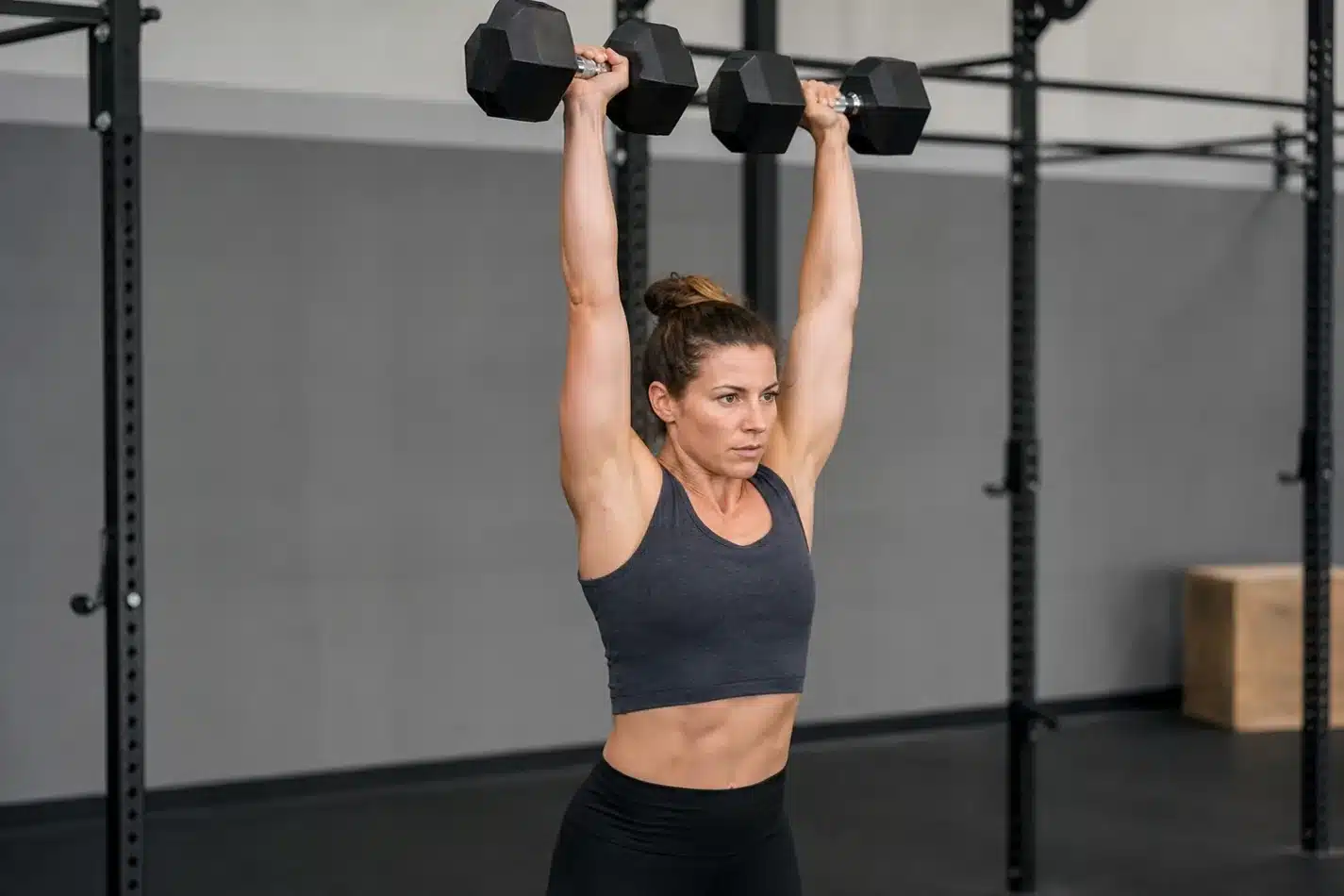
The dumbbell push press gets ugly when athletes treat it like a shoulder raise with a small knee bend. The weight feels light for a few reps, then the arms flood, the ribs flare, and the lockout starts drifting forward.
In CrossFit, the lift is usually there to move load overhead fast without turning every rep into a strict press. The fix is not more arm speed. It is a sharper dip, a patient rack, and a punch that finishes what the legs already started.
- Keep the dumbbells on the shoulders until the legs drive them up.
- Dip straight down. If the chest falls, the bells will travel forward.
- Use lighter bells or fewer reps when the lockout turns soft.
What the dumbbell push press should feel like
A good rep starts with the bells resting on the shoulders, not hovering in front of the body. The athlete dips a few inches, drives hard through the floor, then presses to finish the lockout. The shoulders work, but they should not be doing the whole job.
If you already understand barbell push press timing, the dumbbell version uses the same dip and drive. The difference is that two dumbbells expose side-to-side leaks. One bell may drift, one elbow may drop, or one shoulder may reach lockout late. That feedback is useful if the athlete slows down enough to notice it.
The rack position decides the rep
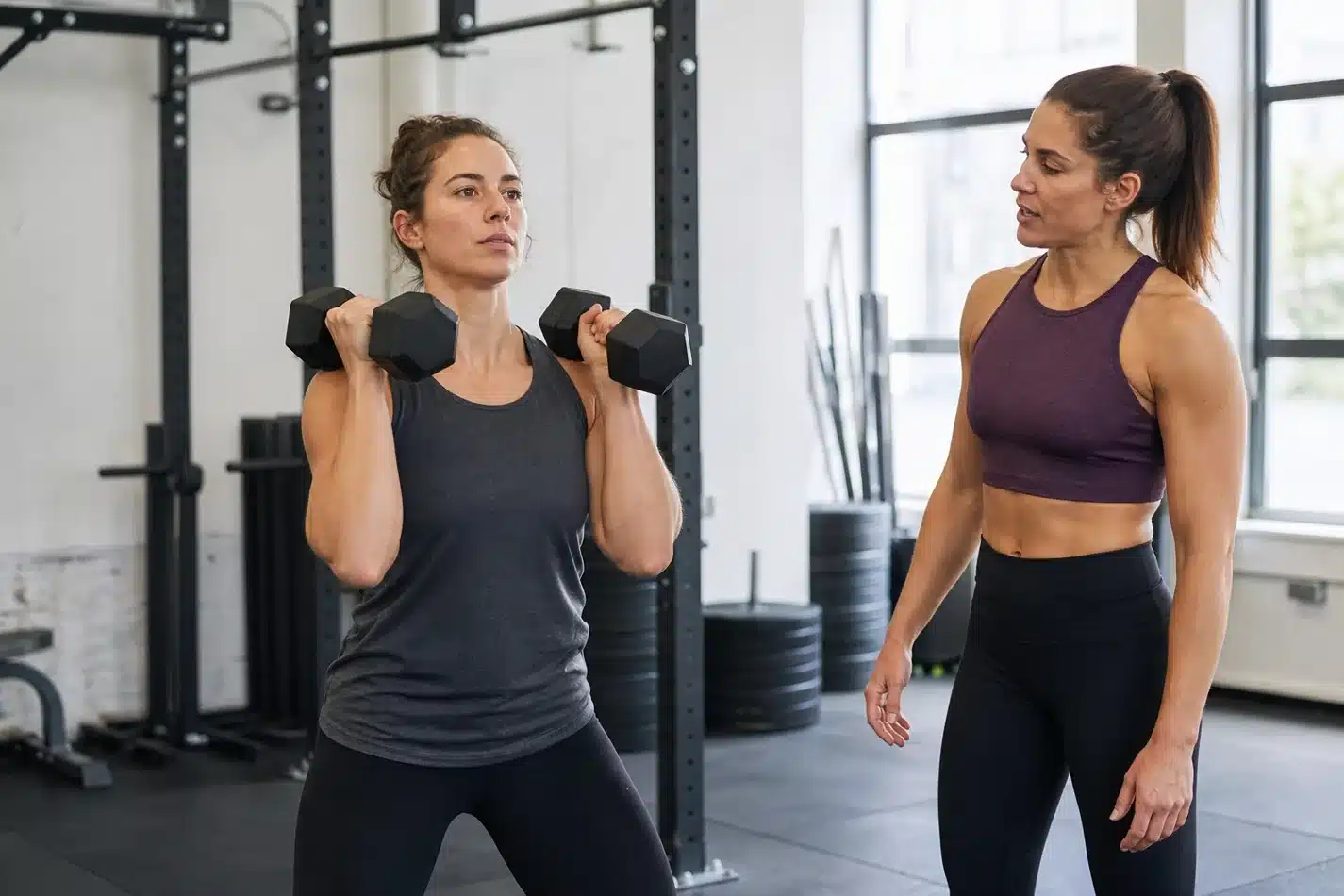
The dumbbells do not need to sit perfectly like a barbell front rack, but they do need a stable starting point. Rest the back head of each bell on the shoulder when possible. Keep the elbows slightly forward. Brace before the dip. If the bells float away from the body, the athlete has to catch them with the shoulders before the drive even starts.
This is where athletes who rely only on strict press strength often struggle. Strength helps, but the push press rewards timing. The dip loads the legs, the drive transfers force into the bells, and the press finishes the line overhead.
| Fault | What it usually means | Fix before adding load |
|---|---|---|
| Dumbbells swing forward | The chest drops in the dip | Dip straight down and keep the ribs stacked |
| Rep turns into a strict press | The athlete presses before the legs drive | Wait for the legs, then punch overhead |
| One arm locks late | Side-to-side strength or timing is uneven | Slow the cycle and finish both bells together |
| Low back arches at lockout | The athlete is chasing overhead range with the spine | Squeeze the glutes and keep the bells over the body |
How to cycle reps without wasting the shoulders
In a workout, the dumbbells should come back to the shoulders with control. Let them crash and the next dip gets rushed. Keep the elbows under the bells, absorb the weight with the legs, and start the next rep from the same stacked position.
The best pace depends on the workout. In a short sprint, fast sets can make sense. In a longer piece with dumbbell clean and jerk cycling, burpees, rowing, or carries, breaking early may save the shoulders for later rounds. The question is simple: can the athlete still hit a tall dip and a clean lockout? If not, the set is already too long.
The demo below is useful because the lift is easy to misread. Watch the dip first. The torso stays tall, the knees bend just enough, and the dumbbells leave the shoulders because the legs started the rep.
Scaling options that keep the pattern
Good CrossFit scaling should keep the dip, drive, and overhead finish. Use lighter dumbbells before turning the movement into sloppy half reps. If the rack position is painful, try a single dumbbell push press, a landmine press, or a lighter pair with a slower tempo.
Athletes who cannot lock out well overhead should not hide the issue by moving faster. Spend time in a CrossFit warm-up that opens the upper back, trains bracing, and checks whether both arms can finish in line. If the shoulder position is not there, choose a press variation that lets the athlete train hard without fighting pain.
Where it fits with other overhead work
The dumbbell push press sits between pure strength and fast conditioning. It can build confidence for shoulder-to-overhead choices, teach a better dip for dumbbell thruster breathing, and give athletes another way to train overhead work without a barbell.
It also pairs well with pulling or hinge movements because the bells are easy to set down and pick back up. That does not mean the reps should be careless. Treat the first rep of every set like a fresh setup: bells on the shoulders, ribs down, feet planted, then drive.
What to check before your next WOD
Before loading the workout, test five slow reps. If the dumbbells leave the shoulders before the legs drive, lower the weight. If the lockout bends the back, lower the weight. If one arm keeps drifting, slow the cycle and make both bells finish together.
The lift should feel like the legs throw the dumbbells into the press, not like the shoulders are dragging them overhead. Once that timing is there, the movement becomes much easier to pace. It also leaves more room for the next thing on the whiteboard, whether that is dumbbell snatch control, carries, or another round of pressing.


