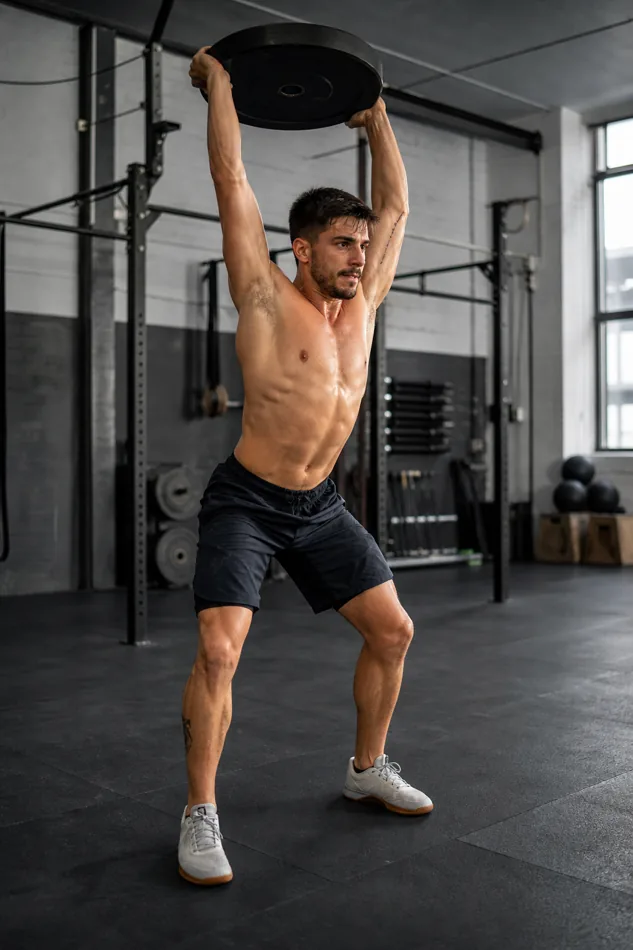
The plan
Plate ground to overhead is one of those CrossFit movements that looks harmless on the whiteboard. A bumper plate is lighter than a barbell, there is no fancy catch, and the rep standard sounds easy: move it from the floor to locked out overhead.
Then the workout starts. The plate gets awkward, the grip changes every few reps, and athletes who treat it like a slow front raise usually find out fast that their shoulders are not built for that plan.
- Start with the plate close to the feet, not out in front where the low back has to rescue the rep.
- Use the legs and hips to move the plate, then guide it overhead with a stable rib cage.
- Scale load or reps when lockout turns soft, the plate drifts away, or every rep becomes a shoulder raise.
What plate ground to overhead should train
A good rep trains a simple idea: pick up an awkward object, keep it close, and finish with control overhead. It has a little of medicine ball clean setup, a little of shoulder to overhead choices, and the same fatigue problem you feel in wall ball pacing when the arms start doing too much.
The movement is not meant to be a barbell snatch with a plate. It is usually programmed for conditioning, warm-up skill work, or simple mixed-modal pieces where the plate keeps the setup easy and the heart rate high.
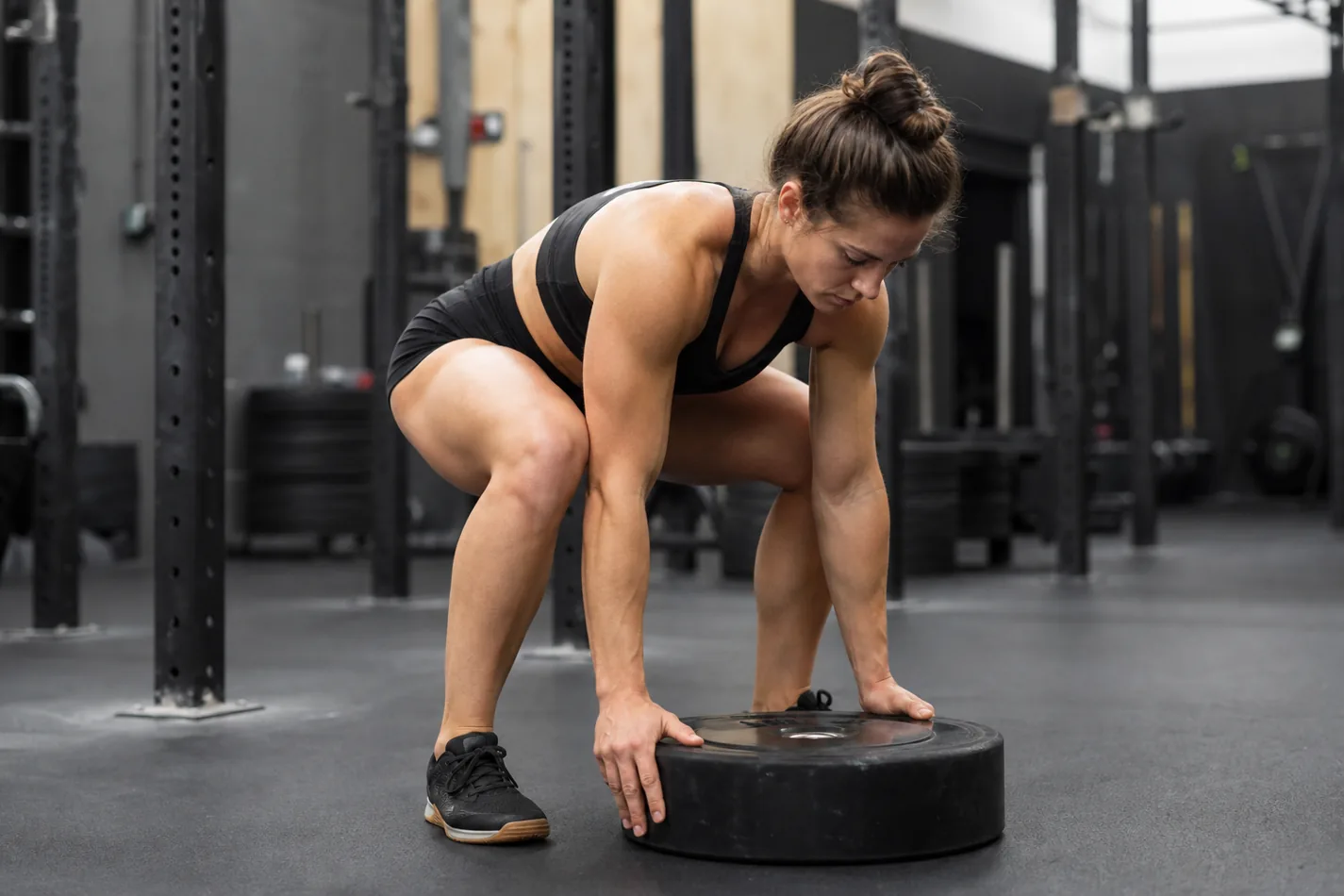
Set the plate close before you pull
The setup decides most of the rep. If the plate starts too far away, the athlete has to reach forward, round the back, and swing the plate around the body. Bring the toes close enough that the hands can grip the sides of the plate without the chest collapsing.
Think about dragging the plate up the body line rather than casting it forward. That same close-load habit shows up in power snatch timing and dumbbell snatch pull. With a plate, the feedback is blunt: if it swings away, the shoulders pay for it.
| Fault | What it usually means | Fix to try first |
|---|---|---|
| Plate starts far from the feet | The athlete is reaching before bracing | Step closer and grip the sides before lifting |
| Plate swings away from the body | The hips are late or the arms are pulling early | Stand hard, then guide the plate up |
| Soft overhead lockout | The ribs flare and the shoulders lose position | Squeeze the glutes and finish with the biceps near the ears |
| Grip changes every rep | The athlete is rushing the floor setup | Reset the hands before the next pull |
Do not turn it into a shoulder raise
The biggest leak is trying to lift the plate with straight arms from the floor. That works for a few reps with a light plate. It falls apart when the workout asks for volume.
Use the legs first. The plate should come off the floor because the athlete pushes through the ground and opens the hips, not because the shoulders are grinding from the first inch. Once the plate is moving, the arms guide it to the lockout.
The demo below is useful because it shows the plate path without making the movement look more complex than it is. Watch how the plate stays close before the athlete finishes overhead.
Lock out with the ribs down
Overhead does not mean leaning back until the plate passes the face. The rep should finish with the arms straight, the plate stacked over the body, and the ribs under control. If the athlete has to overextend the low back to get there, the load or range may need to change.
This is where plate ground to overhead connects to thruster breathing. Breathing gets messy when the ribs flare and the shoulders shrug toward the ears. A cleaner lockout gives the athlete a place to breathe before the next rep starts.
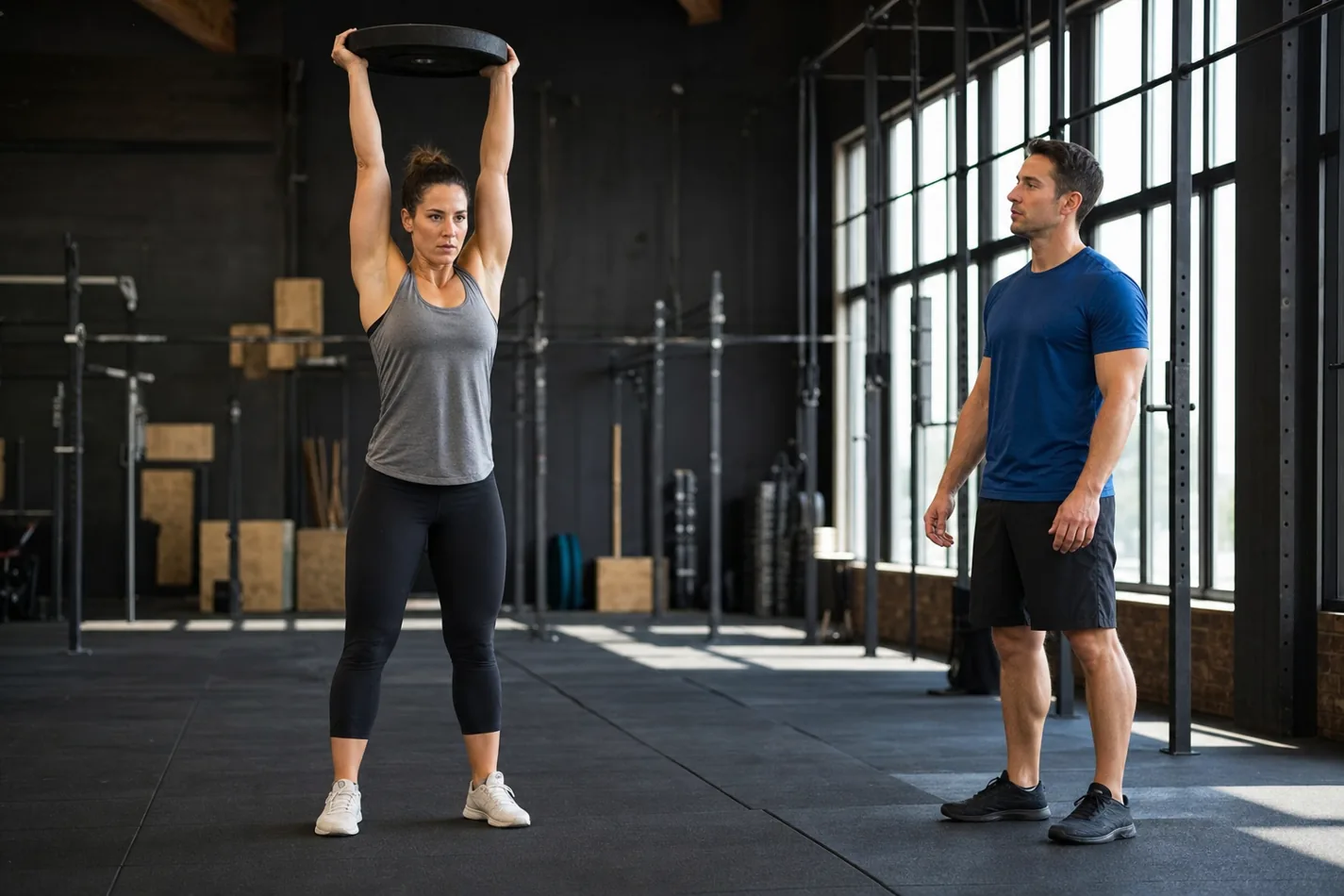
How to pace it in a workout
For light plates, steady touch-and-go reps can work. The trap is letting the plate bounce, twist, or land in a different spot each time. That adds small delays that become expensive over several rounds.
For moderate loads or high reps, use a cleaner rhythm: set the plate down flat, step in, grip, stand, lock out, breathe. That may look slower at first, but it saves the shoulders from a bad first set that ruins the rest of the workout.
Scaling without losing the stimulus
Good CrossFit scaling keeps the movement awkward enough to matter. A lighter plate, fewer reps, or ground to chest can all work. Replacing it with a perfectly neat dumbbell movement changes the feel unless the workout only needs a simple overhead pattern.
If the athlete cannot lock out without leaning back, lower the load. If the setup is the issue, slow the first few reps and make the floor position consistent. If conditioning is the limit, break the set before the shoulders force sloppy reps. That is also the smarter choice when plate work sits next to burpee pacing or another breathing-heavy station.
What to test in your next WOD
Before trying to go faster, check three things during warm-up. Can you keep the plate close from floor to chest? Can you finish overhead without flaring the ribs? Can you put the plate down in the same spot every rep?
If those are clean, speed is available. If they are not, more speed just makes the leak easier to see.


