The plan
- What the power snatch should feel like
- Start close before you try to move fast
- Finish the pull, then get under it
- A video worth watching for the basic pattern
- How to catch without crashing
- Power snatch vs dumbbell snatch in workouts
- How to pace power snatches in a WOD
- When to scale the power snatch
- What to test next time you snatch
The power snatch looks fast from the outside. From the inside, it is mostly patience. The bar has to leave the floor close, pass the knees without drifting away, then accelerate only when the legs and hips can actually finish the job.
That is where many CrossFit athletes lose it. They rip the bar off the ground, jump early, and hope the overhead catch saves the rep. Sometimes it does. More often, the bar loops forward, the feet chase it, and the next rep gets uglier.
- A good CrossFit power snatch starts with a controlled pull from the floor, then a fast finish through the legs and hips.
- The biggest problems are an early arm bend, a bar path that swings forward, and a loose overhead receiving position.
- In workouts, choose a load that lets you keep the catch above parallel without turning every rep into a rescue attempt.
What the power snatch should feel like
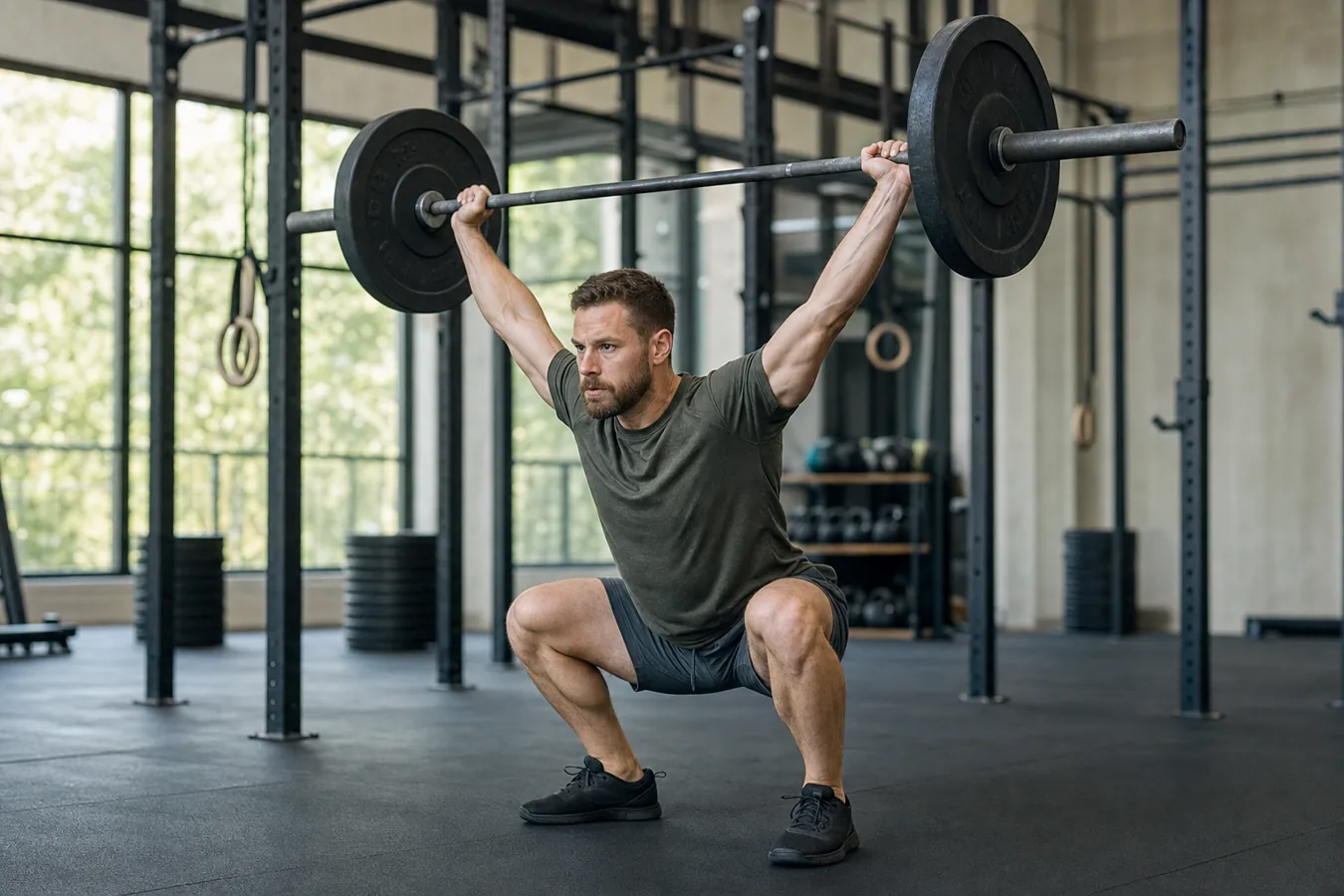
The power snatch is not a wide grip deadlift followed by a shoulder throw. It is a full-body lift that asks you to stay patient long enough to use the floor, then move under the bar before it gets away from you. The catch happens above parallel, but it still needs the same overhead discipline you would expect in a deeper squat variation.
If the catch feels unstable, look at the positions that feed it. Athletes who struggle in the CrossFit overhead squat often show the same issue in the power snatch. The bar can be lighter and faster, but the shoulders, ribs, and feet still have to agree.
Start close before you try to move fast
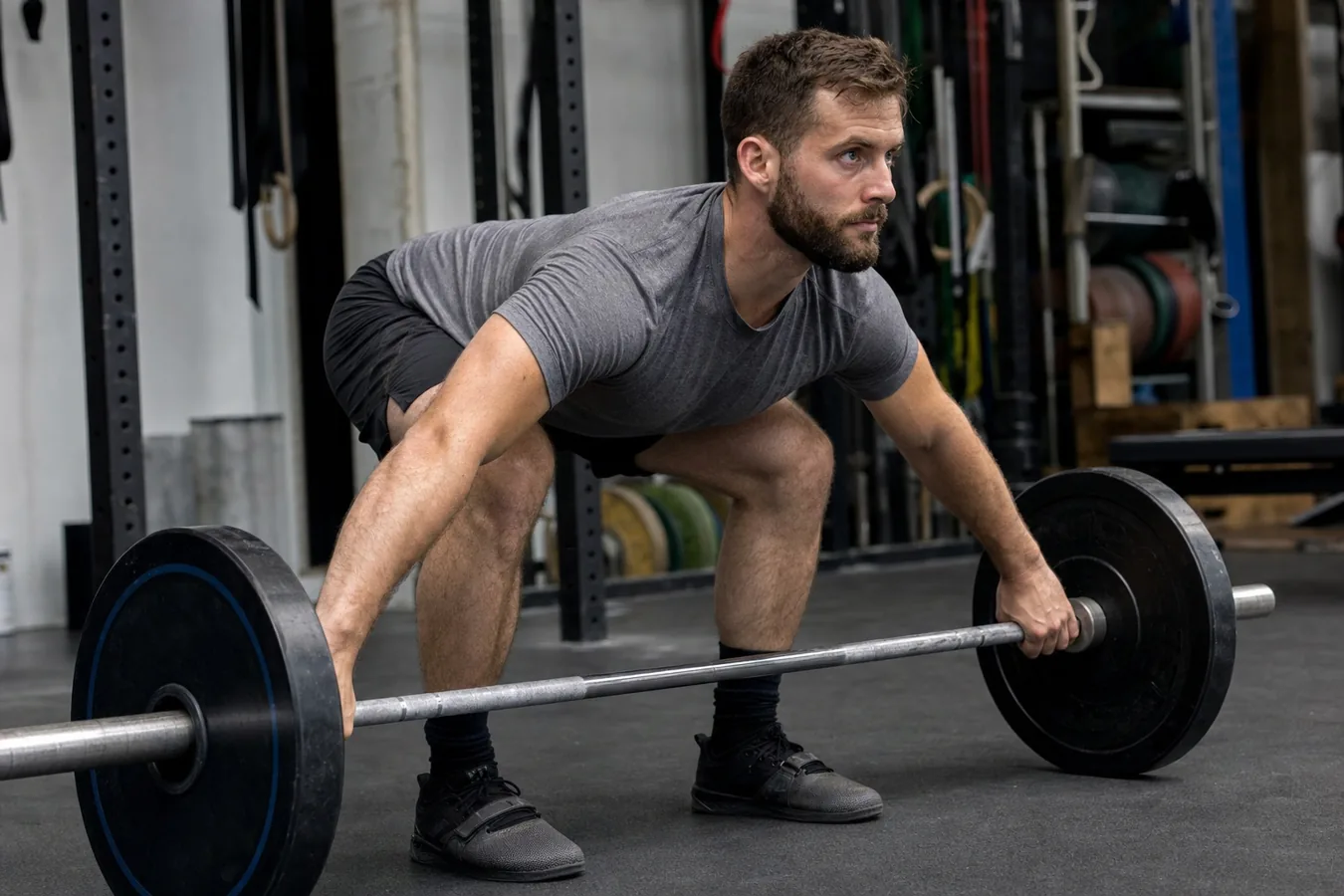
Set your grip wide enough that the bar finishes near the hip crease when you stand tall. Hips start above the knees. Shoulders sit slightly over the bar. The back stays tight, not arched into a pose, and the bar begins over the midfoot.
The first pull should feel controlled. Push the floor away and keep the bar close to the shins and thighs. If the bar moves around the knees instead of past them, you have already created extra distance. That distance shows up later as a forward swing.
This is why the power snatch has more in common with the CrossFit power clean than many beginners think. The grip and catch are different, but the mistake is often the same: yanking from the floor before the body is ready to accelerate.
Finish the pull, then get under it
Once the bar passes the knees, keep pulling it into the body. The finish is violent but not wild. Legs extend, hips open, shoulders rise, and the elbows travel high and outside just long enough to keep the bar close.
The arms do not win the lift. They guide the bar and help you turn over. If you bend them too early, you cut off the leg drive and turn the rep into a long, awkward pull. You might still make it with a light bar, but the pattern falls apart as soon as the workout gets heavier or faster.
| Fault | What you will notice | Fix to try |
|---|---|---|
| Early arm bend | The bar slows before the hip and the shoulders tire fast | Use snatch pulls and keep the elbows long until the legs finish |
| Bar swings forward | You jump toward the bar or catch with the feet chasing it | Practice slow pulls to the knee, then sweep the bar into the thighs |
| Soft catch | The elbows press out late and the bar wobbles overhead | Land with locked elbows, active shoulders, and ribs pulled down |
| Too much load | Every rep turns into a starfish catch or a near miss | Reduce weight until the receiving position stays above parallel and stable |
A video worth watching for the basic pattern
This CrossFit demo keeps the movement clean and simple. Watch the bar stay close, then watch how quickly the athlete locks out overhead. That timing matters more than making the pull look huge.
How to catch without crashing
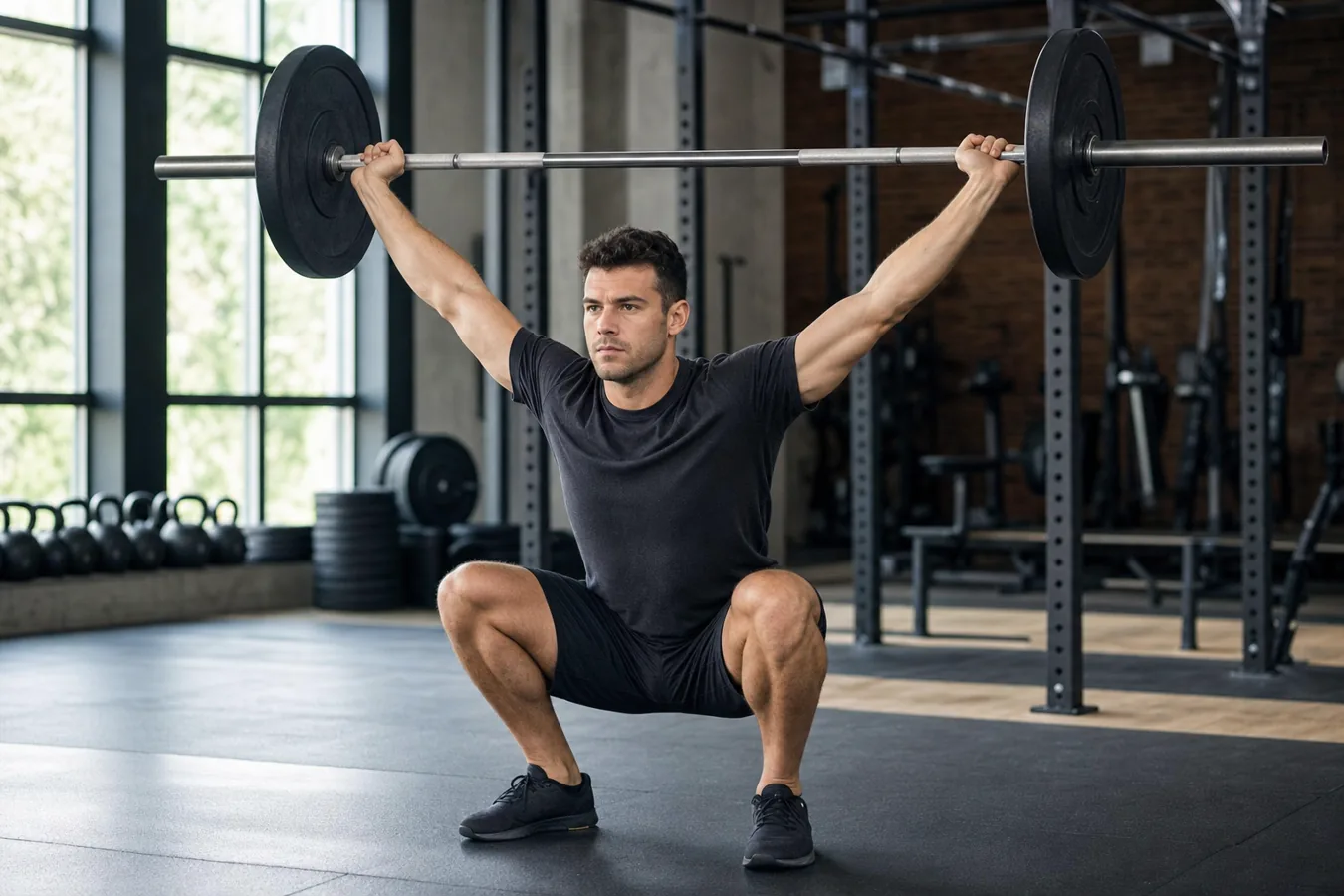
A power snatch catch should be active. Feet move from pulling stance to receiving stance, the knees bend, and the bar lands stacked over the shoulders, ribs, hips, and midfoot. If you catch with straight legs and bent elbows, you did not really receive the bar. You survived it.
Think about punching up against the bar as your feet land. The hands do not just hold the bar overhead. They finish the turnover and create a solid shelf through the shoulders. If the bar feels heavy in the wrists or drifts behind you, stop adding load and fix the catch first.
Power snatch vs dumbbell snatch in workouts
The barbell power snatch rewards consistency. Both hands are locked into one object, so a small timing error affects the whole rep. The CrossFit dumbbell snatch gives you more freedom, but it also lets one side hide problems that the barbell exposes immediately.
In mixed-modal WODs, the barbell version usually costs more coordination. That does not mean you should move slowly. It means you should pick a rhythm you can repeat. Fast singles can be smarter than touch-and-go reps if the bar starts swinging away or the catch gets messy.
How to pace power snatches in a WOD
For light bars, touch-and-go reps can work if the descent stays controlled. Bring the bar back to the hip, guide it down, and keep your next setup close. Do not let the bar crash to the floor and bounce into a random second pull.
For moderate or heavy bars, quick singles often win. Step to the bar, set the back, pull cleanly, drop or guide it down, then repeat before your heart rate convinces you to rush. This is the same logic behind smart CrossFit scaling: preserve the stimulus instead of chasing reps that stop looking like the movement.
When to scale the power snatch
Scale when the bar loops forward, the catch drops below the intended power position, or the shoulders cannot lock out cleanly. A lighter bar is the easiest change. Hang power snatches can help if the floor setup is the limiting piece. Snatch pulls and tall muscle snatches can help if the athlete needs to feel the finish and turnover without the full lift.
Some athletes should use a dumbbell, PVC pipe, or empty bar for the day. That is not a downgrade if it keeps the workout honest. A power snatch done badly at speed teaches the wrong lesson fast.
What to test next time you snatch
- Can you keep the bar close from the floor to the hip?
- Can you wait long enough before bending the arms?
- Can you catch with locked elbows and a stable rib position?
- Can you repeat the same footwork when the clock is running?
- Can you choose singles or touch-and-go reps based on bar path, not ego?
If those checks hold, add speed. If they do not, slow the lift down and fix the piece that leaks first. The power snatch is supposed to be fast, but it gets fast because the positions are clean, not because you rushed the first pull.


