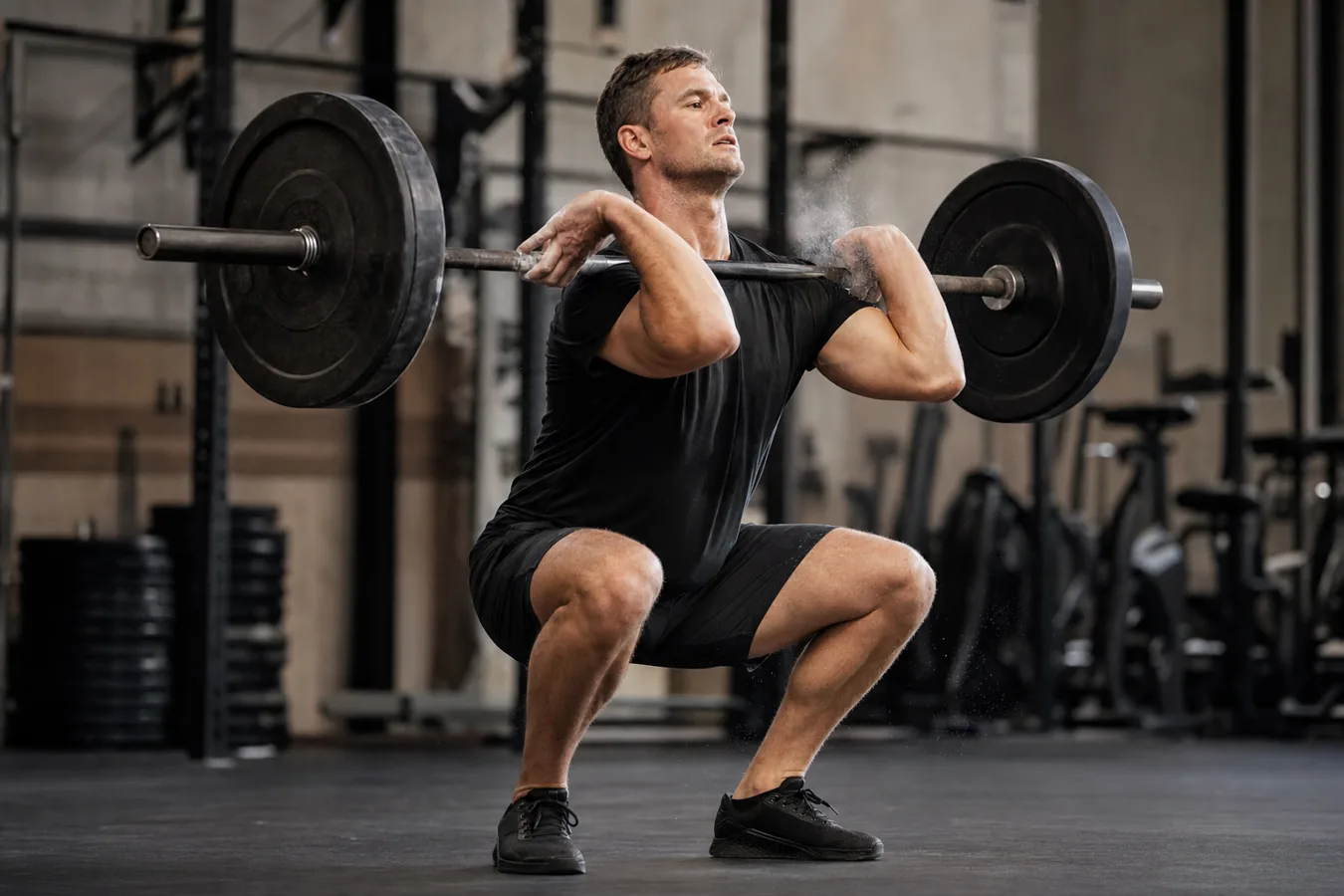
The plan
The power clean looks simple until the clock starts. Pull the bar from the floor, catch it on the shoulders, stand tall. That is the easy description. The hard part is keeping the bar close and getting under it before every rep turns into a curled deadlift.
In CrossFit, the power clean shows up at weights that can feel light for two rounds and ugly by round five. Good reps save the grip, spare the lower back, and make the next movement easier. Bad reps usually show up the same way: early arm pull, soft catch, elbows late, and a bar that drifts away from the body.
- A solid CrossFit power clean starts with a patient pull from the floor and a fast turnover at the top.
- The catch matters more than the load. If the elbows are late, the rep gets heavy fast.
- Scale the weight when the bar swings out, the feet jump too wide, or every rep becomes a lower back fight.
What makes a power clean different
A power clean is a clean received above a full squat. You still pull from the floor, extend the hips, and catch the bar in the front rack. The difference is the receiving position. You do not ride the catch into a deep squat, so timing and height matter more than people expect.
That is why the movement sits between the CrossFit deadlift and the full clean used in a clean and jerk. The deadlift teaches you to push the floor away and keep the bar close. The clean adds speed, turnover, and a real catch. The power version forces you to do all of that without hiding a late pull in a deep squat.
The setup: close bar, tight back, calm arms
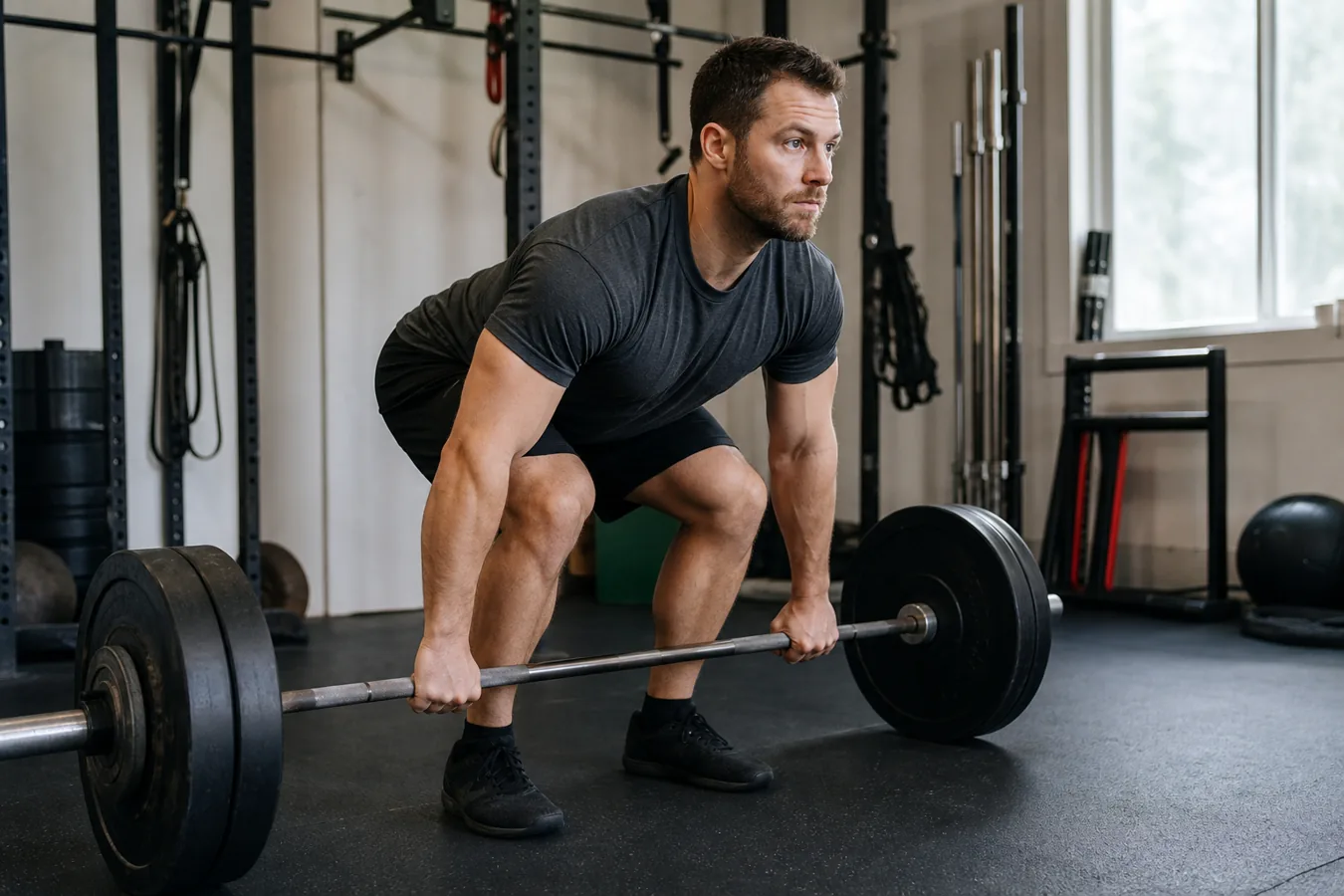
Start with the bar over the midfoot. Shins can touch lightly, but the bar should not be pushed forward before the pull begins. Set the shoulders slightly over the bar, brace the trunk, and keep the arms long. If the elbows bend early, the legs stop doing the work and the pull loses its snap.
The first pull should not feel like yanking a lawn mower cord. Push through the floor and let the knees move back so the bar can travel close to the body. Once the bar passes the knees, stay patient. The finish comes from extension, not from dragging the bar up with the arms.
Pull tall, then meet the bar
The best power cleans usually look quieter than the messy ones. The athlete extends hard, then moves around the bar. The bar does not need to fly high. It needs enough speed and a clean path so the athlete can rotate the elbows through and catch it on the shoulders.
Think of the arms as guides, not engines. They keep the bar close and help the turnover. They should not start the lift. When the arms take over early, the bar swings out, the catch lands low on the hands, and the next rep feels worse before the workout has even reached the hard part.
| Fault | What it looks like | Fix to try |
|---|---|---|
| Early arm pull | Elbows bend before the hips finish | Use clean pulls or pause above the knee before accelerating |
| Bar swings forward | The catch lands away from the body | Keep the lats tight and brush the thighs instead of looping the bar |
| Slow elbows | The bar crashes into the front rack | Practice tall cleans and empty bar turnovers |
| Starfish catch | Feet jump wide to avoid dropping lower | Lower the weight and catch with feet near squat stance |
A short video worth watching before you load the bar
This CrossFit demo is short, but it shows the right priorities: a close pull, full extension, fast elbows, and a controlled catch. Watch where the bar travels before you worry about how much weight is on it.
How to cycle power cleans in a WOD
Touch and go power cleans can be fast, but they punish sloppy breathing. Reset the brace as the bar returns to the floor. If the descent gets loose, the next pull starts from a bad position and the bar drifts forward. That is when athletes begin chasing the bar instead of lifting it.
Singles can be the smarter choice at moderate to heavy loads. Drop, breathe, put the hands back on the bar, and pull from a position you can repeat. Fast singles often beat ugly touch and go sets when the workout also includes overhead work, burpees, or anything that raises the heart rate before the barbell returns.
Power clean vs hang power clean
The power clean starts from the floor. The hang power clean starts from a standing or partial hinge position. Hang reps remove the first pull, which can help athletes feel the jump and turnover. They also hide setup mistakes from the floor, so both versions have a place.
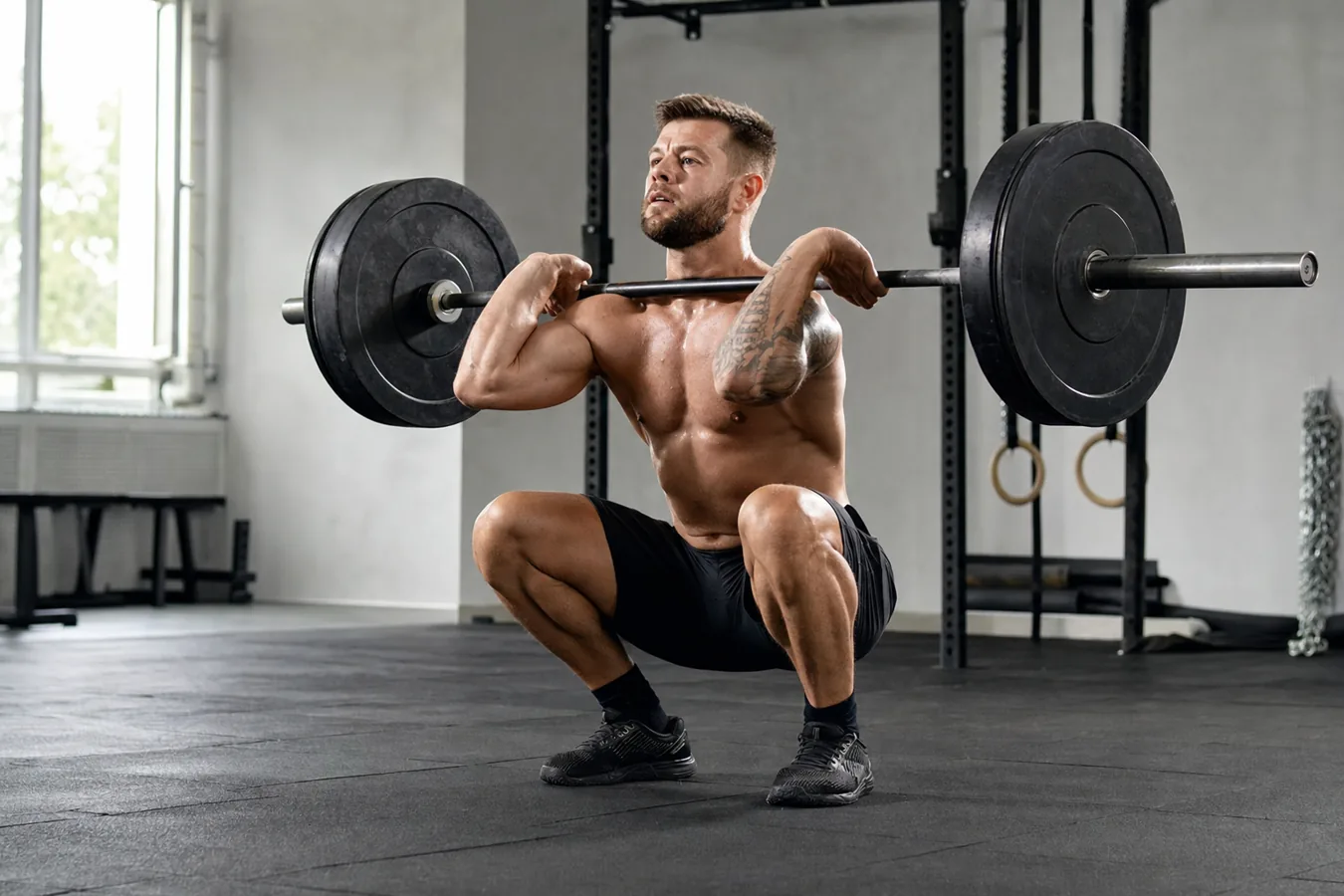
If the workout uses hang power cleans, the focus is usually cycling, grip management, and hip extension. If it uses power cleans from the floor, the setup has to survive every rep. Athletes who struggle to receive the bar should also spend time on the front rack position, because a clean catch is only useful if the shoulders can actually support the bar.
When to scale the power clean
Scale when the movement stops looking like a clean. A lighter bar is usually the first move. Dumbbell power cleans can also work when the workout needs speed but the barbell catch is not ready. For newer athletes, hang power cleans from the mid-thigh can teach the finish without turning every rep into a fight from the floor.
The goal is not to make the workout easy. The goal is to keep the intended stimulus. If the workout asks for quick barbell cycling, choose a load that lets the athlete move cleanly under fatigue. If the workout is meant to be heavy, keep enough load to require focus, then use smart breaks before the catch falls apart.
What to check before your next barbell workout
- Does the bar stay close from the floor to the hips?
- Do the arms stay long until the legs and hips finish?
- Can you catch with elbows through instead of wrists taking the hit?
- Can you repeat the same foot position when tired?
- Can you breathe and reset without losing the next pull?
If one answer is no, fix that piece before adding plates. The power clean rewards a patient start and a fast finish. Rush the wrong part and the bar gets heavy. Get the order right and the movement feels cleaner, even when the WOD does not.


