The plan
A deadlift looks simple until the clock is running. The bar is on the floor. You pick it up. Then fatigue shows every shortcut: hips shoot up, the bar swings forward, the back softens, and the rep turns into a tug-of-war instead of a lift.
For CrossFit athletes, the goal is not to make the deadlift pretty for one max attempt. The goal is to keep the same basic position when the workout asks for 45 reps, a heavy bar after rowing, or a quick set before box jumps. That starts with a bar path you can repeat.
- Start with the bar over the middle of the foot and keep it close from floor to lockout.
- Brace before you pull, then push the floor away instead of yanking with the back.
- In metcons, reset just enough to keep position. Touch-and-go only works if the bar stays under control.
What the deadlift should feel like in a WOD
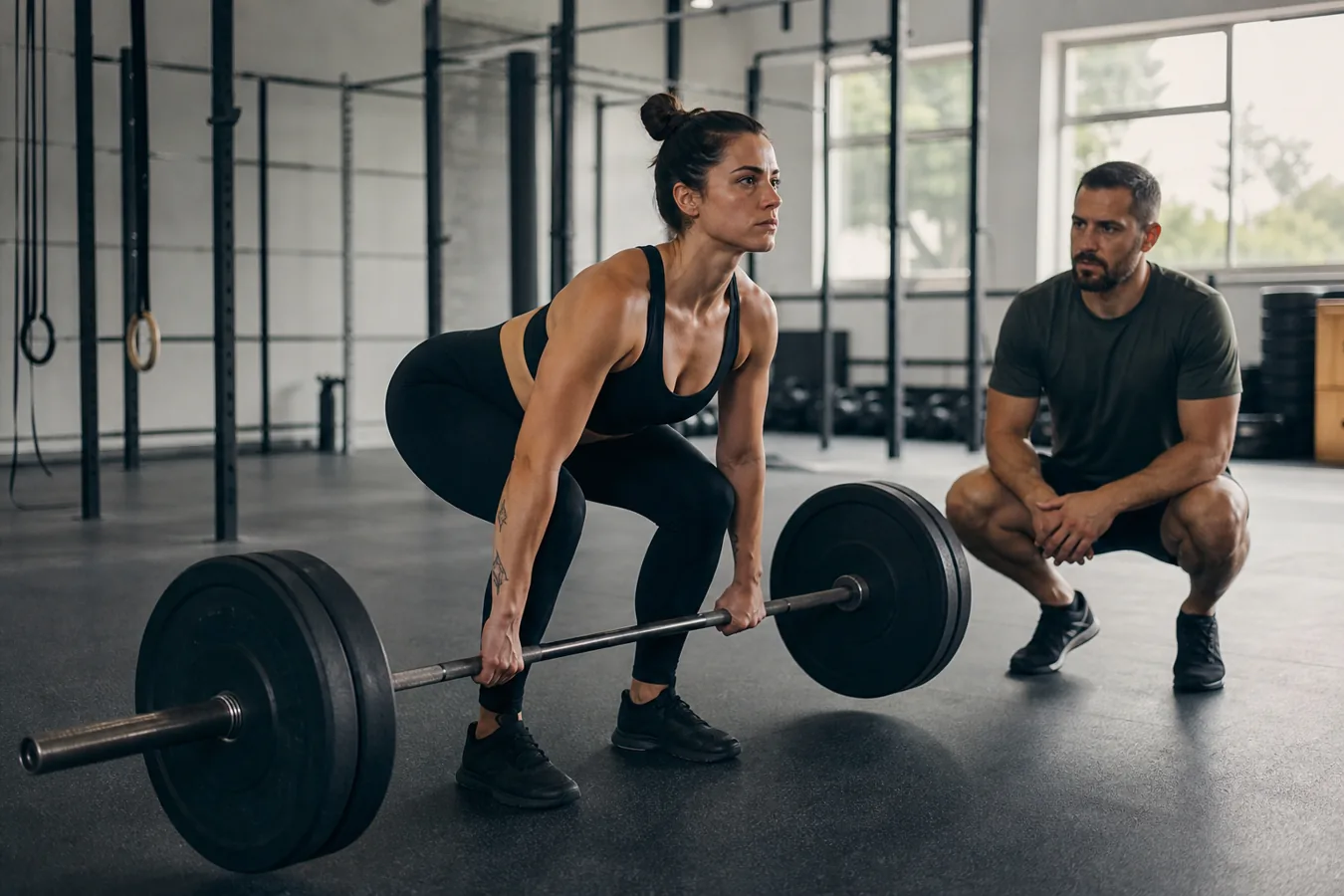
Set your feet under the hips, with the bar close enough that your shins can find it without the bar rolling forward. Grip the bar, bring the chest up, and create tension before the plates leave the floor. You should feel hamstrings, lats, abs, and legs all switch on before the lift starts.
The first inch matters. If the bar leaves the floor and immediately drifts away, the lift gets heavier for no good reason. Keep the bar close, keep the shoulders slightly in front of it at setup, and let the hips and shoulders rise together.
This is the same patience that shows up in a good CrossFit front squat. The lift starts with position, not speed. Once the setup leaks, the rest of the rep becomes damage control.

The bar should not take a scenic route
A good deadlift is boring from the side. The bar travels close to vertical. It stays near the legs. The hips open after the bar passes the knees, not while the bar is still stuck on the floor.
Most CrossFit deadlift problems are bar path problems wearing a different costume. A rounded back often starts when the athlete yanks too hard before bracing. A missed lockout often starts when the bar has drifted forward and the hips have to chase it. Tired grip can make the same mistake worse because the athlete stops pulling the bar into the body.
| What you see | What it usually means | Fix to try |
|---|---|---|
| Bar rolls away before the pull | The setup is loose or the hips are too low | Set the bar over midfoot and pull slack out before lifting |
| Hips shoot up first | The athlete is turning the rep into a stiff-leg pull | Push through the floor and keep chest and hips rising together |
| Back rounds under fatigue | Bracing is gone or the load is too heavy for the workout | Break the set, reduce load, or switch to quick singles |
| Bar bangs off the thighs | The hips are opening too early | Stay over the bar longer and finish with glutes, not a lean-back |
A short video worth watching before you load up
This CrossFit movement demo is useful because it strips the deadlift back to the basics: setup, tension, bar path, and lockout. Watch how little the bar moves away from the body. That is the part most athletes lose when reps get fast.
Touch-and-go or quick singles?
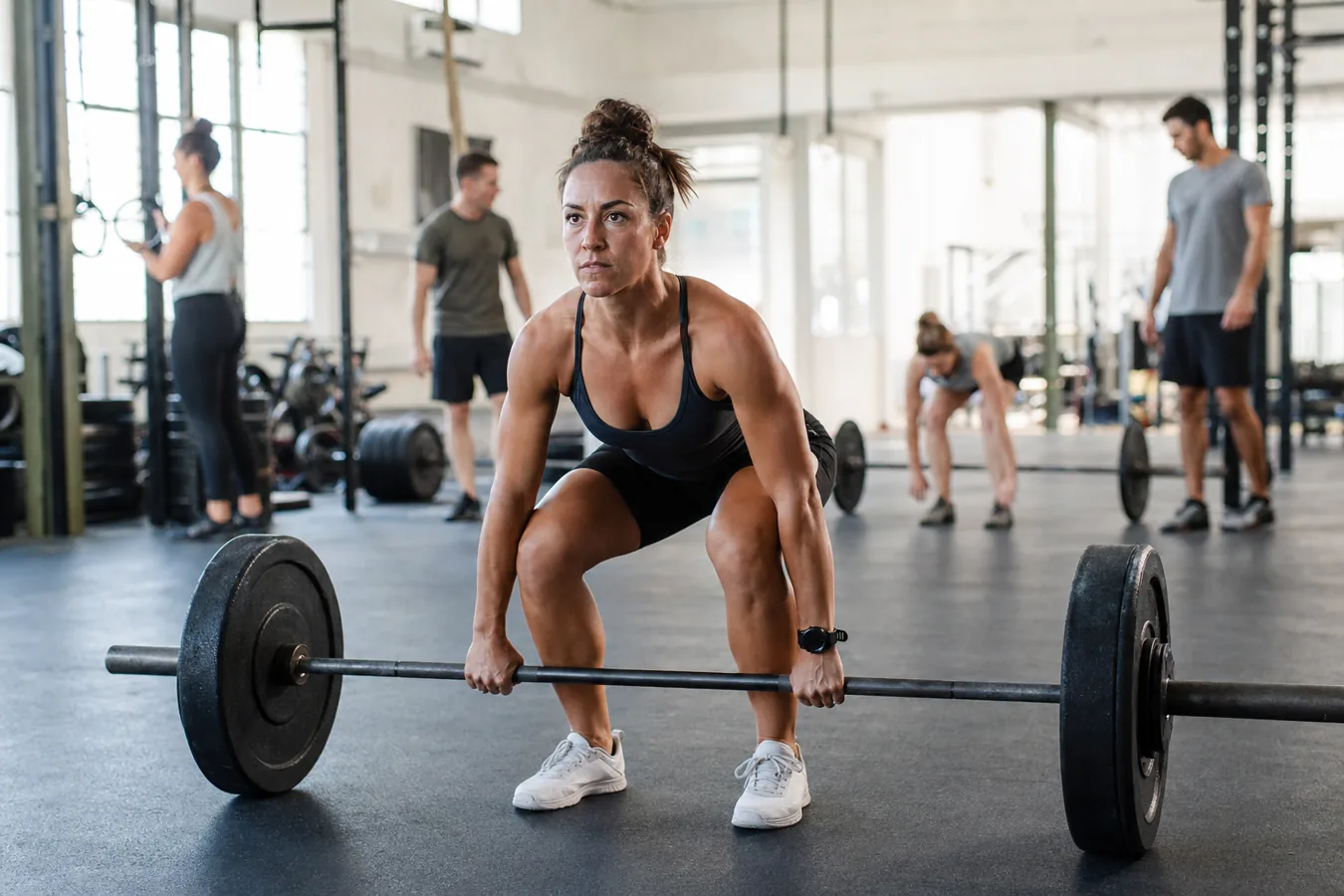
Touch-and-go deadlifts can be efficient, but only when the bar lands in the same place every rep. If the bar bounces forward, the next rep starts from a worse position. That might save a second early and cost you the whole set later.
Quick singles are not a defeat. In many workouts, they are the smarter choice. Drop or guide the bar down, reset your brace, and pull again before you drift into ugly reps. This is especially true when deadlifts are paired with pulling or hinging movements, like the sumo deadlift high pull, rowing, kettlebell swings, or high-rep box jumps.
How to scale deadlifts without missing the point
Scaling the deadlift should preserve the hinge pattern and the intended stimulus. If the workout calls for moderate cycling, a bar that forces singles from the first round is probably too heavy. If the workout calls for strength under fatigue, reducing the reps may make more sense than stripping all the weight away.
Good scaling options include a lighter barbell, kettlebell deadlifts, raised pulls from blocks, or slower sets with planned breaks. The right choice depends on the athlete and the workout. A smart CrossFit scaling plan keeps the training goal alive instead of turning the movement into random survival.
Mistakes to clean up first
- Starting too far from the bar: the bar drifts forward before the lift even begins.
- Yanking the first pull: tension disappears and the back takes the hit.
- Looking up hard: the ribs flare and the neck becomes a fake brace.
- Bouncing every rep: speed goes up, but control usually goes down.
- Leaning back at lockout: stand tall and squeeze the glutes. Do not turn the finish into a backbend.
What to test in your next workout
Before the WOD starts, do three light reps from the side and watch the bar. If it stays close, your hips and shoulders rise together, and the lockout is clean, you have a good starting point. If not, lower the weight or slow the first round down. The deadlift rewards athletes who respect the setup. It punishes the ones who rush it.


