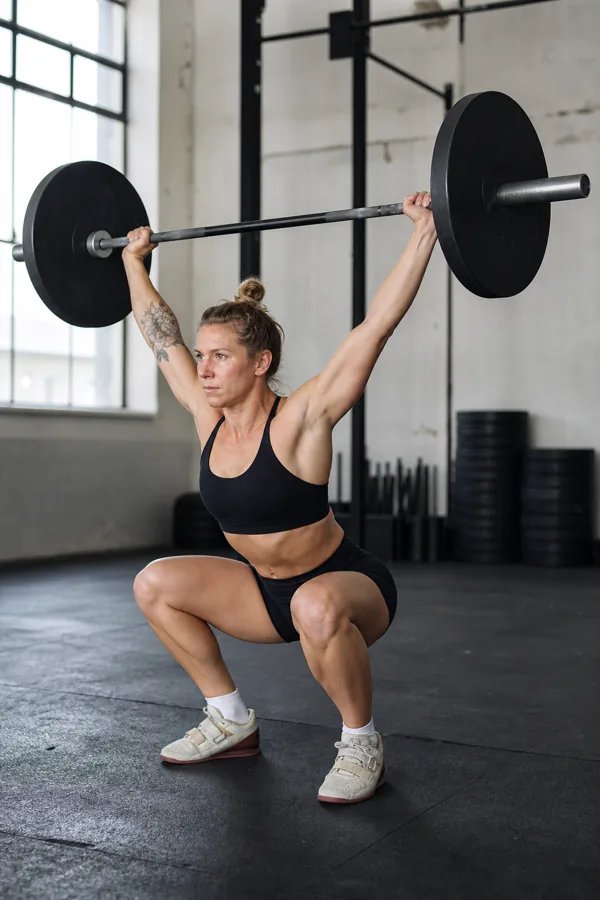
The plan
The overhead squat is honest in a way most CrossFit movements are not. If your ankles are tight, the bar drifts. If your upper back rounds, the bar drifts. If you rush the descent, the bar drifts. The lift does not leave much room for pretending.
That is exactly why it is useful. A good overhead squat teaches you to stay stacked, patient, and braced while the weight sits in the least forgiving place possible: above your head. Before you add load, the first job is to find a position you can actually own.
- Lock the bar over the middle of the foot, not behind the shoulders or out in front.
- Use PVC or an empty bar until your depth and balance are repeatable.
- Scale the movement when mobility turns every rep into a fight for survival.
What a solid overhead squat should feel like
Set the feet about squat width, brace hard, and press the bar up until the elbows are locked. The shoulders should feel active, not shrugged into your ears. From the side, the bar should stay close to a straight line over the middle of the foot as you squat.
If the bar moves forward, you will either chase it with your chest or dump it. If it sits too far back, the shoulders and ribs usually overextend to fake the position. Neither mistake feels terrible for one light rep. Under fatigue, both get ugly fast.
The lower body still matters. The patience you build in a CrossFit front squat carries over here: knees track, midline stays firm, and the bottom position should not feel like a collapse.
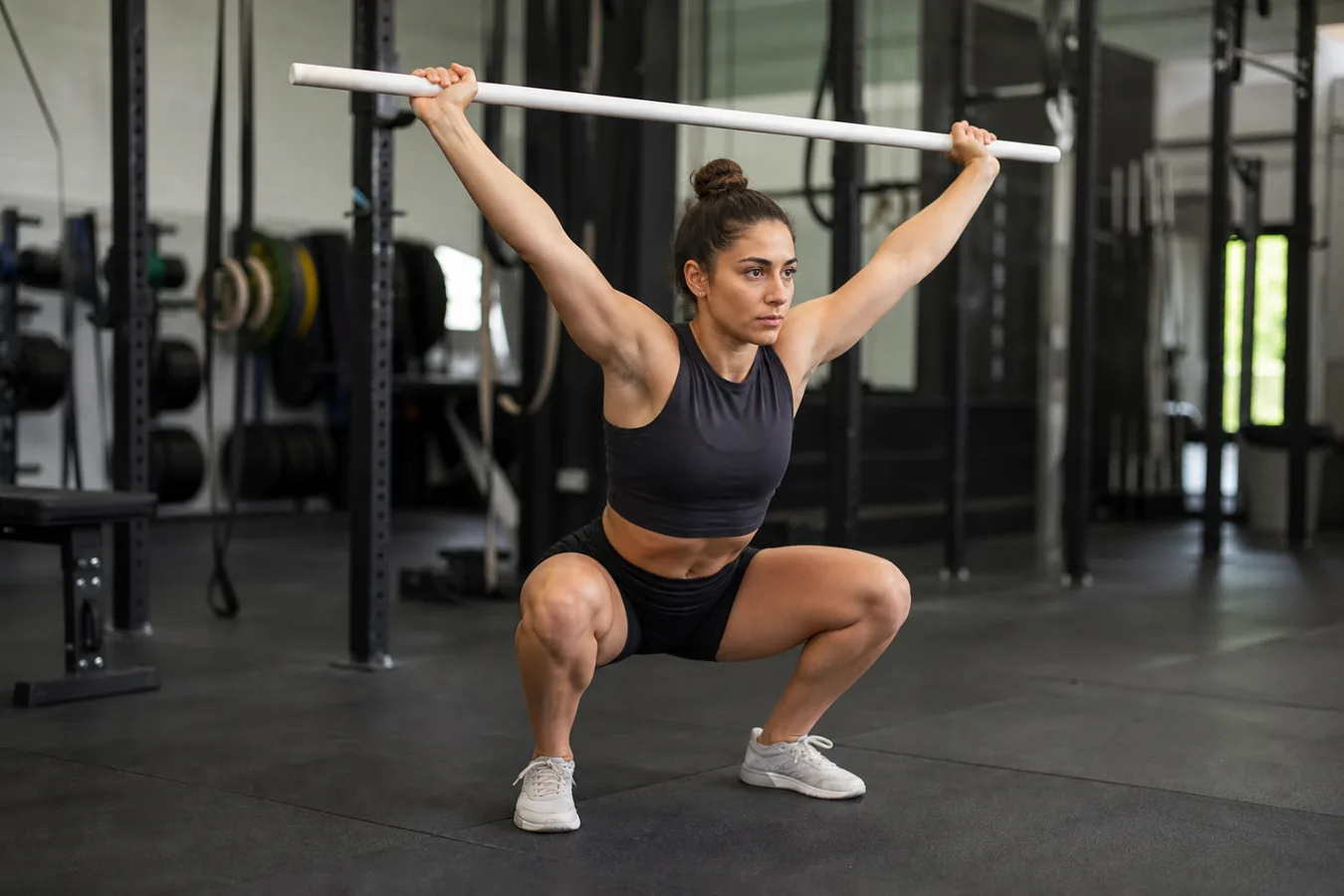
The bar path tells the truth
Coaches often watch the bar before they watch the hips. A quiet bar path means the athlete is stacked. A wandering bar usually points to one of three problems: limited ankle range, a weak overhead lockout, or a torso that cannot stay tall under load.
Do not fix that by forcing depth at any cost. If your heels peel up or your shoulders crank backward just to reach the bottom, you are practicing compensation. Use a lighter tool, reduce depth for a few sets, and earn the range instead of borrowing it from your joints.
| What you see | Likely cause | Fix to try |
|---|---|---|
| Bar drifts forward | Chest drops or shoulders lose position | Slow the descent and press up through the bar |
| Heels lift | Ankles run out of range | Use weightlifting shoes, a target depth, or ankle prep before loading |
| Low back arches hard | Ribs flare to fake overhead range | Brace down and use PVC until the stacked position is real |
| Wrists hurt | Grip or shoulder position is fighting the bar | Try a wider grip and keep the knuckles up |
A useful video cue before you load the bar
This coaching video is worth using because it keeps the focus on position, not just depth. Watch the relationship between the bar, shoulders, hips, and feet. That stack matters more than forcing a heavy rep through a bad line.
How to warm up for overhead squats
Start with PVC pass-throughs, slow air squats, and a few pauses in the bottom position. Then add overhead squats with PVC or an empty bar. Pause for two seconds at the bottom and ask one simple question: can you breathe there without the bar moving?
If the answer is no, loading the bar will not clean it up. Spend more time on the position. Athletes who struggle with handstand work often recognize the same demand in CrossFit handstand push-ups: the shoulders need to support force while the midline refuses to leak.
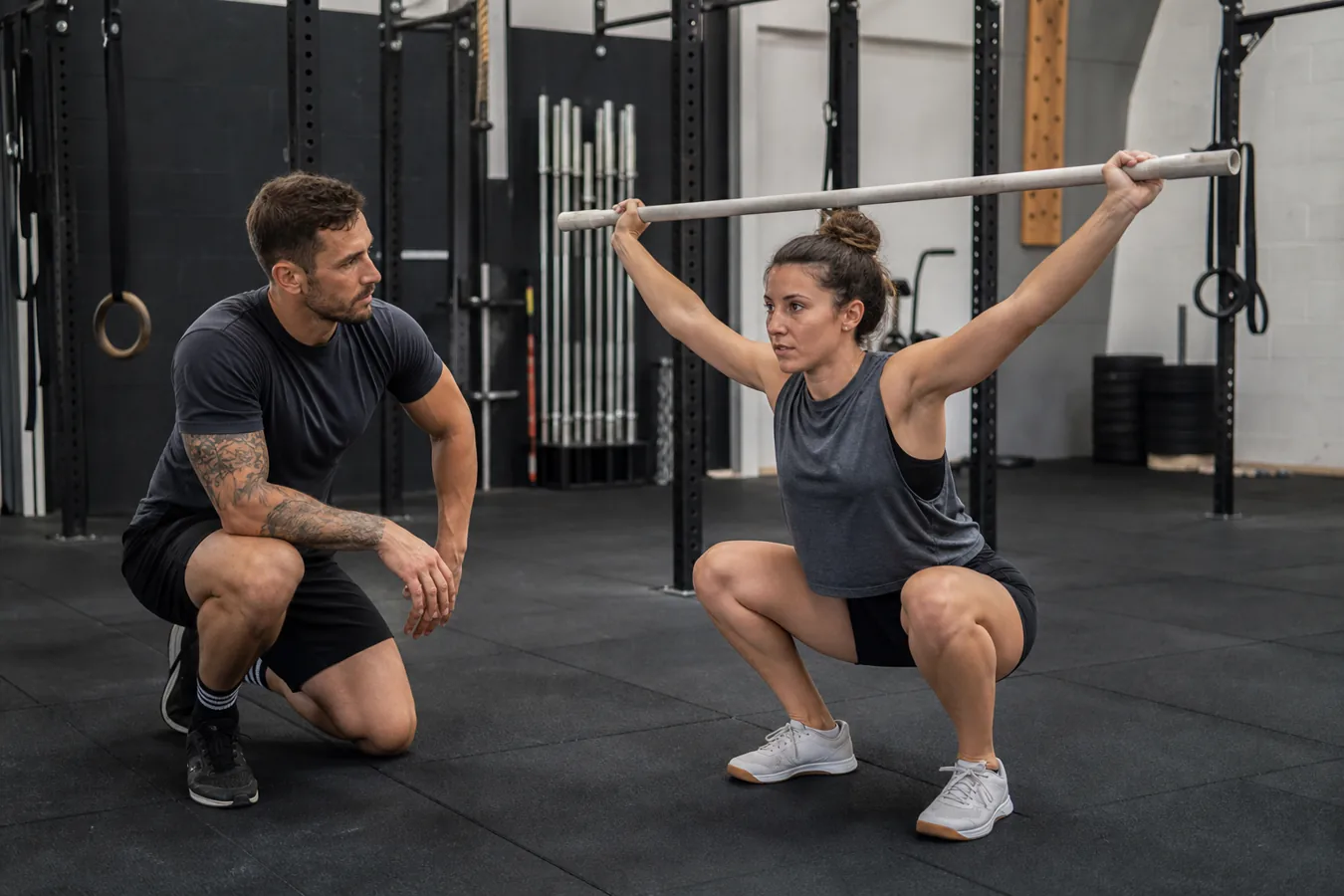
Scaling without dodging the lesson
Scaling the overhead squat does not mean avoiding the movement. It means choosing a version that lets you train the right problem. For some athletes, that is a lighter bar. For others, it is a PVC pipe, dumbbell overhead squats, front squats, or a reduced range with a clear target.
The choice depends on the workout. If the goal is a fast conditioning piece, missed overhead squats can turn the WOD into standing around with a bar overhead. A smart CrossFit scaling plan keeps the intended stimulus alive while still training the weak link.
Mistakes to fix first
- Loading too soon: if PVC looks shaky, a barbell will only make the problem louder.
- Looking down: the eyes drop, the chest follows, and the bar usually comes forward.
- Relaxing the shoulders: the bar needs an active lockout from the first inch to the last.
- Forcing depth: depth only counts if you can keep balance and position.
- Rushing the stand-up: drive through the floor and keep pressing up until the rep is finished.
What to check before adding weight
Before your next WOD, film one light set from the side. If the bar stays over the middle of the foot, the heels stay down, and you can pause at the bottom without panic, add a little load. If not, you already have the day’s work. Fix the position first. The heavier bar can wait.


