The plan
Dumbbell thrusters have a way of finding the leak in a workout. The first few reps feel fine. Then the bells slide off the shoulders, the squat turns shallow, and the press starts before the legs have done their job.
That is why they are different from a barbell thruster. Each arm has to stabilize its own load, and there is less room to hide a weak rack or a rushed drive. In CrossFit, that makes the dumbbell thruster a simple movement with a very short fuse.
- Keep the dumbbells high on the shoulders so the squat does not turn into a front raise.
- Finish the leg drive before pressing, especially when the reps get fast.
- Break sets before the rack collapses. Bad dumbbell thrusters get expensive quickly.
What the dumbbell thruster is really testing
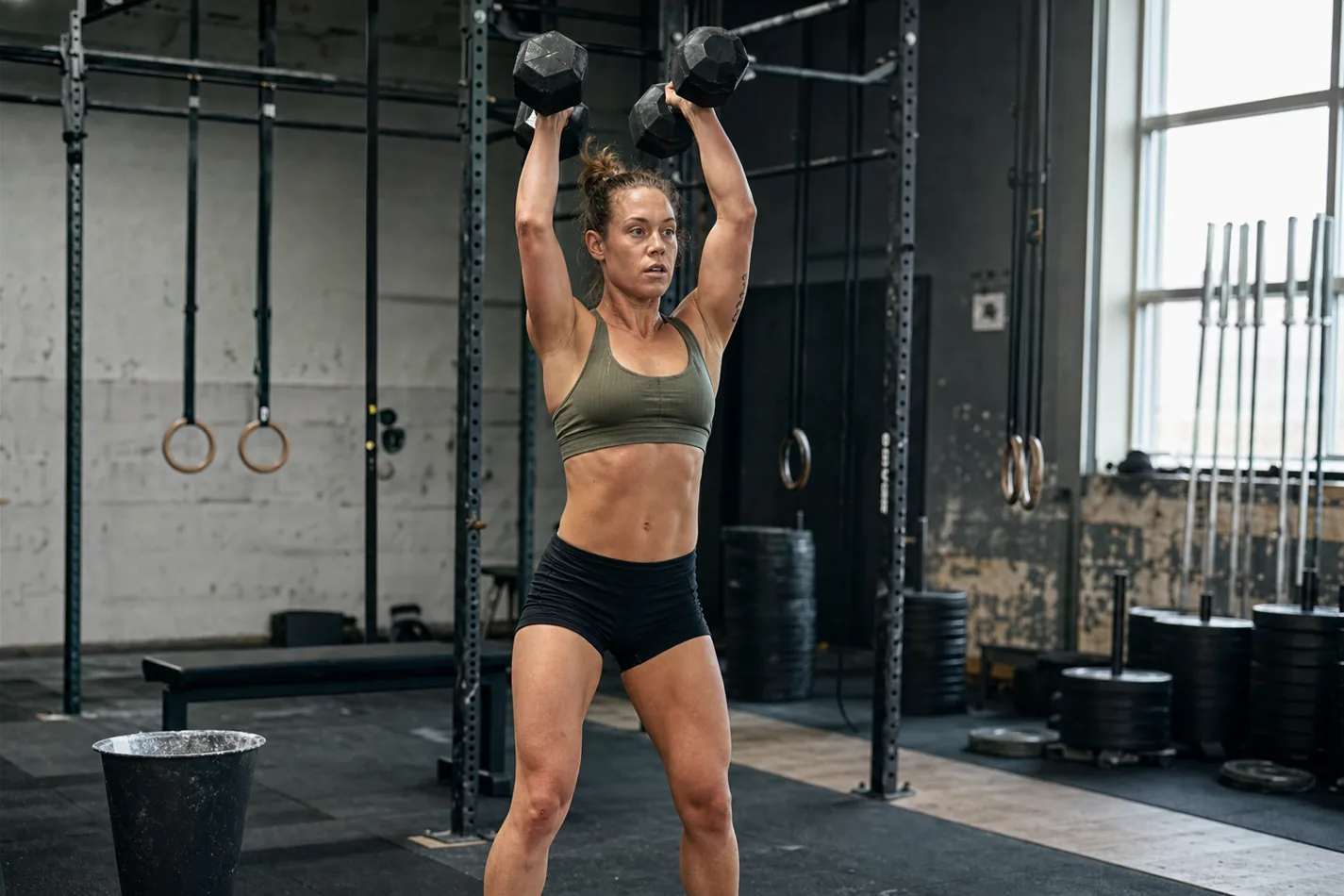
A good dumbbell thruster combines a full squat and an overhead press in one continuous rep. The athlete starts with the dumbbells at the shoulders, squats below parallel if the workout requires it, then stands hard enough to send the bells overhead.
The hard part is not knowing the sequence. It is keeping the sequence when breathing gets loud. Athletes with a solid front squat position usually understand the bottom half faster. Athletes with clean push press timing usually finish the top half without turning every rep into an arm grind.
Start with a rack you can keep
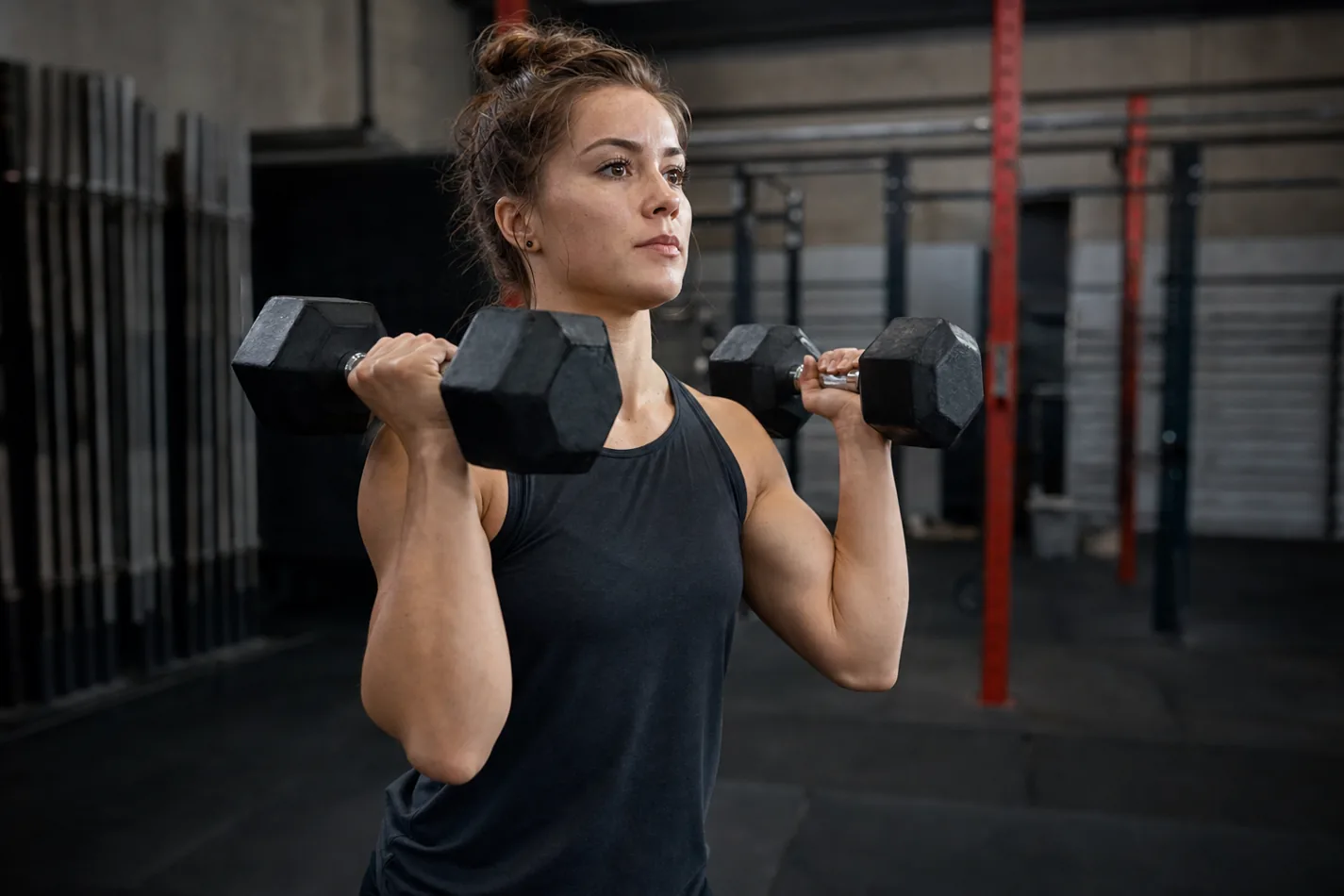
The dumbbells do not need to sit perfectly like a barbell. They do need to stay close enough that the shoulders are not fighting the load before the squat begins. Rest one head of each dumbbell on the shoulder when possible, keep the elbows slightly forward, and let the torso stay tall.
If the bells drift in front, the rep gets heavy early. The athlete starts leaning, the heels get light, and the press becomes a rescue job. A small rack adjustment before the set often saves more energy than any pacing trick later.
| Fault | What it usually causes | Fix to try first |
|---|---|---|
| Dumbbells float in front of the shoulders | Forward squat and early arm fatigue | Rest the bells higher and keep elbows slightly forward |
| Press starts before the hips finish | Heavy lockout and missed rhythm | Stand first, then punch overhead |
| Feet shift every rep | Unstable squat depth and balance loss | Use a stance you can squat and press from |
| No breathing plan | Fast first set, long second break | Breathe at the top or during the controlled lower |
The press should ride the legs
The best dumbbell thrusters feel like the legs launch the bells and the arms finish the line. If the arms do most of the work, the set will fall apart as soon as the workout adds burpees, pull-ups, or another shoulder-heavy station.
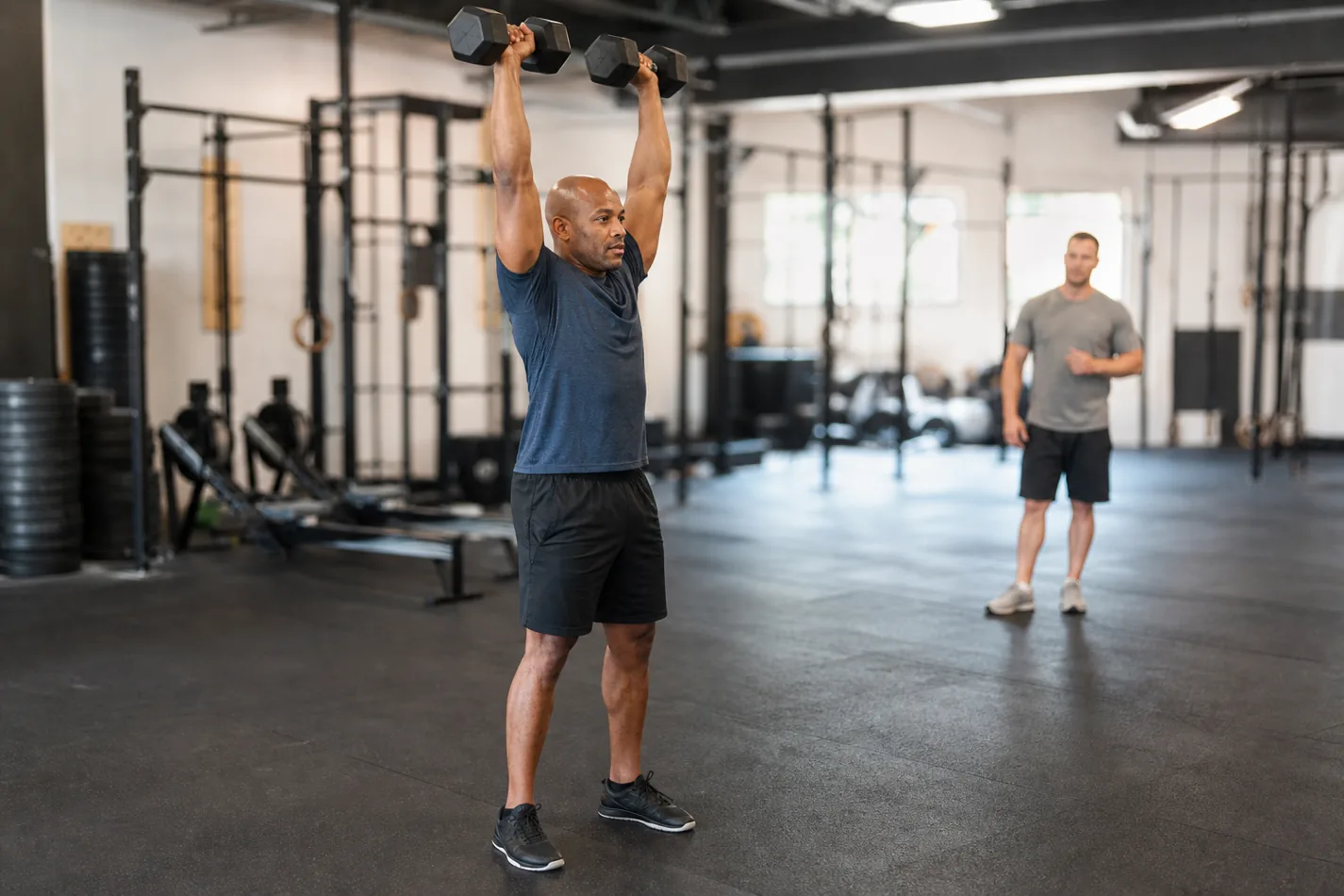
Think tall before fast. Drive through the whole foot, squeeze the legs to finish the stand, then lock out with the biceps near the ears. The overhead position should look controlled, not like two dumbbells barely survived the trip.
The demo below is useful because it shows the movement standard without turning the lift into a circus trick. Watch the rack first, then the way the legs finish before the dumbbells punch overhead.
How to pace dumbbell thrusters in a WOD
Unbroken is not always smart. For light dumbbells and low reps, holding on may make sense. For heavier loads or larger sets, planned breaks can keep the movement clean and protect the shoulders. The mistake is waiting until the rack collapses before putting the bells down.
Try sets of five to eight when the workout has a big total volume. If the dumbbells are heavy, fast singles or short sets can still be efficient as long as the setup is quick. The same lesson shows up in barbell thruster pacing and wall ball breathing: the best pace is the one that lets the last round still look like the first movement.
Scale the movement without losing the stimulus
Scale the load first if the athlete understands the movement but cannot keep the rack. Use one dumbbell if both sides together create too much chaos. For newer athletes, a light pair of dumbbells or medicine ball thrusters can teach the timing without making every rep a survival drill.
The scale should match the problem. If squat depth is missing, reduce load and fix the bottom position. If lockout is weak, lower the weight and practice a clean finish. If coordination is the issue, slow the reps down. Good scaling keeps the athlete training the same idea instead of just doing something easier.
What to test in your next set
Before adding weight, do ten reps at a pace you could repeat after a run or row. Check three things: the dumbbells stay on the shoulders, the hips finish before the press, and the lockout is balanced on both sides. If one side keeps drifting, spend more time on controlled dumbbell cycling and single-arm work.
Dumbbell thrusters reward clean decisions. Pick a weight that lets you squat tall, drive hard, and put the bells down before the rack turns ugly. That is usually faster than opening with a heroic set and paying for it one shaky rep at a time.


