
The plan
The medicine ball clean is one of those CrossFit movements that exposes bad habits fast. The load is not huge, but the shape of the rep matters. If the ball swings away, the athlete chases it. If the hips never finish, the shoulders do all the work.
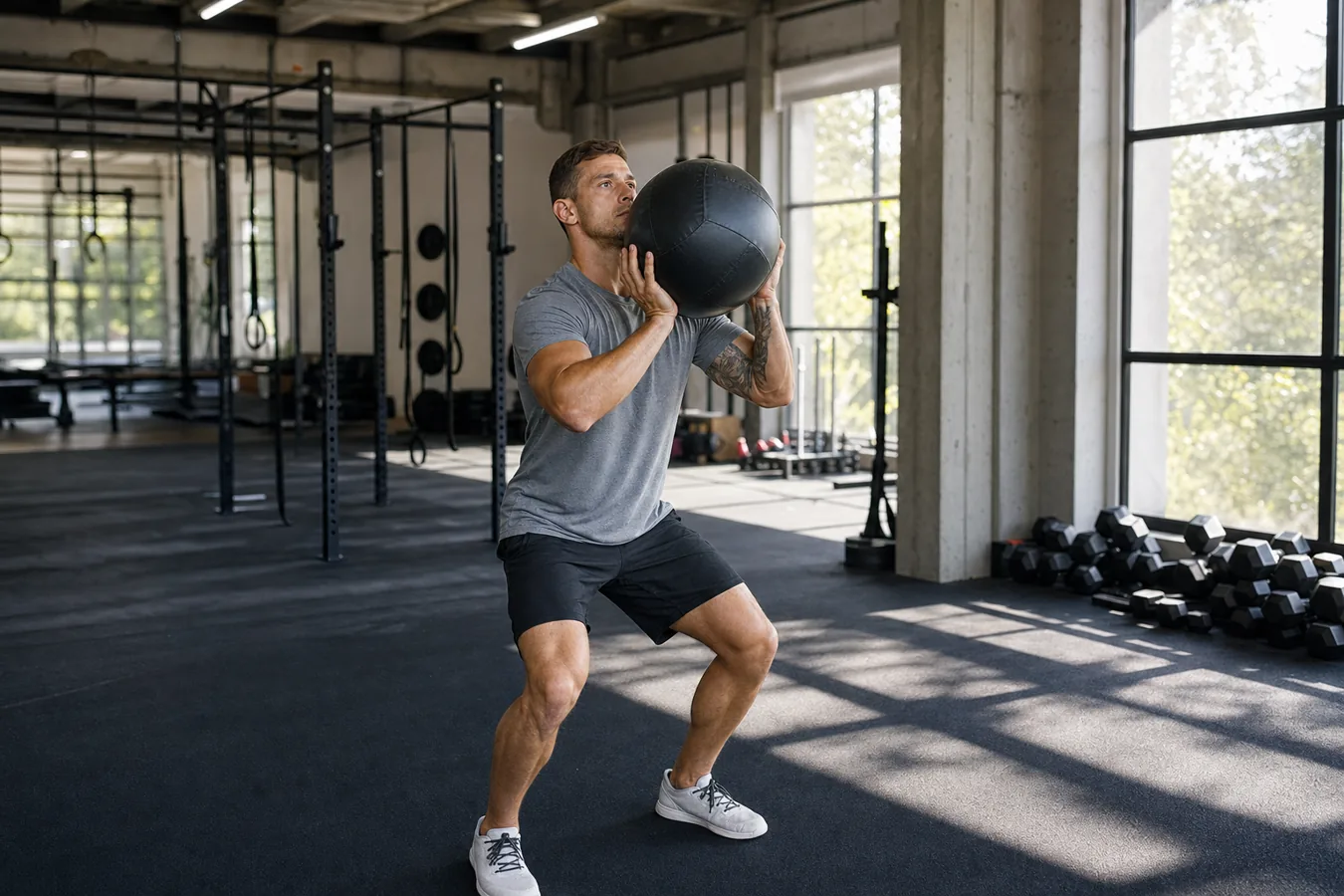
A clean rep should feel boring in the best way. The ball starts close, the legs drive, the athlete finishes tall, then receives the ball with the elbows high enough to keep the chest from collapsing.
- The medicine ball clean trains leg drive, timing, and a strong receiving position.
- Most missed reps come from curling the ball or letting it loop away from the body.
- Scale the load, reps, or range when the catch turns soft or the back rounds from the floor.
What the medicine ball clean is for
The medicine ball clean teaches a basic Olympic lifting pattern without a barbell. It asks the athlete to push through the floor, extend the hips, then pull under just enough to receive the object in a front-rack-like position.
That makes it useful before heavier barbell work. If an athlete cannot keep a ball close and catch it with posture, the same problem often shows up later in the CrossFit power clean. The medicine ball version gives coaches a slower, safer place to fix the pattern.

Set up close before you think about speed
Start with the ball between the feet. The hands sit on the sides of the ball, not wrapped underneath it like a biceps curl. Load the hips, keep the back flat, and let the shoulders stay slightly in front of the ball.
The first pull should not feel like yanking a backpack off the floor. Push with the legs, keep the arms long, and let the ball rise because the body extended. Once the hips finish, the athlete can guide the elbows around and receive the ball.
| Part of the rep | Good sign | Fix if it breaks |
|---|---|---|
| Start | Ball close, back flat, hips loaded | Reset each warm-up rep instead of rushing touch-and-go reps |
| Drive | Legs move the ball before the arms bend | Think stand tall first, then catch |
| Path | Ball rises close to the torso | Keep the hands on the sides and avoid scooping from underneath |
| Catch | Elbows high, chest up, feet balanced | Use a lighter ball and pause for one second in the receive |
Watch the turnover, not just the finish
This CrossFit demo is useful because it shows the part many athletes miss: the ball does not get curled to the chest. The athlete finishes the legs and hips, then turns around the ball so the catch stays stacked and repeatable.
How to cycle reps without losing your back
In a workout, the mistake usually appears on the way down. The athlete drops the ball, folds over it, and starts the next rep from a rounded position. That saves half a second and costs the next five reps.
Lower the ball with enough control that the next setup is still usable. If the workout also includes wall balls, box jumps, or running, keep the first round calmer than your ego wants. A medicine ball clean should tax the legs and lungs, not turn into a lower back survival test.
Mistakes to clean up first
The early arm bend is the big one. Once the elbows bend too soon, the hips stop contributing and the athlete has to pull the ball up with the arms. Another common miss is catching with the elbows low, which pulls the chest forward and makes the next rep harder.
- Starting too far from the ball and reaching with a rounded back.
- Scooping from underneath the ball instead of keeping the hands on the sides.
- Cutting the hip extension short because the workout feels urgent.
- Catching with low elbows and a soft midline.
The fix is not always a lighter ball, although that helps when positions are gone. Often the better fix is a slower first pull, a one-second pause in the catch, or small sets that protect the standard.
When to scale it in a WOD
Scale the medicine ball clean when the athlete cannot keep the ball close, when the back rounds from the floor, or when the catch drops lower on every rep. A lighter ball, fewer reps, or a hang medicine ball clean can keep the same training effect without turning the movement into a mess.
The decision is the same one coaches make with the sumo deadlift high pull: protect the line of pull before chasing speed. If the athlete can repeat clean reps under fatigue, then the medicine ball clean becomes useful conditioning. If not, slow it down and fix the shape first.


