The plan
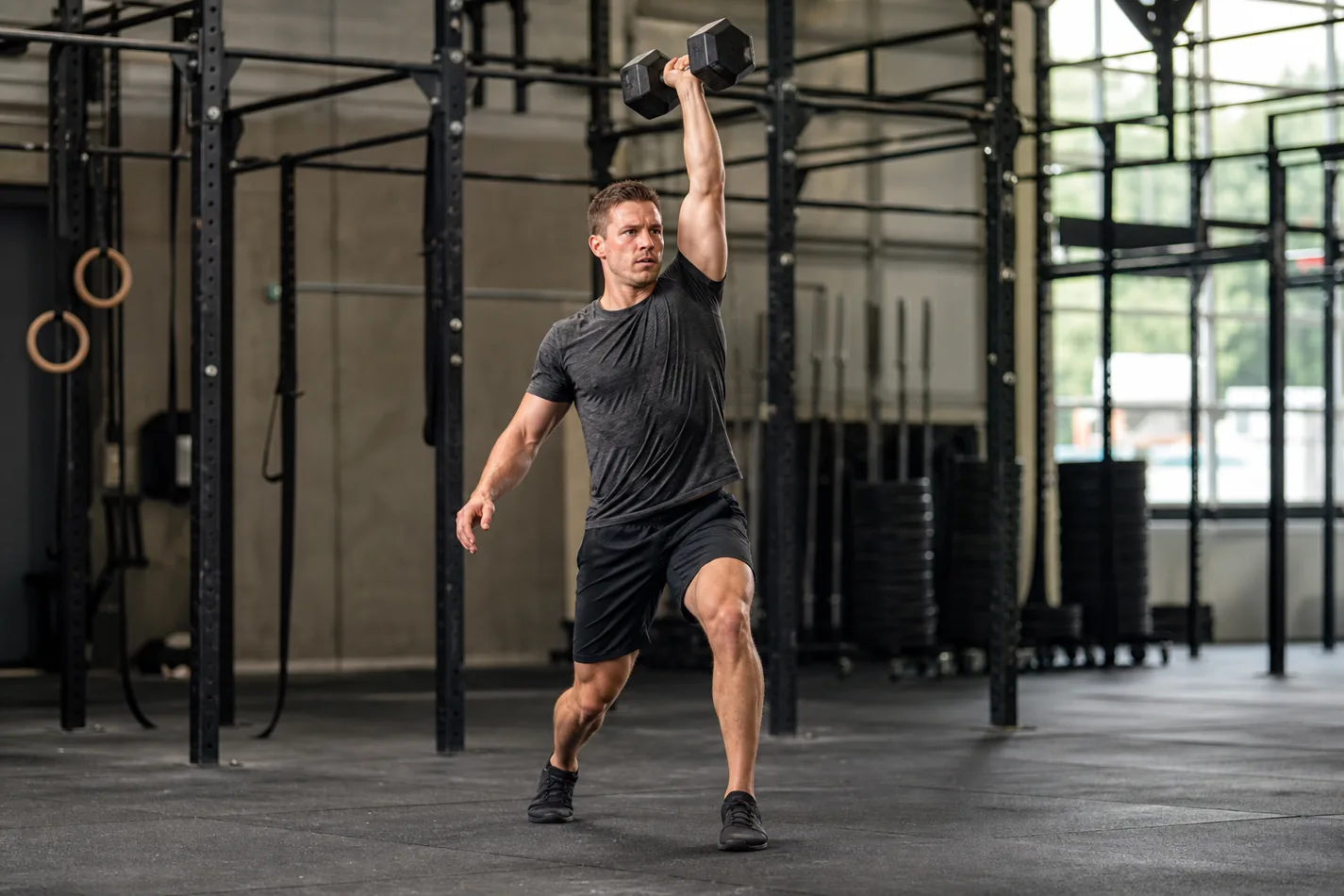
The dumbbell clean and jerk looks simple until the workout gets fast. One hand pulls, one shoulder catches, one arm punches overhead, and the whole rep falls apart if the dumbbell starts swinging away from the body.
In CrossFit, this movement usually shows up when the workout wants power without the setup time of a barbell. That can be a good thing. It can also tempt athletes into curling the dumbbell, leaning back in the rack, or pressing every rep instead of using the legs.
- The clean should stay close enough that the dumbbell lands on the shoulder without a crash.
- The jerk is not a strict press. Use a small dip, drive with the legs, then punch under the dumbbell.
- In workouts, smooth singles or planned hand switches usually beat frantic reps that turn into biceps curls.
What the rep is actually asking for
A dumbbell clean and jerk has two jobs. First, bring the dumbbell from the floor or hang to the shoulder without wasting grip or pulling the body out of position. Second, move it overhead with the legs doing most of the work. The athlete who treats both pieces as one long arm exercise is usually in trouble by round two.
If you already understand the dumbbell clean setup, this movement is a natural next step. The clean gives the dumbbell a stable home. The jerk finishes the rep. When the rack is soft or the elbow hangs low, the overhead piece gets messy before the dip even starts.
Keep the pull close and quiet
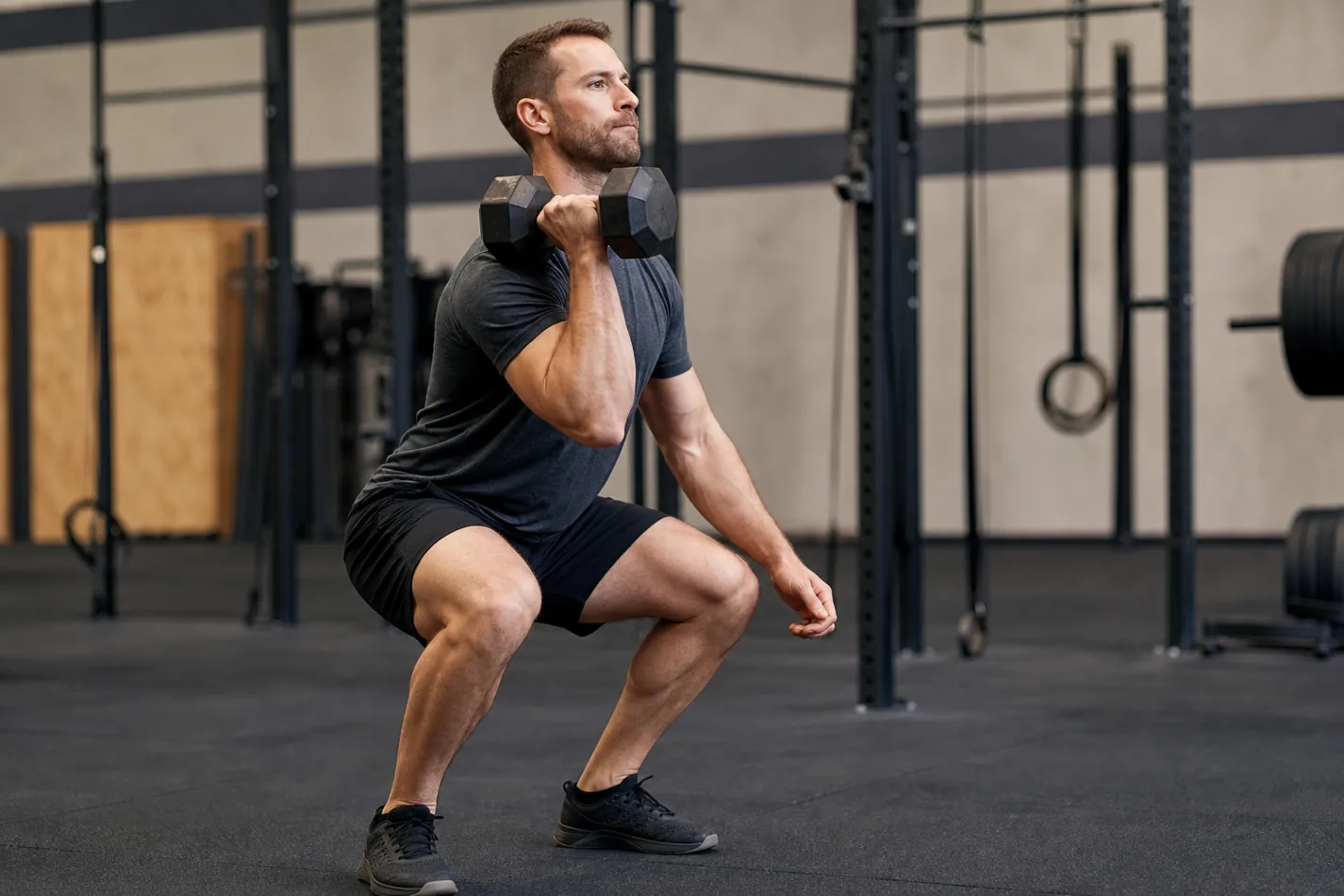
The dumbbell should not swing like a kettlebell. Start with the weight between the feet or just outside the stance depending on the workout standard. Hinge, brace, then use the legs and hips to bring the dumbbell up. The hand guides it. It does not yank it.
This is where the movement shares a lot with the dumbbell snatch pull. A close pull saves the shoulder and keeps the athlete stacked for the next piece. If the dumbbell loops away, the catch usually lands with the ribs open and the feet chasing balance.
| Fault | What it looks like | Fix before adding speed |
|---|---|---|
| Curling the clean | The elbow does all the work and the shoulder tires early | Drive through the legs and keep the dumbbell close to the body |
| Loose rack | The dumbbell bounces off the shoulder or pulls the torso sideways | Catch with the elbow slightly forward and ribs down |
| Pressing the jerk | The arm locks late and every rep slows down | Use a real dip and finish with a quick punch |
| Wild hand switch | The athlete rushes the exchange and loses the setup | Switch after the lockout or on the floor, based on the workout standard |
The rack decides how good the jerk can be
The rack does not need to be pretty, but it has to be organized. The dumbbell should sit on the shoulder with the forearm ready to drive up, not drifting behind the head or floating out in front. A poor rack turns the jerk into a rescue mission.
Think of the dip as short and vertical. Knees bend, torso stays tall, heels stay heavy, then the legs drive. The arm finishes the job after the legs have created speed. That same idea shows up in the push jerk dip and drive, even though the dumbbell asks for more one-sided control.
The demo below is worth watching because it keeps the dumbbell path simple. Pay attention to the short dip after the rack, then the quick punch to lockout.
How to pace dumbbell clean and jerks in a WOD
The fastest athlete is not always the one who moves first. In a workout with high reps, the key decision is when to switch hands and when to breathe. Alternating every rep can keep the shoulders fresh, but it also adds more transitions. Bigger sets on one arm save switches, but they can bury one shoulder fast.
For most athletes, the smart plan is boring on purpose: clean reps, predictable switches, and no failed lockouts. If the workout also includes burpees, box jumps, rowing, or pull-ups, protect the grip early. A dumbbell that feels light in minute one can feel strange after the heart rate jumps.
When to use a jerk, push press, or strict press
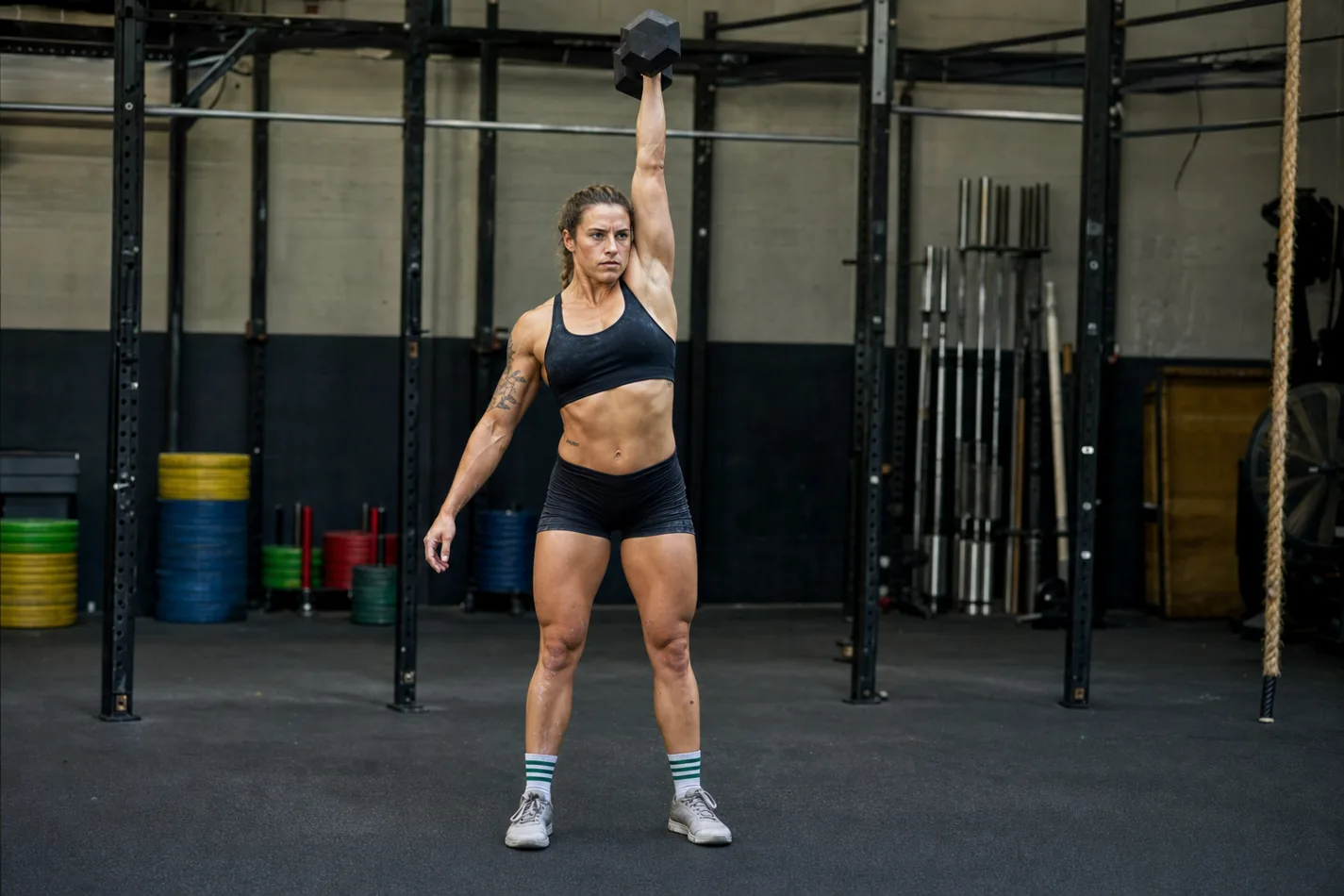
The movement standard matters. If the workout calls for a clean and jerk, a re-dip under the dumbbell is usually fair game unless the workout says otherwise. If the standard allows shoulder to overhead, athletes can choose between a push press and a jerk. That is where the shoulder to overhead choice becomes a real pacing decision, not just a technical detail.
A push press can be faster for small sets and lighter loads. A jerk can save the shoulders when the dumbbell gets heavy or the reps climb. A strict press has its place in strength work, but it is rarely the best choice when the clock is running and the workout asks for repeated reps overhead.
Scaling without changing the whole stimulus
Good CrossFit scaling keeps the point of the workout. If the overhead lockout is the issue, reduce the load and keep the clean and jerk pattern. If the rack position is the issue, practice hang dumbbell cleans and light push jerks before tying them together. If one shoulder is irritated, use a lighter dumbbell, a kettlebell variation, or a different shoulder to overhead movement only if the coach approves the swap.
The scale should not turn a power and coordination movement into slow bodybuilding. The athlete still needs a hip-driven clean, a stacked dip, and a clean overhead finish. Lighter reps done well teach more than heavy reps that are only technically legal.
What to check before your next dumbbell workout
Film two reps from the front and two from the side. Does the dumbbell stay close? Does it land on the shoulder without a fight? Do the knees and hips drive the jerk before the arm takes over? If one piece looks rough, fix that piece first. The dumbbell clean and jerk rewards patience early, then pays it back when the workout gets loud.
The carryover is bigger than one movement. A better rack helps the dumbbell thruster front rack. A cleaner dip makes overhead reps cheaper. Better timing makes the barbell clean and jerk timing feel less like two separate fights. That is a good trade for a few slower practice reps.


