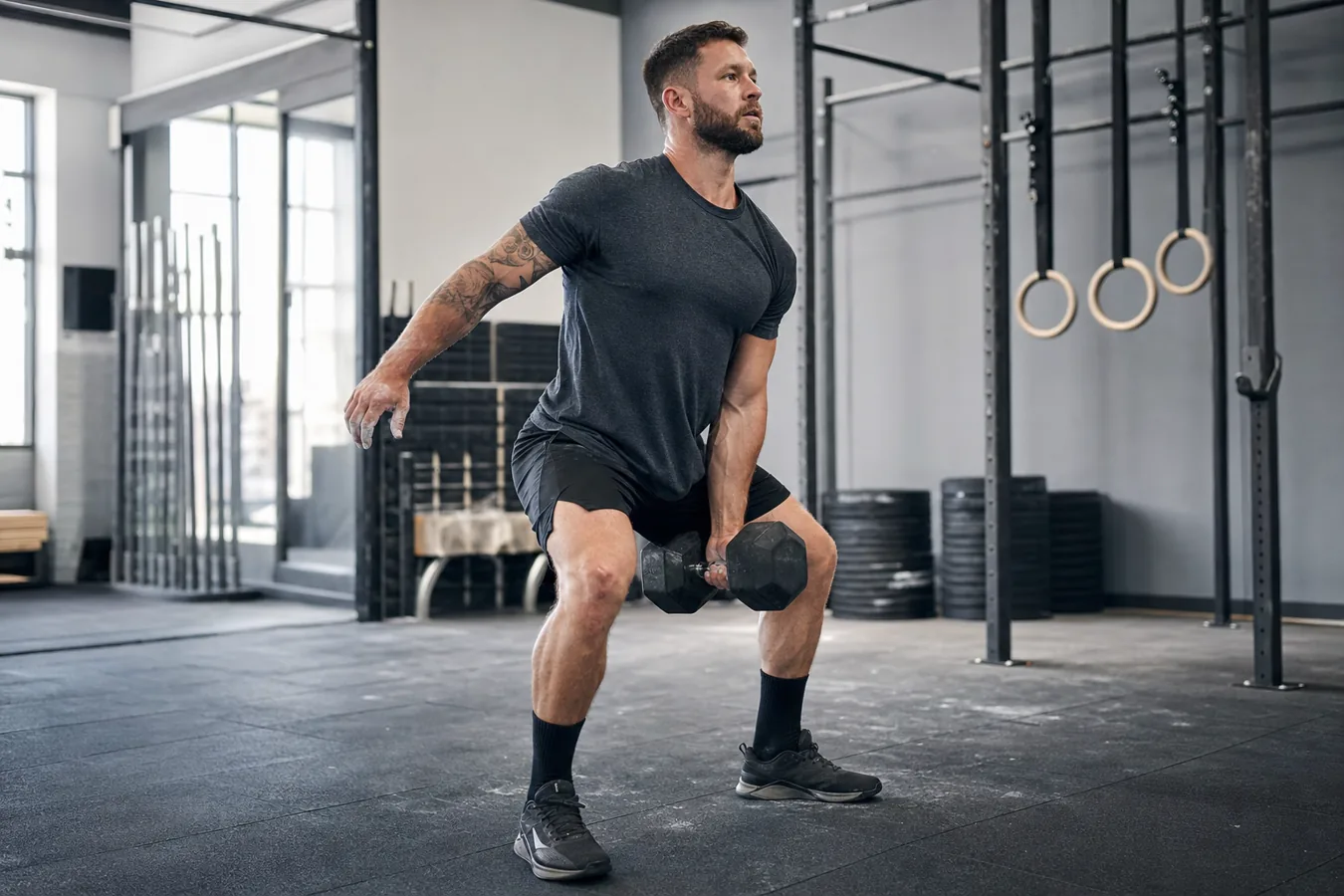
The plan
The dumbbell clean looks simple until the workout starts moving. Then the bell swings away, the back rounds, the catch turns soft, and every rep costs more than it should.
In CrossFit, the movement shows up in dumbbell-heavy conditioning pieces, partner workouts, and quick strength skill blocks. The goal is not to curl the weight to the shoulder. The goal is to use the legs and hips, keep the bell close, and receive it in a position you can repeat.
- A good dumbbell clean starts from a loaded hinge, not a rounded reach for the floor.
- The dumbbell should travel close to the body before it rolls onto the shoulder.
- Scale the load when the catch gets noisy, the elbow drops, or the bell starts looping forward.
What the dumbbell clean is supposed to train
A dumbbell clean asks for a small but useful blend of power, timing, and control. The athlete drives through the floor, extends the hips, then guides the dumbbell to the shoulder without turning the rep into an arm pull.
That is why it carries over well to the CrossFit dumbbell snatch. Both movements punish a bell that drifts too far forward. The clean is usually easier to learn because the dumbbell only has to reach the shoulder, but the same close path still matters.
Start with a setup you can repeat
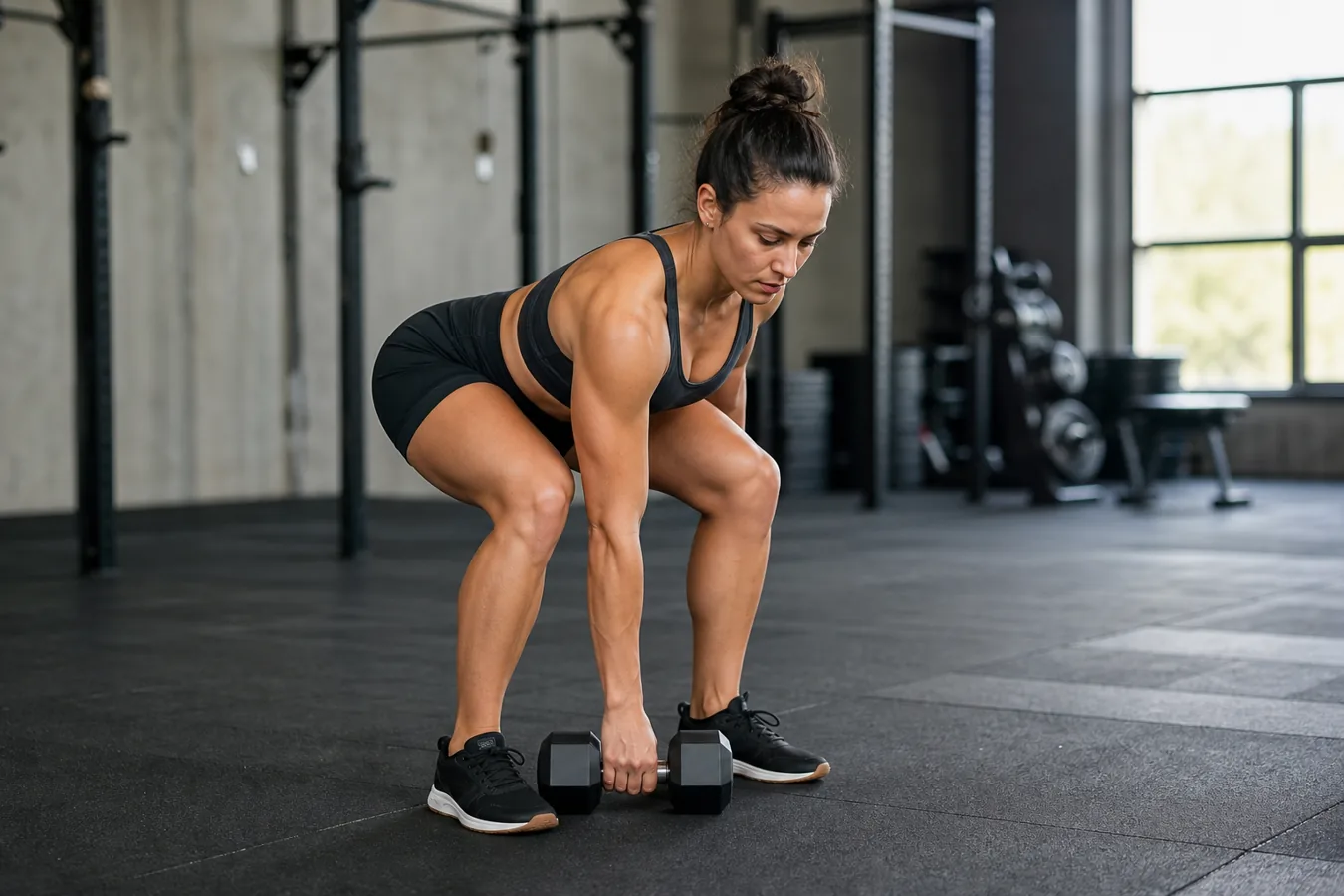
Place the dumbbell between the feet or slightly outside one foot, depending on the workout standard. Set the feet around hip width, load the hamstrings, and keep the chest proud enough that the first pull does not yank you out of position.
The first few inches matter. If the dumbbell jumps away from the body, the athlete has to chase it with the shoulder. A better rep feels close and quiet. The arm stays long until the hips finish, then the elbow moves around the bell so it can land on the shoulder without a crash.
| Checkpoint | What to look for | Simple fix |
|---|---|---|
| Start | Back flat, hips loaded, dumbbell close | Move slower from the floor for two warm-up sets |
| Drive | Legs and hips start the rep before the arm bends | Think jump, then guide the bell |
| Path | Dumbbell stays near the body instead of looping forward | Brush the elbow back and keep the shoulder over the bell |
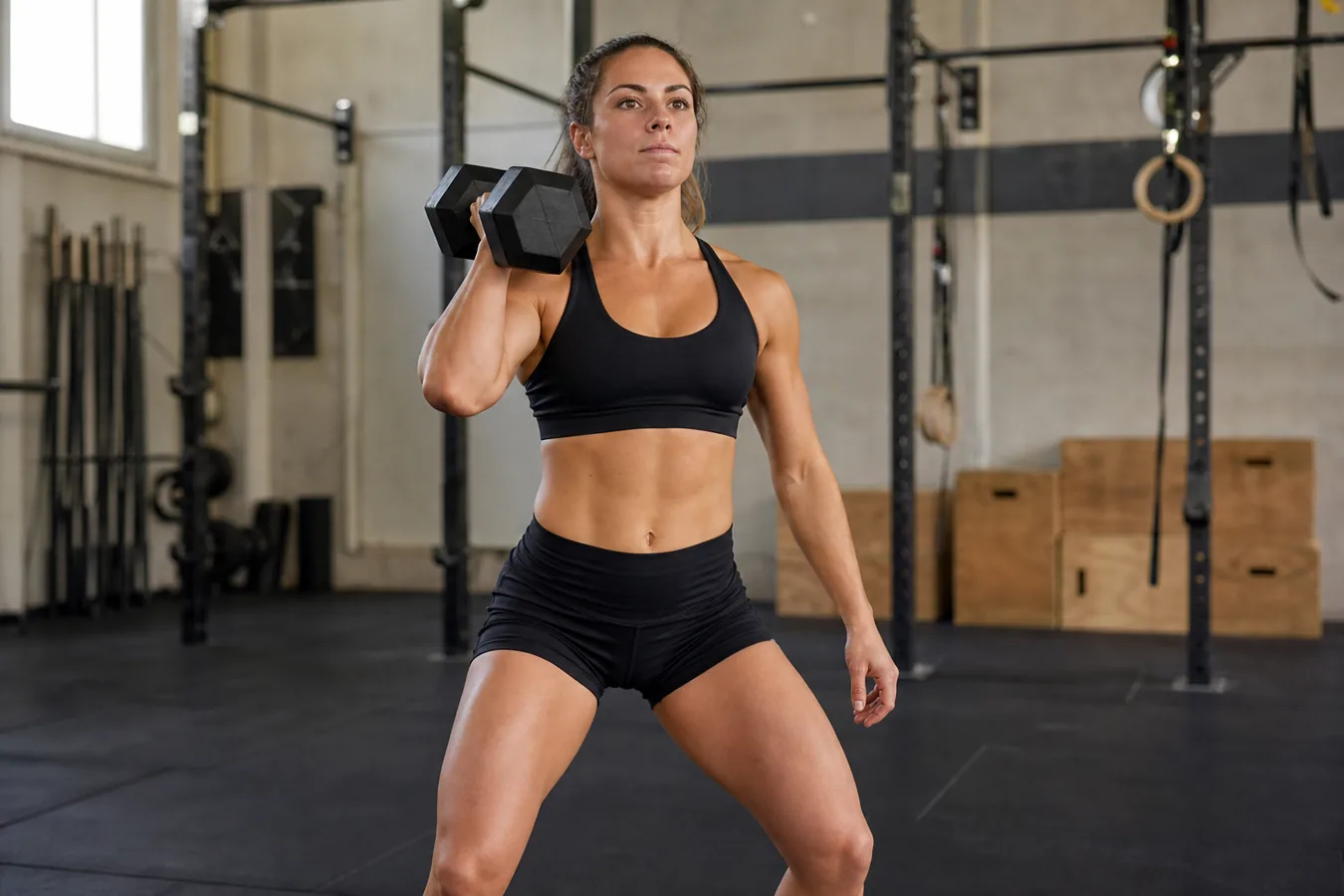
| Catch | Bell lands on the shoulder with the torso braced | Use a lighter load and catch each rep deliberately |
Watch the bell path and shoulder catch
This CrossFit demo is worth watching for the path of the dumbbell. The rep is short, but the important details are visible: the hinge, the hip drive, and the way the bell turns over onto the shoulder instead of being pulled up with the biceps.
How to cycle dumbbell cleans in a workout
Singles are easy to make look clean. Sets of 20 are where the movement changes. Breathe at the top, lower the dumbbell with control, and do not let the descent pull your back into a rounded setup for the next rep.
If the workout pairs dumbbell cleans with burpees, running, or box jumps, keep the early rounds almost boring. Athletes who sprint the first set often start catching the bell low on the shoulder and losing their brace. If that happens, the workout becomes a grip and lower back problem, not a conditioning test.
Mistakes that make the rep harder than it needs to be
The most common mistake is bending the arm too early. Once the elbow bends, the hips stop helping and the athlete has to muscle the dumbbell up. Another common miss is letting the bell swing in a big arc. That feels fine with a light weight, then falls apart when the workout asks for heavier reps or faster transitions.
- Starting each rep with the hips too low and the shoulders behind the dumbbell.
- Curling the bell instead of driving with the legs.
- Letting the dumbbell crash onto the shoulder.
- Switching hands in a way that breaks the workout standard or wastes time.
When to scale the dumbbell clean
Scale the dumbbell clean when the athlete cannot keep a flat back from the floor, when the catch causes shoulder discomfort, or when every rep turns into a curl. A lighter dumbbell, a hang dumbbell clean, or fewer reps per round can keep the stimulus intact.
The same thinking applies to broader workout choices. A smart scale should preserve the reason the movement is in the WOD, not just make the score look better. If you need a framework for that decision, the CrossFit scaling guide is a useful place to start. For athletes building barbell power at the same time, compare the dumbbell clean with the CrossFit power clean and notice how both lifts reward a close pull and a stable catch.


