The plan
Toes to rings look like a small variation of toes-to-bar. They do not feel that way once the rings start drifting. The target moves, the straps swing, and every loose rep costs more grip than expected.
That is why the movement deserves its own practice. In CrossFit workouts, toes to rings reward athletes who can stay tight while the hands are on unstable handles. If the body goes soft, the rings tell on you fast.
- Keep the rings quiet before trying to lift the feet higher.
- Use hollow tension and a controlled lean, not a wild kick from the hips.
- Scale with knee raises or toes-to-rings negatives before chasing big sets.
What toes to rings are really testing
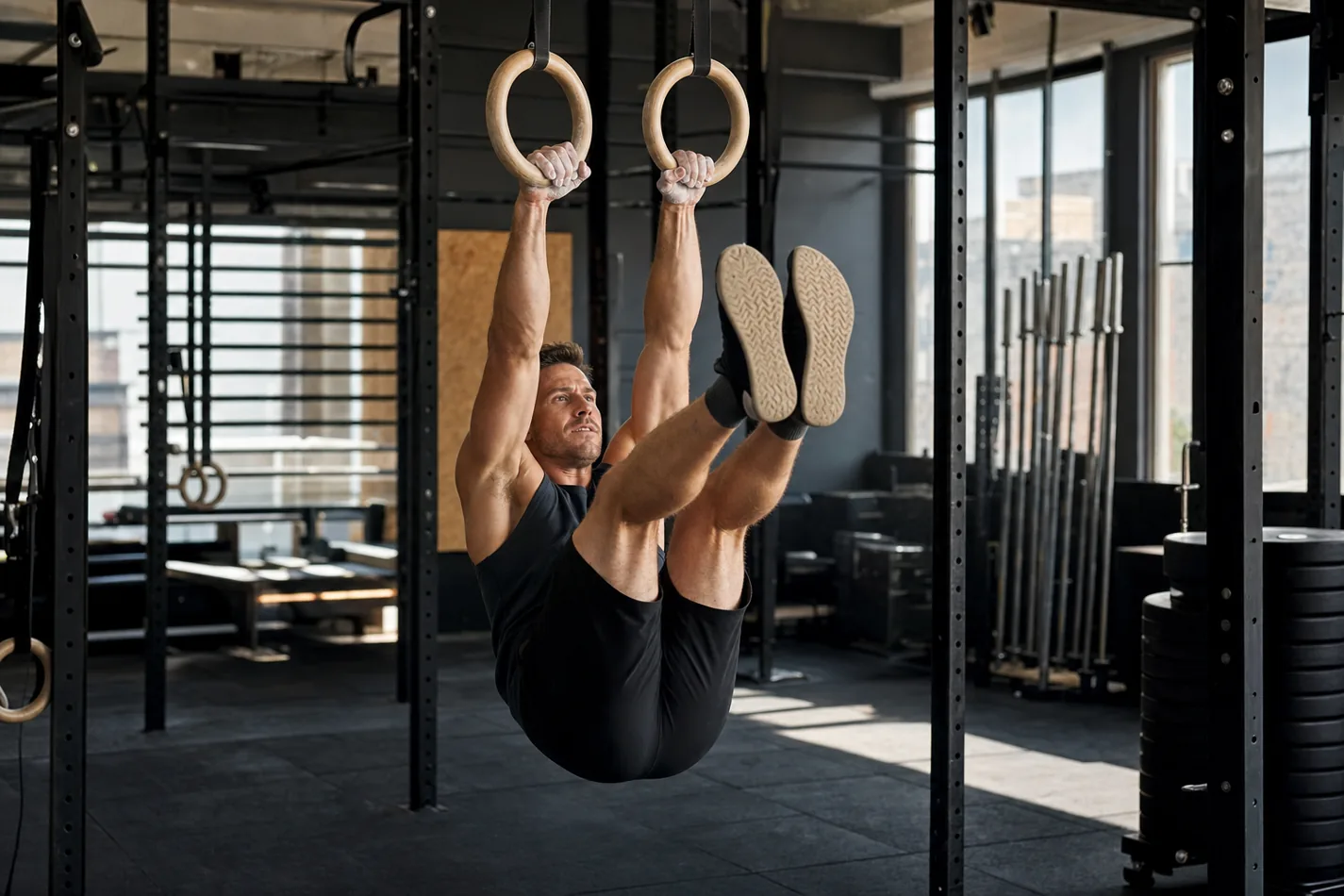
Toes to rings start from a hanging position on gymnastic rings. The athlete brings the feet up toward the rings, usually with a controlled kip or a strict leg raise depending on the workout standard. The goal sounds simple. The hard part is keeping the rings from turning every rep into a swing you did not ask for.
The movement sits between core work and ring control. Athletes who already own toes-to-bar still have to adjust. The bar is fixed. Rings move. That means the shoulders, lats, and midline have to work together before the feet ever reach the target.
Start by making the rings quiet
A good rep starts with active shoulders and straight arms. Pull the rings slightly down and back, keep them close to the ribs, and build tension before the legs lift. If the rings drift wide or shoot forward, the athlete usually loses the line and has to kick harder on the next rep.
This is where ring rows and ring support holds matter more than people expect. Ring rows teach the athlete to keep the straps close. Support holds teach pressure through the handles. Neither skill looks like toes to rings, but both make the rings less chaotic when fatigue arrives.
The lift comes from tension, not a panic kick
The common fault is easy to spot. The athlete hangs loose, throws the legs, misses the rings, then swings under the straps and has to restart. One or two reps might count. A set of ten will fall apart.
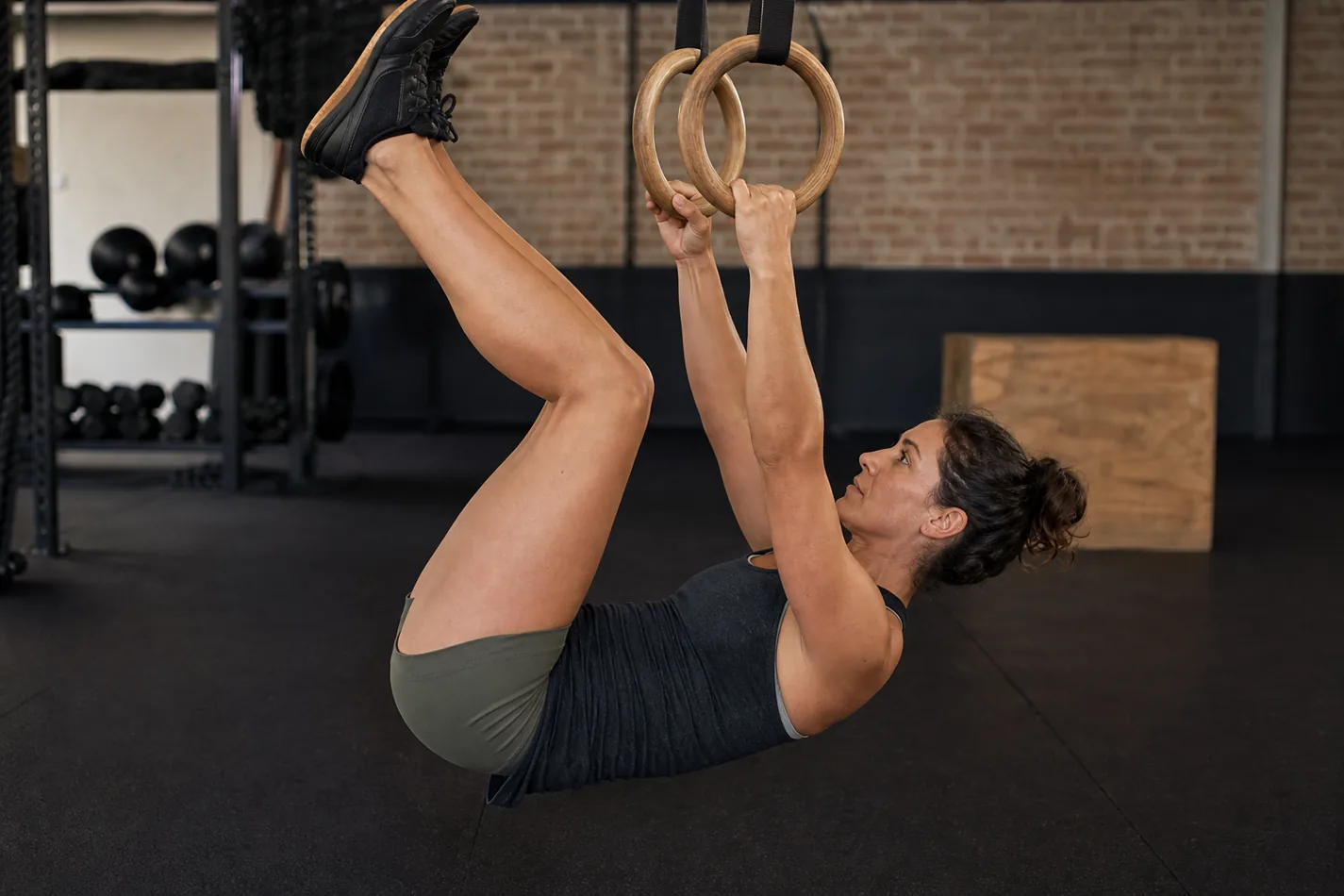
Build the rep from a tight shape. Think about closing the distance between ribs and hips. A clean hollow hold teaches that same feeling on the floor. From the rings, lean back slightly, press down through the hands, then lift the knees or feet with the trunk still organized.
| Fault | What it looks like | Fix it with |
|---|---|---|
| Rings drift away | The straps swing forward and the athlete chases the target | Pull the rings close before lifting the legs |
| Loose midline | The back arches at the bottom and the feet whip up late | Reset the hollow shape before each set |
| Too much knee bend too late | The rep turns into a rushed tuck at the top | Use controlled knee raises and finish higher only when the swing is quiet |
| Grip burns out early | The athlete over-squeezes because the body is swinging | Shorten sets and keep the rings close to the body |
How to kip without losing the straps
A kip can help, but it has to be small enough to control. Think arch to hollow, then lift. If the arch becomes a big backbend, the rings move forward and the athlete has to pull the feet up from a bad position.
Start with knee raises on rings. Keep the rings close, lift the knees, pause for half a second, and lower without swinging. Then move to higher knees, toes toward rings, and controlled singles. The same patience shows up in knees-to-elbows: the target is not the problem if the swing is leaking energy.
The demo below is useful because it shows the movement without extra noise. Watch how the rings stay close, the athlete leans back, and the feet travel up because the midline stays tight, not because the hips are flung around.
Scaling for workouts without faking the stimulus
Good CrossFit scaling keeps the midline and ring control in the workout. If the athlete cannot lift the feet near the rings yet, use ring knee raises, hanging knee raises on a bar, or controlled leg raises from a low ring setup. If grip is the limiter, reduce reps before the athlete starts peeling off the rings with bent elbows and a loose back.
For athletes building toward the full movement, negatives work well. Start with knees or toes high, then lower slowly while keeping the rings close. It is harder than it looks. That slow lower exposes whether the athlete owns the position or only reaches it with momentum.
Where toes to rings fit in training
Use them after a focused CrossFit warm-up or inside skill work before heavy pulling. They pair well with strict gymnastics pieces, light carries, or short conditioning sets where quality can stay high. They do not pair well with reckless volume if the athlete is already losing grip on every round.
If the session already includes ring dips, muscle-up practice, or a lot of strict pull-up strength, be honest about shoulder fatigue. Toes to rings are core work on paper, but the shoulders and grip pay a real bill.
What to test in your next warm-up
Try three sets of five ring knee raises before the workout. The test is not whether the knees move. The test is whether the rings stay close and the body stops swinging within one beat after each rep.
If that is clean, raise the target. If it is messy, stay there. The fastest way to better toes to rings is usually the boring one: quieter rings, tighter midline, fewer rushed reps.