The plan
PVC pass-throughs are easy to fake. An athlete can move the pipe from the front of the body to the back and still miss the point completely if the ribs flare, the elbows bend, or the shoulders shrug into the ears.
Used well, the drill is a quick screen and a useful warm-up. It tells a coach whether an athlete can move the shoulders through a big range while the trunk stays quiet. That carries into snatches, overhead squats, wall walks, pressing, and any WOD that asks the shoulder to work above the head.
- Use a grip wide enough to keep the elbows straight and the ribs down.
- Move slowly. A pass-through is not a shoulder yank or a race.
- Narrow the grip only when the athlete can keep control through the full arc.
What a clean PVC pass-through looks like
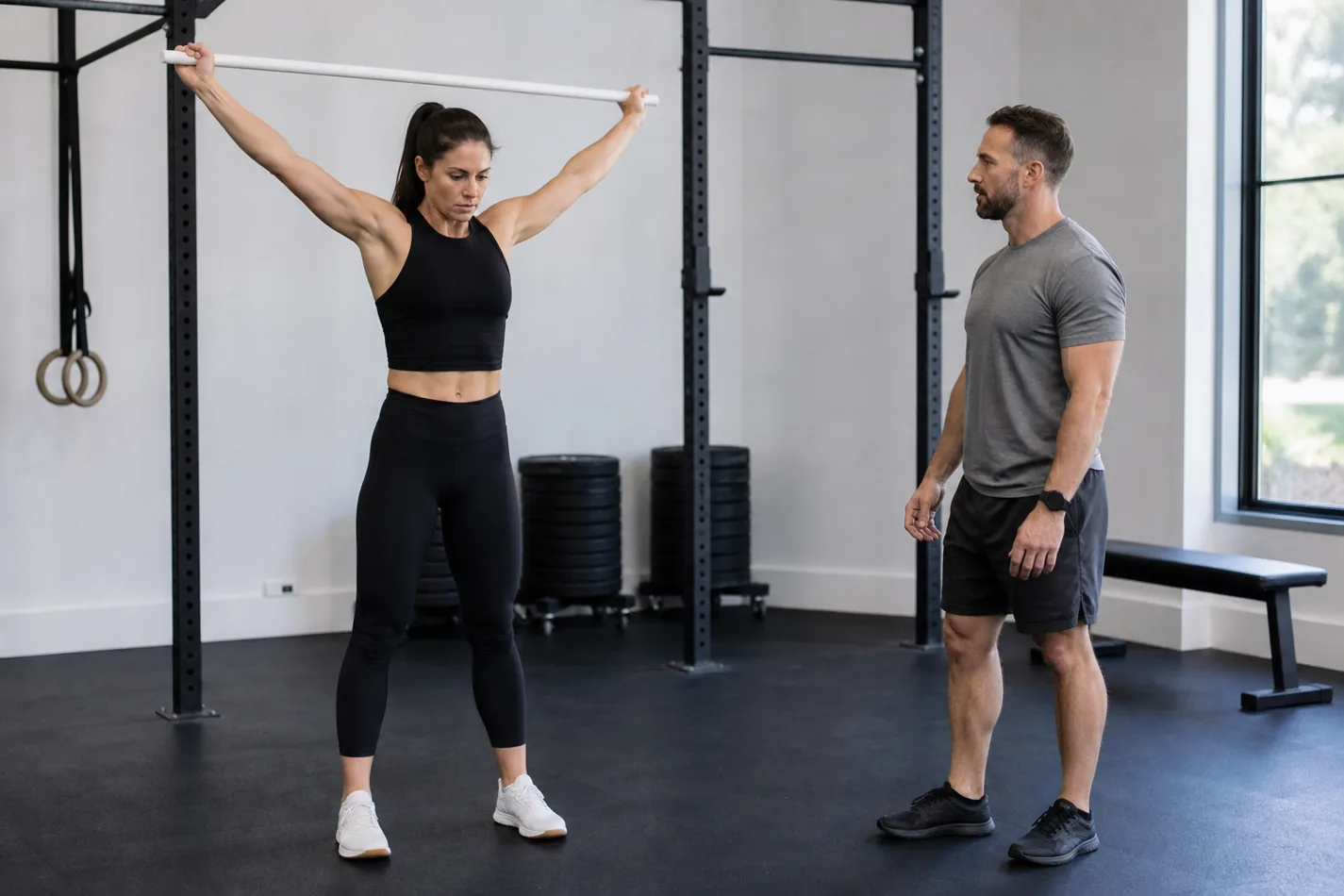
Start standing tall with a PVC pipe in front of the thighs. Take a wide grip, lock the elbows, and squeeze the glutes lightly so the low back does not become the escape route. The pipe travels up, over the head, and behind the body without the athlete leaning back to make space.
The best reps feel smooth and boring. The shoulders move. The trunk stays quiet. If the athlete has to bend the elbows or throw the head forward, the grip is too narrow or the range is not ready yet.
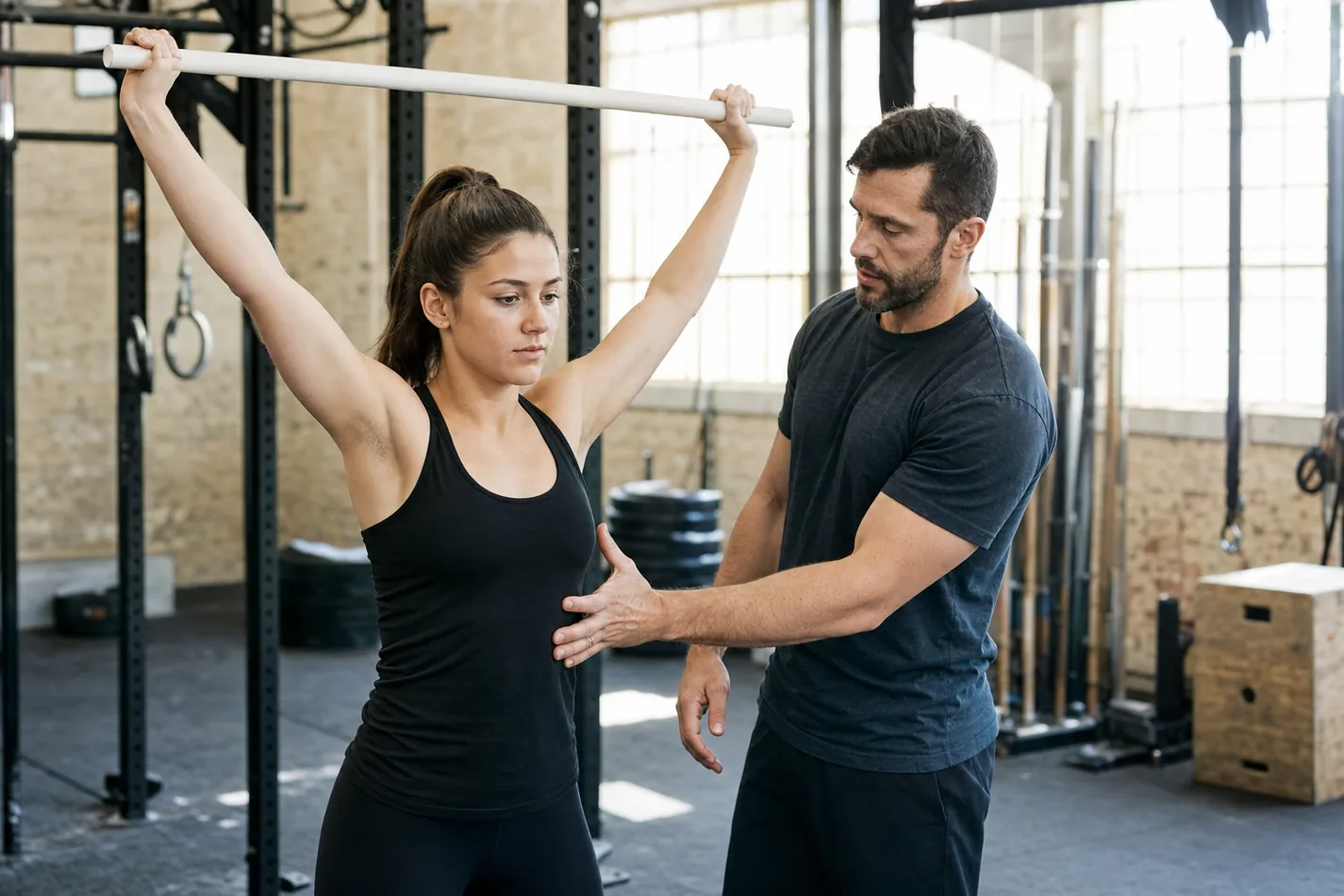
Rib control matters as much as shoulder range
A lot of athletes treat pass-throughs like a shoulder-only drill. Then the chest pops up, the ribs flare, and the low back arches hard while the PVC clears the head. That is not better mobility. It is a workaround.
Ask for a quiet rib cage before each rep. If the athlete cannot keep it, widen the grip. This same control shows up in overhead squat position, shoulder-to-overhead cycling, and handstand holds. The warm-up should teach the position those skills need, not hide the leak.
| Fault | What you see | Fix |
|---|---|---|
| Elbows bend | The athlete curls the pipe around the head | Widen the hands and slow the rep down |
| Ribs flare | The chest lifts and the low back arches | Exhale first and squeeze the glutes lightly |
| Shoulders shrug | The neck gets tight at the top of the arc | Reach long through the pipe instead of jamming up |
| Grip narrows too soon | The first reps look clean, then the athlete compensates | Earn a narrower grip over several calm sets |
Where the drill helps in CrossFit
PVC pass-throughs work best before overhead sessions. Use them before snatches, overhead squats, push presses, jerks, wall walks, and handstand practice. They are especially useful when paired with light pressing or empty-bar skill work because they wake up range without adding fatigue.
The transfer is clearest before power snatch practice and push press work. If the shoulders feel blocked during the warm-up, loading the bar usually makes the problem louder. Fix the setup first, then move to the barbell.
The video below is useful because it keeps the drill simple. Watch the ribs and grip width, not just whether the PVC gets behind the body.
How to scale the drill without forcing range
The easiest scale is a wider grip. That is not cheating. It lets the athlete keep the elbows straight and the ribs down while the shoulders learn the path. Over time, the hands can move closer together, but only if the rep stays honest.
A band can work too, but it changes the feedback. Bands stretch, so athletes can sometimes hide a poor line. PVC is less forgiving. If the goal is to see the true shoulder path before overhead work, the pipe gives cleaner information.
How many reps to use
Keep the dose small. Two sets of eight to twelve slow reps usually do the job. More is not always better. If the athlete starts forcing range, stop and reset.
For a longer warm-up, combine pass-throughs with light scap work, prone raises, empty-bar presses, or controlled ring push-up support work if the session includes upper-body pressing. The drill should make the next movement cleaner, not tire out the shoulders before the work begins.
What to check before the barbell work
Before loading an overhead lift, ask for three slow pass-throughs with straight elbows, quiet ribs, and no neck tension. If the athlete can do that, the shoulders are probably ready for the next warm-up step.
If the only way through is to arch hard and rush, widen the grip and slow down. The pipe is giving you useful feedback. Listen to it before the barbell gets involved.