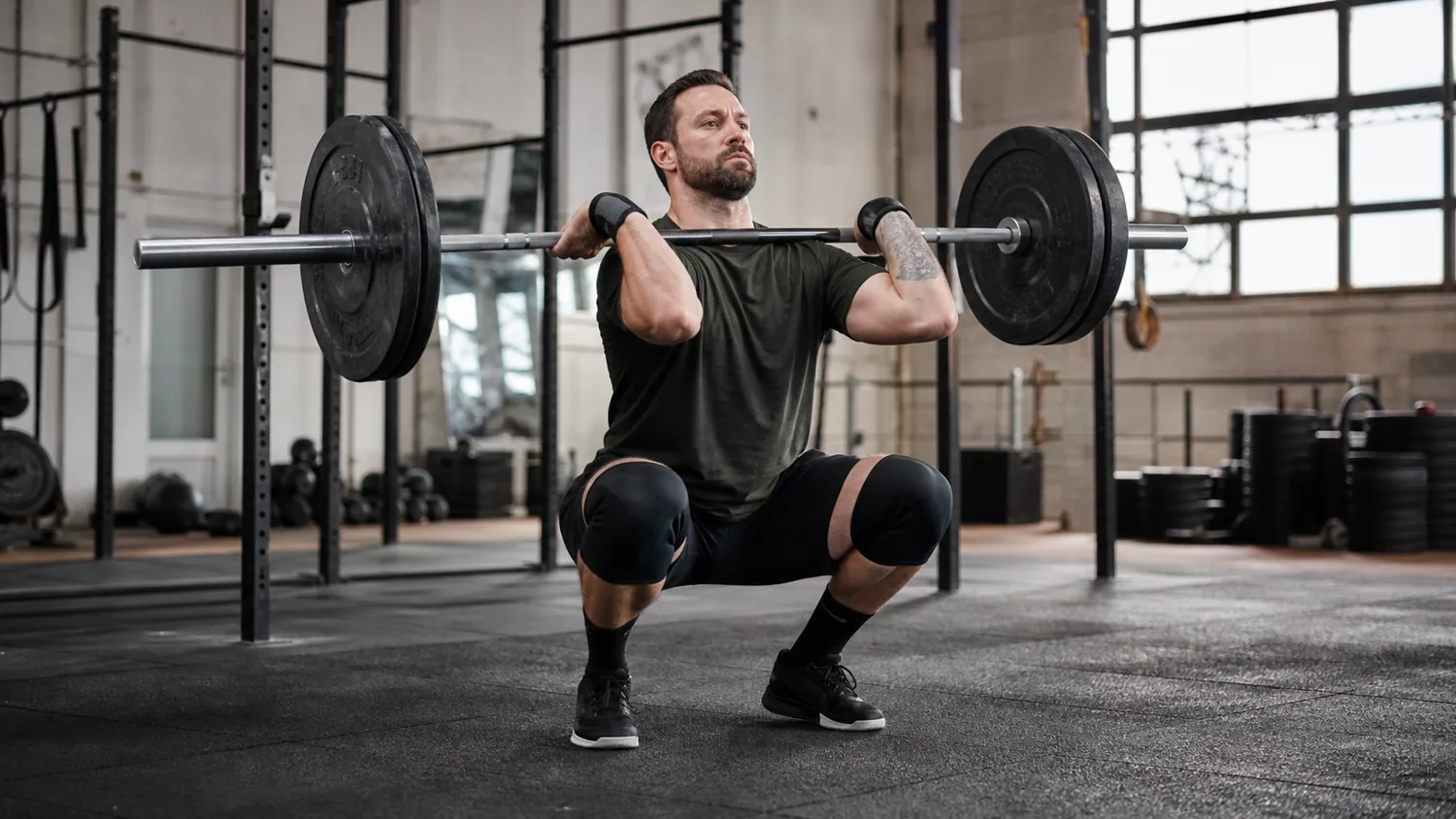
The plan
A cluster looks like a simple mashup on paper: squat clean the bar, then press it overhead. In a workout, it feels less tidy. The bar crashes into the rack, the legs are already tired, and the press gets expensive if the athlete pauses in the wrong place.
In CrossFit, the cluster rewards a clean bar path and a calm front rack. You need enough patience to catch the clean well, but enough timing to use the stand from the squat as the start of the overhead drive.
- A cluster is a squat clean that continues into a thruster-style overhead finish.
- The catch matters. A loose front rack turns the press into a shoulder grind.
- In workouts, smaller planned sets usually beat one ugly set that wrecks your breathing.
What a cluster actually is
A barbell cluster starts from the floor. The athlete cleans the bar, receives it in a front squat, stands, and finishes overhead in one connected rep. That makes it different from clean and jerk setup, where the jerk has its own dip, catch, and reset.
The movement borrows pieces from the squat clean catch and thruster timing. The clean has to be close enough to land in a usable rack. The overhead finish has to come from the legs, not from a late arm press after the athlete has already lost speed.
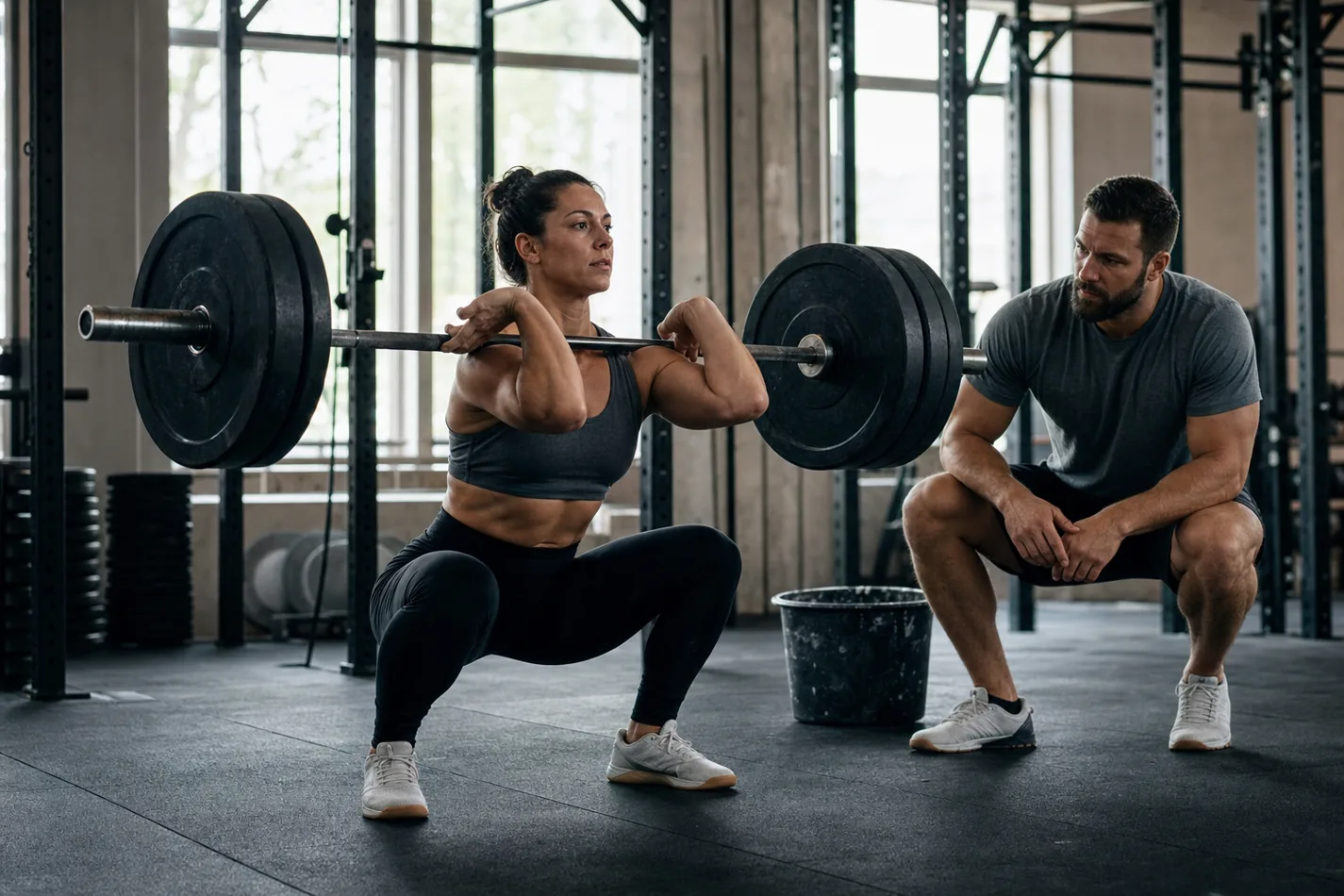
Catch the bar where you can press it
The first mistake is catching the clean low with dropped elbows, then trying to save the rep on the way up. That makes the bar roll forward. Once the bar rolls, the athlete has to fight it back before the overhead drive even starts.
A better catch feels boring. Elbows high enough to hold the rack, chest tall enough to stand, feet flat enough to drive. The same rack discipline used in the front squat rack position matters here because the press begins before you have time to reorganize.
| Fault | What it looks like | Fix to try |
|---|---|---|
| Bar swings away | The clean lands forward and the athlete chases it | Keep the bar close past the knees and finish tall |
| Elbows drop in the squat | The press starts from a collapsed rack | Pause in light warmups and own the rack before standing |
| Press happens too late | The legs finish, then the arms grind | Drive overhead as the hips and knees extend |
| Reps get noisy fast | Every catch crashes harder than the last | Break earlier and reset breathing between sets |
Use the stand from the squat
The cluster is not a strict press after a clean. The useful part is the upward drive out of the squat. As the athlete stands, the bar should already feel like it wants to leave the shoulders. If the bar sits heavy in the rack after lockout of the legs, the timing was late.
This is why athletes who understand push jerk dip and drive usually learn clusters faster. They know how to push through the floor and transfer force into the bar. The difference is that the cluster gives less time to breathe and reset.
The demo below is useful because it shows the cluster as one linked rep, not as a clean followed by a long pause. Watch the bar stay close in the clean, then watch how the athlete drives out of the squat before pressing overhead.
How to scale clusters without losing the point
Good CrossFit scaling should keep the linked nature of the rep. If the barbell is too heavy, reduce load before turning every rep into a separate clean, long pause, and press. The goal is still to connect the catch, stand, and overhead finish.
Dumbbell clusters can work well for newer athletes, especially if the barbell rack position is not there yet. Hang clusters are another useful option because they remove the first pull from the floor and let the athlete focus on the catch and drive.

Pacing clusters in a workout
Clusters get ugly when athletes treat the first set like a test. The first three reps might feel fine. The fourth and fifth are where the rack drops, the breathing spikes, and the overhead finish starts drifting forward.
For moderate loads, quick singles can be smarter than touch-and-go sets. Drop, step back in, breathe once, and pull again. That rhythm keeps the clean cleaner and protects the shoulders. If the workout also has pull-ups, burpees, or rowing, save some grip and lungs for the rest of the room.
What to check before adding weight
Before loading clusters, check three pieces at lighter weight. Can you keep the bar close from the floor? Can you catch with elbows high? Can you stand and press without the bar stalling on the shoulders?
If one answer is no, fix that piece first. Use power clean bar path drills for the pull, front rack holds for the catch, and light thrusters for the drive. Heavy clusters do not hide bad timing. They make it louder.


