
The plan
- What makes a squat clean different from a power clean
- The bar has to stay close before you pull under
- Catch with the elbows, then stand with your legs
- How to use squat cleans in a CrossFit workout
- Scaling the squat clean without losing the lesson
- Use the hang when the floor keeps getting messy
- What to test next time you clean
A squat clean looks powerful when it is done well. It looks expensive when it is rushed. The bar drifts away, the athlete dives under it, and the catch turns into a fight before the first rep is even finished.
In CrossFit, the squat clean has to work under fatigue, not just on a quiet platform. That means the basics matter more, not less: a close pull, a real finish, fast elbows, and enough front squat strength to stand without collapsing.
- The lift is not a power clean followed by a squat. The athlete pulls, finishes, and receives the bar in one connected movement.
- Most missed reps come from a bar that swings forward or elbows that arrive late in the catch.
- For workouts, clean singles or small sets often beat sloppy touch-and-go reps that leak position fast.
What makes a squat clean different from a power clean
A power clean finishes above parallel. A squat clean receives the bar in a full or near-full front squat. That extra depth changes the lift. The athlete has to commit to pulling tall, moving under the bar, and catching with the elbows high enough to keep the bar on the shoulders.
If the athlete already owns a solid power clean catch, the squat clean usually becomes a question of timing and confidence. The mistake is trying to pull the bar higher instead of pulling long enough, then moving under it. More height is not always the answer. Better timing is.
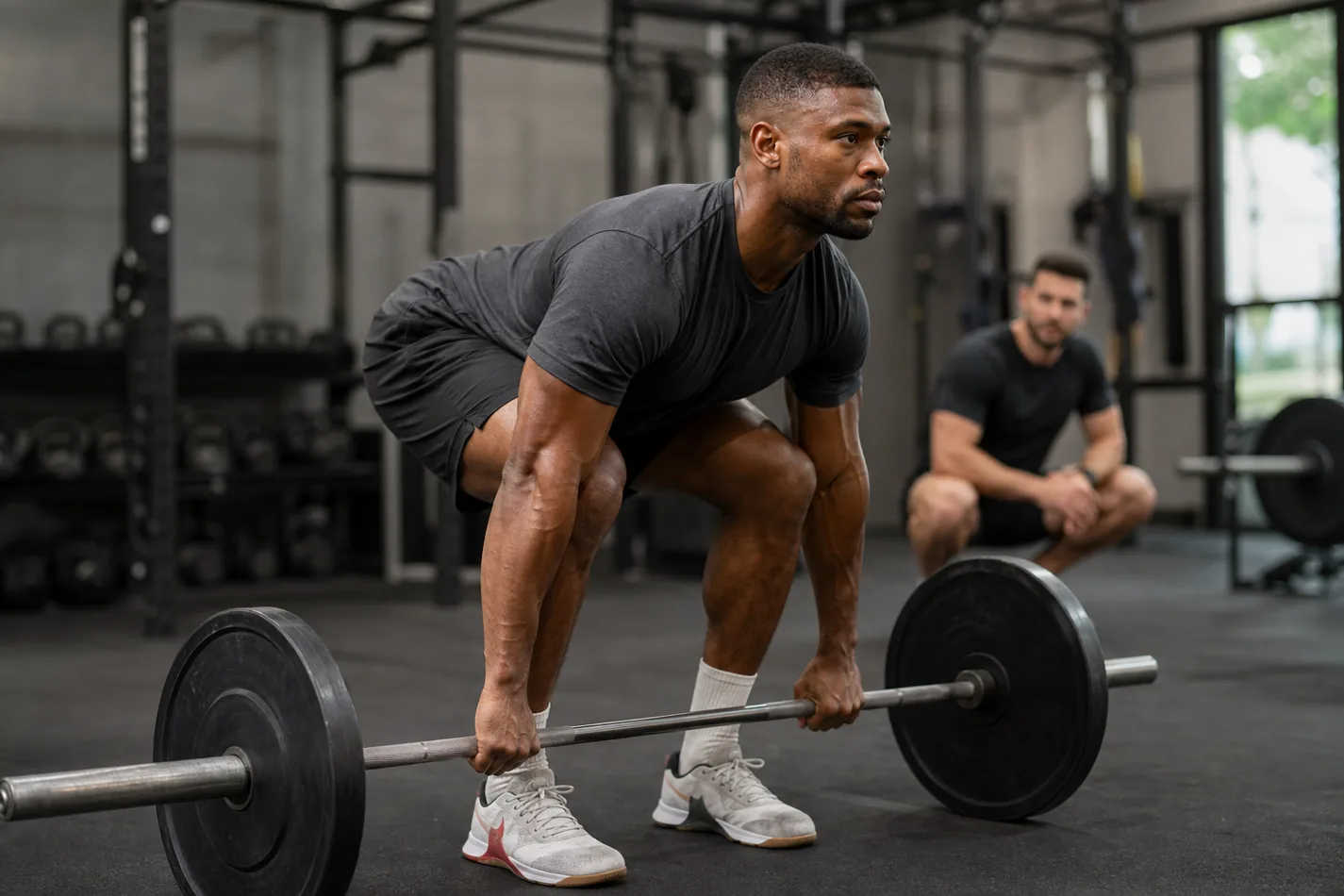
The bar has to stay close before you pull under
The first pull should feel patient. Push the floor away, keep the back angle organized, and let the bar pass the knees without looping around them. If the bar starts forward early, the catch will usually land forward too.
This is where deadlift bar path carries over more than people expect. A clean is faster and more athletic, but the bar still needs to stay close. The second pull only works if the first pull gives it a chance.
| Fault | What it looks like | Fix before adding weight |
|---|---|---|
| Bar swings forward | The athlete jumps toward the bar or catches on the toes | Use clean pulls from the floor and keep the lats tight |
| Early arm bend | The elbows pull before the hips finish | Stay patient and let the legs finish the lift |
| Late elbows | The bar crashes and the torso folds | Practice tall cleans and front rack turnover |
| Soft catch | Knees cave, chest drops, or heels lift | Lower the load and rebuild the receiving position |
Catch with the elbows, then stand with your legs
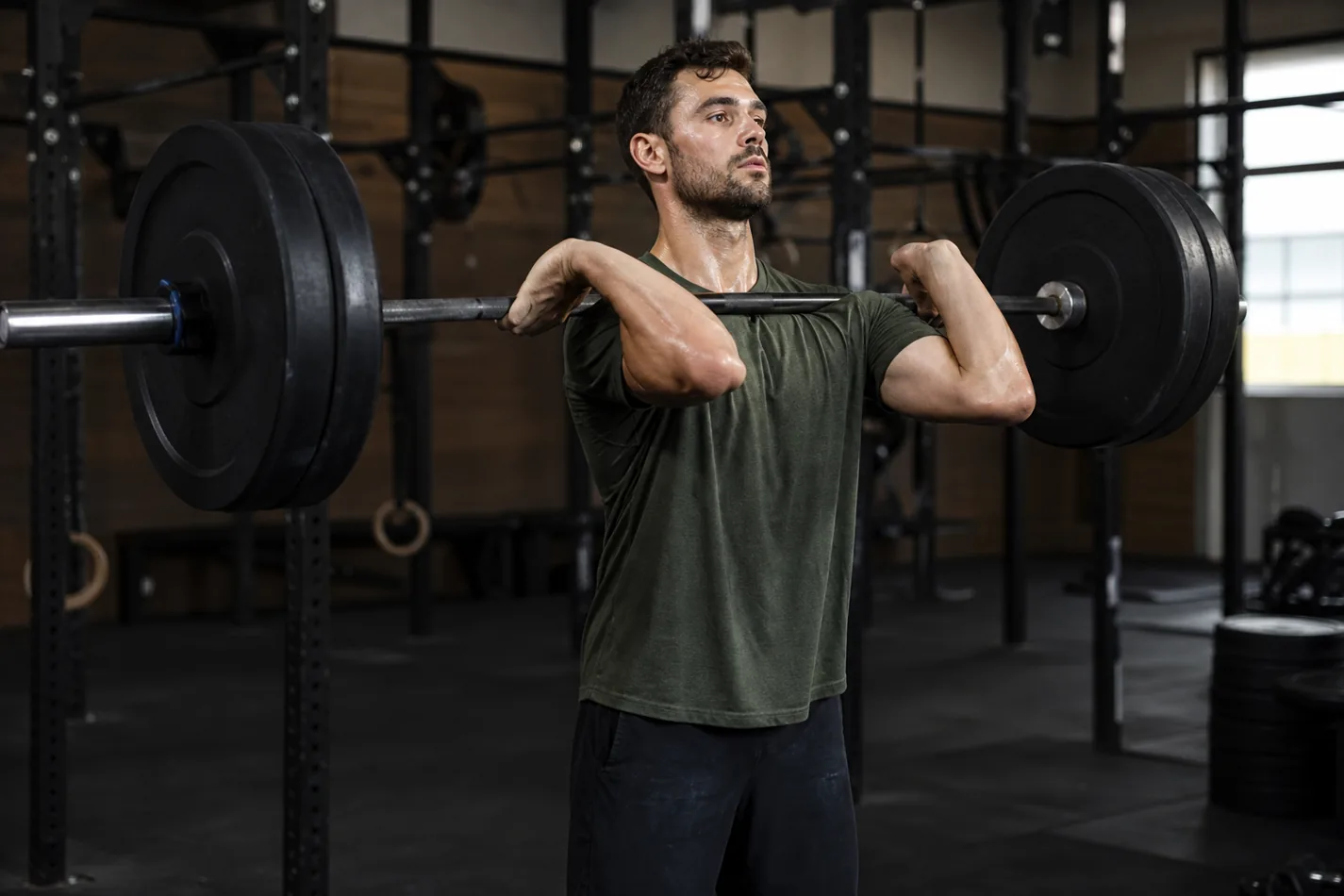
The catch is not a crash landing. The feet move, the elbows whip through, and the athlete receives the bar with the torso ready to stand. If the elbows are slow, the bar sits in the hands instead of the front rack. That is when the wrists complain and the chest starts to fall.
Good front squat rack position gives the squat clean somewhere to land. The rack does not need to feel comfortable, but it needs to be stable. If the athlete cannot hold the bar with high elbows in a front squat, catching a heavy clean there will not magically fix the problem.
The CrossFit demo below is useful because it slows the lift down enough to see the finish and the catch. Watch how the athlete keeps the bar close before dropping under it.
How to use squat cleans in a CrossFit workout
In a strength piece, take the time to reset. A clean setup matters. Feet under the hips, hands set, bar close, breath held, then pull. In a metcon, the decision changes. The question is whether touch-and-go reps help the score or just turn every rep after the third one into survival.
For many athletes, fast singles are cleaner and not much slower. Drop, step back in, breathe once, and pull with the same setup each time. That approach also protects the next movement if the workout includes pull-ups, burpees, box jumps, or a shoulder-to-overhead after the clean.
Scaling the squat clean without losing the lesson
Good CrossFit scaling keeps the purpose of the movement. If depth is the issue, use lighter squat cleans, hang squat cleans, or front squats paired with clean pulls. If the turnover is the issue, use tall cleans or muscle clean drills before loading the full lift.
Some workouts can use power cleans instead, but that changes the demand. It removes the receiving depth. That can be the right call for a newer athlete or a shoulder that is not ready for a fast rack, but the coach should know what skill is being skipped.
Use the hang when the floor keeps getting messy
The hang is not a shortcut. It can be the best place to learn. From the hang, the athlete feels the finish, the pull under, and the catch without fighting a rough start from the floor. That is why hang power clean timing often cleans up the full lift faster than adding more heavy attempts.
The same idea shows up in clean and jerk setup. A clean that lands forward makes the jerk harder before the bar ever leaves the shoulders. Fixing the squat clean is not only about making one lift prettier. It gives the rest of the workout a better chance.
What to test next time you clean
Load a bar you can move well and film three reps from the side. Does the bar stay close? Do the elbows beat the bottom of the squat? Can you stand without chasing the bar forward? If one answer is no, fix that piece before adding weight. The bar will tell the truth fast.


