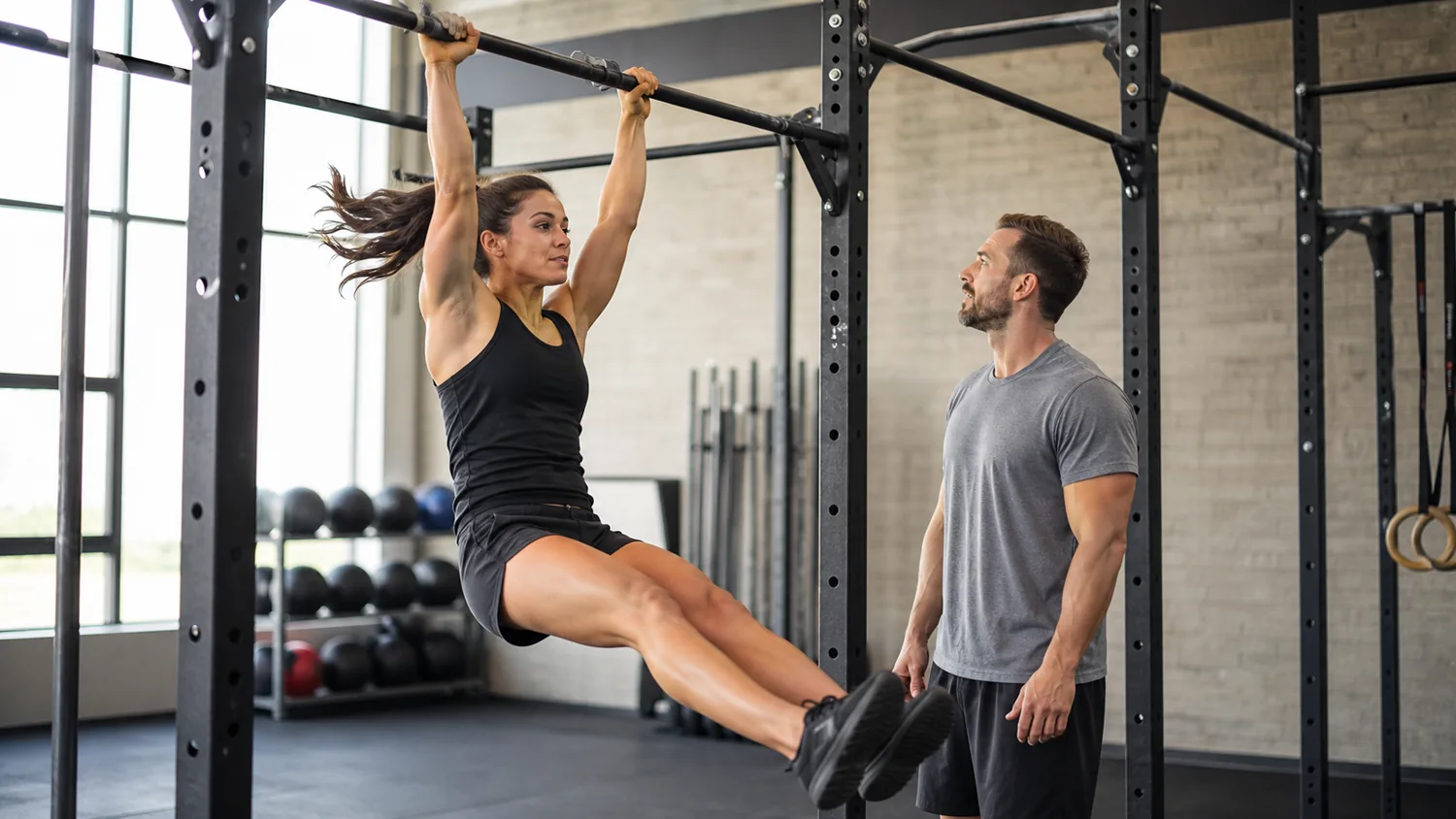
The plan
A kipping pull-up is not a shortcut for athletes who cannot do strict work. Done well, it is a gymnastics skill built around timing, body tension, and a repeatable swing. Done poorly, it is a shoulder fight on a bar.
That difference matters in CrossFit because fatigue exposes everything. One loose arch, one late pull, one rushed descent, and the set starts eating your grip before the workout has really started.
This guide breaks down the kipping pull-up from the swing first. Build that piece, and bigger sets become possible without turning every rep into a survival attempt.
- The kip starts with a controlled hollow and arch, not with yanking the chin over the bar.
- Strict pulling strength still matters. If you cannot control the shoulder, scale the movement.
- Most missed reps come from pulling too early, losing body tension, or dropping straight down after the bar.
What a kipping pull-up is supposed to do
The kipping pull-up uses momentum from a hollow to arch swing to help the athlete move around the bar. The goal is not to flop through space. The goal is to create tension, redirect it, and pull at the right moment.
Think of the rep as a rhythm problem before it is a strength problem. The shoulders open in the arch. The ribs and hips snap back into hollow. Then the arms finish the pull when the body is already moving up and back.
If you pull before the swing has done its job, the rep feels heavy. If you wait too long, the body falls away from the bar and you end up chasing it. The sweet spot is small, which is why beginners often need more swing drills and fewer max sets.
Earn the positions before adding speed
Before you care about linking ten reps, test the two shapes that make the movement work.
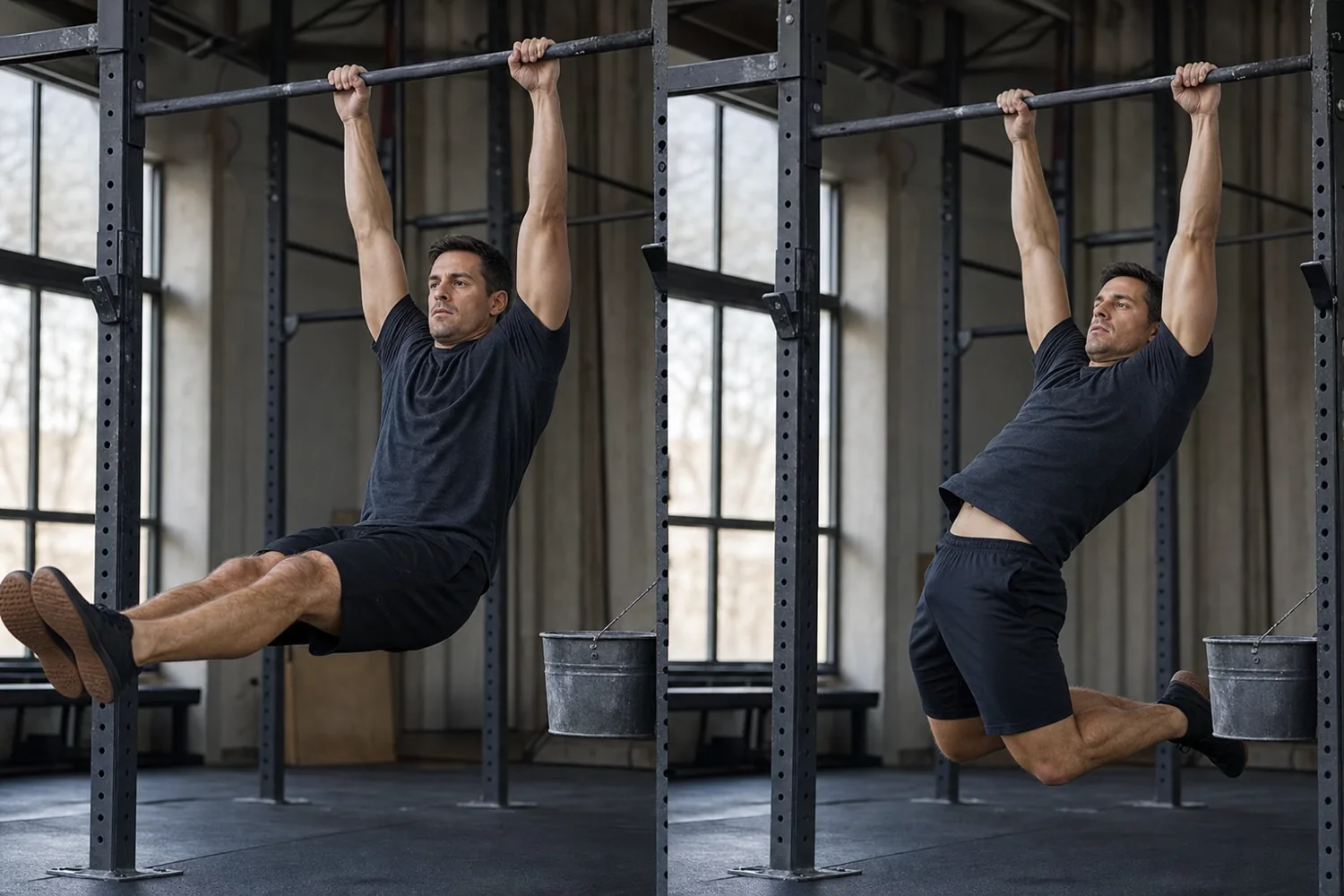
- Hollow: ribs down, glutes on, feet slightly in front of the bar, shoulders active.
- Arch: chest open, legs behind the body, shoulders still controlled, no loose lower back swing.
The body should move between those shapes without the knees bending wildly or the ribs flaring. A small, sharp swing beats a huge swing you cannot control.
The timing cue that changes the rep
Most athletes pull too soon. They feel the swing start, panic a little, and bend the elbows before the hips have snapped back under the bar. That turns the kip into an awkward arm pull with extra movement attached.
Use this cue: close the body, then pull. As you move from arch back to hollow, drive the feet slightly forward and bring the ribs down. When the body starts to rise, pull the bar toward the chest instead of just reaching the chin up.
The descent matters too. Push away from the bar at the top so you can return into the next arch. Dropping straight down kills the swing and forces you to restart each rep.
| Problem | What it usually means | Fix to try next |
|---|---|---|
| You swing but cannot get high | The pull starts before the hollow snap | Delay the elbow bend until the body rises |
| Your grip blows up fast | You are muscling every rep instead of using rhythm | Cut the set size and rebuild timing |
| Your shoulders feel pinchy | The arch is loose or too aggressive | Reduce swing size and keep the shoulders active |
| You cannot link reps | You drop straight down from the top | Push away and return into the next arch |
Strength still sets the floor
A kip does not remove the need for strength. It changes how strength shows up. You still need enough strict pulling capacity to control the shoulder, keep the bar close, and avoid dumping stress into the joint when tired.
A useful rule: if you cannot perform controlled strict pull-up negatives, active hangs, and scap pull-ups, spend more time there before making kipping volume a regular workout tool. If strict reps are not solid yet, this CrossFit scaling guide gives a better way to keep the workout moving without pretending the skill is ready.
That is not punishment. It is how you keep the skill available later. A shoulder that gets irritated every time pull-ups show up on the board is not a training plan.
Video cue to watch before practice
This WODprep breakdown is useful because it separates the skill into steps instead of telling athletes to simply swing harder. Watch the hollow and arch timing, then compare it with your first few warm-up reps.
How to practice without trashing your hands
Do not learn kipping pull-ups by doing sets to failure. That teaches panic, not timing. Use short sets while the swing still looks the same from rep to rep.
- Start with three sets of 8 to 10 controlled hollow and arch swings.
- Add five singles where you swing, snap, pull, and reset.
- Build to small sets of two or three linked reps.
- Stop before your hands rip or your shoulders start taking ugly reps.
Grip fatigue is part of CrossFit, but torn hands are not a badge of honor. They interrupt training and usually come from too much volume too soon, a death grip on the bar, or continuing after the swing is gone. If your hands tear often, check your grip choice too. A pair of CrossFit grips can help, but they will not fix a wild swing.
When to scale the kipping pull-up
Scale when the workout asks for repeatable reps and your version is not repeatable yet. Ring rows, banded strict pull-ups, jumping pull-ups with a controlled lower, and low-volume kip drills can all make sense depending on the stimulus.
The wrong scale is the one that ignores the workout. If the WOD is meant to be fast, choose an option you can cycle safely. If the day is skill practice, slow down and give the swing more attention. If your shoulder is irritated, do not negotiate with it mid-workout.
Mistakes to fix first
Start with the mistake that shows up earliest. If you lose hollow on rep two, fix body tension. If you can swing but never rise, fix the timing of the pull. If you get one rep and fall out of rhythm, fix the push-away at the top.
The kipping pull-up gets much easier to train when you stop treating it like a chin-over-bar contest. Build the swing, protect the shoulders, and keep the sets small enough that your best rep and your last rep still look related.


