The plan
Banded pull-aparts are one of those drills that get thrown into warm-ups so often that athletes stop paying attention. The band moves, the shoulders feel a little warm, and everyone assumes the job is done.
That is where the drill gets wasted. A good banded pull-apart teaches the athlete to move the shoulder blades while the ribs stay down and the neck stays quiet. That carries into pull-ups, ring work, pressing, handstands, and any WOD where tired shoulders start making poor decisions.
- Use a light band that lets the arms stay straight and the ribs stay down.
- Pull by moving the shoulder blades, not by leaning back or shrugging.
- Keep the dose small. The drill should clean up the next skill, not fatigue the shoulders before it starts.
What a clean banded pull-apart looks like
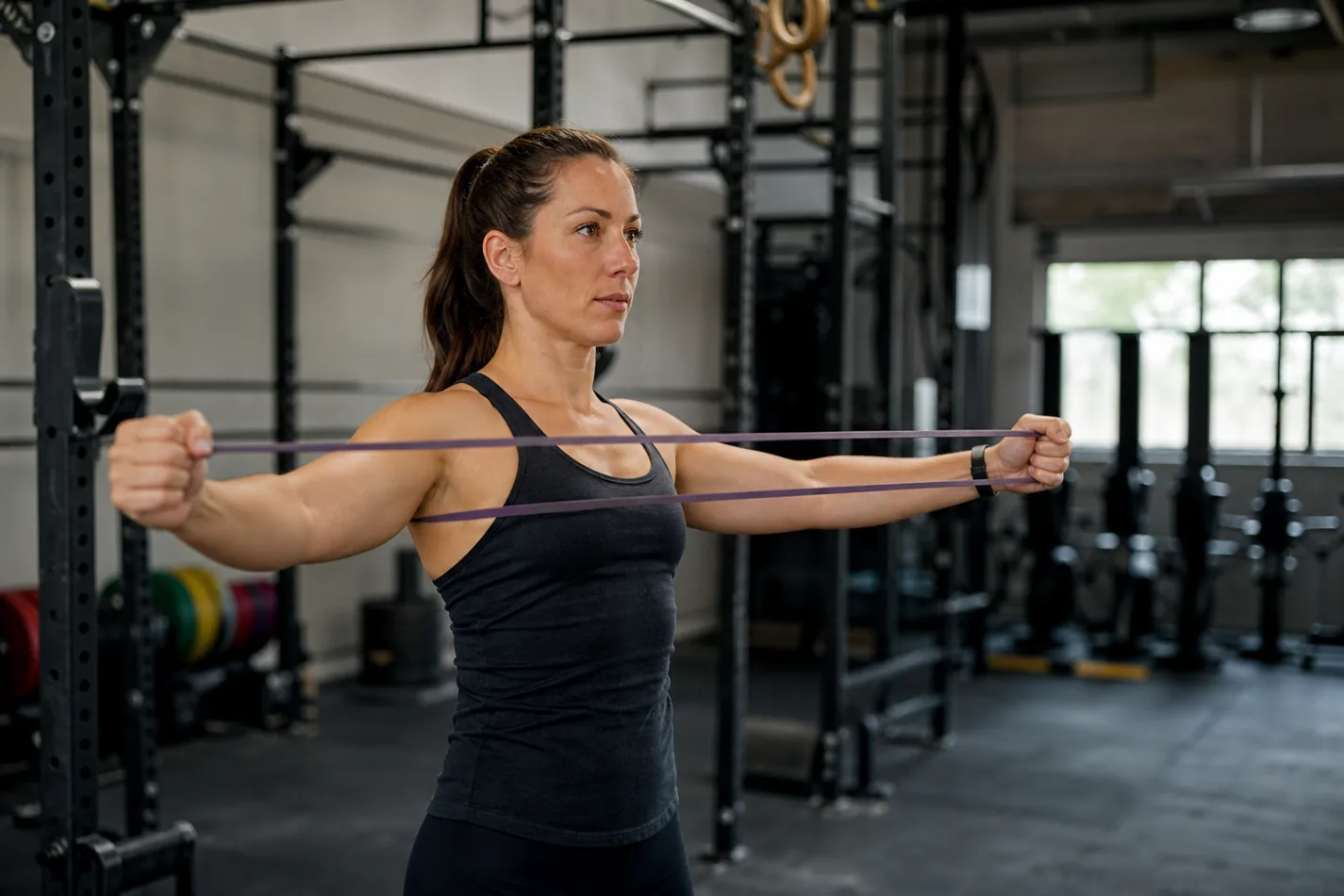
Stand tall and hold a light band in front of the chest with straight arms. Set the ribs down, keep the glutes lightly squeezed, then pull the hands apart until the band reaches the chest or upper ribs. Pause for a second, then return with control.
The rep should feel controlled across the upper back. If the athlete has to arch, bend the elbows, or yank the band to finish, the band is too heavy or the hands are too close together. Lighter and cleaner wins here.
The rib flare is the fault most people miss
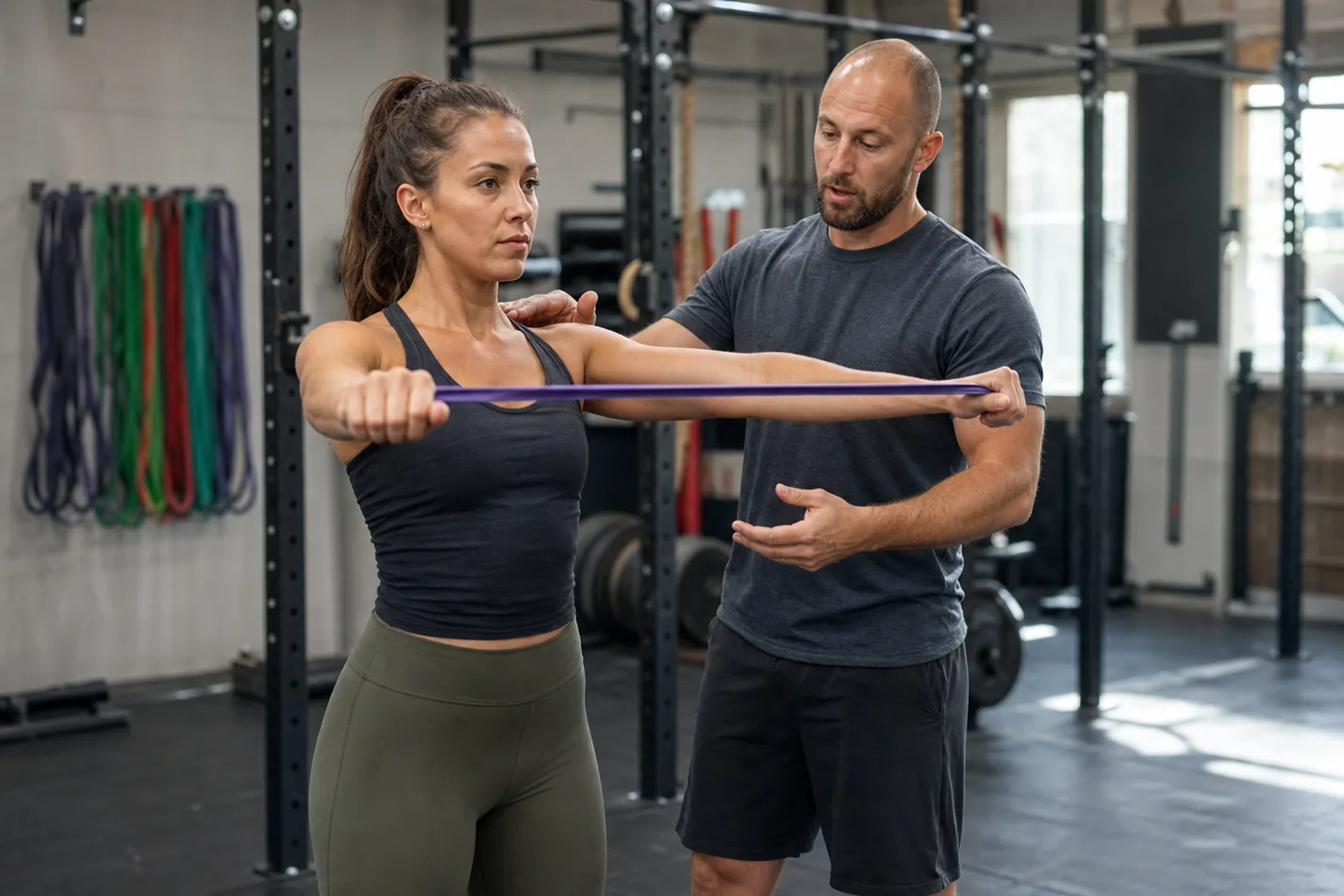
Most coaches catch bent elbows. Fewer catch the chest popping up. When the ribs flare, the athlete turns a shoulder drill into a low-back workaround. The band still reaches the chest, but the shoulder blades did not do the work cleanly.
Use the same rib control you would ask for in PVC pass-throughs or shoulder-to-overhead cycling. The athlete should be able to breathe, pull the band apart, and keep the trunk quiet. If that cannot happen, the band is giving useful feedback before the barbell or rig makes the mistake more expensive.
| Fault | What you see | Fix |
|---|---|---|
| Band is too heavy | Elbows bend and the rep turns into a tug | Use a thinner band or move the hands wider |
| Ribs flare | The chest lifts and the low back arches | Exhale first, squeeze the glutes lightly, then pull |
| Shoulders shrug | The neck gets tight before the band reaches the chest | Reach long through the hands and keep the traps quiet |
| Return is sloppy | The band snaps the arms forward | Control the way back so the shoulder blades move both directions |
Where the drill helps in CrossFit
Banded pull-aparts fit well before pulling and pressing. They are useful before ring rows, strict pull-ups, chest-to-bar work, ring dips, handstand practice, and overhead barbell sessions.
The drill is not a magic shoulder fix. It is a quick way to remind the upper back to work before bigger movements ask for the same control under speed or fatigue. Pair it with scap pull-ups when the session includes the rig, or with light pressing prep before push press work.
The video below is useful because it shows the drill without turning it into a big, dramatic pull. Watch how the band moves because the upper back works, not because the athlete leans back.
How many reps to use
Two sets of ten to fifteen controlled reps is usually enough. If the goal is activation, stop while the reps still look sharp. Chasing a burn can make the drill worse because athletes start shrugging, arching, and bending the arms to keep going.
For a stronger athlete, do not rush to a thicker band. First make the pause longer. Then slow the return. If the position still holds, the band can get slightly heavier. The order matters because tension without control just teaches a stronger compensation.
How to use it before your next pulling or pressing day
Before the next workout with pull-ups, ring work, or overhead reps, try one slow set of banded pull-aparts and one small set of the actual skill. If the shoulders feel better but the neck gets tight, lighten the band and clean up the rib position.
If the drill makes the first few reps of ring push-ups or handstand work feel more organized, keep it. If it turns into random shoulder fatigue, cut the volume. Warm-ups should make the workout clearer, not steal from it.