The plan
A handstand pirouette looks flashy until you try to turn while tired. Then it becomes a simple question: can you shift your weight, move one hand, and keep the line from folding?
In CrossFit, that skill shows up around handstand walks, obstacle work, wall drills, and gymnastic warm-ups. It is not only for Games athletes. A small quarter turn can teach athletes how to control the shoulders instead of hoping momentum will save the rep.
- Turn from a stable handstand line, not from a rushed kick-up.
- Shift weight into one shoulder before moving the other hand.
- Scale with wall-facing drills and quarter turns before chasing a full spin.
What a handstand pirouette is really testing
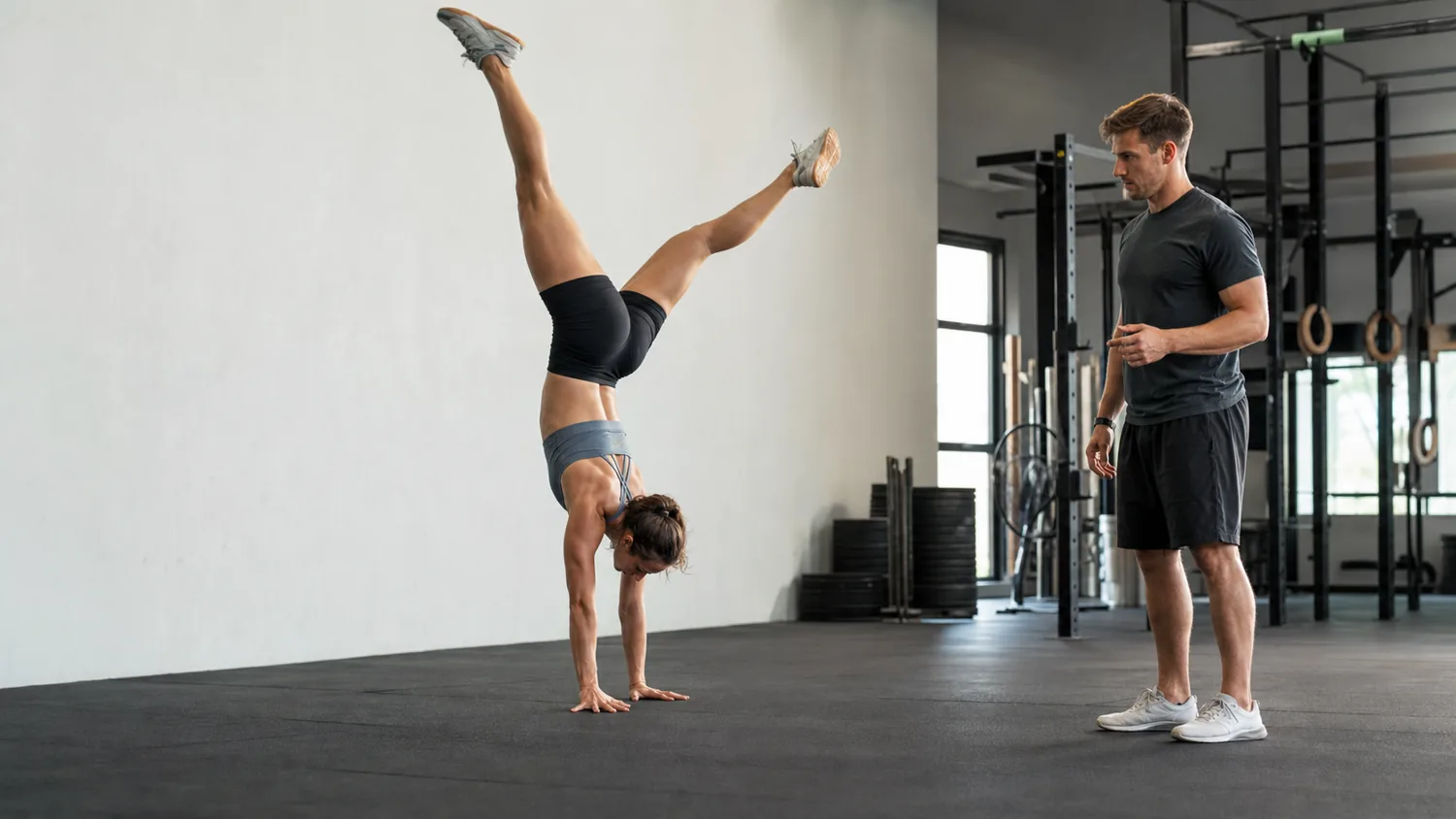
A pirouette is a controlled handstand turn. The athlete rotates by shifting weight from one hand to the other, stepping the hands around, and keeping the hips stacked over the shoulders. In a workout, that can help an athlete change direction, clear an obstacle, or save a handstand walk line that starts to drift.
The mistake is treating it like a trick. A good pirouette comes from the same base as a solid handstand hold. If the ribs flare, the elbows soften, or the athlete cannot press into the floor, the turn will wobble before it starts.
Start with the line before the turn
Before adding rotation, build a handstand that can stay still. Hands press through the floor. Elbows stay locked without being jammed. The head stays neutral enough that the athlete can see the floor between the hands, not the far wall. The feet do not have to be perfectly glued together, but the body should not be scissoring for balance.
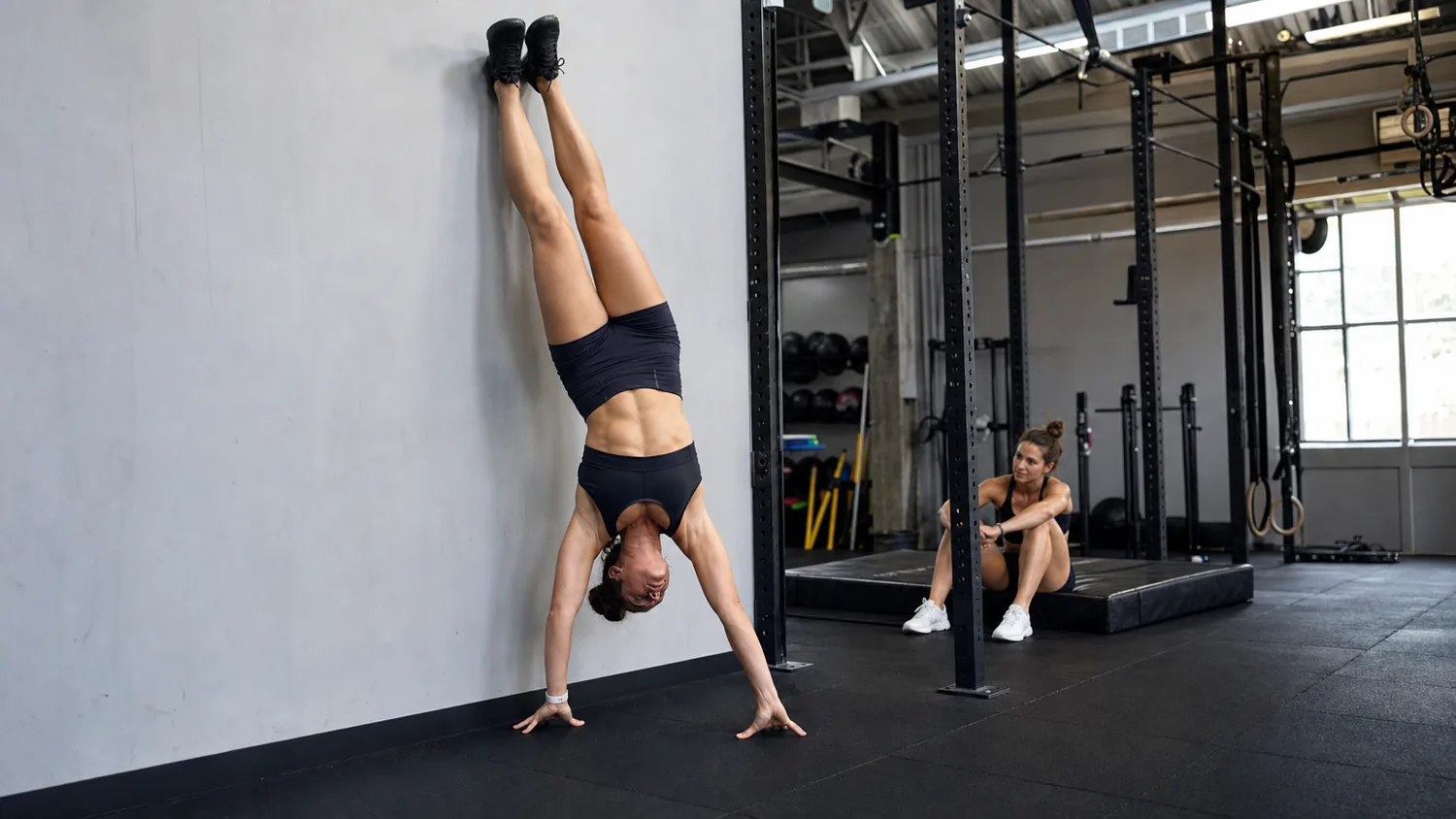
This is where wall walk work and wall-facing holds help. The wall gives feedback without making the athlete guess. If the stomach peels away from the line every time the hands move, the athlete needs more time on position before turning. The same shoulder pressure carries into a handstand walk, especially when the floor line is not perfectly straight.
The weight shift comes first
The turn starts before the hand moves. Shift slightly into the support arm, press the floor away, then pick up the free hand just enough to step it around. If both hands feel light, the athlete is falling. If one shoulder feels loaded and active, the athlete has something to turn around.
A simple drill is a wall-facing quarter turn. Start close enough to the wall that the line is honest, but not so close that the nose is smashed into it. Shift into the right hand, step the left hand a few inches, then bring the right hand back under the shoulder. Reverse it. Small steps count. Sloppy big steps do not.
| Fault | What it looks like | Fix it with |
|---|---|---|
| Turning too fast | The feet whip around and the hands chase the fall | Use quarter turns and pause after each hand step |
| Soft elbows | The shoulders sink and the head drops | Press tall through the floor before moving the hand |
| No weight shift | The free hand feels stuck to the floor | Lean gently into one shoulder, then step the other hand |
| Overarched body | The ribs open and the feet fall behind the athlete | Squeeze the glutes and bring the ribs down before turning |
How it fits into CrossFit training
Most athletes do not need a full 360-degree pirouette in a daily class. They do need the control that the drill teaches. A quarter or half turn can make handstand walking safer, sharpen shoulder balance, and expose whether the athlete is pressing into the floor or just hanging on the joints.
It also pairs well with handstand shoulder taps. Shoulder taps teach the weight transfer. Pirouettes add direction. If an athlete cannot lift one hand for a tap without collapsing, the turn is too advanced for that day. Use bear crawl variations, wall shoulder shifts, or box pike shoulder taps first.
The demo below is worth watching slowly. The turn is not a wild spin. The athlete shifts weight first, moves one hand, then lets the body follow while the shoulders stay stacked.
Scaling without turning it into circus practice
Good CrossFit scaling keeps the purpose clear. If inversion is the limiter, start with a box pike position and step the hands around the box. If shoulder endurance is the limiter, use shorter holds with clean turns. If fear is the limiter, keep the athlete wall-facing and ask for tiny hand steps.
Athletes chasing a strict handstand push-up can still use the drill, but they should not turn every pressing session into skill play. Keep pirouettes light and controlled before heavy pressing work. When wrists are irritated, shorten the session or move to shoulder taps on parallettes if the athlete already owns that setup.
When to practice it
Place handstand pirouette drills after a focused CrossFit warm-up, not at the end of a workout when the shoulders are cooked. Two or three sets of short, clean turns are usually enough. Quality drops fast once the athlete starts rushing the kick-up or bending the elbows to survive.
For conditioning pieces, keep the standard honest. A handstand pirouette should show control through the hands and shoulders. If the athlete lands every turn by crashing into the floor, scale the turn before adding reps.
What to test before adding speed
Film a quarter turn from the side. Look for locked elbows, quiet feet, and a visible weight shift before the hand steps. If the hips twist first or the shoulders sink, slow the drill down.
The goal is not to spin harder. The goal is to turn with enough control that the next handstand rep is still there.