The plan
The Romanian deadlift is not just a lighter deadlift with a fancy name. In a CrossFit class, it is usually where athletes learn whether they can hinge without chasing the floor, bending their knees too much, or letting the bar drift away from their legs.
Done well, it teaches hamstring tension, lat pressure, and a patient stand-up. Done badly, it becomes a rounded stretch with weight in the hands. The difference is small enough to miss when the clock is loud.
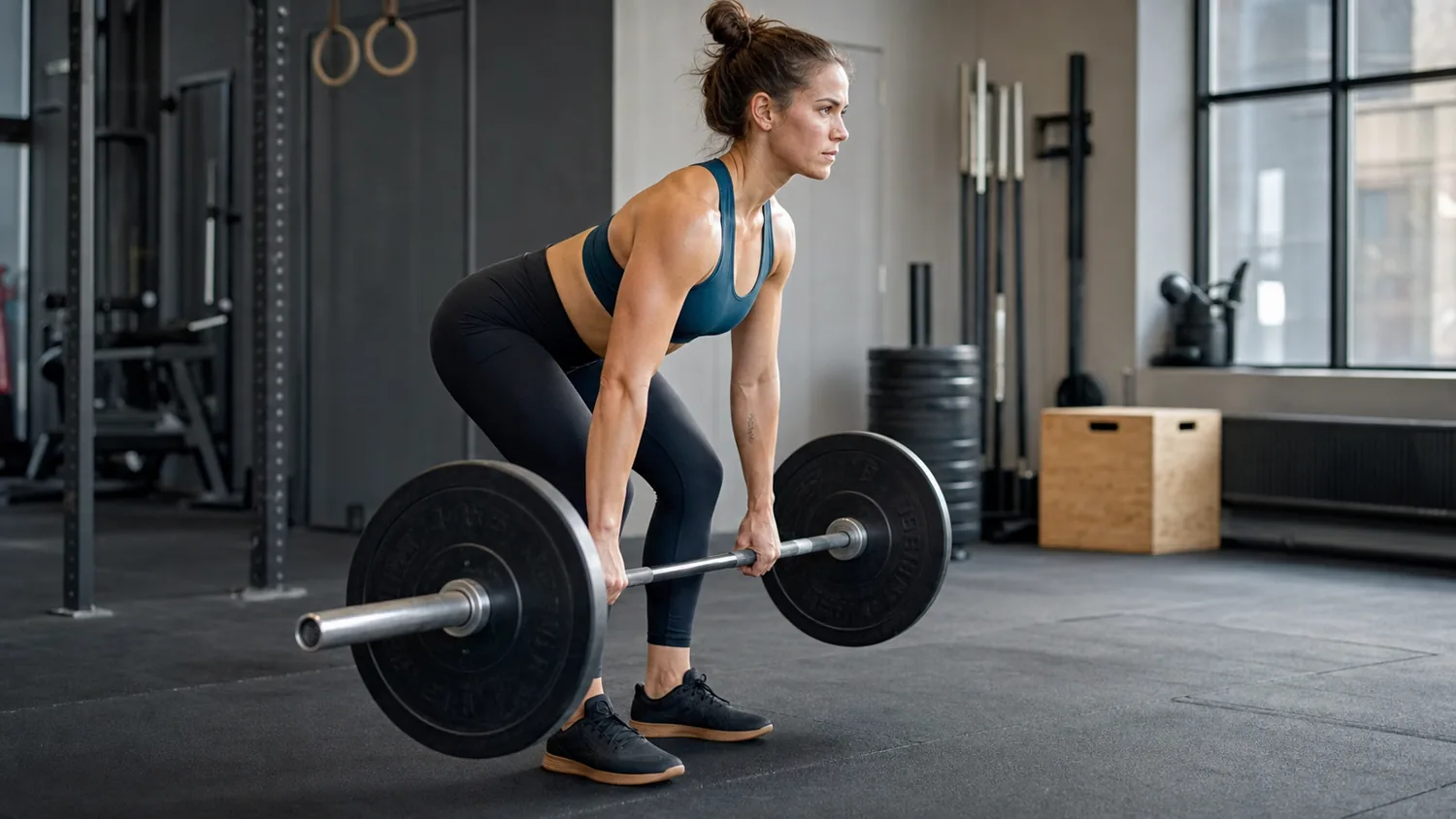
- Start from the top, push the hips back, and keep the bar close to the thighs.
- Stop the descent when the hamstrings load and the back position still looks clean.
- Use tempo before load. A slow RDL gives better feedback than a heavy rushed one.
What makes a Romanian deadlift different
A regular deadlift starts from the floor. A Romanian deadlift starts standing. The knees unlock, but they do not keep bending like a squat. The bar slides down the thighs as the hips move back, then the athlete stands by driving the hips through.
That makes the RDL a sharper teaching tool for the hinge. It borrows pieces from the deadlift setup, the good morning hinge, and the kettlebell swing timing, but the feedback is more direct: if the bar leaves the legs or the ribs flare open, the rep tells on you right away.
Set up from the top before the bar moves
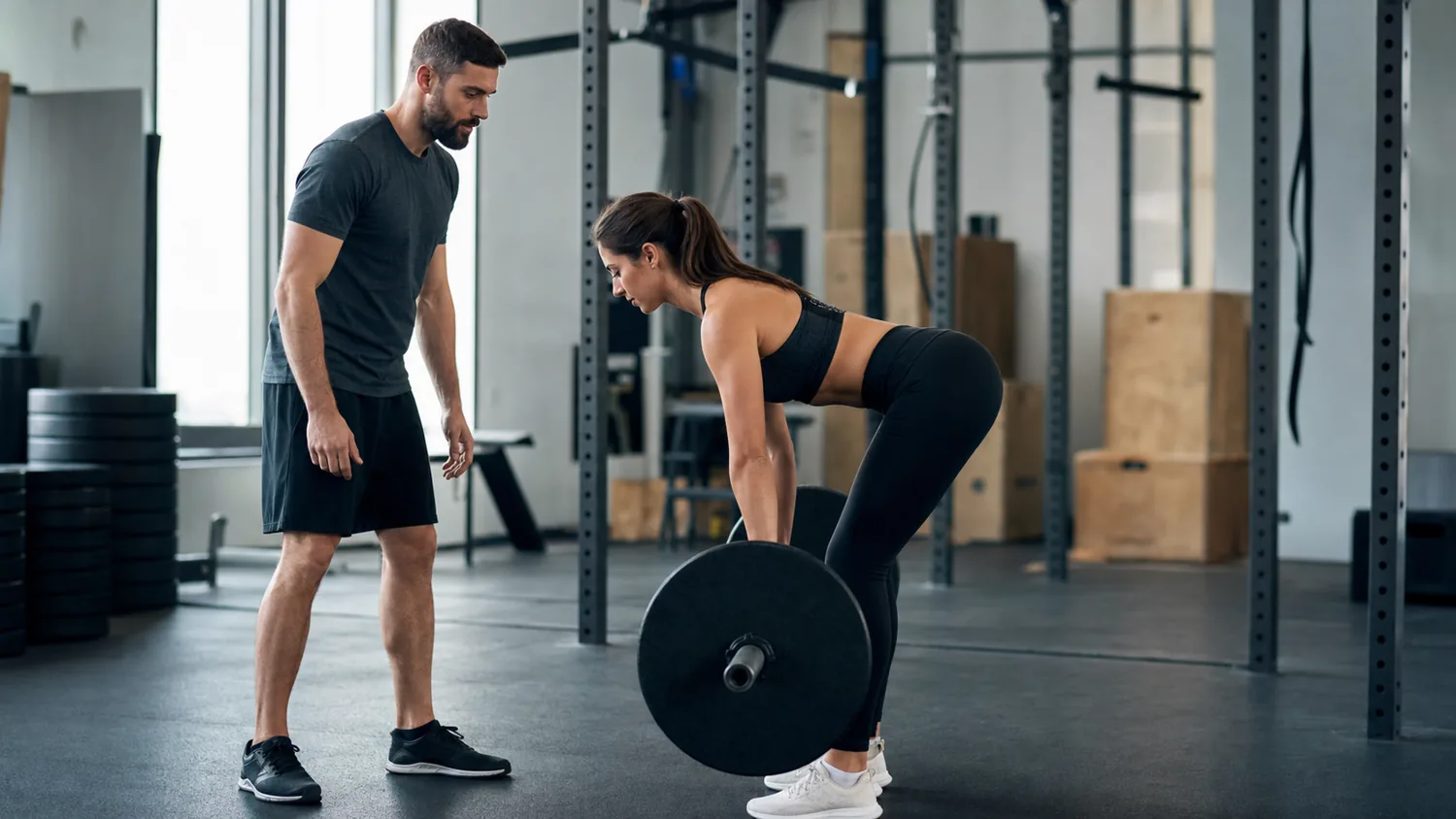
Stand tall with the bar against the thighs. Pull the shoulders down without leaning back. Keep the feet heavy through the mid-foot and heel. Before the first rep, take a breath and make the torso feel locked in, not stiff for show, just organized enough that the hips can move without the spine changing shape.
The first two inches matter. If the athlete breaks at the knees first, the rep turns into a partial squat. If the chest drops first, the lower back usually gets dragged into the job. The right cue is simple: hips back, bar close, knees soft.
| Check | Good rep | Fix if it breaks |
|---|---|---|
| Bar path | Bar stays close to thighs and shins | Pull the lats tight and slow the descent |
| Knees | Soft bend, then fairly quiet | Freeze the knee angle after the first unlock |
| Range | Stops at clean hamstring tension | Do not chase the plates toward the floor |
| Stand-up | Hips drive through without leaning back | Squeeze the glutes and finish tall, not overextended |
Use RDLs to build better pulls, not to prove toughness
Romanian deadlifts fit well before or after sessions that involve the power clean pull, deadlifts, swings, or heavy carries. They help athletes feel hamstring load without the noise of pulling from the floor. That is why a coach might put them in a CrossFit warm-up, a strength accessory block, or a slower tempo piece after the main lift.
They also expose the athlete who tries to solve every hinge by yanking with the back. If the RDL gets messy, the problem will probably show up later in barbell cycling, back squat bracing, or longer pieces with loaded carry fatigue.
The demo below is useful because it keeps the rep plain. The bar starts from the top, the hips travel back, and the athlete stops before the lower back has to fake more range.
How low should the bar go?
The honest answer: only as low as the athlete can go without changing shape. For one person, that might be just below the knee. For another, it might be mid-shin. The target is not the floor. The target is a controlled hinge with tension in the hamstrings and a bar that still feels attached to the body.
A good test is the pause. Hold the bottom position for one second. If the athlete can breathe, keep the bar close, and stand up without a jerk, the range is probably usable. If the shoulders round or the bar drifts forward, shorten it.
Loading, tempo, and smart scaling
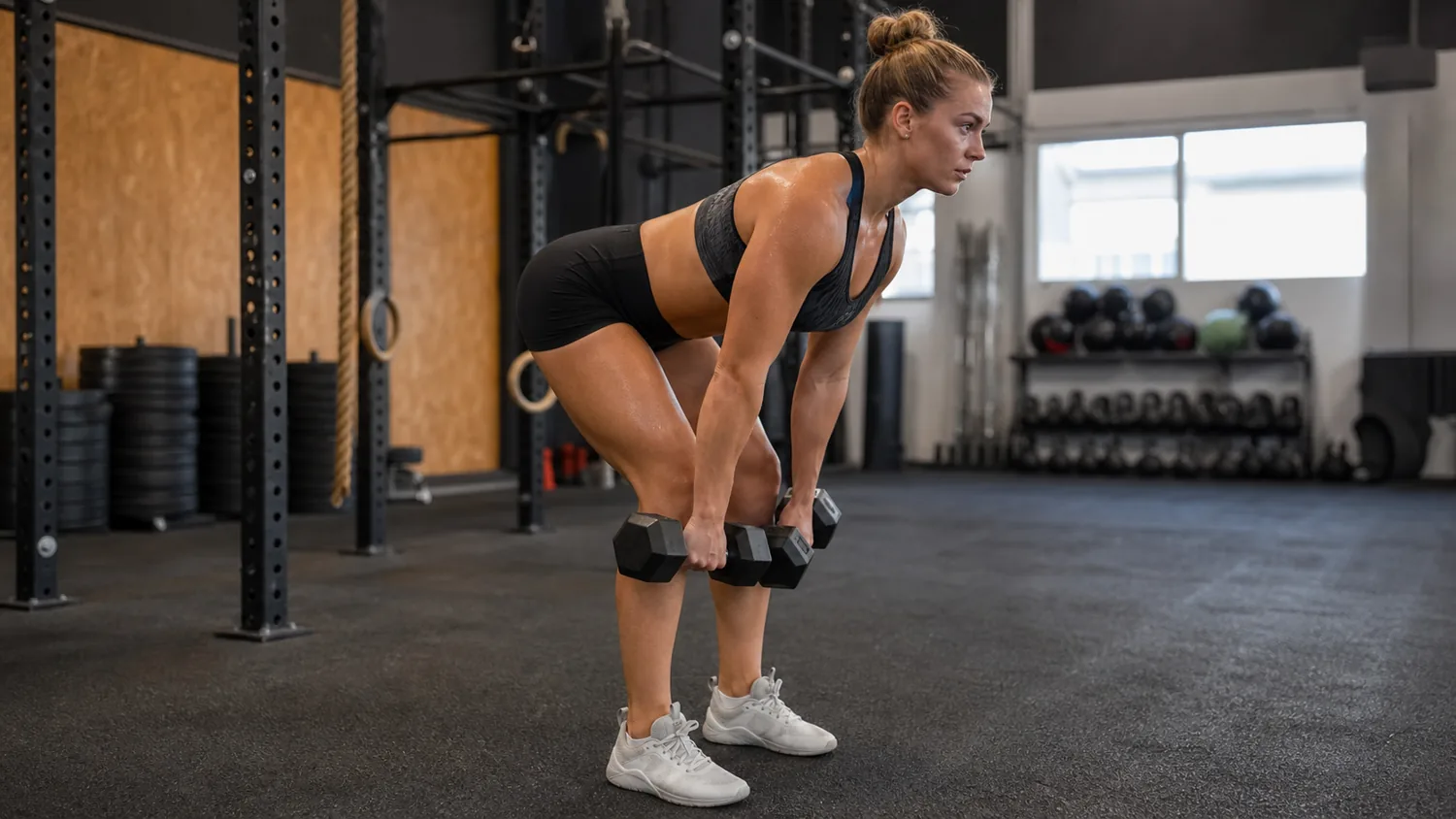
Most class athletes get more out of moderate weight and tempo than from chasing a heavy RDL. Try sets of 6 to 10 reps with a three-count lower, a quiet pause, and a smooth stand. If the tempo makes the athlete lose position, the load was already too high.
Good CrossFit scaling keeps the hinge while reducing threat. Use dumbbell RDLs, kettlebell RDLs, a PVC hinge drill, a wall tap drill, or a shorter barbell range from the hang. If grip is the limiter, straps may make sense in strength work, but not if the goal is preparing for grip-heavy CrossFit pieces.
When to pull it back
Pull back if the athlete feels sharp back pain, cannot keep the bar close, or turns every rep into a squat. Also be careful after workouts with high-volume deadlifts, heavy swings, sandbag work, or long carries. The hamstrings and back may already be cooked.
Before the next WOD, test five slow Romanian deadlifts with an empty bar. If the bar tracks close and the bottom position looks the same each time, add a little load. If rep three looks different from rep one, stay light and fix the hinge first.


